At KÜRE Encyclopedia, we use cookies to provide you with the most efficient and enjoyable experience possible.
With your consent, we may personalize our content and services based on your browsing history and preferences. If you choose to allow only essential cookies, some features may operate with limited functionality.

This article was automatically translated from the original Turkish version.

Eid morning is one of the purest moments of childhood joy. With the early rising of the sun, homes come alive with color, people put on their finest clothes, and small hands prepare to gather fresh wildflowers. This moment is not merely a celebration but a profound expression of family bonds, love, and social culture. Barış Manço’s song “Bugün Bayram” evokes precisely these emotions, bringing to light memories of childhood Eid mornings.
The magic of Eid mornings lies not only in gifts or sweets but in the excitement with which children wake up and the careful behavior they display while performing Eid rituals. Practices such as giving handkerchiefs as gifts, visiting elders, and kissing their hands in respect serve to transmit social values to children, shaping them as both individuals and integral members of society.
Barış Manço’s 1985 song “Bugün Bayram” goes beyond its lively melody to capture both the joy and the sorrow of Eid. The song tells the story of a father who has lost his wife or mother, waking his children early on Eid morning and taking them to her grave with wildflowers. Thus, grief and joy meet on the same Eid morning.
Throughout history, holidays have served as rituals that strengthen social unity. Religious holidays are not merely days of worship but also days when estranged relatives reconcile, elders are visited, and children eagerly prepare themselves. Although some traditions have become less widespread due to urbanization and modern life, the values emphasized in this song remain a cultural legacy that generations must remember.
In the song, details such as children’s excitement and their visit to their mothers’ graves with wildflowers remind us that Eid is not only about joy but also about remembrance and longing. Eid rituals that reinforce unity and love in society are a cultural thread passed from past to future. Through this song, Barış Manço invites both children and adults to embrace social values, respect, and shared love.
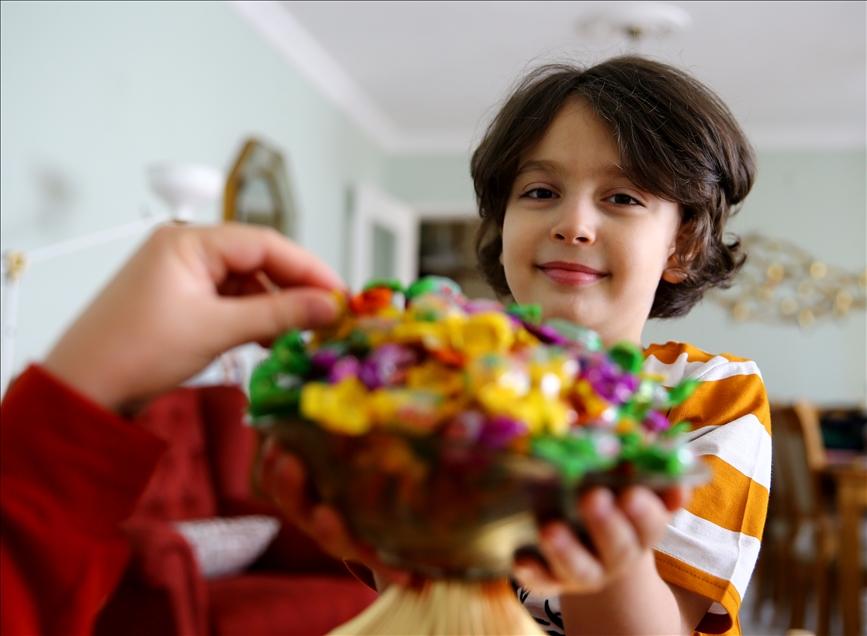
Eid morning, hands full of sweets (AA)
Eid is not merely a traditional celebration but a breath of renewal that opens our hearts. The joy in children’s eyes, the freshness of wildflowers, and the remembrance of elders give meaning to Eid. “Bugün Bayram” serves as a reminder to honor the past, acknowledge loss, and strengthen social ties.
Every Eid is a moment when the past meets the future, where joy and longing come together. Cultural values are kept alive through remembering and living them. Barış Manço’s song is more than just a melody; it is an invitation to childhood, love, and social connection. Every Eid is a new beginning, renewed hope, and shared joy. That is why people rise early on Eid morning, wear their finest clothes, and visit mothers with wildflowers—for those still alive and for those resting in their graves.
Bugün bayram erken kalkın çocuklar,
Giyelim en güzel giysileri,
Elimizde taze kır çiçekleri,
Üzmeyelim bugün annemizi...【1】
Anadolu Ajansı. “Tam Kapanma Döneminde Ramazan Bayramı.” AA Foto Galeri. Accessed March 19, 2026. https://www.aa.com.tr/tr/pg/foto-galeri/tam-kapanma-doneminde-ramazan-bayrami
Barış Manço. “Bugün Bayram Lyrics.” Genius. Accessed March 19, 2026. https://genius.com/Bars-manco-bugun-bayram-lyrics
Önal, Gülden Filiz. “Sembolik Etkileşim Bağlamında Müzik: Barış Manço Örneği.” *Millî Folklor* 18, no. 140 (2023): 143–154. Accessed March 19, 2026. https://dergipark.org.tr/en/download/article-file/2613316
[1]
Barış Manço, “Bugün Bayram Lyrics,” Genius, accessed 19 March 2026, https://genius.com/Bars-manco-bugun-bayram-lyrics.
Culture and Childhood Embedded in the Song
Living and Remembering Eid

