


This article was automatically translated from the original Turkish version.
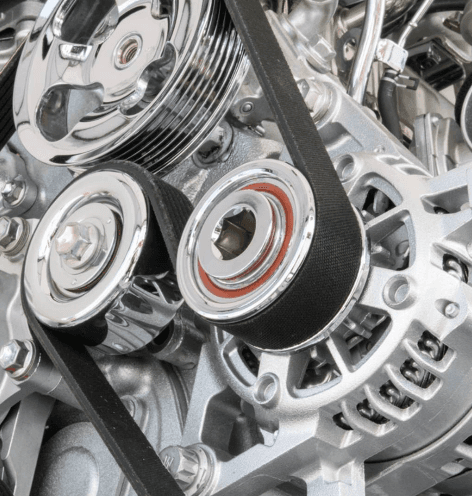
Figure 1 | Trigger Belt | ||||||||
|---|---|---|---|---|---|---|---|---|---|
The timing belt is a critical component that establishes the synchronization between the crankshaft and the camshaft in internal combustion engines, ensuring that the valves open and close at the correct times. It is also known as a “timing belt” or “camshaft belt” gibi. Typically made from durable materials such as rubber and glass fiber, the belt ensures the synchronized operation of the engine.
class=\
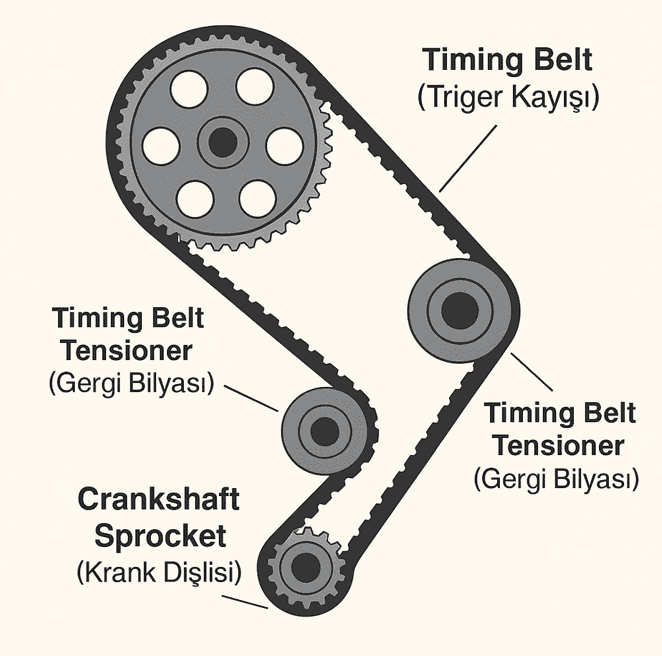
The primary function of the timing belt is to transmit motion from the crankshaft to the camshaft, ensuring that the engine’s valves open and close at the precise moments required. This allows the air-fuel mixture to enter the cylinders and ignite at the correct time. In many engines, the timing belt also drives the water pump, facilitating the circulation of coolant. The proper functioning of this system plays a decisive role in engine performance and longevity.
Timing belts are generally composite in structure, with rubber as the primary material reinforced with strong fibers such as steel wire, glass fiber, or aramid. This combination provides both flexibility and high tensile strength. They are typically designed to withstand loads of approximately 1.5 tons.
The lifespan of a timing belt varies depending on the vehicle model and engine design, but it generally requires replacement between 60,000 and 120,000 kilometers. Additionally, it is recommended to replace the belt every 3 to 5 years based on usage time. If the belt shows signs of wear, hardening, or cracking, the engine may suffer serious damage. Regular inspections are therefore essential.
A broken or stripped timing belt can cause the engine to stop completely. Stripping is usually caused by wear and hardening. Problems with the timing belt can be identified by the following symptoms:
Unusual noises coming from the engine
Black smoke from the exhaust
Engine failure or stalling
Visible fragments of a broken belt
In the event of a breakage, not only the timing belt but also the tensioner pulley and the water pump must be inspected and replaced if necessary, as they are directly driven by the belt.
The timing belt is an indispensable component for the consistent operation of the engine and its long lifespan. Neglecting its maintenance can lead to irreversible engine damage. Therefore, replacement at the recommended mileage and time intervals must always be carried out under professional supervision.
Fark Oto Servis. "Triger Kayışı Nedir, Ne İşe Yarar?" Fark Oto Servis Blog. Accessed March 31, 2025.https://farkotoservis.com/triger-kayisi/
Lexus Türkiye. “Triger Kayışı Nedir, Koparsa Ne Olur?” Accessed March 31, 2025.https://www.lexus.com.tr/lexusu-kesfet/lexus-otomobilleri-hakkinda-hersey/triger-kayisi-nedir-koparsa-ne-olur
Çetaş Otomotiv. "Triger Kayışı Nedir? Neden Kopar?" Çetaş Blog. Accessed March 31, 2025.https://www.cetas.com.tr/blog/triger-kayisi-nedir-neden-kopar

Figure 1 | Trigger Belt | ||||||||
|---|---|---|---|---|---|---|---|---|---|
Function and Operation
Construction and Materials
Replacement Interval and Maintenance
Faults and Symptoms