This article was automatically translated from the original Turkish version.
+1 More
Location | Cevizli Village Türkiye Artvin Şavşat | ||||||||
|---|---|---|---|---|---|---|---|---|---|
Period(s) | Bagratids 9th–10th centuries | ||||||||
Plan | Free cross plan | ||||||||
Material(s) | Cut stone | ||||||||
Feature(s) | Plant decorations ram sculptures apostle figures | ||||||||
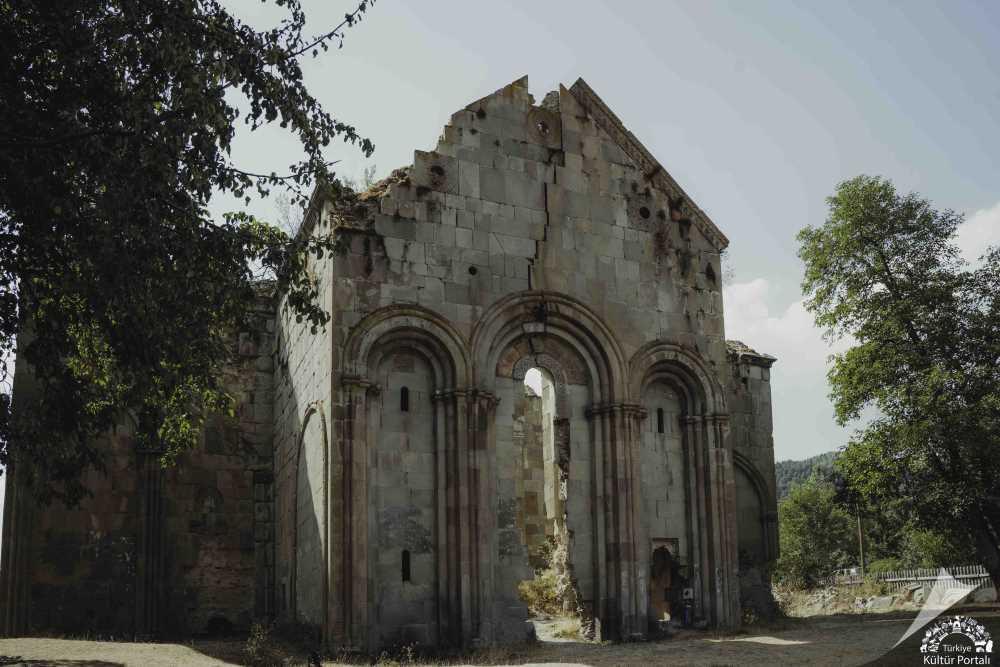
The Tibeti Church is an early medieval church dated to the Bagratid period, located in the village of Cevizli, Şavşat district of Artvin Province, Türkiye. The structure, which has no surviving inscription, was constructed between 899 and 914 according to written sources by Prince Aşut Koh (Aşot Koukhi) of the Bagratid dynasty. After the region adopted Islam, the church was converted into a mosque and gradually fell into ruin.
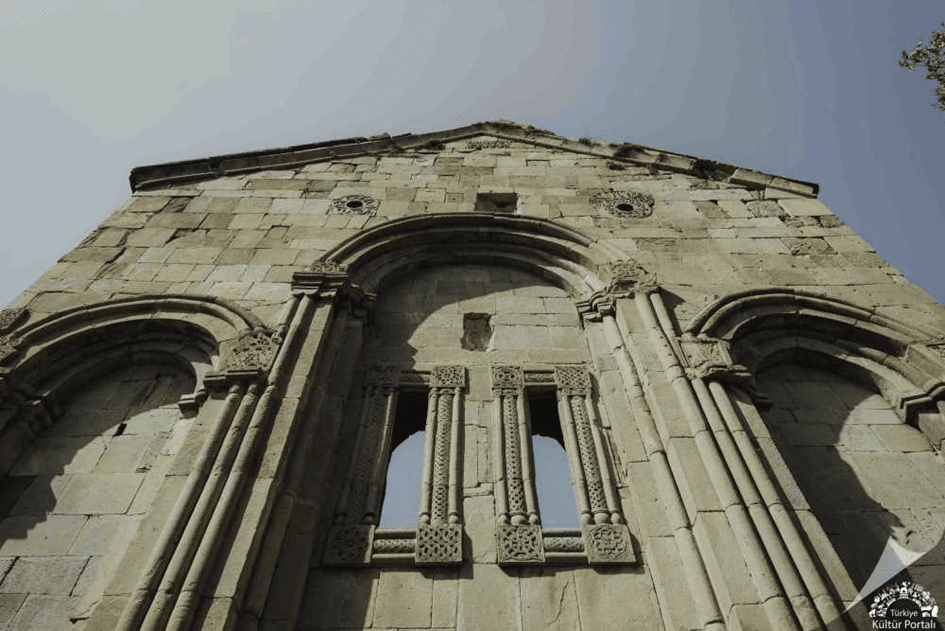
Tibeti Church (Culture Portal)
According to written sources, the Tibeti Church was built at the end of the 9th century and the beginning of the 10th century during the reign of Prince Aşut Koh of the Bagratid dynasty. It was mentioned as one of the region’s major religious centers from the 11th century onward and underwent various repairs in the 12th and 15th centuries. After the region’s conversion to Islam, the building was transformed into a mosque. In 1885, its dome and cross arms were damaged by a lightning strike, and it was completely abandoned in 1889. The collapse of the dome in 1953 further deteriorated the structure. Today, only the church and its associated chapel remain.
The church was built in a free-cross plan and measures 26.00 x 25.50 metres externally. The south arm of the cross has a rectangular plan oriented east-west, measuring 7.20 x 5.00 metres internally. The structure was constructed using finely cut stone, with a four-sloped roof and a ram’s head sculpture on each façade. Interior frescoes depict apostolic figures.
Rich plastic decorations on the building’s façades are particularly notable. Around the apse window, interlaced basket-weave motifs appear, while the interiors of heart-shaped motifs are filled with leaf patterns. The capitals of columns, column bases, and wall piers in the interior are adorned with vegetal plastic ornamentation.
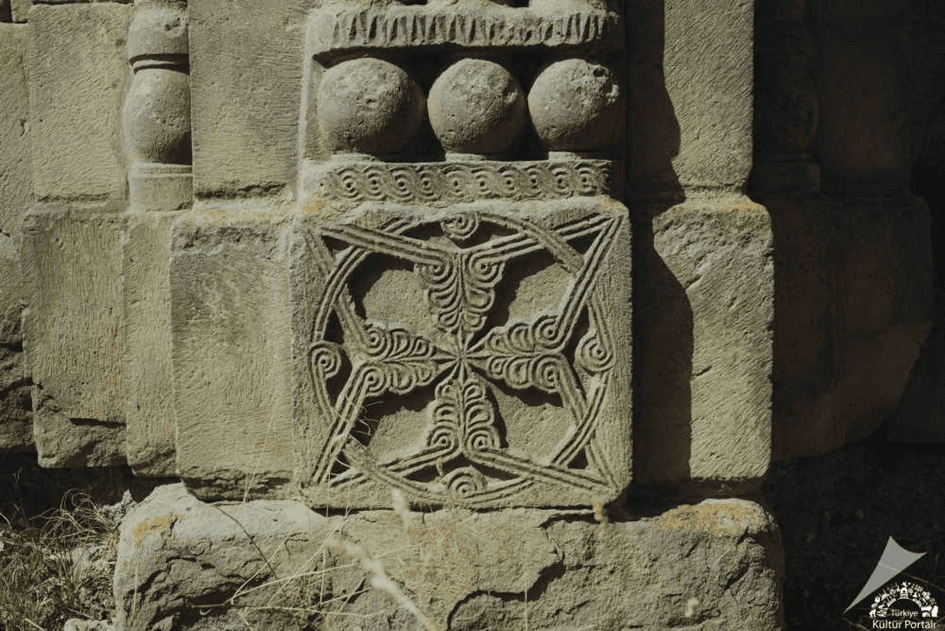
Tibeti Church (Culture Portal)
The chapel associated with the church is rectangular in plan, oriented east-west, and located north of the north arm of the cross. The north façade of the chapel is enlivened by round-arched arcades, while the north and west walls have completely collapsed. Although the chapel lacks decorative elements, its construction materials and techniques resemble those of the main church.
The church is today largely in ruins. The dome has collapsed, and only the outer walls and some architectural details remain standing. Nevertheless, it retains its significance as a historical monument through its original stonework, examples of vegetal ornamentation, and figural representations.
Artvin Municipality. "Tibeti Kilisesi." Şavşat Municipality. Accessed August 16, 2025. https://savsat.bel.tr/sayfa/tibeti-kilisesi
T.C. Kültür ve Turizm Bakanlığı. “Tibeti Kilisesi.” Kültür Portalı. Accessed August 16, 2025.
T.C. Ministry of Culture and Tourism. "Tibeti Kilisesi." Artvin İl Kültür ve Turizm Müdürlüğü. Accessed August 16, 2025.
T.C. İletişim Başkanlığı. “Tibeti Kilisesi Ziyaretçilerini Büyülüyor – Artvin.” T.C. Cumhurbaşkanlığı İletişim Başkanlığı. Accessed August 16, 2025. https://www.iletisim.gov.tr/turkce/yerel_basin/detay/tibeti-kilisesi-ziyaretcilerini-buyuluyor-artvin.

Location | Cevizli Village Türkiye Artvin Şavşat | ||||||||
|---|---|---|---|---|---|---|---|---|---|
Period(s) | Bagratids 9th–10th centuries | ||||||||
Plan | Free cross plan | ||||||||
Material(s) | Cut stone | ||||||||
Feature(s) | Plant decorations ram sculptures apostle figures | ||||||||
History
Architectural Features
Chapel and Other Elements
Current Condition