


This article was automatically translated from the original Turkish version.

Yunus Emre (Created with AI Assistance by the Author)
There Is a Self in Me (Poem)
Author(s) | Yunus Emre | ||||||||
|---|---|---|---|---|---|---|---|---|---|
Genre | Folk Poetry / Hymn / Sufi Poetry | ||||||||
Publication Venues | Poetry, Yunus Emre's divans, Sufism and folk poetry collections are included in academic studies and research | ||||||||
Region of Compilation / Knowledge | Anatolia (Eskişehir, Sivas and Karaman regions) | ||||||||
Period of Writing | 13th–14th centuries | ||||||||
THIS IS MY LEARNING MATERIAL
“There Is One I in Me” is a poem attributed to Yunus Emre and is among the verses that explore the human inner world, self-perception, and the quest for truth within the framework of Sufi thought. The poem centers on the distinction between the external self as perceived in the world and the internal, spiritual dimension, and is regarded as one of the texts that reflect Yunus Emre’s worldview.
“There Is One I in Me” belongs to the tradition of Sufi folk poetry. It carries an instructional and guiding tone associated with the ilahi and nefes forms. The simple language, emphasis on inner experience, and Sufi concepts commonly found in Yunus Emre’s poetry are clearly present in this text. The poem possesses a didactic quality in its focus on self-questioning and the orientation toward truth.
“There Is One I in Me” centers on the distinction between the apparent self and the inner self. The duality emphasized in the poem reveals that human spiritual and metaphysical states are not one-dimensional. The phrase “one I” symbolizes the difference between the individual’s outward existence and the inward dimension oriented toward truth. Yunus Emre constructs a discourse aimed at helping the individual recognize themselves and turn toward inner reflection.
I love You from the depths of my soul
My path lies beyond this ego
Sharia and tariqa are the paths to the destination
The fruit of truth is found beyond this moment
Abandoning religion is disbelief
But what is disbelief if not beyond faith
When you say “I am in me,” I am not that
There is one I in me, beyond me
My hand cannot reach the one who takes me from myself
Whoever steps on the threshold of the Sultan beyond me
They say Solomon understood the language of birds
Solomon exists, beyond Solomon
Some were granted revelation
Others seek their purpose beyond this
Your love has taken me from myself
How sweet this suffering, beyond medicine
Poor Yunus, his eyes turned to You
At the door, a servant, beyond the Sultan
The exact date of composition is unknown. The poem is generally dated to the late 13th and early 14th centuries, the period during which Yunus Emre is believed to have lived. The text has reached us through manuscript collections of poems attributed to Yunus Emre and the oral transmission tradition.
No specific region is definitively identified in sources as the place where this poem was compiled. However, it is known that poems attributed to Yunus Emre were transmitted orally across various regions of Anatolia throughout history. “There Is One I in Me” is among the widely circulated texts within the Anatolian Sufi tradition.
The poem is attributed to Yunus Emre in all sources. Yunus Emre is recognized as a pivotal Sufi poet in the development of Turkish Sufi poetry in Anatolia. Although details of his life are limited, there is general consensus that he lived in Anatolia during the late 13th and early 14th centuries.
Yunus Emre’s poetry is notable for expressing the fundamental concepts of Sufi thought in simple and accessible Turkish. His poems highlight themes of humanity, selfhood, nafs, love, and divine truth. “There Is One I in Me” is considered one of the texts closely associated with his worldview due to its emphasis on inner reflection and self-awareness, themes frequently found in his attributed works.
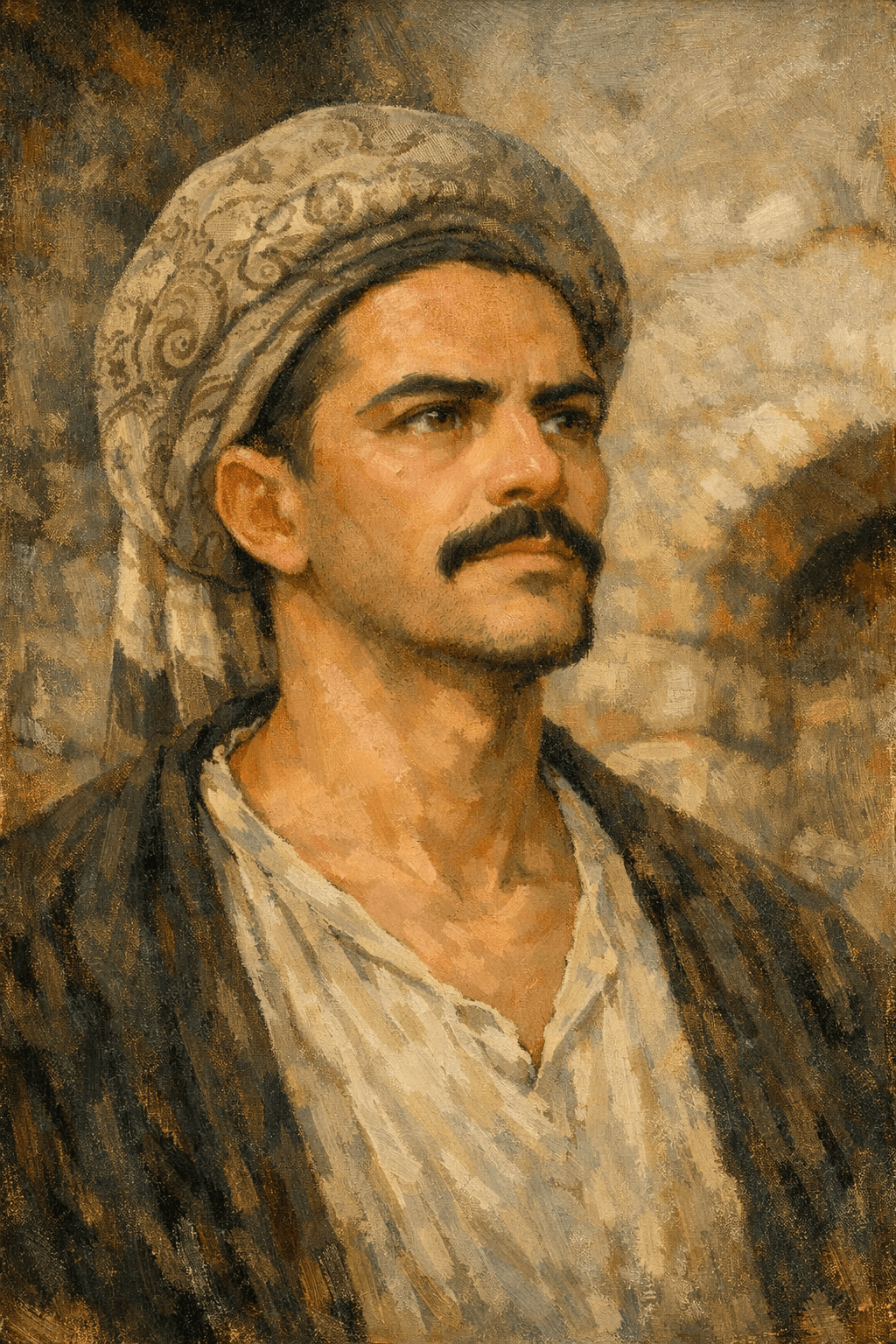
Yunus Emre (Generated with AI Assistance)
“There Is One I in Me” is interpreted within the framework of key Sufi concepts: nafs, selfhood, and inner journey. The poem draws a distinction between the outward self and the inner self oriented toward truth. This perspective is linked to the individual’s process of self-knowledge and spiritual maturation.
The poem reflects the instructional and direct style common in Yunus Emre’s poetry. It presents a framework that prioritizes turning inward rather than outward, and is thus understood within the context of the Sufi tradition that developed in Anatolia.
No specific historical event, person, or narrative regarding the origin of the poem “There Is One I in Me” is recorded in any sources. There is no concrete story tied to its composition. The poem is regarded as a poetic expression of the inner experiences shaped within Yunus Emre’s Sufi worldview.
Therefore, its origin is not seen as stemming from a single event but rather as a reflection of Sufi teachings and individual inner experience. Sources indicate that the poem emerged within the intellectual and cultural environment of the period in which Yunus Emre is believed to have lived.
Atatürk Kitaplığı. A’dan Z’ye Yunus Emre. İstanbul Büyükşehir Belediyesi. Accessed February 3, 2026.
Eskişehir Valiliği. "Yunus Emre." Accessed February 3, 2026.
Türkiye Diyanet Vakfı İslâm Ansiklopedisi. "Yunus Emre." Accessed February 3, 2026.
Yunus Emre. "Bir Ben Vardır Bende." Accessed February 3, 2026.
https://ataturkkitapligi.ibb.gov.tr/Content/publications/8/a_dan_z_ye_yunus_emre.pdf
https://islamansiklopedisi.org.tr/yunus-emre
https://www.eskisehir.gov.tr/yunus-emre
https://yunusemre.net/siirler/99-bir-ben-vardir-bende.html

Yunus Emre (Created with AI Assistance by the Author)
There Is a Self in Me (Poem)
Author(s) | Yunus Emre | ||||||||
|---|---|---|---|---|---|---|---|---|---|
Genre | Folk Poetry / Hymn / Sufi Poetry | ||||||||
Publication Venues | Poetry, Yunus Emre's divans, Sufism and folk poetry collections are included in academic studies and research | ||||||||
Region of Compilation / Knowledge | Anatolia (Eskişehir, Sivas and Karaman regions) | ||||||||
Period of Writing | 13th–14th centuries | ||||||||
No Discussion Added Yet
Start discussion for "There Is a Self in Me (Poem)" article
Genre of the Poem
Historical Information
Region of Compilation or Circulation
Poet
Brief Contextual Information
Origin Story