


This article was automatically translated from the original Turkish version.
+1 More
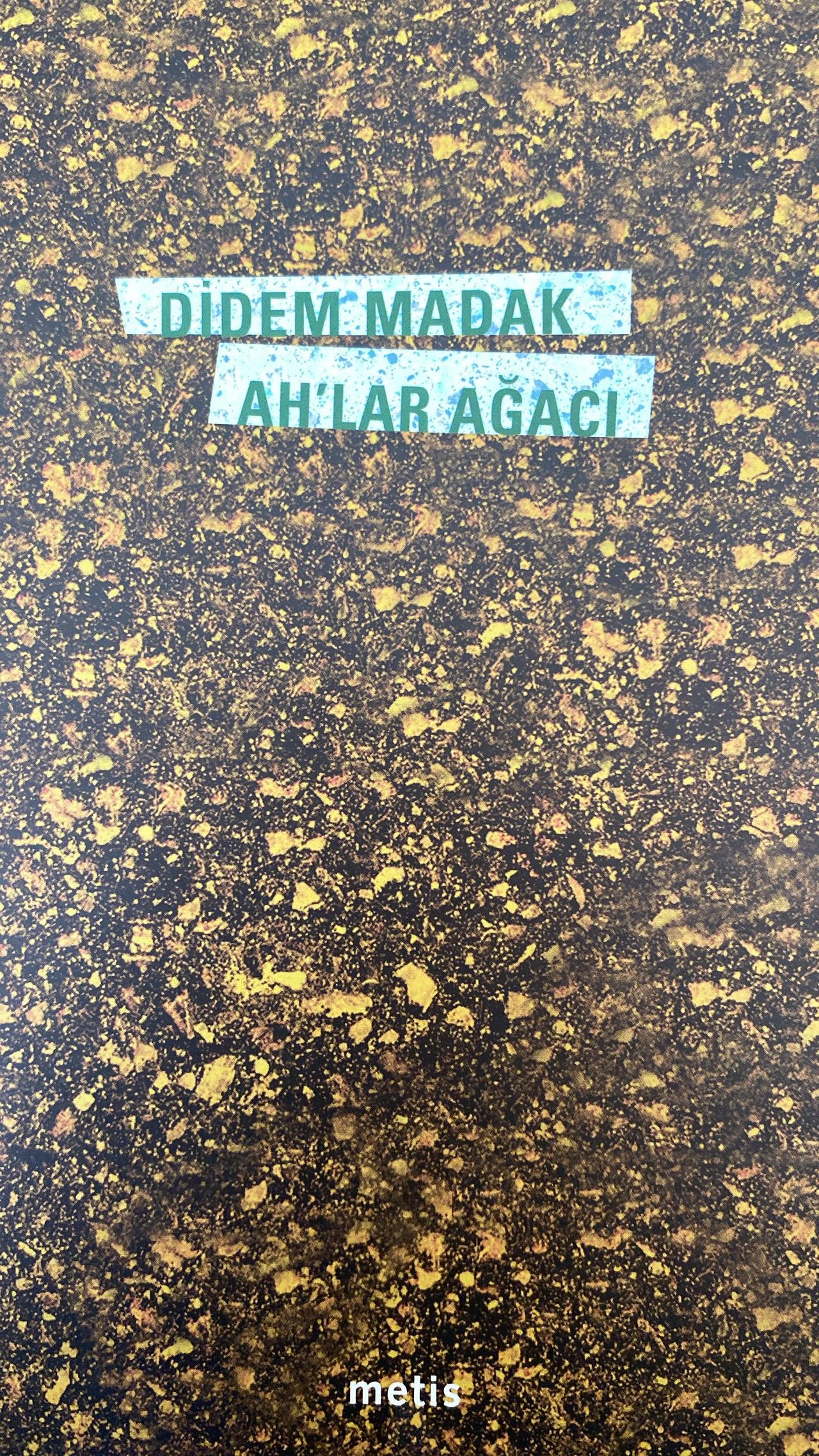
Photo: Berranur Öksüzömer
The Trees of Ah (Book)
Author(s) | Didem Madak | ||||||||
|---|---|---|---|---|---|---|---|---|---|
Publisher(s) | Metis Yayınları | ||||||||
First Publication Year | 2002 | ||||||||
Number of Pages | 73 | ||||||||
ISBN | 978-975-342-875-0 | ||||||||
The Ah Trees is the second poetry collection by Turkish poet Didem Madak. It was first published in 2002 by Everest Yayınları; the second edition was released in November 2012 by Metis Yayınları, one year after the author’s death.
The book consists of nine poems, each with its own individual title. It is 76 pages long and measures 13 × 19.5 cm.
Madak, Didem. Ah'lar Ağacı. Metis Yayınları, 2012.

Photo: Berranur Öksüzömer
The Trees of Ah (Book)
Author(s) | Didem Madak | ||||||||
|---|---|---|---|---|---|---|---|---|---|
Publisher(s) | Metis Yayınları | ||||||||
First Publication Year | 2002 | ||||||||
Number of Pages | 73 | ||||||||
ISBN | 978-975-342-875-0 | ||||||||
No Discussion Added Yet
Start discussion for "The Trees of Ah (Book)" article
Content
Themes
Style and Structural Features
Author and Publication Information