


The First Superpower in History: The Persians
The Persians, approximately 2500 years ago, established one of the largest empires in history across the geographical region of Iran, with territories spanning three continents. This empire is renowned for uniting numerous peoples of different languages and religions under a single administration. It is regarded as the first “superpower” in history due to its vast borders and well-organized administrative system.
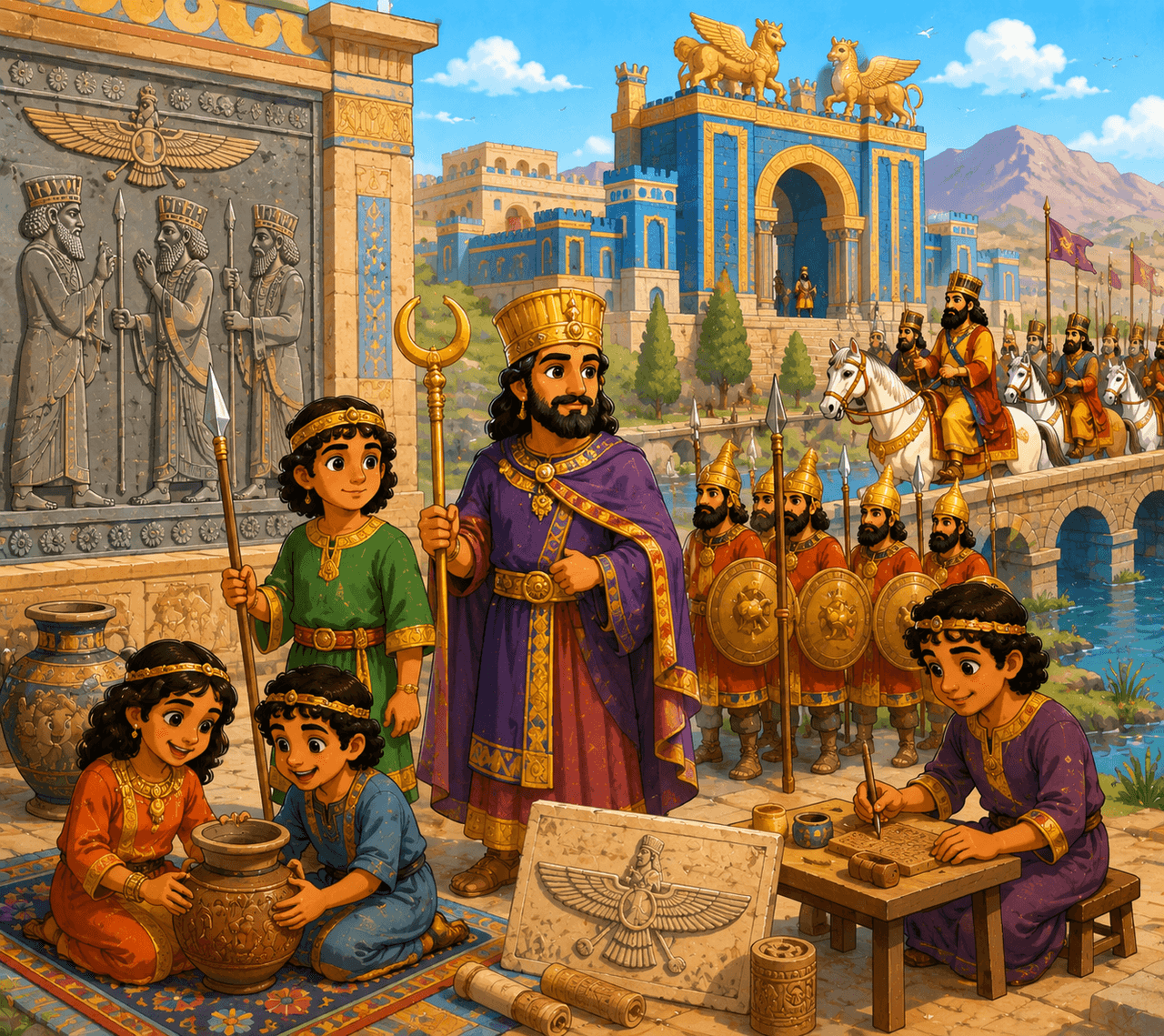
Persian Empire(generated by artificial intelligence)
Who Were the Persians and Where Did They Live?
The Persian Empire was founded in 559 BCE by Cyrus the Great (Cyrus II) in southern Iran. Initially a small group subordinate to the Medes, the Persians rapidly grew in power under Cyrus’s leadership and conquered territories in Mesopotamia and beyond. The empire’s borders extended from Anatolia and northern Greece in the west to the Indus River in India in the east, and from the Caspian Sea in the north to the Persian Gulf and Egypt in the south. These vast territories brought the caravan routes and trade networks of the region under Persian control.
Tolerance and the Satrapy System
The most distinguishing feature of the Persians compared to other ancient kingdoms was their tolerance toward the peoples they conquered. Persian kings permitted the inhabitants of conquered lands to maintain their own religions and languages. This policy facilitated peaceful coexistence among diverse cultures. Due to its enormous size, the empire was administered through a provincial system known as the “satrapy.” The country was divided into approximately twenty tax districts, each governed by a governor called a “satrap.” Satraps upheld justice, collected taxes, and maintained security on behalf of the king.
The Royal Road and Communication
One of the greatest achievements of the Persians was the construction of a vast transportation network known as the “Royal Road.” This road stretched over 2400 kilometers from the city of Susa in Iran to the city of Sardis in Anatolia. Along the route, relay stations and security posts were established at regular intervals. Thanks to this road, messages could be delivered rapidly across the empire by mounted couriers. The Royal Road was used not only for military purposes but also to promote trade. During the reign of Darius I, standardized coinage and weight measurements were introduced to further facilitate commerce.
How Did the Persian Empire Fall?
The collapse of the Persian Empire (Achaemenid Dynasty) did not result from a single event but from a combination of accumulated political instability, economic weaknesses, and ultimately the military genius of Alexander the Great.
The key factors that led to the empire’s decline were as follows:
Decline of the Satrapy System and Internal Rebellions
The provincial (satrapy) system, the foundation of Persian administration, played the most significant role in the empire’s weakening during its final years.
- Rise of the Satraps: Initially loyal governors acting on behalf of the king, satraps gradually prioritized their own interests and began to challenge central authority.
- Satrap Rebellions: Major revolts by satraps in Anatolia between 366 and 360 BCE, including those led by Datames, Ariobarzanes, and Orontes, exposed deep vulnerabilities in Persian internal affairs. Some satraps even minted coins in their own names to declare independence.
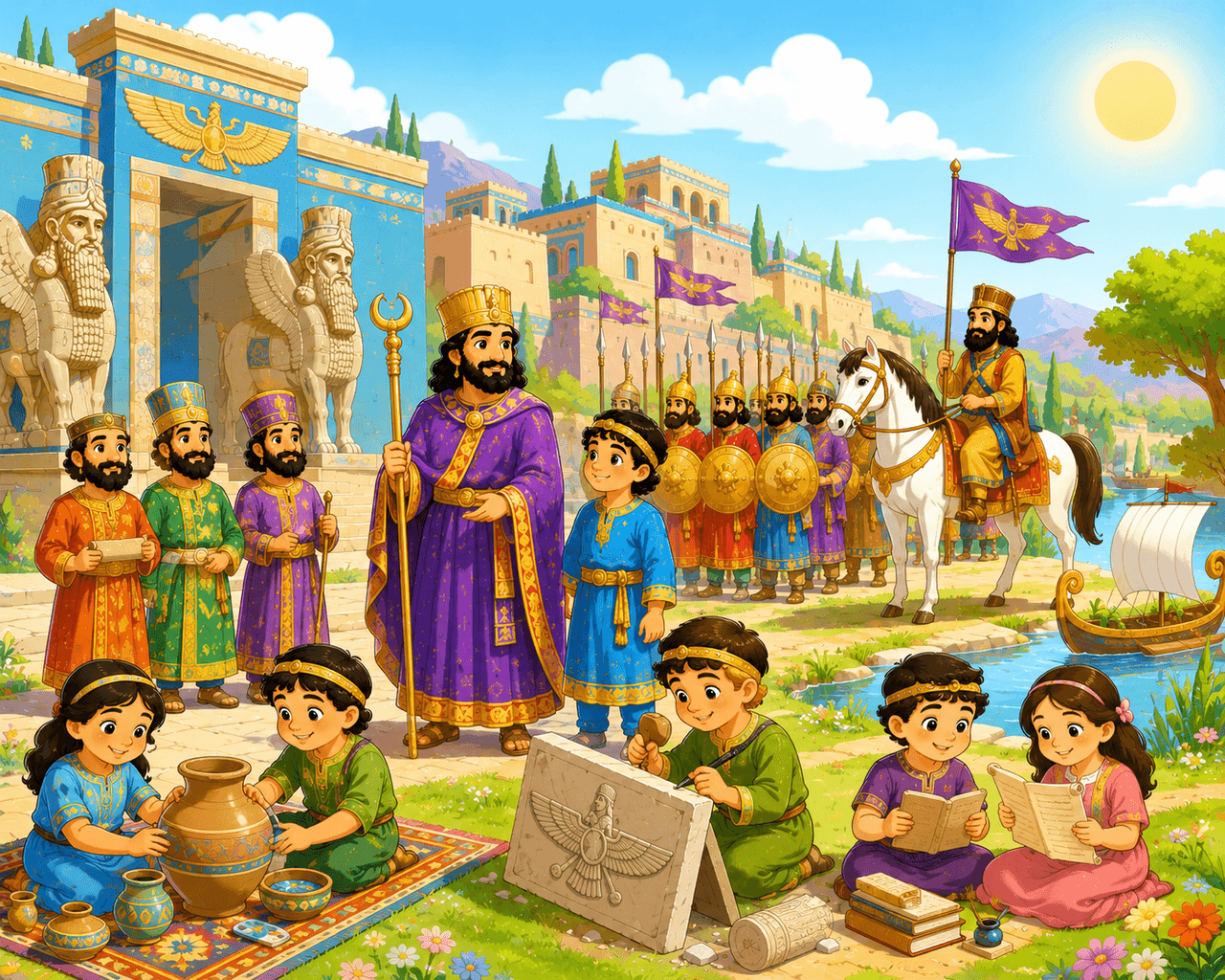
Daily Life in Persia (generated by artificial intelligence)
Weakening of Central Authority and Court Intrigues
The Persian kings after Darius I failed to maintain the strong leadership demonstrated by their predecessors.
- Decline in Administrative Competence: Later kings delegated direct command of the army to generals and left state affairs to influential court officials.
- Succession Struggles and Assassinations: Endless murders, conspiracies, and power struggles within the palace eroded the dynasty from within. For example, Artaxerxes III was assassinated.
Military Defeats and Economic Losses
The Persians suffered significant losses in wars against the Western world, particularly the Greeks.
- Greco-Persian Wars: Defeats at the battles of Marathon, Salamis, Plataea, and Mycale ended Persian dominance in western Anatolia and the Aegean Sea.
- Economic Decline: Continuous rebellions in Egypt and along the western coast of Anatolia, the empire’s wealthiest regions, led to reduced tax revenues and increased military expenditures.
The Final Blow: The Conquests of Alexander the Great
The force that definitively erased the Persian Empire from history was King of Macedon Alexander the Great. Alexander defeated the Persian armies in three major battles:
- Battle of the Granicus (334 BCE): The gates of Anatolia opened to Alexander.
- Battle of Issus (333 BCE): The last Persian king, Darius III, suffered a crushing defeat and was forced to flee the battlefield.
- Battle of Gaugamela (331 BCE): This was the decisive battle in which the Persians were utterly defeated. After this victory, Alexander proclaimed himself “King of Asia,” and the Persian capitals of Babylon, Susa, and Persepolis fell into Macedonian hands.
With the death of Darius III, the Persian Empire, which had ruled for nearly two centuries and was considered the first superpower in history, was completely destroyed.