


This article was automatically translated from the original Turkish version.
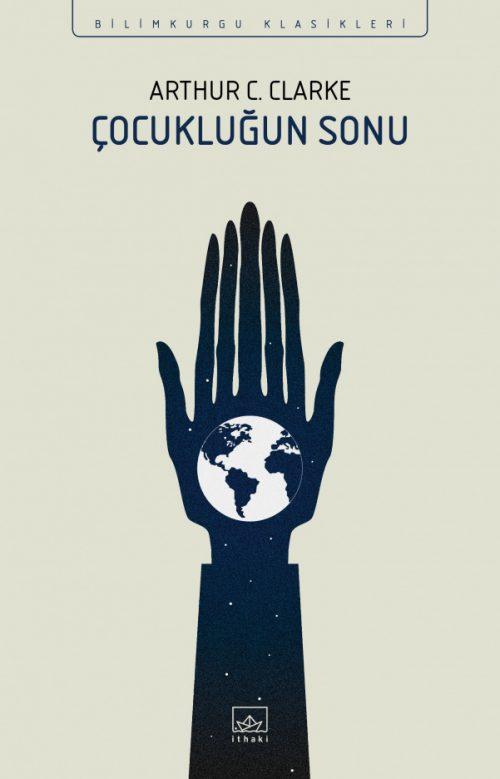
Author(s) | Arthur C. Clarke | ||||||||
|---|---|---|---|---|---|---|---|---|---|
Genre | Science Fiction | ||||||||
Publisher(s) | İthaki Yayınları | ||||||||
Number of Pages | 256 | ||||||||
Arthur C. Clarke’s novel Childhood’s End is a science fiction work that explores the arrival of an alien race known as the Overlords and the subsequent transformation of humanity. The novel analyzes relationships between humans and aliens through the framework of a parent-child dynamic, positioning humanity as children caught in an endless process of growth.
The novel opens against the backdrop of lingering Cold War tensions and the space race following two world wars. In this climate of tension, the alien Overlords arrive on Earth and intervene to prevent humanity from destroying itself. The Overlords present themselves as humanity’s saviors and transform the planet into a global civilization characterized by peace and prosperity—a period known as the “Golden Age.” During this era, war, crime, ignorance, disease, poverty, and fear are nearly eradicated. The Overlords provide humanity with scientific comfort and luxury.
Although the “utopia” brought by the Overlords emphasizes order, harmony, and social perfection, it transforms into a dystopian reality through restrictions on individual freedom and rigid control. The Overlords assume the mission of “imposing order and civilizing the human race.” Initially, they remain invisible to humanity for fifty years, communicating only through their representative, Karellen. To enforce discipline, they employ psychological threats such as cutting off sunlight and heat to punish noncompliance. By banning space travel, they keep humanity confined within a “children’s playground,” justifying this as protection against humanity endangering itself or the universe. This reflects the idea that humanity must be protected until it matures. The constant presence and surveillance of the Overlords’ ships in the sky cause people to self-regulate their behavior, creating a panopticon-like totalitarian control. This reveals the repressive dynamics underlying what appears from the outside as benevolent intervention.
During the “Golden Age,” scientific curiosity and creativity vanish as a cost of peace and prosperity. The belief that the Overlords have already discovered all secrets discourages humans from creating new things, rendering life monotonous and dull.
A group of humans who resist the Overlords’ imposed order establish their own “ideal society,” New Athens. This colony focuses on art, philosophy, and creativity, aiming to preserve the human spirit and consciousness. Yet New Athens also fails: its artificiality, restrictive nature, inability to unite all of humanity, and failure to halt the transformation of the new generation lead to its collapse. When the children begin their transformation, the inhabitants of New Athens trigger a volcano using atomic weapons and choose mass suicide to end their lives. This demonstrates that both utopian experiments contain within themselves the seeds of their own destruction.
The novel portrays the Overlords as parental figures guiding humanity’s spiritual development. Under their guidance, humanity learns to eliminate discrimination, corruption, and injustice, gradually maturing physically, mentally, and spiritually. Suffering is emphasized as an essential part of growth, paralleling the Four Noble Truths of Buddhism: suffering exists, suffering has a cause, suffering can end, and there is a path to the cessation of suffering. Clarke’s interest in Buddhism stems from viewing it not as a religious doctrine but as a “path” or a shared heritage of human wisdom. The novel can also be read as a pragmatic depiction of Buddhist principles such as the rejection of ego and detachment from material things.
The third and final part of the novel, titled “The New Generation,” addresses humanity’s final evolution. The Overlords serve as midwives preparing humanity to join the Overmind—a higher consciousness that draws countless beings into itself to grow and expand awareness. Children under the age of ten begin developing psychic powers, gradually losing their individuality and human traits as they transform toward the Overmind. This marks the end of humanity as it was and the transition to a new state of existence.
The children’s union with the Overmind results in the physical extinction of humanity and even of Earth itself. Yet the novel’s tone presents this end not as a tragedy but as a completion and a new beginning. This is likened to the Buddhist cycle of continuous death and rebirth, and to the transition from the “Realm of Form” to the “Formless Realm.” The end of humanity’s “childhood” is metaphorically framed as liberation from material concerns and illusory achievements. This final transformation can be seen as a step toward revealing humanity’s shared wisdom and achieving unity.
Pekşen, Seda. “Spiritual Growth in Arthur C. Clarke’s *Childhood’s End*.” *Çankaya University Journal of Humanities and Social Sciences* 15, no. 1 (2021): 107–121. Accessed July 8, 2025. https://dergipark.org.tr/en/download/article-file/1782113.
Çakır, Ece, and Alev Karaduman. “From Utopian Visions to Dystopian Revelations in Arthur C. Clarke’s *Childhood’s End*.” *Hacettepe Üniversitesi Edebiyat Fakültesi Dergisi* 42, no. 1 (2025). Accessed July 8, 2025. https://dergipark.org.tr/en/download/article-file/4158421.
İthaki Yayınları. "Çocukluğun Sonu." Accessed July 8, 2025. https://www.ithakiyayingrubu.com/cocuklugun-sonu.aspx.

Author(s) | Arthur C. Clarke | ||||||||
|---|---|---|---|---|---|---|---|---|---|
Genre | Science Fiction | ||||||||
Publisher(s) | İthaki Yayınları | ||||||||
Number of Pages | 256 | ||||||||
No Discussion Added Yet
Start discussion for "The End of Childhood (Book)" article
The Golden Age
Paradoxical Utopia
Stagnation and the Loss of Creativity
The New Athens Experiment
Spiritual Growth
The New Generation and the Overmind
Apocalypse and Rebirth