+1 More


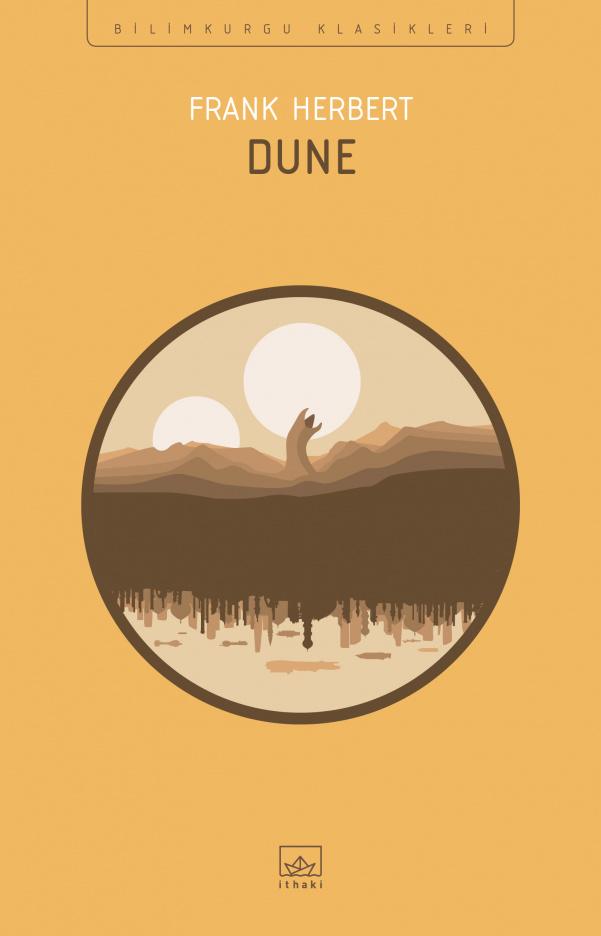
Children of Dune (Book)
Author(s) | Frank Herbert | ||||||||
|---|---|---|---|---|---|---|---|---|---|
Series | Dune Series – Book 3 | ||||||||
Genre | Science Fiction | ||||||||
Preceded by | Dune Messiah | ||||||||
Followed by | God Emperor of Dune | ||||||||
Publisher (Turkish Edition) | İthaki Yayın Grubu | ||||||||
Page Count | 552 | ||||||||
Children of Dune is a science fiction novel published in 1976 by Frank Herbert, and it is the third book in the Dune series. The story revolves around Paul Atreides’ twin children, Leto II and Ghanima, focusing on the political, religious, and ecological conflicts surrounding them. It explores the struggle for power over the legacy of House Atreides, the schemes of the Bene Gesserit and other power groups, as well as the ecological transformations that will determine the future of Arrakis.
This installment holds a central place within the entire Dune corpus, as it contains key developments that guide Herbert’s concept of the “Golden Path.”
After the death of Paul Atreides, who had risen to the status of god-emperor under the name Muad’dib, Arrakis and the entire Imperium are thrown into a vacuum of authority and power struggles. Acting as regent of the Empire, Paul’s sister Alia begins to falter under both political intrigues and the threat of inner corruption known as “Abomination.” Meanwhile, the Bene Gesserit, the Corrino dynasty, CHOAM, and the Spacing Guild all attempt to manipulate the Atreides lineage for their own interests.
In the midst of this turmoil, Paul’s twin children, Leto II and Ghanima, emerge as decisive figures for both the imperial legacy and the fate of Arrakis. Through spice-induced journeys and visions, Leto perceives the existential dead ends threatening humanity and turns toward a long-term salvation plan he calls the “Golden Path.” Ghanima, on the other hand, strives to uphold the survival of the dynasty, asserting her own will in the face of pressures such as the proposed political marriage to Corrino Prince Farad’n.
The central theme is the conflict of power, religion, and time with individual consciousness and the collective destiny of humanity. In the novel, Frank Herbert explores how religious authority can degenerate into an oppressive dogma, how power can corrupt both individuals and societies, and how the ability to see the future can have destructive consequences for free will.
Through Leto II’s visions, the idea of the “Golden Path” represents the tension between individual sacrifice and collective responsibility as the key to humanity’s survival. Ghanima’s resistance to political pressures demonstrates that individual will can endure against corrupt systems.
Throughout the novel, Herbert presents a philosophical inquiry into the determinative force of time (past, present, and future) on human life and the inevitability of civilizational transformation.
Children of Dune is a science fiction novel in which Frank Herbert’s narrative technique emphasizes philosophical and political dimensions. The work goes beyond a classic adventure plot, containing multi-layered debates on religious authority, struggles for power, and the future of humanity.
The language of the novel is dense and descriptive; the ecological structure of Arrakis, religious rituals, and political intrigues are depicted in detail. A notable feature of the narrative is its nonlinear treatment of time—especially during Leto II’s spice journeys, where past, present, and future intertwine.
Herbert reinforces his storytelling with mythological allusions, quotations from fictional sacred texts, and aphorisms. To reflect the characters’ inner worlds, he makes use of stream of consciousness and interior monologues. This technique is particularly effective in portraying Alia’s inner corruption and Leto II’s visions.
The novel as a whole is dominated by an epic tone; dynastic struggles, religious dogmas, and ecological transformation are presented within a grand, almost mythic framework.
Herbert, Frank. Dune Çocukları. Translated by Dost Körpe. İthaki Yayın Grubu, 2016.
Jung, Hyundo. “Book Review: Children of Dune”. The Robinson Review. Accessed October 2, 2025. https://www.robinsonreview.org/copy-of-format2/book-review%3A-children-of-dune

Children of Dune (Book)
Author(s) | Frank Herbert | ||||||||
|---|---|---|---|---|---|---|---|---|---|
Series | Dune Series – Book 3 | ||||||||
Genre | Science Fiction | ||||||||
Preceded by | Dune Messiah | ||||||||
Followed by | God Emperor of Dune | ||||||||
Publisher (Turkish Edition) | İthaki Yayın Grubu | ||||||||
Page Count | 552 | ||||||||
No Discussion Added Yet
Start discussion for "Children of Dune (Book)" article
Plot
Themes
Characters
Literary Features and Style
This article was created with the support of artificial intelligence.