


This article was automatically translated from the original Turkish version.
+2 More
The Ancient City of Dülük
Location | 10 km north of Gaziantep near Dülük District | ||||||||
|---|---|---|---|---|---|---|---|---|---|
History | M.O. 600,000 – Ancient settlement area | ||||||||
Historical Significance | Trade route junction between Mesopotamia and Cilicia; Assyrian, Median, Persian ruins from the Hellenistic and Roman periods | ||||||||
Sections | Ancient City (Keber Hill) and Sacred Area (Dülük Baba Hill) | ||||||||
Prominent Structures | Temple of Mithras (Mithraeum), 4th century Basilica and Mosaics, Temple of Jupiter Dolichenus | ||||||||
Rock Tombs | Tombs carved into the rock around Keber Hill | ||||||||
Transportation | Via Gaziantep-Yavuzeli highway, Dülük Baba Hill can be reached through Dülük Forests | ||||||||
Dülük Ancient City is located approximately 10 kilometers north of the city center of Gaziantep in Şehitkamil district, Türkiye. This archaeological site, situated near today’s Dülük District, is one of the oldest known human settlements. The history of settlement here dates back to 600,000 years BC, giving it significant importance in both Turkish and world archaeology. The Dülük settlement is divided into two parts: the “Ancient City” and the “Sacred Area”. The ancient city is located around Keber Hill; the sanctuary lies on Dülük Baba Hill at an altitude of 1,020 meters.
The Ancient City of Dülük. (Culture Portal)
Dülük, known as Doliche in antiquity, was situated at the crossroads of major trade routes extending from Mesopotamia to Cilicia and Zeugma. This center held great significance during the Assyrian, Median, Persian and Hellenistic periods and maintained its importance into the Roman period, eventually attaining provincial status. It was referred to as “Doliche” during the Roman Empire.
During excavations on Keber Hill, flint tools and production workshops from the Lower Paleolithic period were uncovered. Due to their distinctive form, this culture is termed “Dülükien” in scientific literature. Additionally, findings in Şarklı Cave dating back 600,000 years BC provide evidence of early human settlement. In this regard, Dülük is regarded as one of the earliest settlement centers in the world.
Dülük Ancient City has served as a sacred center for multiple religions throughout history. During the Hittite period, it was associated with the temple of the storm god Teşup; in the Hellenistic and Roman periods, this deity was identified as “Zeus” and “Jupiter Dolichenus”. The cult of Jupiter Dolichenus, which was especially venerated by Roman soldiers, spread across Europe through small statuettes.
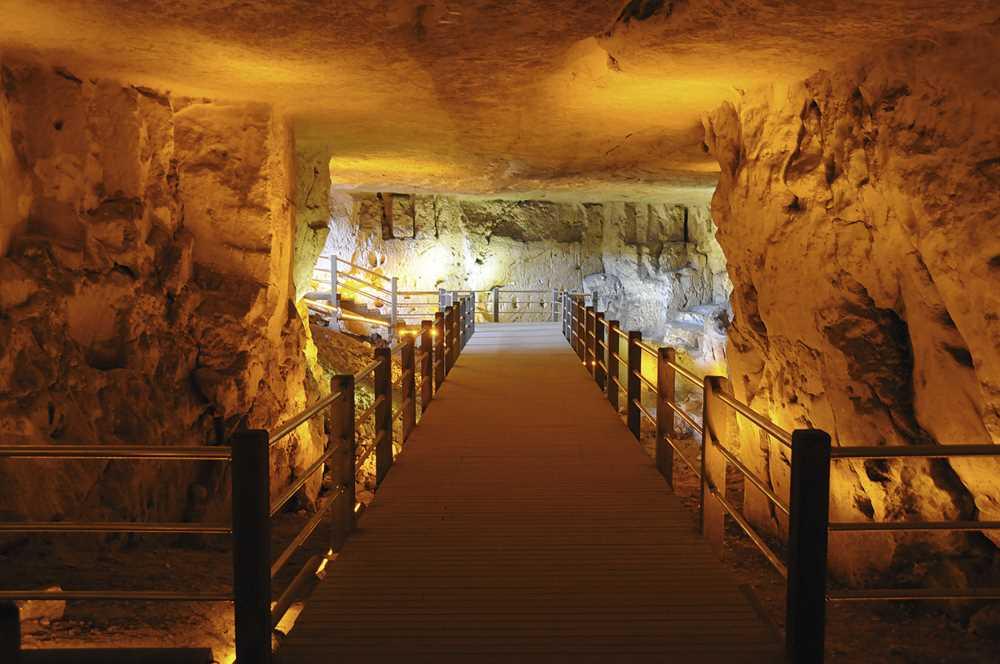
The underground Temple of Mithras (1st century AD) is the first Mithraeum discovered in Anatolia to date and is considered one of the largest examples worldwide in terms of size. The temple consists of two halls, and its main niche contains the “Tauroktonos” scene — a relief depicting the god Mithras slaying the bull. This scene symbolizes, astrologically, the end of the Age of Taurus and the beginning of the Age of Aries. The cult of Mithras was particularly widespread among Roman soldiers, merchants and bureaucrats. Rituals included symbolic acts such as bathing and drinking the bull’s blood.
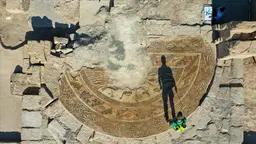
During excavations conducted in cooperation with the University of Münster, Germany, and the Ministry of Culture and Tourism, a 4th-century basilica was identified. This church is among the important examples of early Christian architecture, notable for its geometric mosaics and structural features. Most of the mosaics lack human or animal figures. Animal motifs in the apse are believed to have been added later in the 6th century. Restoration of the mosaics has been completed and they are now preserved for tourism.
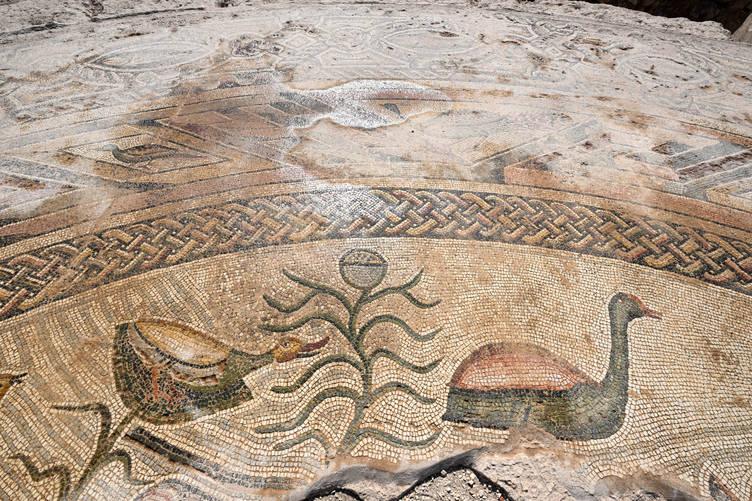
Moziks. (AA)
During the Byzantine period, Dülük was known as “Telukh” and served for a long time as an archbishopric center. Following Islamic invasions in the 7th century, the city was largely destroyed and lost its status as a religious center. The archbishopric was relocated to Zeugma during this period. In subsequent centuries, Dülük declined in importance and became a village subordinate to Ayıntap (modern-day Gaziantep).
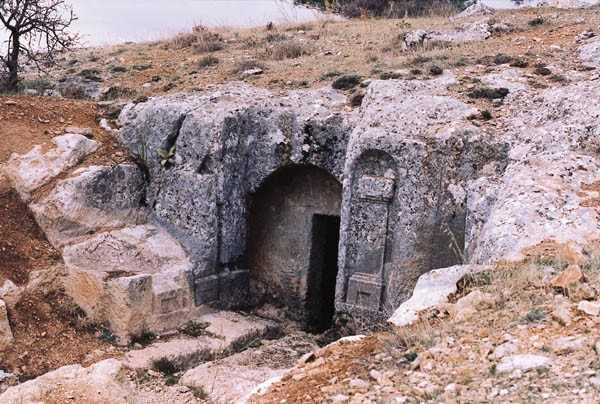
Numerous rock-cut chamber tombs have been found in the necropolis area on the opposite ridges of Keber Hill. Some of these tombs feature figures of Hermes and Psyche — symbolizing the soul guiding the deceased — as well as Medusa head reliefs and scenes reflecting daily life. Belief in posthumous resurrection led to tombs being constructed in the form of houses. Two rock churches believed to belong to the Mar-Slemun monastery have also been identified in the region.
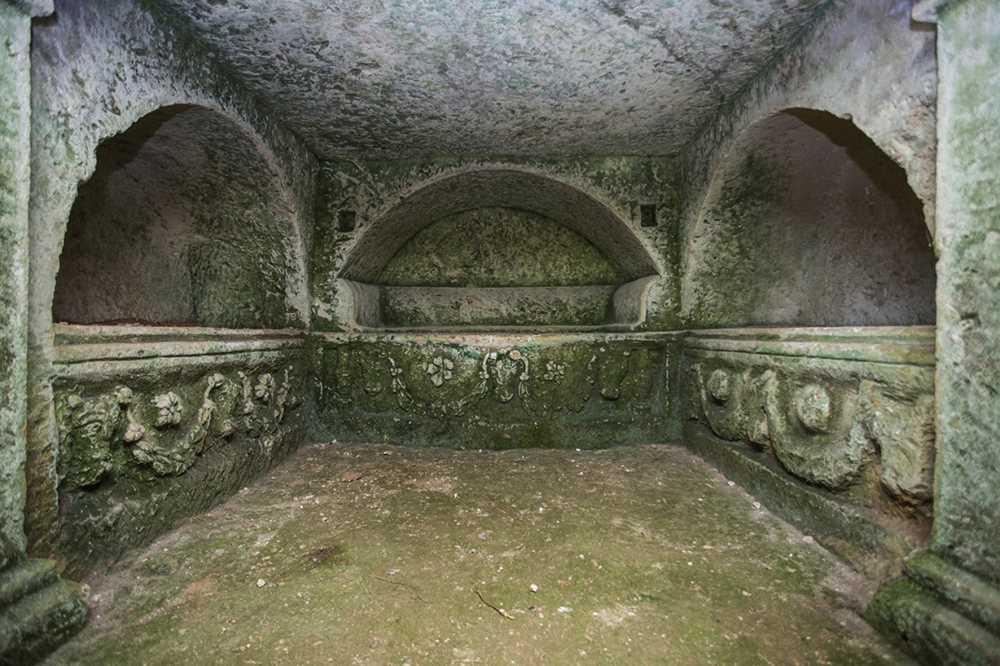
The Rock Church. (Culture Portal)
Since systematic excavations began in 2015, a bath structure, a large 4th-century church, an archive building and a 4,500-year-old seal have been uncovered. These seals were used to secure ancient documents, letters and commercial goods and depict deities. Some seal impressions smuggled abroad through illegal excavations are now exhibited at the Gaziantep Archaeological Museum.
Within the scope of excavations conducted under the auspices of the Ministry of Culture and Tourism in cooperation with the University of Münster, Germany, mosaics have been restored and protected, some rock tombs have been cleaned and opened to visitors, and architectural remains along with associated tombs of the Temple of Jupiter Dolichenus on Dülük Baba Hill have been documented. Circular cover stones and sarcophagi adorned with garland motifs have been found around the temple ruins.
Access to Dülük Ancient City is via a road following the Gaziantep-Yavuzeli highway and the Beylerbeyi Village route. The sacred area on Dülük Baba Hill can be reached from Dülük Forests along the Gaziantep-Adana highway. Picnic areas are also available within the forested zone.
Dülük Village attracts attention for its traditional cut-stone architecture, mosque and Musa Kazım Tomb. Intertwined with the ruins of the ancient city, this village continues to hold archaeological and cultural significance.
Anadolu Agency. “1600-Year-Old Mosaics in Dülük Ancient City Will Be Brought to Tourism.” Anadolu Agency, September 8, 2024. Accessed May 1, 2025. https://www.aa.com.tr/tr/kultur/duluk-antik-kentindeki-1600-yillik-mozaikler-turizme-kazandirilacak/3324502.
Anadolu Agency. “Excavations in Dülük Ancient City Will Shed Light on the History of Different Religions.” Accessed May 1, 2025. https://www.aa.com.tr/tr/kultur-sanat/duluk-antik-kentindeki-kazilar-farkli-dinlerin-tarihine-isik-tutacak/2382231.
Gaziantep Provincial Directorate of Culture and Tourism. “Ancient Cities.” Accessed May 1, 2025. https://gaziantep.ktb.gov.tr/TR-131688/antik-kentler.html.
Ministry of Culture and Tourism. “Dülük Ancient City.” Türkiye Culture Portal. Accessed May 1, 2025. https://www.kulturportali.gov.tr/turkiye/gaziantep/gezilecekyer/duluk-antik-kenti.

The Ancient City of Dülük
Location | 10 km north of Gaziantep near Dülük District | ||||||||
|---|---|---|---|---|---|---|---|---|---|
History | M.O. 600,000 – Ancient settlement area | ||||||||
Historical Significance | Trade route junction between Mesopotamia and Cilicia; Assyrian, Median, Persian ruins from the Hellenistic and Roman periods | ||||||||
Sections | Ancient City (Keber Hill) and Sacred Area (Dülük Baba Hill) | ||||||||
Prominent Structures | Temple of Mithras (Mithraeum), 4th century Basilica and Mosaics, Temple of Jupiter Dolichenus | ||||||||
Rock Tombs | Tombs carved into the rock around Keber Hill | ||||||||
Transportation | Via Gaziantep-Yavuzeli highway, Dülük Baba Hill can be reached through Dülük Forests | ||||||||
No Discussion Added Yet
Start discussion for "The Ancient City of Dülük" article
Historical Background and Geopolitical Importance
Archaeological Findings and Paleolithic Settlement
Religious Centers and Cults
Temple of Mithras (Mithraeum)
The Christian Era and Early Churches
Medieval Period and Archbishopric
Necropolis Area and Rock Tombs
Excavations, Seals and Archive Findings
Tourism and Conservation Studies
Transportation and Today's Situation