


This article was automatically translated from the original Turkish version.
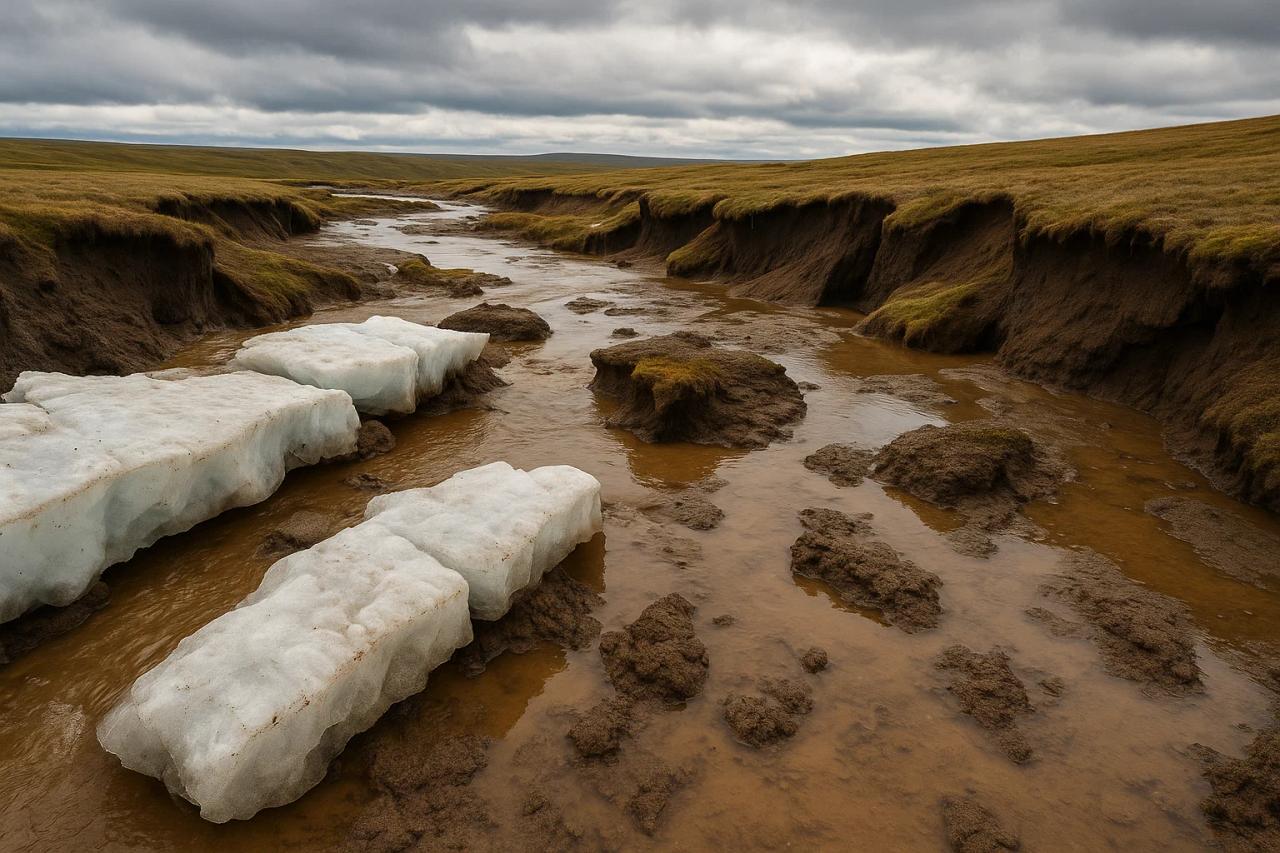
Thawing of the Arctic Permafrost
Permafrost | Continuous permafrost contains 30-40% of the world's carbon stocks | ||||||||
|---|---|---|---|---|---|---|---|---|---|
Cause of Melting | Rising temperatures due to global warming cause permafrost to thaw | ||||||||
Result | Emissions of CO₂ and methane increase Organic carbon is released Accelerates climate change | ||||||||
Additional Effects | Soil structure is damaged, and ecosystems and infrastructure are harmed | ||||||||
Risks | Frozen pathogens and toxic substances threaten environmental and human health | ||||||||
Monitoring | NASA and the UN monitor the process through satellite and field studies | ||||||||
Permafrost is soil and rock material that remains frozen for at least two consecutive years. The Arctic region contains the largest permafrost areas on Earth, particularly widespread at high latitudes in the Northern Hemisphere. Arctic permafrost acts as a major carbon reservoir playing a critical role in the global carbon cycle. Carbon stored in the soil as frozen organic matter is isolated from the atmosphere as long as the permafrost remains intact.
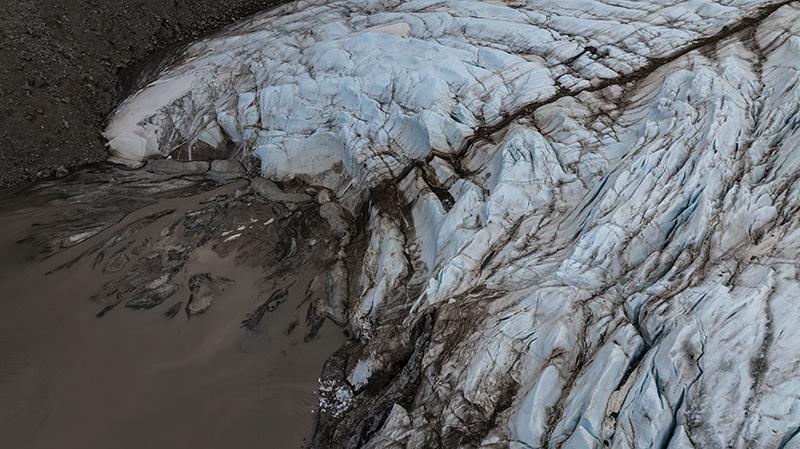
Arktik permafrostunun çözülmesi (AA)
Permafrost holds approximately 30 to 40 percent of the total carbon on Earth’s surface. This organic carbon has remained stable for thousands of years within the frozen layers of permafrost. However, as permafrost thaws, this carbon begins to decompose through microbial activity and is released into the atmosphere as carbon dioxide (CO₂) and methane (CH₄). Methane has a far stronger greenhouse effect than CO₂ and can significantly accelerate global warming in the short term.
Due to global warming, temperatures in the Arctic region are rising faster than the global average. This leads to the melting of ice within permafrost layers and the thawing of soil. As soil temperatures increase, frozen organic matter becomes accessible and its biological decomposition accelerates. This results in increased carbon emissions into the atmosphere, creating a feedback loop that further intensifies climate change.
The thawing of Arctic permafrost poses a critical risk to the global climate system. The release of greenhouse gases increases atmospheric carbon dioxide concentrations and strengthens the greenhouse effect. Studies conducted by NASA have shown that permafrost thaw will contribute to the acceleration of climate change over the long term. United Nations reports also indicate that this process complicates predictions of global temperature increases and introduces uncertainty into climate models.
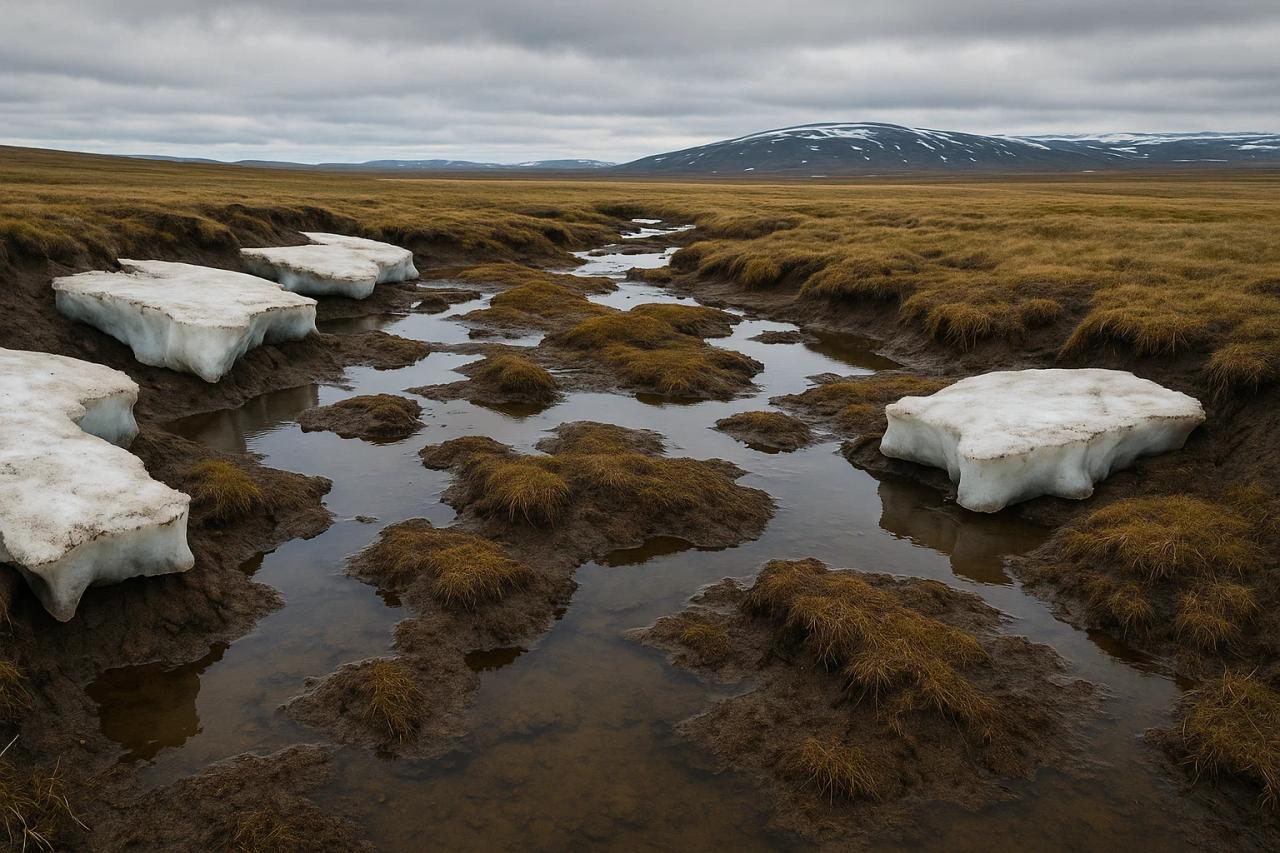
Arktik permafrostunun çözülmesi (Görsel Yapay Zeka İle Oluşturulmuştur.)
Permafrost thaw does not only affect atmospheric carbon emissions but also profoundly alters regional ecosystems. The disruption of the frozen soil structure causes surface cracks, subsidence, and expansion of wetland areas. This changes vegetation patterns and threatens the habitats of local animal species. Additionally, ground movements resulting from thawing can cause significant damage to settlements and infrastructure. Roads, buildings, and energy pipelines in the Arctic region are at risk due to the declining stability of permafrost.
As permafrost thaws, pathogens and toxic chemicals that have been frozen for decades or centuries may be released. Scientists have issued warnings that this could lead to health problems for local populations and harm biodiversity. Furthermore, chemical waste left behind by the oil and gas industry poses a risk of spreading into the environment as thawing occurs.
International organizations are conducting various projects to monitor the impacts of permafrost thaw and develop strategies to combat climate change. NASA tracks changes in permafrost areas using advanced satellite observations and ground measurements. Technical reports prepared by the Turkish Chamber of Geological Engineers provide detailed analyses of regional impacts. These efforts are crucial for accurately calculating the global carbon budget and developing effective climate policies.
Anadolu Ajansı. 2022. “İklim Değişikliği Karbon Deposu Arktik Tundrasını Karbon Kaynağına Dönüştürdü.” Accessed May 31, 2025.https://www.aa.com.tr/tr/yesilhat/bilim/iklim-degisikligi-karbon-deposu-arktik-tundrasini-karbon-kaynagina-donusturdu/1825163
NASA Science. "The Atmosphere: Getting a Handle on Carbon Dioxide." Accessed May 31, 2025.https://science.nasa.gov/earth/climate-change/greenhouse-gases/the-atmosphere-getting-a-handle-on-carbon-dioxide/.
United Nations News. 2022. “Climate Change: Arctic Permafrost Thaw Could Speed Up Global Warming.” Accessed May 31, 2025.https://news.un.org/en/story/2022/01/1110722.

Thawing of the Arctic Permafrost
Permafrost | Continuous permafrost contains 30-40% of the world's carbon stocks | ||||||||
|---|---|---|---|---|---|---|---|---|---|
Cause of Melting | Rising temperatures due to global warming cause permafrost to thaw | ||||||||
Result | Emissions of CO₂ and methane increase Organic carbon is released Accelerates climate change | ||||||||
Additional Effects | Soil structure is damaged, and ecosystems and infrastructure are harmed | ||||||||
Risks | Frozen pathogens and toxic substances threaten environmental and human health | ||||||||
Monitoring | NASA and the UN monitor the process through satellite and field studies | ||||||||
No Discussion Added Yet
Start discussion for "Thawing of Arctic Permafrost" article
The Role of Permafrost as a Carbon Reservoir
Mechanisms of Permafrost Thaw
Impacts on Global Climate Change
Regional and Ecosystem Impacts
Health and Environmental Risks
Monitoring and Intervention Efforts