


This article was automatically translated from the original Turkish version.
Thatcherism is a political approach developed under the leadership of Margaret Thatcher, who served as Prime Minister of the United Kingdom from 1979 to 1990. It advocates economic liberalization and a reduction in the role of the state. This ideological framework represents not only the policies adopted during Thatcher’s tenure but also a lasting political legacy that continued to influence governance after her term. Thatcherism emerged as a response to the postwar dominance of the social democratic welfare state model in Britain.
After the Second World War, social state policies became widespread in the United Kingdom, with public authorities taking control of many sectors including health, education, energy, transportation and housing. Throughout the 1950s and 1960s, welfare state practices were broadly accepted by both the Conservative Party and the Labour Party. However, the economic stagnation, rising inflation and unemployment of the 1970s cast doubt on the sustainability of these policies. The faster growth of public spending compared to tax revenues led to growing budget deficits and increased scrutiny of public sector efficiency.
In 1976, the United Kingdom was forced to seek financial assistance from the International Monetary Fund (IMF), signaling a serious loss of confidence in public sector management. In this context, Margaret Thatcher won the 1979 elections by advocating lower taxes, a smaller government and market-based solutions, and assumed the office of Prime Minister.
Thatcherism is built on principles aligned with classical liberal economic thought. It opposes state intervention in the economy and emphasizes the importance of private property and individual entrepreneurship. Its policy applications can be grouped under the following key areas:
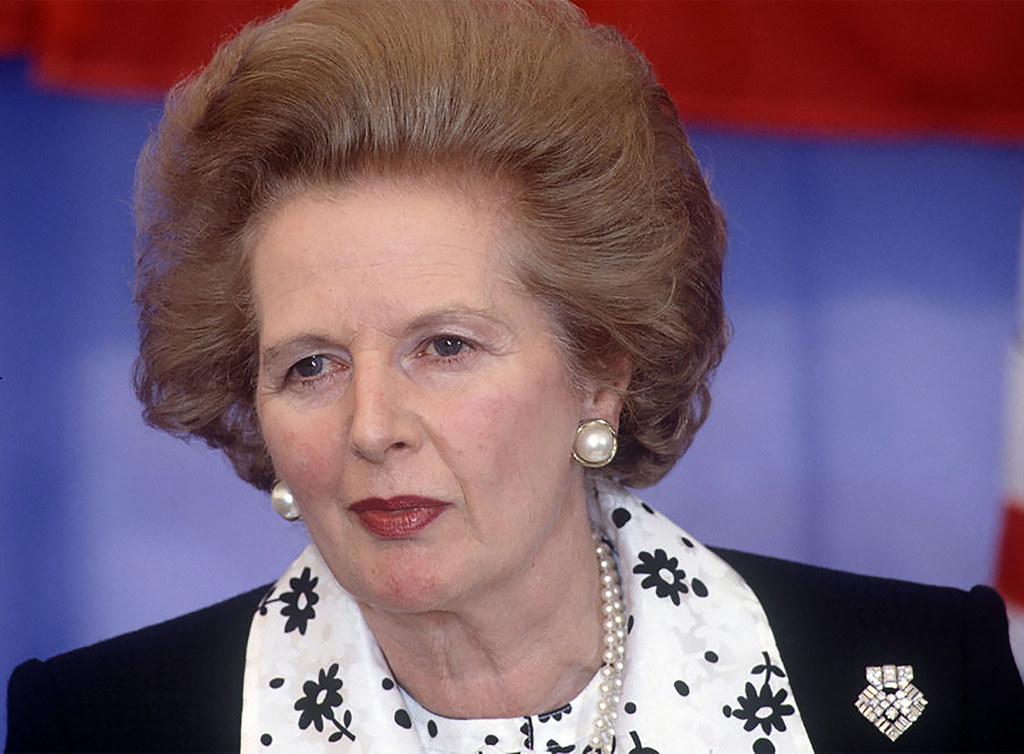
Margaret Thatcher (Flickr)
After Thatcher’s departure from office, public service reforms under the governments of John Major and Tony Blair exhibited both continuity and change. The Major government introduced the “Citizen’s Charter” in 1991 to enhance user satisfaction in public services, placing greater emphasis on quality standards and transparency. During this period, public-private partnerships were deepened and outsourcing practices expanded.
Although the rhetoric toward public administration shifted somewhat under the New Labour government, the underlying principle of performance-based management persisted. Tools such as “Performance Partnership Agreements,” the “Delivery Unit,” and “Public Service Agreements” strengthened output-oriented accountability. Centralization in areas such as personnel management and budget control continued, and service delivery was structured according to professional criteria.
Following 2010, coalition governments implemented significant cuts to public service spending, reduced public sector employment and prioritized external sourcing. This period bears similarities to the Rayner reviews conducted during Thatcher’s tenure. Additionally, the “Big Society” discourse advocated devolution of powers to local authorities, though critics accused it of using localism as a cover for cost-cutting.
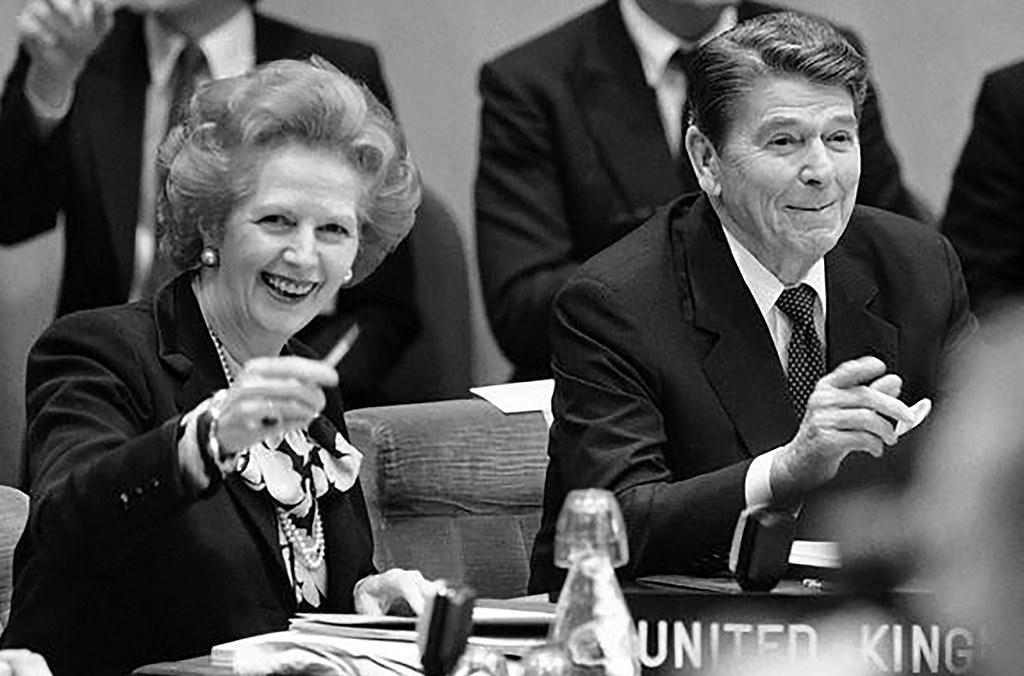
Margaret Thatcher, Ronald Reagan ( Flickr)
Thatcherism’s public service reforms can also be understood within the broader global framework of New Public Management (NPM), which advocates applying private sector management techniques to public services. Within this framework, marketization, institutional fragmentation and performance-based management models were developed. Most reforms implemented during Thatcher’s tenure align with these trends.
International organizations such as the OECD and the World Bank encouraged the integration of NPM principles into public administration during the 1990s. The European Union also introduced various legal measures to open public services to competition, proposing that services be assessed within the concept of “services of general interest.”
Dalingwater, Louise. "Civil Service Reform and the Legacy of Thatcherism." *Observatoire de la société britannique*, no. 17 (2015): 61–78. Accessed May 17, 2025.
EBSCO. "Thatcherism." *EBSCO Research Starters: Political Science*. Accessed May 17, 2025.
Levan Ramishvili. “Margaret Thatcher Portrait.” Photograph. Flickr.https://www.flickr.com/photos/levanrami/49306153957. Accessed May 17, 2025.
Levan Ramishvili. “Margaret Thatcher Statue.” Photograph. Flickr.https://www.flickr.com/photos/levanrami/49218252983. Accessed May 17, 2025.

Historical Background
Core Principles of Thatcherism
Public Service Reforms After Thatcher
International Impact and New Public Management (NPM)