


This article was automatically translated from the original Turkish version.
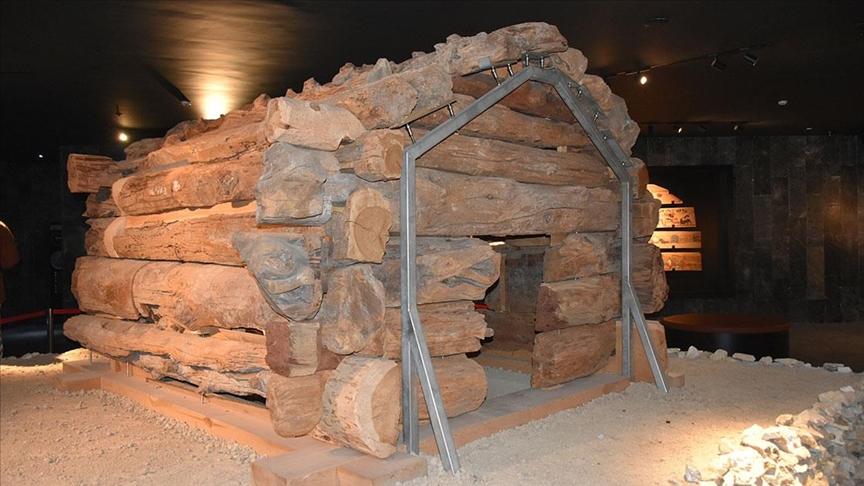
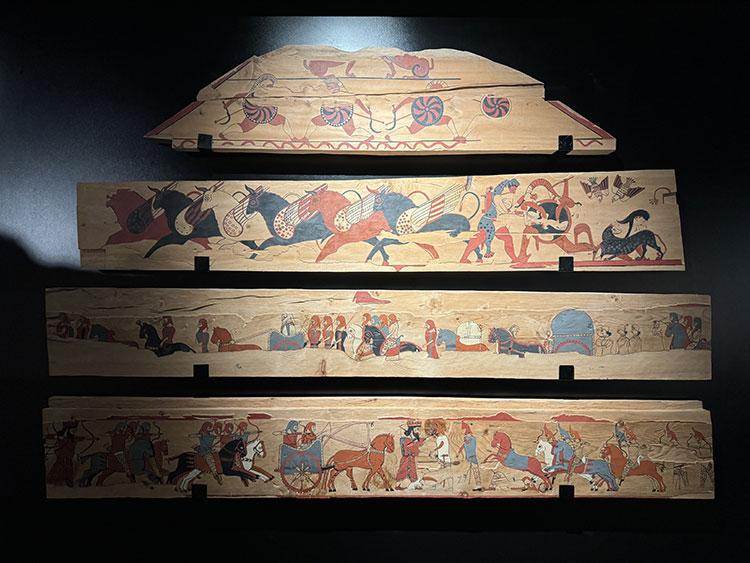
The Tatarlı Tumulus was discovered in 1969 during illegal excavations. During the excavation, the wooden beams and walls of the burial chamber were found adorned with painted friezes featuring colorful figures. However, some of these valuable fragments were looted and smuggled abroad after the excavation. Among them, 38 small wooden pieces and four beams, now housed in the Archaeological Museum of Munich in Germany, were returned to Türkiye in 2010 through the efforts of the Ministry of Culture and Tourism.
The burial chamber of the Tatarlı Tumulus was constructed entirely of wood and decorated internally with richly painted friezes. The friezes depict themes such as mythological narratives, battle scenes, hunting imagery, and funeral rites. Particularly, mythological scenes like Heracles stealing the winged cattle of Geryon reflect influences from Phrygian and Persian cultures.
These figures provide important clues for understanding the social and cultural life of the period. The paintings executed on wooden surfaces are among the rare surviving examples of ancient wooden painting, and their preservation significantly enhances the value of this discovery.
Tatarlı Tumulus (
The burial chamber of the Tatarlı Tumulus was exhibited in Istanbul in 2010 under the title “Tatarlı Tumulus: The Return of Colors” as part of the European Capital of Culture events. The artifact was later transported to Afyonkarahisar and stored in specially designed crates. In 2023, it began to be displayed in a newly opened section of the Afyonkarahisar Museum. This exhibition has attracted considerable interest from both local and international visitors and represents a significant step in promoting the region’s cultural heritage.
The Tatarlı Tumulus holds great importance not only for Türkiye but also for world archaeology. The wooden burial chamber and its painted friezes are among the rare surviving examples of ancient wooden painting, making them unique. These artifacts, bearing traces of Phrygian and Persian cultures, offer vital insights into the social and cultural life of the period.
The Tatarlı Tumulus also serves as an example in the preservation and exhibition of cultural heritage. The recovery and protection of these artifacts, which were damaged by illegal excavations, through national and international cooperation, mark a crucial step in safeguarding cultural heritage.
Interior Paintings of the Tomb (AA)
The Tatarlı Tumulus and its burial chamber can be visited at the Afyonkarahisar Museum. The museum is an important destination for both archaeology enthusiasts and history lovers, offering visitors the opportunity to closely examine this unique artifact bearing traces of the ancient world. The Tatarlı Tumulus is a significant archaeological site reflecting the rich history and cultural diversity of Anatolia and stands as one of the rare examples preserving the traces of the past for the present. This unique artifact holds great value for both the scientific community and the public.
Anadolu Ajansı. “Afyonkarahisar Müzesi’ndeki ‘Ahşap Mezar Odası’ Antik Çağ’ın İzlerini Taşıyor.” Accessed May 16, 2025. https://www.aa.com.tr/tr/kultur/afyonkarahisar-muzesindeki-ahsap-mezar-odasi-antik-cagin-izlerini-tasiyor/3229094.
T.C. Ministry of Culture and Tourism, General Directorate of Cultural Heritage and Museums. “60 Alman’dan İadesi Sağlanan Tatarlı Tümülüsü’nün Mezar Odasına Ait Ahşap Parçalar (42 Adet) (2010).” Accessed May 10, 2025. https://kvmgm.ktb.gov.tr/TR-44487/60-almanyadan-iadesi-saglanan-tatarli-tumulusunun-mezar-odasina-ait-ahsap-parcalar-42-adet-2010.html.
Discovery and History of the Tatarlı Tumulus
Artistic Features of the Wooden Burial Chamber
Exhibition Process and Conservation Efforts
Cultural and Scientific Significance
Visit Information
