This article was automatically translated from the original Turkish version.
+1 More
Location | Between the districts of Sivaslı and Banaz in Uşak Province along the banks of the Gediz River | ||||||||
|---|---|---|---|---|---|---|---|---|---|
Formation | Formed by the erosion of granite and gneiss rocks due to river erosion | ||||||||
Geological Structure | Notable for its folded rock formations, natural pools, and waterfalls | ||||||||
Conservation Status | Declared a nature park in 2013 | ||||||||
Tourism | Suitable for nature walking, photography, and day trips | ||||||||
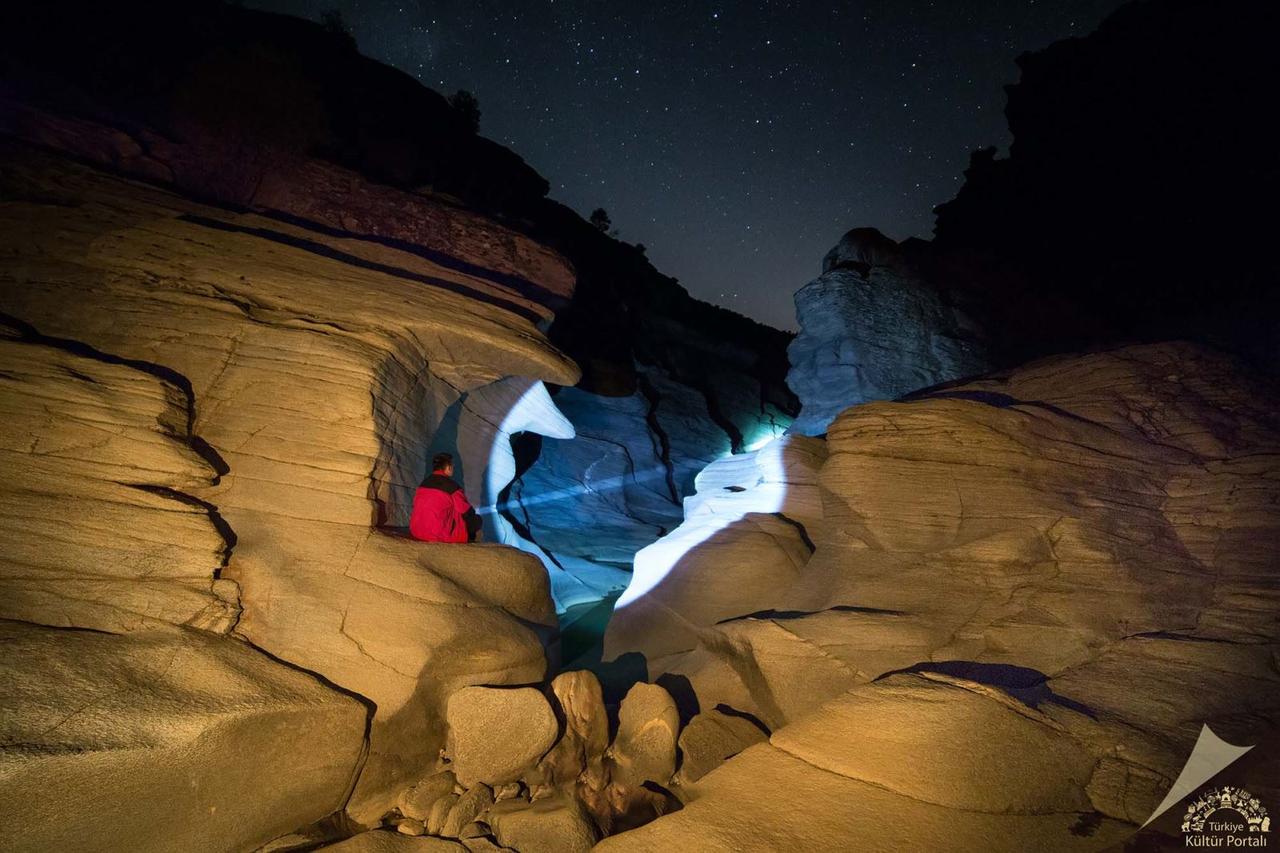
Taşyaran Valley is a natural geomorphological formation located within the boundaries of the Banaz district in Uşak Province, notable for its striking rock formations. Formed over thousands of years by the erosive action of Banaz Creek, a tributary of the Gediz River, this valley is an important natural area due to its rich flora and fauna diversity, aesthetic rock shapes, and ecological balance.
Taşyaran Valley is situated approximately 45 kilometers from the center of Uşak Province, at the 35th kilometer of the Uşak–İzmir highway, within the boundaries of Banaz district. The valley was formed through physical and chemical erosion processes along the bed of Banaz Creek, exposing characteristic structures of metamorphic rocks and granites. Particularly, the fracturing and weathering of granite masses, combined with the unique hollows created over time as water seeped through these cracks, have given the valley its name “Taşyaran,” meaning “stone carved.”
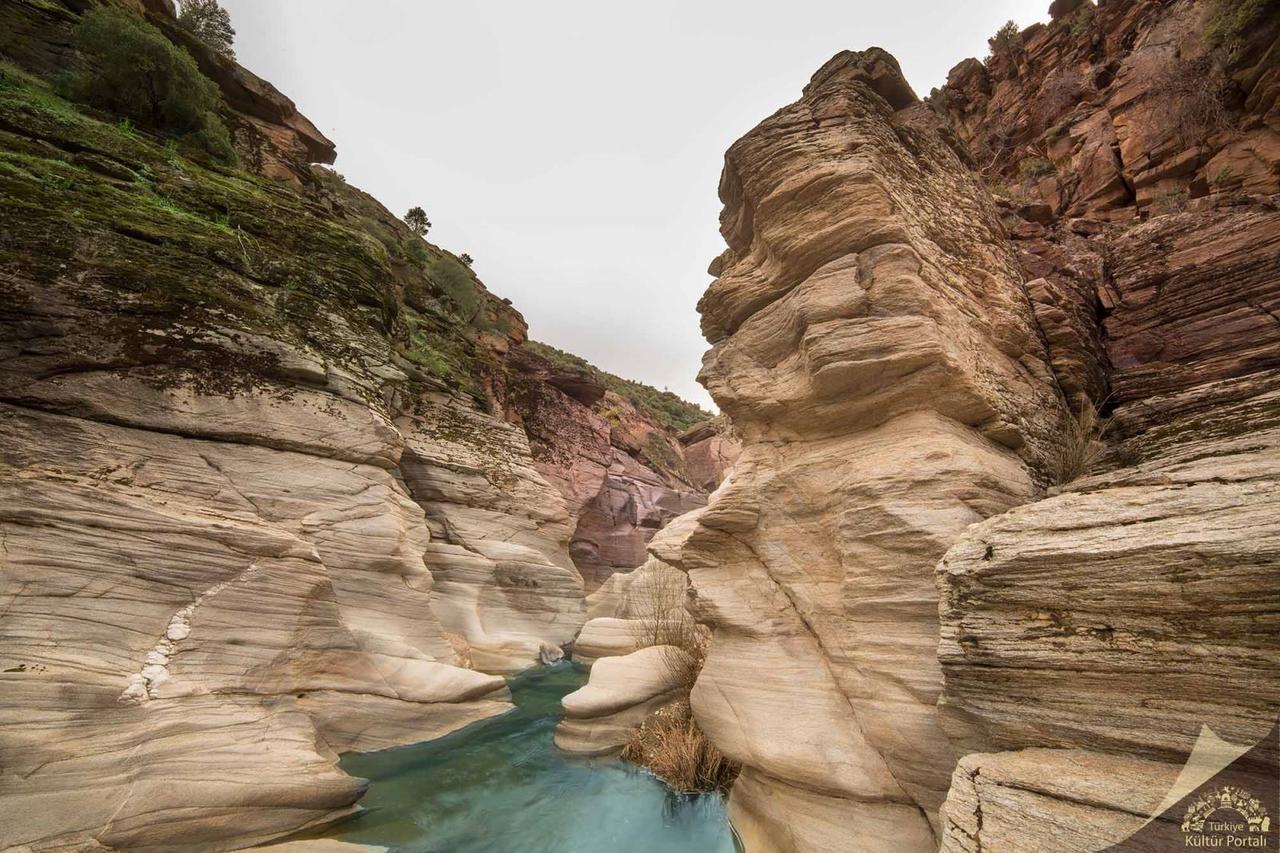
Taşyaran Valley (Culture Portal)
The shaping of the rocks in the valley occurred primarily through the erosive effects of scouring, carving, and polishing by rapidly flowing water during high-flow periods. During this process, natural forms resembling “pots,” “cauldrons,” “grooves,” and “nests” emerged. These features are described as depressions carved by the cyclical movement of water and are known in geomorphological literature as “pot holes” or “taş kazanı.” These formations present a highly striking and visually captivating mosaic across the landscape.
In 2022, Taşyaran Valley was designated as a “Nature Park” by the General Directorate of Nature Conservation and National Parks under the Ministry of Agriculture and Forestry. Spanning a total area of 105.28 hectares, the valley is now under formal protection, with human activities regulated and monitored. The area is also rich in biological diversity, hosting a variety of plant and animal species. The vegetation is typical of the Mediterranean climate, including oak, juniper, and pine trees. Wildlife includes partridge, fox, hare, and several species of raptors.
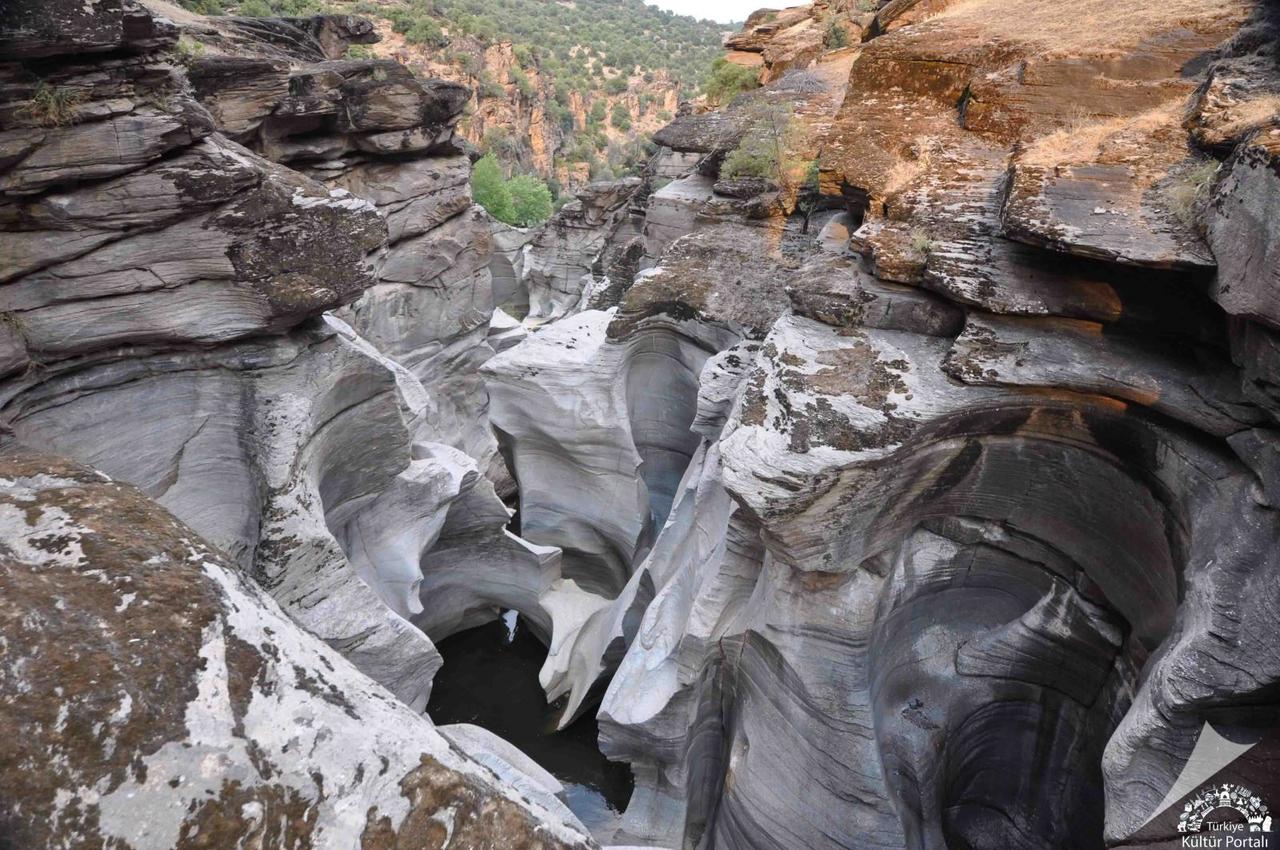
Taşyaran Valley (Culture Portal)
With its natural landscape, visual aesthetics, and strong potential for photography, Taşyaran Valley is a significant ecotourism destination in Uşak Province. Walking trails, observation terraces, and informational panels along the valley provide visitors with controlled access to nature. Especially during spring and autumn, increased rainfall raises the water level of Banaz Creek, enhancing the valley’s visual dynamism. These seasons represent the ideal time to visit. Additionally, picnic areas and camping facilities are available around the valley.
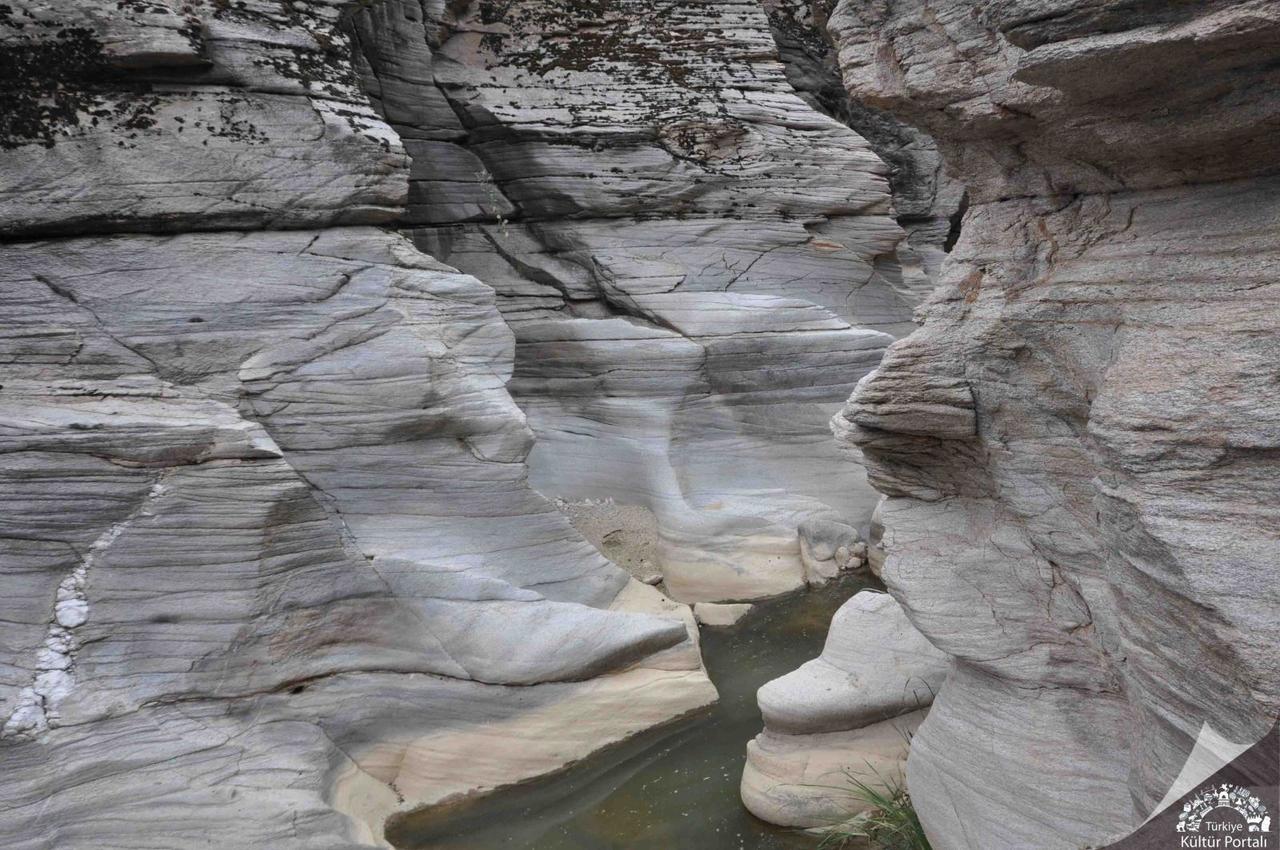
Taşyaran Valley (Culture Portal)
Taşyaran Valley carries cultural value not only through its natural features but also through legends and stories preserved in the collective memory of the local population. Folk tales and oral traditions associated with the valley are significant elements of intangible cultural heritage, representing the historical relationship between humans and nature. The Uşak Governorship, the Provincial Directorate of Culture and Tourism, and the Banaz District Governorship conduct promotional activities for the valley and organize various events to support regional tourism.
Due to its ecological fragility, the valley is managed within a framework balancing conservation and use. The Nature Park status was granted to ensure both the protection of biological diversity and the sustainability of ecotourism activities. Within this framework, visitor numbers, trail usage, and internal developments are planned and monitored by the General Directorate of Nature Conservation and National Parks. Environmental education programs and awareness campaigns are implemented to enhance public environmental consciousness.
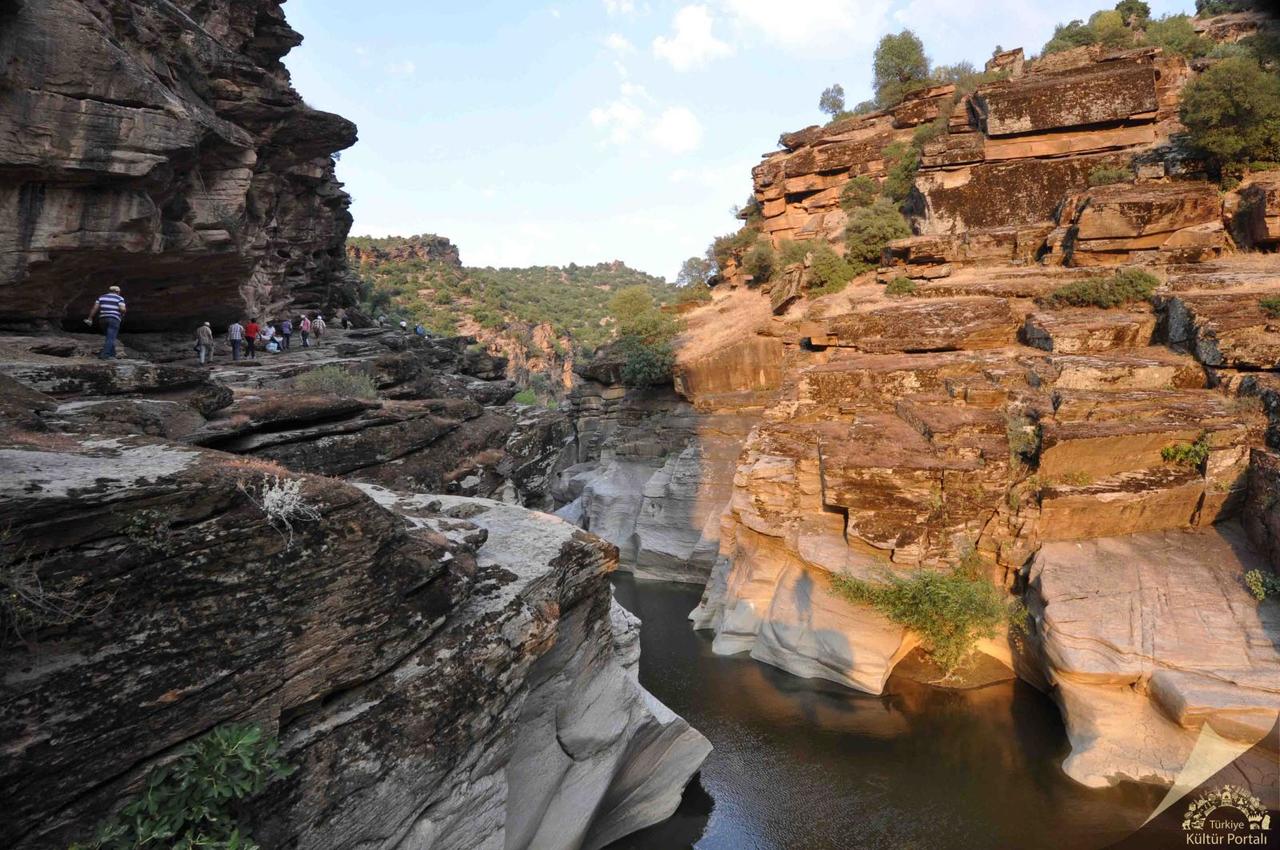
Taşyaran Valley (Culture Portal)
Ministry of Agriculture and Forestry. "Taşyaran Vadisi Tabiat Parkı." *Ekotaban Tabiat Alanları Veri Tabanı*. Accessed July 17, 2025. https://ekotaban.tarimorman.gov.tr/alan/415
Ministry of Culture and Tourism of the Republic of Turkey. "Taşyaran Vadisi." *Turkey Culture Portal - Tourism Activities*. Accessed July 17, 2025. https://www.kulturportali.gov.tr/turkiye/usak/turizmaktiviteleri/tasyaran-vadisi-1
Ministry of Culture and Tourism of the Republic of Türkiye. "Taşyaran Vadisi." *Türkiye Kültür Portalı - Gezilecek Yerler*. Accessed July 17, 2025. https://www.kulturportali.gov.tr/turkiye/usak/gezilecekyer/tasyaran-vadisi
Uşak Valiliği. “Gezip Görülmesi Gereken Bir Yer: Taşyaran Vadisi.” Uşak Valiliği Resmî Web Sitesi. Accessed July 17, 2025. http://usak.gov.tr/gezip-gorulmesi-gereken-bir-yer-tasyaran-vadisi

Location | Between the districts of Sivaslı and Banaz in Uşak Province along the banks of the Gediz River | ||||||||
|---|---|---|---|---|---|---|---|---|---|
Formation | Formed by the erosion of granite and gneiss rocks due to river erosion | ||||||||
Geological Structure | Notable for its folded rock formations, natural pools, and waterfalls | ||||||||
Conservation Status | Declared a nature park in 2013 | ||||||||
Tourism | Suitable for nature walking, photography, and day trips | ||||||||
Geographical Location and Geological Structure
Geomorphological Features and Aesthetic Texture
Ecological Structure and Conservation Status
Touristic and Recreational Value
Cultural and Promotional Dimension
Conservation and Sustainability Approach