


This article was automatically translated from the original Turkish version.
SWOT analysis is a strategic analytical method used to evaluate the internal and external factors of an organization, business, or individual. The analysis aims to contribute to the strategic decision-making process by systematically identifying the institution’s or individual’s strengths and weaknesses, as well as the opportunities and threats it faces. This method is applied in various fields such as business management, strategic planning, human resource management, education, public policy, and individual career planning gibi.
SWOT analysis enables a comprehensive assessment of the current situation by comparing internal factors (strengths and weaknesses) with external factors (opportunities and threats). This allows institutions and individuals to effectively leverage their strengths, develop strategies to improve their weaknesses, take proactive action to assess opportunities, and implement preventive measures against threats.
SWOT analysis consists of four key components:
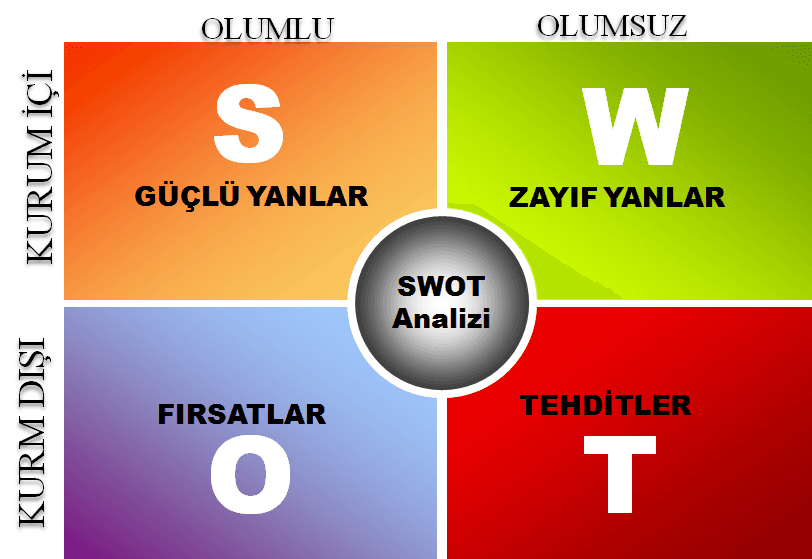
SWOT Analysis Representation (Source: Yeni Ankara)
Importance and Application Areas of SWOT Analysis
SWOT analysis serves as an important guide in the strategic decision-making process for individuals and organizations. It is widely used in academic research, the business world, and public administration. The main advantages of this method include:
A systematic process is followed to implement SWOT analysis:
Akdemir, Prof. Dr. Ali, Prof. Dr. Derman Küçükaltan, Prof. Dr. Mehmet Marangoz, Prof. Dr. Gülten Eren Gümüştekin, Dr. Öğr. Üyesi Gönül Konakay, Prof. Dr. İbrahim Cemil Ulukan, and Dr. Öğr. Üyesi Ayşe Hepkul. Strategic Management.Anadolu Üniversitesi Publication No: 2681, Open Faculty Publication No: 1647. Eskişehir: Anadolu University, 2021.
Söğüt, Muhammet. "SWOT Analizi Nedir?" Accessed March 3, 2025.

Elements of SWOT Analysis
Methodological Implementation of SWOT Analysis