

`strategic-planning` Related Article Results

Siber Threat Intelligence
Cyber Threat Intelligence (CTI) is a systematic process of collecting, processing, analyzing, and sharing information to protect the digital assets of organizations, states, or individuals against current and potential cyber threats. This discipline is not limited to examining technical indicators; it also encompasses understanding the motivations, intentions, targets, and methods of threat actors. These methods are typically classified under the umbrella of Tactics, Techniques, and Procedures (
EN
Ömer Said Aydın
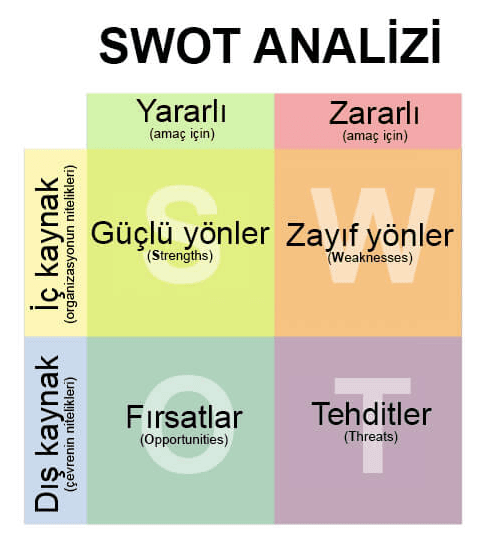
SWOT Analysis
SWOT analysis is a strategic analytical method used to evaluate the internal and external factors of an organization, business, or individual. The analysis aims to contribute to the strategic decision-making process by systematically identifying the strengths and weaknesses of the organization or individual, as well as the opportunities and threats they face. This method is applied across various fields including business management, strategic planning, human resource management, education, publ
EN
Sümeyra Uzun
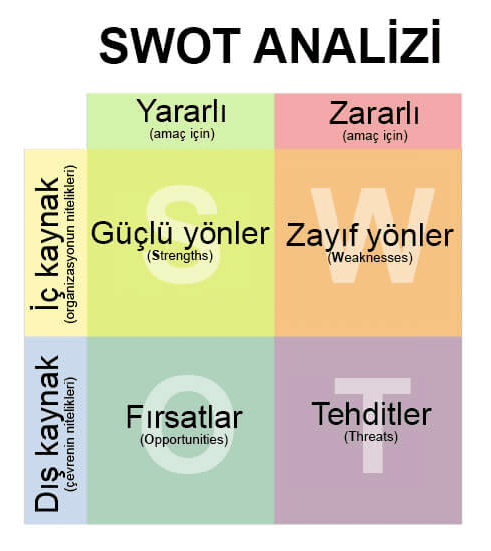
SWOT Analysis
SWOT analysis is a strategic analytical method used to evaluate the internal and external factors of an organization, business, or individual. The analysis aims to contribute to the strategic decision-making process by systematically identifying the institution’s or individual’s strengths and weaknesses, as well as the opportunities and threats it faces. This method is applied in various fields such as business management, strategic planning, human resource management, education, public policy,
EN
Sümeyra Uzun

PESTLE Analysis
PESTLE Analysis is a comprehensive analysis tool used in strategic planning and environmental impact assessments. It enables businesses, public institutions and non-governmental organizations to systematically assess their external environment and focuses on six key factors: Political, Economic, Socio-cultural, Technological, Legal and Environmental. PESTLE helps organizations operating in a dynamic and complex external environment to base their long-term planning on realistic grounds. This anal
EN
Okan Kanpolat

Affinity Diagram
The Affinity Diagram is a visual organizing tool that groups a large number of seemingly independent ideas, observations, thoughts, or data points based on their natural relationships. This technique was first developed in the 1960s by Japanese anthropologist Jiro Kawakita, which is why it is also known in the literature as the KJ Method (Kawakita Jiro Method). Kawakita initially applied this method in sociological field studies to classify scattered qualitative data. Over time, Total Quality Ma
EN
Beyza Nur Türkü
 Co
CoCobra Effect
The Cobra Effect is a concept describing a situation in which a solution or incentive applied to solve a problem instead worsens the problem or produces unforeseen negative outcomes. This phenomenon is commonly associated with the principle of the “law of unintended consequences” and describes how interventions planned with a linear cause-effect logic can backfire in complex systems, sabotaging their original intent. The term gained widespread recognition in academic literature through the 2001
ENYunus Emre Yüce