


This article was automatically translated from the original Turkish version.
+1 More
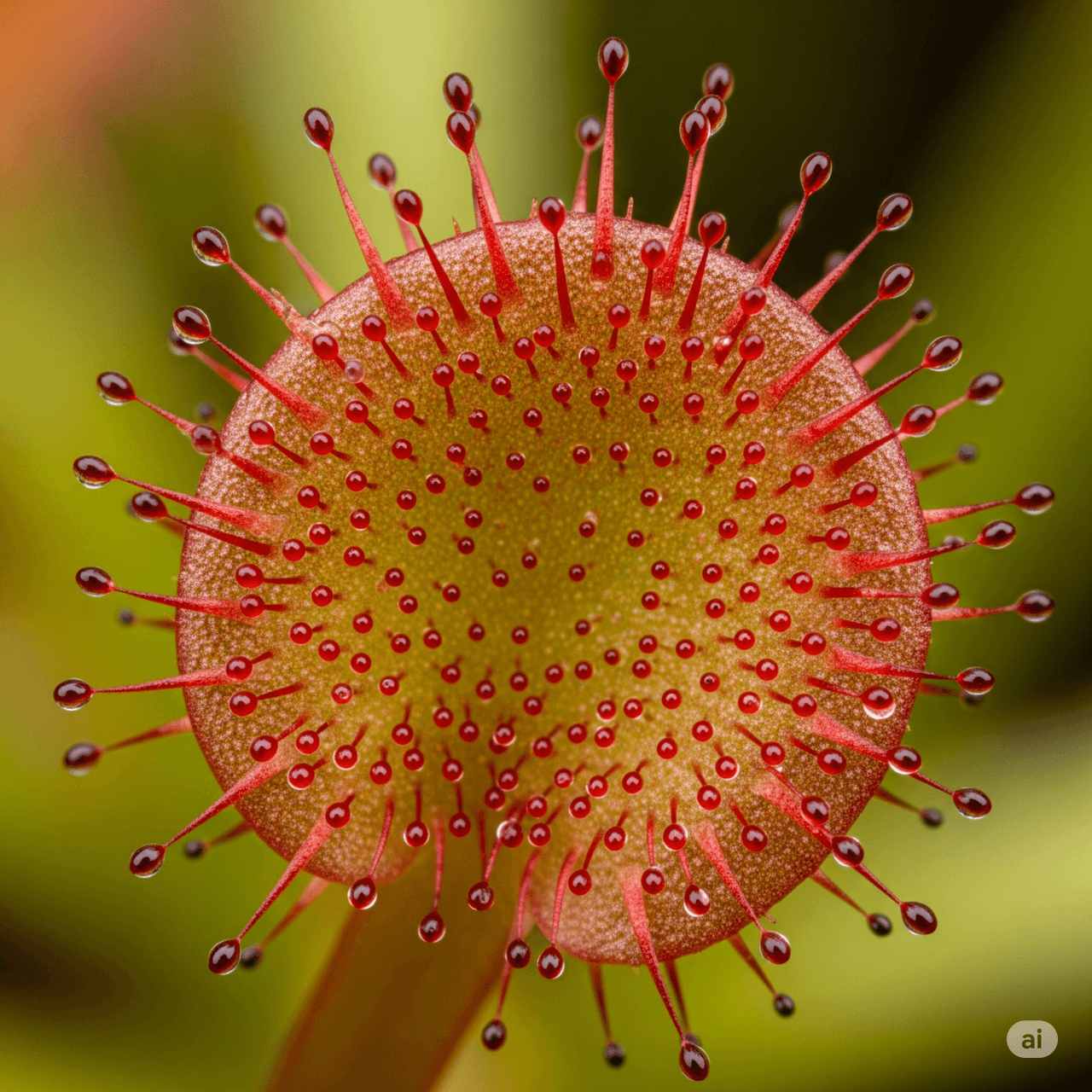
Sun Drosera (Drosera rotundifolia)
Scientific Name(s) | Drosera rotundifolia L. | ||||||||
|---|---|---|---|---|---|---|---|---|---|
Family | Droseraceae | ||||||||
Common Name | Round-leaved Sundew | ||||||||
Habitat | Acidic and Moist Soils Swamps Bogs | ||||||||
Geographic Distribution | North America Asia Europe | ||||||||
Feeding Behavior | Insect Digestion Photosynthesis | ||||||||
Drosera rotundifolia, commonly known as the round-leaved sundew, is a carnivorous and perennial plant species belonging to the Droseraceae family. This species is widely distributed in the cool and moist regions of the Northern Hemisphere, particularly thriving in nutrient-poor, acidic environments such as peat bogs and marshes. In addition to producing energy through photosynthesis, it supplements its nutritional needs by capturing small insects using sticky secretions on its leaves. This adaptation enables it to survive in low-nutrient habitats.
Drosera rotundifolia is a plant that grows in a rosette form and lacks a thin, elongated stem. Its leaves are circular with slightly hairy edges. The reddish hairs (tentacles) on the leaf surface secrete a sticky substance used to attract and trap insects. The plant digests the captured insects to obtain nutrients such as nitrogen and phosphorus.
Drosera rotundifolia is capable of photosynthesis; however, due to the nutrient-poor nature of its habitats, it fulfills its additional nutritional requirements by digesting insects. After capturing prey, the tentacles on its leaves secrete digestive enzymes and absorb the insect’s internal contents. This process provides the essential nutrients required for the plant’s growth and development.
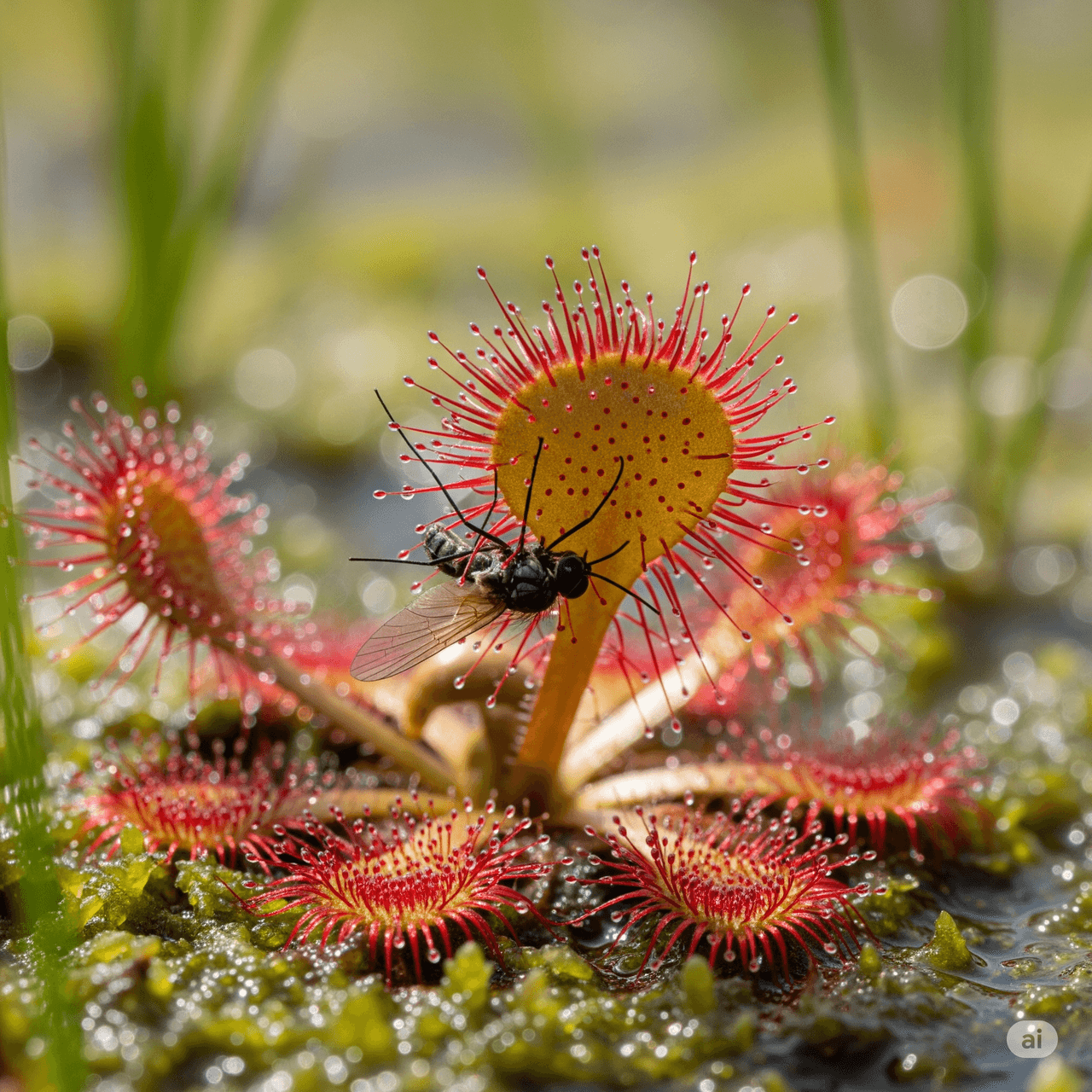
Carnivorous Nutrition (Generated by Artificial Intelligence)
Drosera rotundifolia is commonly found in the cool and moist regions of the Northern Hemisphere. It naturally grows in Europe, Asia, and North America, particularly in Scandinavia, Russia, Canada, and the northern regions of the United States. This broad geographical distribution demonstrates the species’ ability to adapt to a variety of climatic and soil conditions.
This species typically occurs in peat bogs, marshes, and other moist areas with acidic soils. It thrives in association with Sphagnum mosses, which create the acidic environment necessary for its growth. Soil pH typically ranges between 3.2 and 7.3, and the plant shows no tolerance for saline soils. It prefers open, sunny areas over shaded ones.
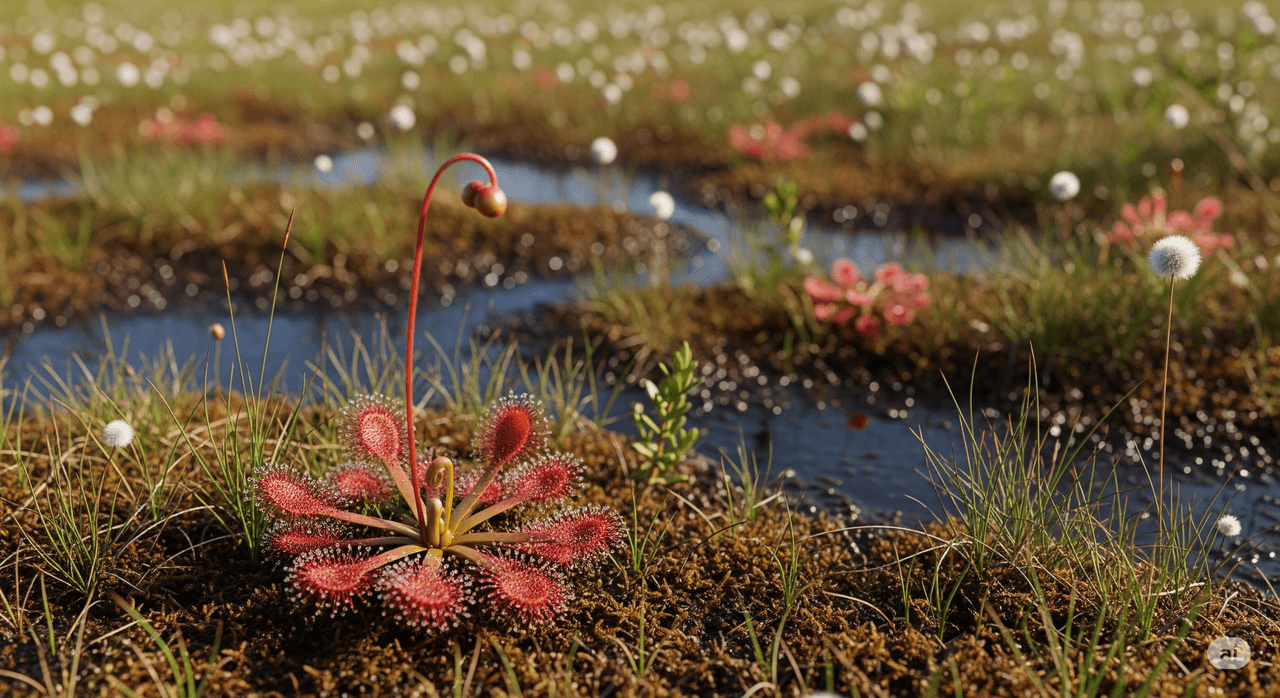
Habitat Characteristics (Generated by Artificial Intelligence)
Drosera rotundifolia plays a significant ecological role in its habitats. By capturing insects to obtain nutrients such as nitrogen and phosphorus, it actively participates in nutrient cycling. Furthermore, this adaptation allows the plant to survive in low-nutrient environments and gain a competitive advantage over non-carnivorous species.
Banaś, K., Ronowski, R., & Marciniak, P. (2023). Effects of environmental conditions on the individual architectures and photosynthetic performances of three species in Drosera. *International Journal of Molecular Sciences*, *24*(12), 9823. https://doi.org/10.3390/ijms24129823.
Gerschler, S., Neumann, N., Schultze, N., Guenther, S., & Schulze, C. (2023). Quality parameters for the medicinal plant Drosera rotundifolia L.: A new approach with established techniques. *Archiv Der Pharmazie*, *357*(1). https://doi.org/10.1002/ardp.202300436.
Hoshi, Y., Homan, Y., & Katogi, T. (2021). Colchicine Induction of Tetraploid and Octaploid Drosera Strains from D. rotundifolia and D. anglica. CYTOLOGIA, 86(1), 21–28. https://doi.org/10.1508/cytologia.86.21.
Ďurechová, D., Kačániová, M., Terentjeva, M., Petrová, J., Hleba, L., & Kata, I. (2016). ANTIBACTERIAL ACTIVITY OF DROSERA ROTUNDIFOLIA L. AGAINST GRAM-POSITIVE AND GRAM-NEGATIVE BACTERIA. *Journal of Microbiology Biotechnology and Food Sciences*, *5*(special 1), 20–22. https://doi.org/10.15414/jmbfs.2016.5.special1.20-22.

Sun Drosera (Drosera rotundifolia)
Scientific Name(s) | Drosera rotundifolia L. | ||||||||
|---|---|---|---|---|---|---|---|---|---|
Family | Droseraceae | ||||||||
Common Name | Round-leaved Sundew | ||||||||
Habitat | Acidic and Moist Soils Swamps Bogs | ||||||||
Geographic Distribution | North America Asia Europe | ||||||||
Feeding Behavior | Insect Digestion Photosynthesis | ||||||||
No Discussion Added Yet
Start discussion for "Sun Dew (Drosera rotundifolia)" article
Morphological Characteristics and Physiology
General Structure
Photosynthesis and Nutrition
Habitat and Ecological Distribution
Geographical Range
Habitat Characteristics
Ecological Role and Adaptations