


This article was automatically translated from the original Turkish version.
+1 More
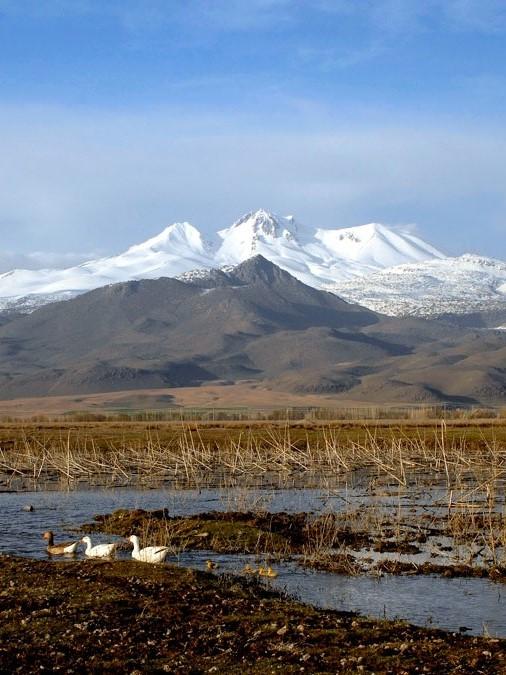
Sultan Sazlığı
Location | Yahyalı - Kayseri / Türkiye | ||||||||
|---|---|---|---|---|---|---|---|---|---|
Area | Approximately 24,357 hectares | ||||||||
Ecosystem | Freshwater marsh and reedbed | ||||||||
Elevation | Average 1000–1072 m | ||||||||
Conservation Status | 1971: Waterfowl Protection and Breeding Area 1993: First Degree Natural Site 1994: Ramsar Site 1988: Nature Conservation Area | ||||||||
Sultan Sazlığı is located in Türkiye’s Central Anatolia Region, between the districts of Develi, Yeşilhisar, and Yahyalı in Kayseri. Situated at an elevation of approximately 1000 meters on the southern slopes of Mount Erciyes, the area lies within a large closed basin. Covering an area of about 24,357 hectares, it represents a complex wetland system. The site features a natural mosaic of diverse ecosystems, including freshwater lakes, marshes, reedbeds, saline grasslands, and steppes.
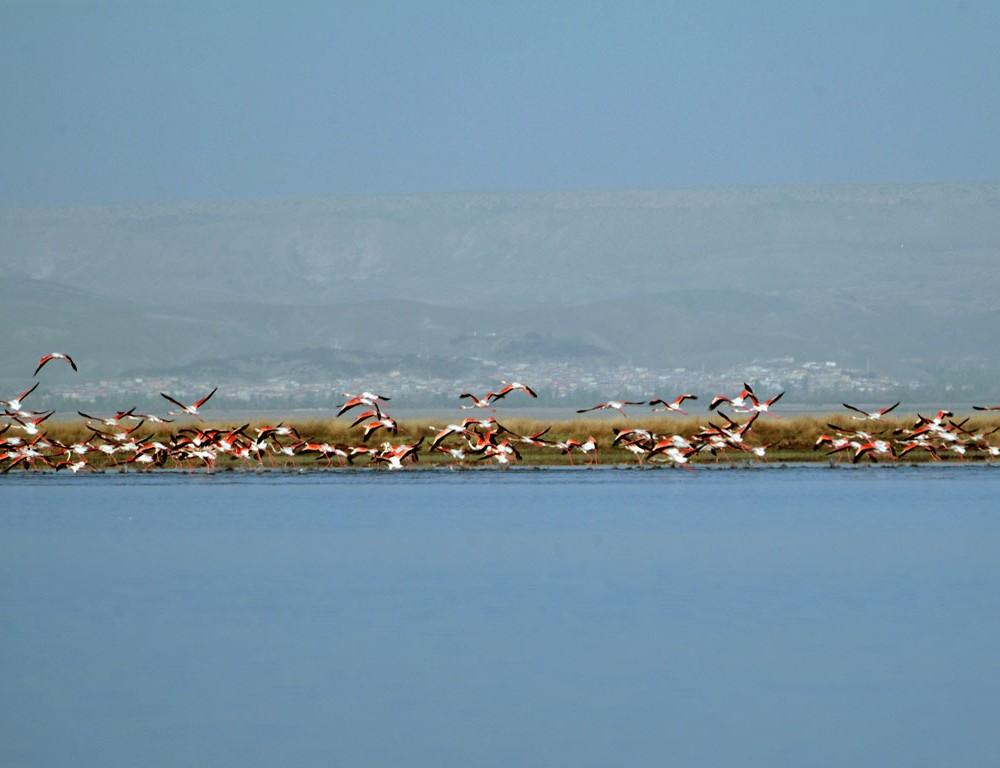
Sultan Sazlığı (Yahyalı Belediyesi)
Designated in 1971 as a “Waterfowl Protection and Breeding Area,” the site was declared a “Nature Conservation Area” in 1988. In 1994, it gained the status of “Wetland of International Importance” under the Ramsar Convention. Additionally, it has been officially registered as a first-degree natural site by the Council for the Protection of Cultural and Natural Heritage.
The system encompasses both freshwater and saline-alkaline water conditions, including extensive reedbeds, marshes, lakes, and steppe areas. In the freshwater complex, separated by Lake Yay to the south and north, floating reed islands occur intermittently. These islands shift position due to wind and serve as nesting habitats for several bird species.
The reedbeds are fed by seasonal rivers, groundwater, springs, and precipitation. However, between 1990 and 1991, the area dried out completely for approximately six months, causing severe damage to the ecosystem. A protocol exists between the State Hydraulic Works (DSİ) and the General Directorate of National Parks to maintain the water level at 1071 meters.
The site is a transition zone between the steppe vegetation characteristic of Central Anatolia and aquatic and semi-aquatic species. Major plant species include reed, bulrush, water lentil, water lily, and hyacinth. Species adapted to saline (halophytic) and alkaline soils are also widespread. A total of 174 different plant species have been recorded.
Sultan Sazlığı lies at the intersection of two major bird migration routes between Africa and Europe. Over 300 bird species have been observed to date, more than 80 of which breed in the area. Notable species include the white-headed duck (Oxyura leucocephala), flamingo (Phoenicopterus ruber), Dalmatian pelican, crane, and great white pelican. In addition to birds, the site supports over 90 species of plankton, 60 insects, 19 molluscs, 10 reptiles, 3 amphibians, 3 fish, and 21 mammal species.
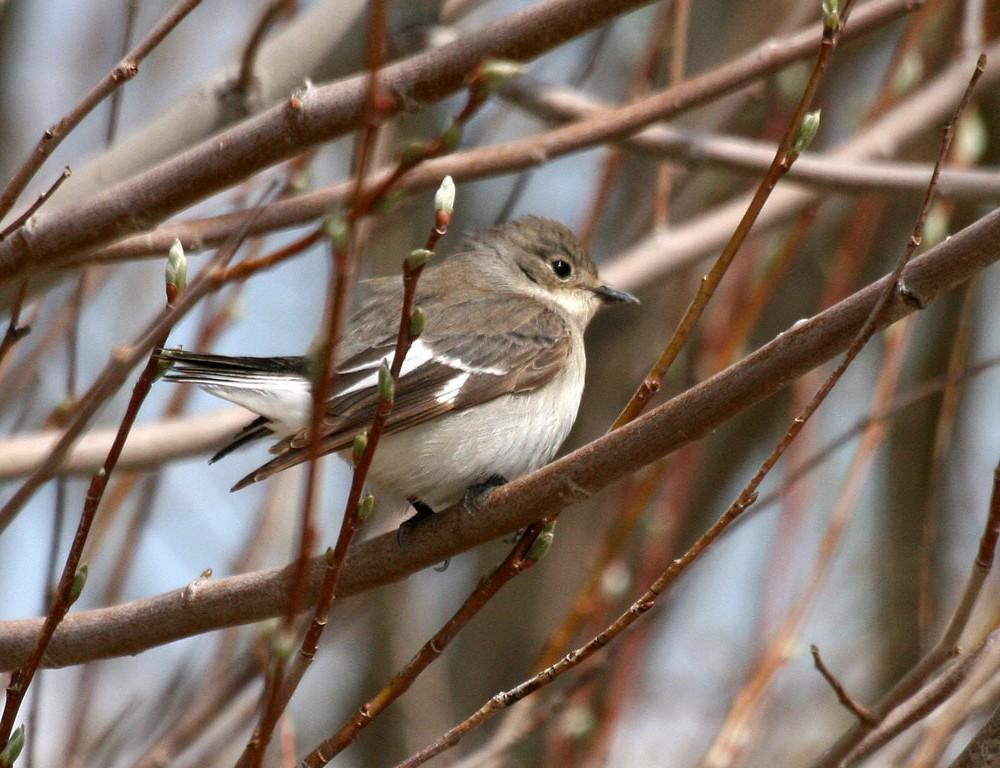
Sultan Sazlığında Bulunan Benekli Sinekkapan Kuşu (Yahyalı Belediyesi)
Intensive water extraction initiated by the Develi Irrigation Project has lowered groundwater levels, leading to periodic drying of the area. The direct discharge of irrigation return flows into Lake Yay has increased pollution through pesticide and fertilizer runoff. Other threats to the ecosystem include reed cutting, fires, illegal hunting, and livestock grazing.
Sultan Sazlığı has traditionally provided economic support to surrounding villages through activities such as reed harvesting, animal husbandry, and fishing. In the past, lake transport, products made from reeds, and small-scale aquatic resource harvesting were practiced in the region. Today, products such as reed mats are exported to Europe.
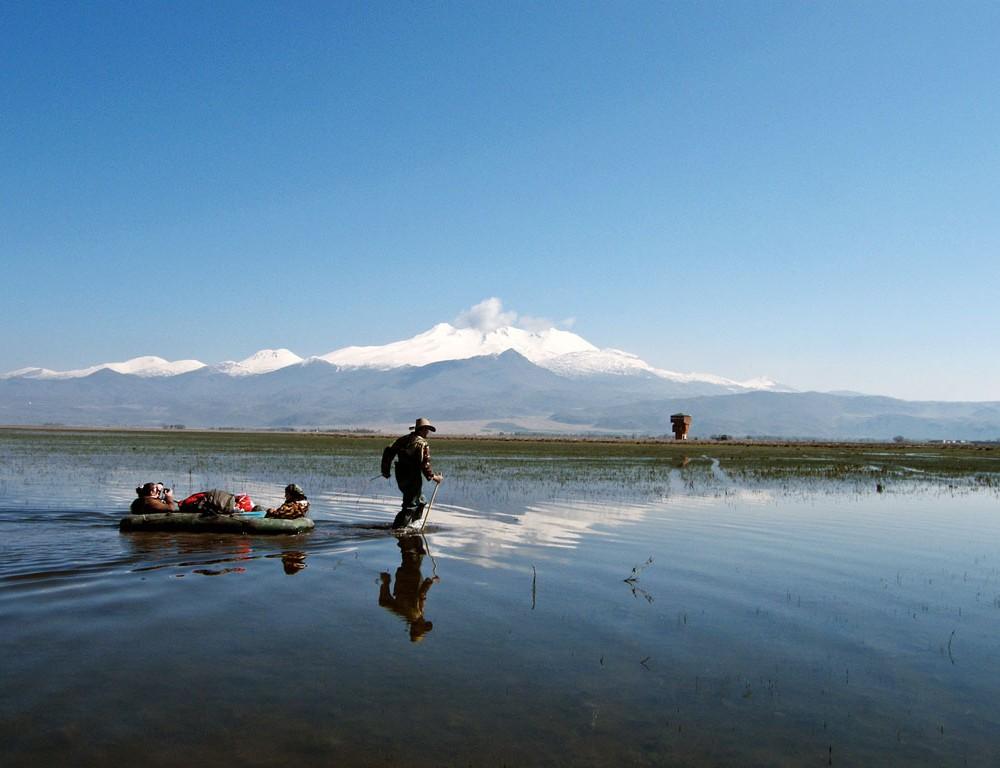
Balıkçı (Yahyalı Belediyesi)
Sultan Sazlığı is one of Türkiye’s most valuable wetlands for birdwatching, ecology, biology, and environmental science. Regular inventories and monitoring programs are conducted by universities and environmental organizations.
T.C. Kayseri Valiliği. "Sultan Sazlığı." T.C. Kayseri Valiliği Resmî Web Sitesi. Accessed May 15, 2025.http://www.kayseri.gov.tr/sultan-sazl
T.C. Kültür ve Turizm Bakanlığı. "Sultan Sazlığı." Kayseri İl Kültür ve Turizm Müdürlüğü. Accessed May 15, 2025.http://kayseri.ktb.gov.tr/TR-183204/sultan-sazligi.html
Yahyalı Municipality. "Sultan Sazlığı." T.C. Yahyalı Belediyesi Resmî Web Sitesi. Accessed May 15, 2025.https://www.yahyali.bel.tr/sultan-sazligi
Özesmi, Uygar, Somuncu, Mehmet, and Tunçel, Harun. “Sultan Sazlığı Ekosistemi (Ecosystem of Sultan Marshes).” *TUCAUM - Ankara Üniversitesi Türk Coğrafya Kurumu*, no. 14 (2015): 276–288. Accessed May 15, 2025.https://tucaum.ankara.edu.tr/wp-content/uploads/sites/280/2015/08/tucaum2_14.pdf
Sultan Sazlığı
Location | Yahyalı - Kayseri / Türkiye | ||||||||
|---|---|---|---|---|---|---|---|---|---|
Area | Approximately 24,357 hectares | ||||||||
Ecosystem | Freshwater marsh and reedbed | ||||||||
Elevation | Average 1000–1072 m | ||||||||
Conservation Status | 1971: Waterfowl Protection and Breeding Area 1993: First Degree Natural Site 1994: Ramsar Site 1988: Nature Conservation Area | ||||||||
Conservation Status
Ecosystem Structure and Hydrology
Biodiversity
Flora
Fauna
Ecological Issues
Cultural and Economic Uses