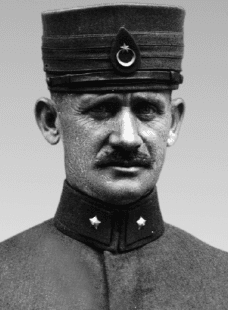


Birth | Thessaloniki 1876 | ||||||||
|---|---|---|---|---|---|---|---|---|---|
Death | 25 November 1936 (Republic Archives) 23 November 1936 (Atatürk Encyclopedia) 26 October 1936 (MSB) | ||||||||
Initial Burial Place | Istanbul Edirnekapı Martyrdom Cemetery | ||||||||
Transfer of the Funeral to Ankara | 25 October 1988 Ankara State Cemetery | ||||||||
Rank/Profession | Member of Parliament Lieutenant general Staff officer | ||||||||
Education | Staff College Military School Manastır High School | ||||||||
Military Duties | Commander of the 3rd Corps Chairman of the Adana Region Occupation and Handover Commission Commander of Ankara Commander of the 15th Infantry Division Commander of the 50th Infantry Division Chief of Staff of the 7th Nizamiye Division Chief of Staff of the 14th Nizamiye Brigade Staff of the 29th Piriştine Reserve Division Instructor and inspector in reserve battalions under the 3rd Army | ||||||||
Political Positions | Member of Parliament for Istanbul in the 5th Term (1935–1936) Member of Parliament for Kırklareli in the 2nd Term (1923–1924) | ||||||||
Promotions | Lieutenant general (30 August 1926) Major general (31 August 1922) Lieutenant colonel (1 September 1917) Major (during World War I) Captain (6 December 1907) | ||||||||
Awards and Medals | Independence Medal and Grand National Assembly of Türkiye Certificate of Appreciation Second Class Iron Cross Third Class Order of Saint Alexander Fourth Class Order of Osmanie Fifth Class Order of Medjidie Silver Merit Medal War Medal | ||||||||
Şükrü Naili Gökberk (1876–1936) was a staff officer and member of parliament who held various ranks and positions during the transition from the late Ottoman period to the early years of the Republic. His military career began in the final years of the reign of Sultan Abdülhamid II and continued through the Balkan Wars, World War I, and the Turkish National Struggle. After the proclamation of the Republic, he served for a time as commander of a corps and later as a member of the Grand National Assembly of Türkiye.
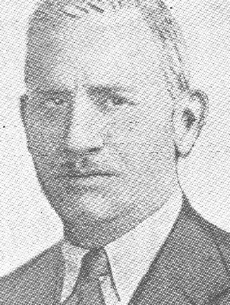
Şükrü Naili Gökberk during his term as a member of parliament (TBMM Album 1920–1950)
Gökberk’s biography serves as an important example, illustrating the convergence of the classical professional ascent within the Ottoman army and the reorganization phase of the National Struggle.【1】 His military identity, shaped through war academies and staff training, enabled him to perform effectively both as a frontline unit commander and in headquarters roles, allowing him to assume responsibilities at division and corps levels throughout different stages of his career. His duties during the Balkan Wars and World War I provided the background for his position during the National Struggle.
During the National Struggle, Şükrü Naili Gökberk served within the organization of the Western Front. After the war, he was stationed in Istanbul as commander of the 3rd Corps; the entry of Turkish forces into the city on 6 October 1923 is among the events associated with his name. Throughout the Republican period, he maintained relations with the new political structure through both his military duties and his parliamentary representation. Until his death, his professional life was primarily shaped by military service and parliamentary activity.
Şükrü Naili Gökberk was born in 1876 (Hijri 1292) in Thessaloniki. His mother was Hasibe Hanım, daughter of İsmail Efendi, and his father was Hacı Mustafa Efendi, son of Osman Efendi from Demirhisar. His father, Mustafa Efendi, worked as a clerk for the Lighthouse Administration, which was affiliated with a French company operating in Thessaloniki. The family had four sons; Şükrü Naili had three brothers named Mehmet, İsmail, and Ethem.
He spent his childhood in a two-story house on Kule Mezarlığı Street in the Pinti Hasan neighborhood of Thessaloniki. The upper floor contained three rooms and a sitting room, while the lower floor had one room and a salon. The front facade of the house featured windows, and its garden included a water well. The property title for this house was registered on 23 March 1879. Kule Mezarlığı Street was also known as “Odos Sofya,” reflecting one of the many details illustrating the multilingual character of the city.
These details about Gökberk’s residence in Thessaloniki provide indirect clues regarding the social environment of his childhood. Pinti Hasan neighborhood can be described as a settlement area where Muslim and non-Muslim populations lived together, relatively close to administrative and commercial centers. Address records indicate that Şükrü Naili’s childhood home was geographically very near the streets where Mustafa Kemal resided in Thessaloniki.【2】 Although the neighborhood names differed, both addresses were located on nearby streets within the same urban fabric.
Şükrü Naili Gökberk began his primary education at a local school in Thessaloniki and later studied at the Thessaloniki Terakki School. The entry in the War Academy register stating “student transferred from Manastır İdadisi on 1 March 1312” confirms that he received his secondary education at the Manastır İdadisi (high school).【3】 Thus, it is understood that his primary and secondary education began in Thessaloniki and continued at the İdadisi in Manastır.
After completing his secondary education, Şükrü Naili Efendi pursued military training and entered the War Academy (Mekteb-i Harbiye) in Istanbul on 13 March 1896. His name in the academy register is recorded as “the son of Demirhisarlı Mustafa Efendi from Pinti Hasan neighborhood, Thessaloniki,” with registration number 1259. The fact that the term “Naili” in his name was added later in handwriting is a small but notable detail regarding the formalization process of his name in official records.【4】 His birth date is recorded as Hijri 1292.
Şükrü Naili received three years of education at the War Academy and graduated on 13 January 1899 with the rank of second lieutenant. He then continued his studies at the Staff Academy (Erkan-ı Harbiye Mektebi) and graduated on 6 February 1902 with the rank of staff captain. Military service records indicate that he was proficient in German, French, and English. Thus, his early and secondary education in Thessaloniki, his high school training in Manastır, and his staff officer education completed at the War Academy and Staff Academy in Istanbul collectively formed the foundation of his military career.
After graduating from the Staff Academy on 6 February 1902 with the rank of staff captain, Şükrü Naili was assigned to the Third Army and began his first field duties. On 14 January 1902, he was appointed as instructor and inspector to the 2nd Class Redif Battalion in Görice under the Third Army, a position he held until 28 July 1902. On the same day, he was transferred to the 2nd Class Redif Battalion in Avlonya, again as instructor and inspector, and served in this role until 13 September 1902. Thus, during the early years of his career as a staff officer, he was engaged in the training and supervision of Redif units in Rumelia.
Following his instructional and inspector roles, Şükrü Naili was assigned on 14 October 1902 to command the 2nd Battery of the 13th Artillery Regiment. This marked his first actual command of a battery. After serving in this position until 13 July 1903, he was appointed on 18 July 1903 as commander of the 2nd Company of the 2nd Battalion of the 20th Infantry Regiment. During this period, he participated in operations against bandits in the Kırçova and Pirlepe regions and took part in security campaigns. For these activities, he was awarded the Fifth Class Order of Medjidie.
A significant advancement in Şükrü Naili’s career was his transition to staff duties. On 18 May 1904, he was appointed to the Staff of the 29th Piriştine Redif Division, beginning his responsibilities in planning and command functions within a division headquarters. Serving as chief of staff of a Redif division was significant in the context of the reorganization of Redif units and the increasing security challenges in Rumelia. He held this position for approximately three and a half years, until 28 October 1907. This extended period marked a crucial phase in the consolidation of his staff experience and his mastery of the Rumelian geography.
Şükrü Naili was promoted to major on 6 December 1907. Following his promotion, due to the rise in bandit activities in Rumelia, he was assigned to a newly reorganized pursuit regiment tasked with suppressing these activities. Starting on 5 February 1908, he was appointed commander of the 2nd Hunter Battalion of the Thessaloniki Regiment. Hunter battalions were mobile units employed during this period for internal security and public order duties; Şükrü Naili participated in pursuit and suppression operations in the region accordingly.
In 1908, with the proclamation of the Second Constitutional Monarchy, the hunter battalions were transferred to Istanbul. Major Şükrü Naili relocated to Istanbul along with the 2nd Hunter Battalion. At this time, the protection of the building where the Chamber of Deputies convened became one of the duties of the 2nd Hunter Battalion; Şükrü Naili, as battalion commander, led the unit responsible for securing the parliamentary building. He held this responsibility until 13 April 1909. Thus, as a major who had served in both bandit suppression in Rumelia and parliamentary security in the capital, he experienced his military career intertwined with internal security and political transformation processes.
On 13 April 1909, Major Şükrü Naili’s tenure as commander of the 2nd Hunter Battalion ended. On 23 April 1909, he was appointed commander of the 20th Nizamiye Regiment under the Third Army. He held this command position until 13 July 1910. Thus, after his service in Redif and hunter units, he gained extended experience in commanding a Nizamiye regiment.
Following his regimental command, Şükrü Naili’s career next advanced to a staff position at the corps level. On 14 July 1910, he was appointed chief of staff of the 10th Köprülü Redif Division. Subsequently, he was assigned as chief of staff of the 14th Nizamiye Division, stationed in Serres under the First Army, and participated in the Balkan Wars with this division. Thus, between 1902 and 1912, his career progression—from commanding Redif battalions in Görice and Avlonya, to the Piriştine Redif Division, the Thessaloniki Hunter Battalion, Nizamiye units in Manastır and Serres, and finally the chief of staff of a division—illustrates his ascent within the Ottoman army.
This decade of service across various units and ranks constituted a preparatory phase for the higher command roles Şükrü Naili Gökberk would assume during the Balkan Wars, World War I, and the National Struggle. His prolonged assignments in Rumelia, his experience within Redif and Nizamiye organizations, and especially his staff chief positions equipped him to assume responsibilities on the battlefield and in headquarters when the Balkan War began.
At the outbreak of the Balkan Wars, Major Şükrü Naili was serving as chief of staff of the 14th Nizamiye Division, stationed in Serres under the Fifth Army. The division’s commander was Mirliva Galip Pasha. Şükrü Naili’s appointment date to this division is recorded in two different forms: 14 March 1911 and 15 January 1911; however, both records confirm his presence at the Serres headquarters of the 14th Nizamiye Division on the eve of the Balkan War. This assignment lasted until 17 October 1912, placing Şükrü Naili within the staff of one of the Ottoman army’s main units in Rumelia at the start of the war.
With the outbreak of war against the Balkan states in the autumn of 1912, the Ottoman army was forced into significant retreats, particularly along the eastern front. As a result of Bulgarian offensives, Ottoman forces were pushed back first to the Pınarhisar–Lüleburgaz line and, by 23 October 1912, further back to Çatalca. Following this retreat, the army was reorganized at Çatalca and restructured into six corps under the name “Çatalca Army.” Şükrü Naili, as chief of staff of the 14th Nizamiye Division, actively participated in both the retreat and the reorganization phases.
Şükrü Naili Gökberk (General Staff
During the continuation of the war, Major Şükrü Naili was appointed chief of staff of the Fatih Redif Division, organized in Istanbul, and served with this division for the remainder of the Balkan War.【5】 The Fatih Redif Division was part of the Çatalca Army, commanded by Colonel Etem (Şehzadebaşı). The division’s staff also included Captain İzzettin (Çalışlar), who would later become well known during the Republican period. This appointment demonstrated Şükrü Naili’s transition from a Nizamiye division in Serres to a centrally based Redif division, placing him in charge of planning and command for one of the key units in the Çatalca defense.
Reports on the activities of the Fatih Redif Division around Muratbey Hill provide concrete documentation of Şükrü Naili’s duties during the Balkan War. These reports meticulously recorded reconnaissance and observation results, including the strength, deployment patterns, and movements of Bulgarian units. In his own memoirs, Şükrü Naili noted that he served during the Çatalca defense in the Kalikratya and Serköprü sectors; these records confirm his position as the staff officer responsible for units stationed at critical points along the defensive line.【6】
Within the overall course of the Balkan War, the prolonged defense of Edirne by its commander Mehmet Şükrü Paşa, followed by his forced surrender on 26 March 1913 and the signing of the London Treaty on 30 May 1913, resulted in significant losses for the Ottoman State. Bulgaria’s strengthened position disrupted the balance among the Balkan states and laid the groundwork for a second war. Taking advantage of the conditions created by the Second Balkan War, the Ottoman State launched an offensive to recapture Kırklareli and Edirne; during this operation, the Fatih Redif Division stationed in Istanbul participated as an active unit.
It is known that Major Şükrü Naili participated in clashes with Bulgarian forces south of Cumaibala and with Greek forces near Yenice-i Vardar. Thus, during the Balkan Wars, he served on both the Bulgarian and Greek fronts: first as chief of staff of the 14th Nizamiye Division in Serres, and later as chief of staff of the Fatih Redif Division within the Çatalca Army, participating in various phases of the defensive and counteroffensive operations in Rumelia.
This period constituted a formative stage in Şükrü Naili Gökberk’s military career, during which he gained firsthand experience in the conduct of staff services under battlefield conditions and prepared himself for the higher responsibilities he would assume during World War I and the National Struggle. While the Ottoman State lost its extensive territories in the Balkans, Şükrü Naili carried forward the long-term unit and headquarters experience he had acquired in Rumelia as a valuable asset for future conflicts.
After the Balkan Wars, Şükrü Naili was appointed chief of staff of the 7th Nizamiye Division. His official military biography records this appointment as 14 March 1914,【7】 while his brief biography in the Askerî Mecmua lists 8 February 1914. The thesis on his life also adopts 14 March 1914 as the date.【8】 This position continued through the beginning of the Çanakkale Battles, and during the war Şükrü Naili, as chief of staff of the 7th Division, was responsible for unit planning and command.
Before the war, the 7th Division was stationed in Tekirdağ. After the outbreak of World War I, the division moved from Tekirdağ and arrived in Gelibolu on 4 November 1914. At that time, the division was commanded by Lieutenant Colonel Mehmet Ali Bey. After deployment, the 7th Division was assigned to the Seddülbahir sector under the Southern Group, tasked with preventing the enemy from advancing from the Kirte–Alçıtepe line and breaking the defense of the Strait.
During his activities on the Çanakkale Front, Şükrü Naili participated in various battles first as division chief of staff and later as commander of the Kayalıtepe Sector. He notably took part in the battles of Seddülbahir, Kerevizdere, and Zığındere. In these battles, the 7th Division fulfilled both the defense of coastal positions and the tasks of resistance and counterattacks against enemy advances.
One of the critical phases of the Çanakkale Battles was the Turkish offensive conducted during the nights of 1–2 and 3–4 May 1915 in the Seddülbahir region. At that time, the division commander was Colonel Remzi, and the chief of staff was Major Şükrü Naili. The division consisted of a composite force: the 19th Regiment with two battalions, a provisional battalion from the 26th Regiment, a field battery from the 9th Division, and the Bursa Gendarmerie Battalion. In the offensive formation, the 21st Regiment was positioned on the right flank, the provisional battalion under the 26th Regiment in the center, and the Bursa Gendarmerie Battalion on the left flank. These forces were organized to face the British 88th Brigade and the French 1st Division and advanced at night using bayonet charges.
During the offensives of 1–2 and 3–4 May, Turkish units occasionally advanced toward enemy positions and gained hundreds of meters in certain sectors; however, these gains could not be consolidated due to delayed reinforcement and troop fatigue. It is known that during the 7th Division’s offensive, the 21st Regiment had a significant impact on the French units, but prolonged territorial changes were not achieved due to enemy counterattacks and the arrival of reinforcements. In Şükrü Naili’s notes from the Çanakkale battles, he recounts how a small Turkish unit—according to his own account, twenty-two bayonets—remained in its position for hours under intense artillery fire and subsequent infantry assault on the Kanlıdere ridge.【9】
Throughout 1915, the participation of the 7th and 11th Divisions in the Kerevizdere and Zığındere battles, followed by the transfer of some units to the Saros Group and others to the Asian Group, led to frequent changes in the front organization. Amid this mobility, Şükrü Naili continued to appear as chief of staff of the 7th Division, maintaining his duties on the Çanakkale Front until 28 October 1915. During this period, he was promoted to lieutenant colonel, placing him in a position to prepare for a higher unit command role.
While still serving on the Çanakkale Front, Şükrü Naili was nominated for command of the 50th Infantry Division (50th Fırka). After this nomination was approved by the relevant authorities, he was appointed commander of the 50th Fırka on 7 October 1915. Some sources also list the appointment date as September 1915.【10】
The headquarters of the 50th Infantry Division was initially located in Pozantı, and its units were assigned to various coastal and interior line duties in Anatolia. Şükrü Naili, with this division, participated in defense operations along the Şile–Anadolu Feneri line between 14 February and 13 August 1916. This duty was important for coordinating units deployed along the coast and inland to counter potential amphibious landings or naval operations from the Black Sea.
The entry of Bulgaria into the conflict on the Allied side in Macedonia necessitated reinforcements from Ottoman units to that front. Accordingly, it was decided to transfer the 50th Infantry Division to Macedonia, and Lieutenant Colonel Şükrü Naili received orders on 12 September 1916 to return to Istanbul with his division. The division consisted of infantry regiments, an artillery regiment, medical and engineering units, communication teams, a field ammunition column, and approximately 11,979 soldiers, 1,241 animals, 11,320 rifles and pistols, 16 cannons, 12 machine guns, 137 swords, and 190 carts.【11】 The transfer, which began on 21 September 1916, was completed on 25 October 1916, and the division reached its position on the Macedonia Front.
In Macedonia, the 50th Division was placed under the command of the 10th Bulgarian Division and tasked with defending the area between Lefterya Bay and the mouth of the Struma River, along the coasts of Takyanos Lake and Orfano Bay. The division was responsible for preventing potential enemy landing operations and maintaining the connection between the coast and inland areas. The division’s structure included the 157th, 158th, and 169th Infantry Regiments, the 50th Artillery Regiment, and supporting units; its chief of staff was Captain Tevfik (Bıyıklıoğlu).
Shortly after arriving on the Macedonia Front, Lieutenant Colonel Şükrü Naili assessed the situation on the ground and issued a general order to his units, documenting his evaluations of the positions of the British units (27th and 10th British Divisions), the Bulgarian brigades alongside them, and the cavalry units in the region. The order emphasized both the enemy’s deployment and the need for coordination with the Bulgarian allied forces.
On the Macedonia Front, combat generally consisted of limited artillery and infantry actions. However, increasing pressure on Ottoman forces on other fronts—particularly in Iran–Iraq and Palestine–Sinai—led to the recall of some units from Macedonia. Accordingly, it was decided in spring 1917 that the 20th Corps would return home. Although the 50th Division was initially excluded from this decision, it was later ordered to return to Istanbul to join the 7th Army, which was being organized as reinforcement for the Iraq Front. The return began on 30 June and was completed on 25 July 1917; thus, Şükrü Naili completed his service on the Macedonia Front and was redirected to units heading toward the Iran–Iraq region during the final phase of the war.
For the Ottoman army, the Iran–Iraq Front became critical as British forces advanced from Basra into the interior of Iraq. British efforts to establish dominance over the Persian Gulf and surrounding areas held strategic importance due to oil resources and connections to India. Consequently, a force named the “Euphrates Group” was organized to defend along the Euphrates River.
The 50th Infantry Division, returning from Macedonia, was first sent to Aleppo, where it remained under the command of Mirliva İsmet Bey (İnönü) of the Third Army. Subsequently, it was placed under the command of the Yıldırım Army Group and later assigned to the Euphrates Group. During this period, Şükrü Naili was promoted to colonel on 1 September 1917 and participated in operations in the Iran–Iraq region as commander of the 50th Division.
The Euphrates Group aimed to halt the British advance along the Euphrates River. The 157th Regiment of the 50th Division was sent to Hit, while the other elements of the division were deployed along the Euphrates for defensive arrangements. Initially under the command of the Sixth Army, the 50th Division came directly under the Yıldırım Army Group Command on 18 October 1917, when Colonel Şükrü Naili assumed command.
By early 1918, the strength of the 50th Division had diminished due to troop transfers to the Iraq Front; only the 157th and 169th Regiments and limited artillery remained. The Hit region along the Euphrates became the target of British offensives; the Army Command prepared a defensive plan anticipating that the 50th Division would hold its position at Hit before withdrawing to the Hanbağdadi line.
On 9 March 1918, facing numerical superiority and the threat of encirclement, Şükrü Naili ordered the withdrawal of his division from Hit to Hanbağdadi. This withdrawal occurred further back than the defensive line prescribed in orders; the Yıldırım Army Group, citing disobedience of orders, removed Şükrü Naili from command of the 50th Division and appointed Lieutenant Colonel Nazmi, commander of the 3rd Regiment of the 14th Division, in his place. At the same time, Şükrü Naili was summoned to Mosul and considered for referral to the War Council.
However, the Sixth Army Command informed the Yıldırım Army Group that, given the situation on the Euphrates and the pressure from British forces, the complete encirclement and capture of the division were highly likely if it remained at Hit, and that Şükrü Naili’s decision to withdraw was a necessity under battlefield conditions. Indeed, shortly after assuming command, Lieutenant Colonel Nazmi and his division were encircled and captured on 26 March 1918; the defense along the Hit–Hanbağdadi line collapsed.
In response to these developments, the Euphrates Group was reorganized under the command of Lieutenant Colonel Cemil, brought from west of Mardin, and removed from the Sixth Army’s command to be placed under the Second Army. Şükrü Naili was relieved of his command of the 50th Division but was promoted on 21 March 1918 with a one-year seniority bonus; thus, his withdrawal decision was recognized not as disobedience but as a military necessity dictated by battlefield conditions.
Şükrü Naili served as commander of the 49th Division between 15 October 1917 and 15 March 1918 during the later stages of World War I. After the war, he served in various units between 1918 and 1920. It is recorded that in the summer of 1920, he fled to Bulgaria with his unit and returned to the homeland in December 1920. This period marked a preparatory phase for his transition to the National Struggle amid the complex military-political environment following the Armistice of Mudros.
Following the complete withdrawal of the First Army to Bulgaria during the final phase of World War I, Colonel Şükrü Naili, like the units under the 49th Division, remained in the Tatarpazarcık area for nearly three months. With the dissolution of the First Army on 1 October 1920, the 49th Division effectively ceased to exist, leaving Şükrü Naili as an officer without a unit. After approximately three months of waiting, he left İslimye on 1 December 1920 and returned to Istanbul.
After returning to Istanbul, Colonel Şükrü Naili remained in the city for about three months. During this time, instead of assuming a permanent position in the occupied capital, he chose to move to Anatolia. On 12 April 1921, he crossed into Anatolia via İnebolu and actively joined the National Struggle. Thus, he joined the group of staff officers who escaped from Istanbul to join the resistance movement initiated by Mustafa Kemal Paşa’s landing in Samsun and gradually organized across Anatolia.
The independent 15th Infantry Division, under the Central Army Command, was stationed in Samsun and surrounding areas after the Second Battle of İnönü and was under the temporary command of Colonel İsmail Hakkı, awaiting transfer to the Western Front. As the situation on the Western Front deteriorated, elements of the division were gradually transferred westward; the 56th Regiment was transported by motor vehicles to Akçakoca, and other regiments were sent to the front on different dates. The transfer of the last remaining unit in Samsun, the 38th Regiment, began on 14 May and was completed on 31 May 1921. Thus, the entire 15th Infantry Division had relocated to the Western Front.
While these transfers were underway, Colonel Şükrü Naili was appointed commander of the 15th Infantry Division on 1 May 1921. His own military service record lists this date as 30 April 1921, and the appointment was officially confirmed by the Ministry of National Defense on 5 May 1921 via letter No. 4/968.【12】 By 15 June 1921, the 15th Infantry Division had become a fully organized division consisting of the 38th, 45th, and 56th Infantry Regiments, an artillery regiment, a assault battalion, a cavalry battalion, and attached units. Division commander Miralay (Colonel) Şükrü Naili worked with subordinates holding the rank of Kaymakam at the regimental level; in the division headquarters, officers such as Staff Captain İhsan, who would later rise to high ranks in the Turkish Armed Forces, served.
Before the Kütahya–Eskişehir Battles, the 15th Infantry Division was stationed in reserve at Sabuncupınar. In this area, the division conducted training activities while also completing its logistical preparations. On 10 July 1921, the Western Front Command ordered the 15th Division to concentrate in the areas of Kızılcaviran, Hamamderesi, Serviran, and Avdan; after remaining in this area for one day, it was moved to the Doğaköy–Ağızören sector north of Kütahya and assigned the task of securing the region.
By the morning of 16 July, the units of the 15th Division, now under the command of the 5th Group, were dispersed around Ortaca–Kocagüney, Ağızören, and Seydiköy. On 17 July, Greek forces launched an attack on the division’s right flank; due to the intensity of the attack, the right flank exchanged positions with reinforcement units, and as enemy pressure increased in the division’s sector, a decision was made to withdraw. The 15th Infantry Division was removed from the 5th Group and placed under the 3rd Group; thus, the defense along the Kütahya–Eskişehir line was attempted under a new organization.
The fall of Kütahya and Eskişehir caused morale to decline both in Ankara and among the Anatolian public; however, this withdrawal enabled the establishment of a new defensive line east of the Sakarya River. On 18 July 1921, Mustafa Kemal Paşa arrived at the Western Front headquarters and decided that the army would withdraw east of the Sakarya River; this decision laid the groundwork for the subsequent reorganization of units, including the 15th Infantry Division and its commander Colonel Şükrü Naili.
Before the Battle of Sakarya, the Greek army, following a meeting in Kütahya on 24 July 1921, decided to launch an offensive toward Ankara; on 23 August 1921, it launched a general offensive from the south of the Sakarya River against Turkish units. During this period, the 15th Infantry Division, by decision of the Commander-in-Chief, was held in reserve in the Haymana region and was engaged in training and fortification activities.
While the division headquarters conducted terrain surveys in the area, Colonel Şükrü Naili carried out terrain inspections near İnegöl on 18 August 1921; at that time, although the general offensive had not yet begun, Greek forces opened fire on the positions where the headquarters was located.
During the ongoing phases of the Battle of Sakarya, the 15th Infantry Division, while completing its organization in the Haymana region, assumed both reserve duties and defensive and counterattack responsibilities in designated sectors. The division’s chief of staff was Captain İhsan; the 56th, 45th, and 38th Regiments, along with artillery and cavalry elements, were commanded and administered in coordination with General İsmail Hakkı (the division’s previous commander in Samsun) and other unit commanders within the front line formation.
In the reorganized structure of the Western Front after the Battle of Sakarya, the 15th Infantry Division emerged as both part of the recovery process following the Kütahya–Eskişehir defeat and one of the units sustaining the army’s resistance during the Battle of Sakarya. After the completion of the Battle of Sakarya, Colonel Şükrü Naili was placed under the direct command of the Commander-in-Chief and soon thereafter assigned to new duties.
Three days after being placed under the Commander-in-Chief’s command, on 18 September 1921, Şükrü Naili was appointed to the Ankara Command by order of the Ministry of National Defense. He held this position until 1 November 1921. The security of the capital and its surroundings, the organization of the rear areas, and administrative-military coordination constituted the primary responsibilities of the Ankara Command during this period.
On 1 November, after his tenure as Ankara Commander ended, Colonel Şükrü Naili was assigned to a responsibility related to the Southern Front. According to records dated 26 November 1921, he was appointed head of the Adana Region Occupation and Handover Command. He had already learned of this appointment earlier; on 25 October 1921, he was ordered to prepare for departure to Adana, separating from his duties within the Commander-in-Chief’s headquarters.
The Adana Region Occupation and Handover Command was established to implement Article 4 of the Ankara Agreement signed between Türkiye and France on 20 October 1921. Established by orders from the Ministry of National Defense and the General Staff, the commission’s primary task was to monitor the withdrawal of French forces from the region and ensure the transfer of vacated areas to Turkish authorities. Colonel Şükrü Naili, as head of the commission, was assigned two officers and a map officer, thus assuming a mixed military and administrative responsibility.
The French side also established its own evacuation commission; the two commissions operated together on the ground. The program that defined the framework of these efforts and regulated the transfer of administration to representatives of the Ankara Government was signed on 29 November 1921 by Colonel Şükrü Naili, head of the Turkish Evacuation Commission, and Colonel Pettelat, head of the French Evacuation Commission. This ten-article program detailed the transfer of administrative authority, the status of the limited number of French military personnel remaining in the region, the situation of French nationals leaving Cilicia, and the dates on which the Turkish flag would be raised in centers such as Adana, Tarsus, Mersin, Dörtyol, Kilis, and Antep.
Under this mandate, the administrative structure in Adana and its surroundings gradually came under the control of Turkish civil administrators starting 1 December 1921; thus, the transfer of civilian administration alongside the military domain on the Southern Front was formally scheduled. Şükrü Naili’s activities in this region demonstrate that during the National Struggle, he assumed not only the role of a front commander but also that of a commission head responsible for the handover and reorganization of occupied territories.
After completing his duties in Adana, Staff Colonel Şükrü Naili was placed under the command of the Western Front on 26 June 1922. From this date, he was appointed commander of the 3rd Corps during its reorganization; he worked with officers such as Chief of Staff Lieutenant Colonel Hayrullah, Operations Section Director Captain Rıfat, and his assistant Captain Ekrem. Thus, Şükrü Naili entered the final military phase of the National Struggle with a corps-level command role.
Before the Great Offensive, the 3rd Corps’ mission was to defend the Sakarya Valley with the Porsuk Detachment and ensure the organization of its subordinate divisions along designated lines. Accordingly, the 41st Division was stationed from Mecidiye to the Hüsrevpaşa Hills; the 61st Division was assigned to the Kazuçuran direction; and the 1st Division was held in reserve between Gedikevi and Beyköy. On 23 August 1922, Colonel Şükrü Naili went to Hüsrevpaşa and ordered all divisions to complete their preparations by the evening of 24 August; the next day, he inspected the units and worked to correct deficiencies before the offensive began.
During the Great Offensive, which began on the morning of 26 August, the 3rd Corps headquarters observed the operation from an observation post on Büyükkaradağ, while the 61st and 41st Divisions participated in the offensive and the 1st Division remained in reserve. On 27 August, the organization continued; on 28 and 29 August, as signs of enemy withdrawal became evident, a general pursuit order was issued. On 31 August, as Turkish forces began their general pursuit, the 3rd Corps, along with its headquarters and the 1st Division, advanced toward Kütahya; the Provisional Cavalry Division stationed there was also placed under its command and ordered to confront the retreating Greek forces in the direction of Seyitgazi.
During the Pursuit Operations, the 3rd Corps’ mission was to pursue the retreating enemy forces along the Eskişehir, Gemlik, Bursa, Mudanya, Bandırma, and Erdek line and to liberate key settlements from enemy occupation. On 1 September, the corps reached Kütahya and, considering the enemy’s movement toward İzmir, continued its advance without waiting for the 41st Division; it spent the night in the Akpınar region.
For the planned İnönü offensive on 3 September, the 1st Division was assigned to the offensive, and the Provisional Cavalry Division was tasked with maneuvering behind enemy lines to support the attack. After the recapture of İnönü, corps units were briefly halted for rest; however, due to enemy movement toward Bursa, a new decision for forward movement was made.
On 5 September, the 3rd Corps engaged the enemy in battle; on 6 September, offensive objectives were determined in the İnegöl direction. Şükrü Naili, anticipating that the enemy would defend the terrain around Çifli and Kazancı Bayırı, prepared an offensive plan accordingly; he placed the Porsuk Detachment under the command of the 1st Division and brought the Kocaeli Group under his command. The battles around Kazancı Bayırı and Mustafa Hill were a critical phase in securing control of the axis toward Bursa. After the initial clash failed to hold Mustafa Hill, a new offensive was planned to capture the hill; this time, the enemy was forced to abandon it.
Immediately after the Turkish forces captured İzmir on 9 September, Mustafa Kemal Paşa ordered the immediate liberation of Bursa; Colonel Şükrü Naili issued orders to his units on the morning of 10 September for the planned offensive. According to this plan, the Provisional Cavalry Division would advance toward Bursa via Aksu, and the 1st Division would move via Dimboz–Kestel–Aksu. As a result of the offensive, Bursa was liberated from enemy occupation; the 3rd Corps headquarters entered the city on the morning of 11 September and carried out arrangements such as organizing the municipal administration, ensuring security and public order, identifying Greek-owned properties, and establishing the central command.
After the liberation of Bursa, the 3rd Corps moved on 12 September toward the Gemlik–Mudanya direction; the 1st Division, in battle with the 11th Greek Division, forced it to disintegrate and captured many prisoners. The corps units captured 200 officers and 6,500 soldiers and entered Mudanya; the captured spoils were distributed to the people of Bursa. Following the operations in Bursa and Mudanya, the campaigns in Bandırma and Erdek resulted in the complete liberation of Western Anatolia from enemy occupation by 18 September 1922.
At the end of the Great Offensive and Pursuit Operations, Colonel Şükrü Naili, commander of the 3rd Corps, was promoted to the rank of Mirliva (Major General) on 31 August 1922, receiving the title of pasha. Thus, he fulfilled a corps-level command role during the final military phase of the National Struggle and assumed responsibility for pursuit operations along the extensive front from Eskişehir to Erdek.
Şükrü Naili was placed under the command of the Western Front after serving as head of the Adana Region Occupation and Handover Commission and as commander of the Mersin Region. In 1922, he was appointed commander of the 3rd Corps. From this date, he assumed responsibility for a unit at the corps level during the final phase of the National Struggle. On 31 August 1922, his rank was elevated to Mirliva, and he continued his duties as commander of the 3rd Corps with the rank of pasha.
During the Great Offensive and subsequent operations, the 3rd Corps participated in military activities along the Eskişehir, Kütahya, Bursa, Gemlik, Mudanya, Bandırma, and Erdek line. After the recapture of Eskişehir and Kütahya, the corps advanced toward Bursa, carrying out offensive and pursuit operations during the withdrawal of Greek forces in and around Bursa. Subsequently, it advanced along the Gemlik–Mudanya–Bandırma–Erdek direction and, by 18 September 1922, ensured the evacuation of enemy forces from the areas assigned to it in Western Anatolia.
After the signing of the Mudanya Armistice, the 3rd Corps was repositioned according to the new situation along the Marmara Region and Kocaeli line. The corps headquarters and subordinate divisions were stationed around İzmit and its surroundings, in accordance with the boundaries and responsibility zones prescribed by the armistice, and became responsible for security and public order along the coastline and the land routes leading to Istanbul. Thus, the corps transitioned from an offensive and pursuit force to a force implementing surveillance, security, and military measures required by the new administrative order.
The withdrawal of Allied forces from Istanbul was carried out gradually according to a schedule determined in 1923. After the occupying forces left the city, the Turkish army entered Istanbul on 6 October 1923. During this entry, the units of the 3rd Corps entered the city under the command of Mirliva Şükrü Naili Paşa.
On 6 October 1923, the units of the 3rd Corps dispersed to different districts of the city, taking over former occupation garrisons, barracks, and strategic points. The corps headquarters managed the deployment of units and the phased takeover operations in the reorganization of military control and public order in the city. The transfer of barracks and strategic positions in Istanbul’s symbolic centers and areas dominating the Strait to Turkish forces began on this date, and military authority in the city effectively passed to Turkish command.
The entry into Istanbul marked a turning point for both the 3rd Corps and Şükrü Naili Paşa, signifying the end of the military phase of the National Struggle and the beginning of Istanbul’s reorganization as part of the Turkish State. After this period, Şükrü Naili Gökberk continued his duties as commander of the 3rd Corps and the highest-ranking military authority in Istanbul, while simultaneously approaching the period during which he would join the political structure of the early Republic as a member of parliament.
Following his role as commander of the units entering Istanbul, Şükrü Naili Gökberk was promoted to the rank of general in 1926. With this promotion, he held a senior position in both the 3rd Corps and the Istanbul military command hierarchy. He served as commander of Istanbul for a period; this role encompassed responsibilities such as military control of the city, barracks organization, garrison structure, and coordination with central administration.
Thus, Şükrü Naili Gökberk, after fulfilling the role of a corps commander on the front during the National Struggle, remained in a decisive position within Istanbul’s military structure during the early years of the Republic and reached the highest point of his professional life in this city. In the subsequent period, his second career phase began, as he transitioned from military service to political life through his activities as a member of parliament.
Şükrü Naili Paşa, after entering Istanbul with his units as commander of the 3rd Corps on 6 October 1923, continued his duties as both commander of the 3rd Corps and the de facto highest-ranking military authority in the city. He directly participated in the transfer of former occupation garrisons, barracks, and strategic positions to Turkish forces, the reorganization of these barracks, and the restructuring of the city’s military organization to conform to the new regime.
The military authority responsible for implementing the official announcement from Ankara regarding the proclamation of the Republic was Şükrü Naili Paşa. The announcement stated that the Grand National Assembly of Türkiye had decided to proclaim the Republic and that this decision should be announced to the public with cannon fire. Paşa read this decision to the official and civil representatives in Istanbul and then implemented it. Thus, during the official ceremonies and announcements related to the proclamation of the Republic in Istanbul, he fulfilled his role both as commander of the 3rd Corps and as the head of military authority in the city.
Şükrü Naili Paşa continued to advance in rank during the period he maintained these duties after the National Struggle. He was promoted to major general on 31 August 1922 and elevated to the rank of lieutenant general on 30 August 1926. During this period, he maintained a decisive position within both the 3rd Corps and the Istanbul garrison and command structure. On 8 October 1934, while serving as commander of the 3rd Corps, he retired and thus ended his active military career.
Şükrü Naili Paşa was elected as a member of parliament for Kırklareli in the 1923 elections for the Second Term of the Grand National Assembly of Türkiye. His election certificate was confirmed on 13 August 1923. From this date, he continued his duties as commander of the 3rd Corps while also representing Kırklareli in the Second Term of the TBMM.
In the General Assembly decision dated 19 December 1923, it was accepted that, due to his active military command duties, he would be considered “on leave” from parliamentary work. Thus, Şükrü Naili Paşa retained his legal status as a member of parliament while continuing to prioritize his military duties.
In the autumn of 1924, a framework was adopted stating that officers holding both command and parliamentary positions could not sustain dual roles, and such commanders were requested to choose one of the two duties. In this context, Şükrü Naili Paşa chose to remain in the military and resigned from his parliamentary position. The resignation date appears in TBMM records as 31 October 1924, and the resignation telegram was presented to the General Assembly on 1 November 1924.
Following this resignation, Şükrü Naili Paşa continued his military duties as commander of the 3rd Corps, and his second-term parliamentary service ended at the close of 1924. Thus, he briefly participated in legislative activity during the early years of the Republic but chose to remain in the military, prioritizing his professional field.
Şükrü Naili Gökberk retired from his position as commander of the 3rd Corps on 8 October 1934. After serving in various command roles across different fronts and regions for approximately twelve years, he had been at the head of Istanbul’s corps and garrison structure during the first decade of the Republic and retired from this city with the rank of lieutenant general.
Shortly after retirement, he was elected as a member of parliament for Istanbul in the 1935 elections and served as a member of the Fifth Term of the Grand National Assembly. Thus, he entered parliament for the second time after the National Struggle. At this stage, he was no longer an active commander but a retired general engaged in legislative activity. Şükrü Naili Gökberk’s parliamentary career was again brief; he died shortly after being elected as a member of parliament.
Şükrü Naili Gökberk was the son of a family settled in Thessaloniki. His father was Mustafa Bey, and his mother was Hasene (Hasibe) Hanım. He was one of four brothers and spent his childhood in a two-story house on Kule Mezarlığı Street in the Pinti Hasan neighborhood of Thessaloniki. The upper floor contained three rooms and a sitting room, while the lower floor had one room and a salon. The front facade of the house featured windows, and its garden included a water well.
In adulthood, he was married and had three children. Detailed information regarding the names and professions of his wife and children is unavailable. Gökberk was proficient in German, French, and English. His proficiency in these languages enabled him to interact with foreign officers and military missions during his service in the Ottoman army, World War I, the National Struggle, and the Republican period.
Şükrü Naili Gökberk served in various units and fronts during the Balkan Wars, World War I, and the War of Independence. This long military service was recognized with numerous decorations and medals. His principal decorations and medals include:
Additionally, he was awarded the Independence Medal by the Grand National Assembly of Türkiye and received a resolution of appreciation from the Assembly. Thus, he was honored separately under the Ottoman decoration system, by allied states, and during the Republican period.
Şükrü Naili Gökberk died on 25 November 1936 in Edirne; his death occurred during ceremonies held to commemorate the liberation of Edirne.【13】
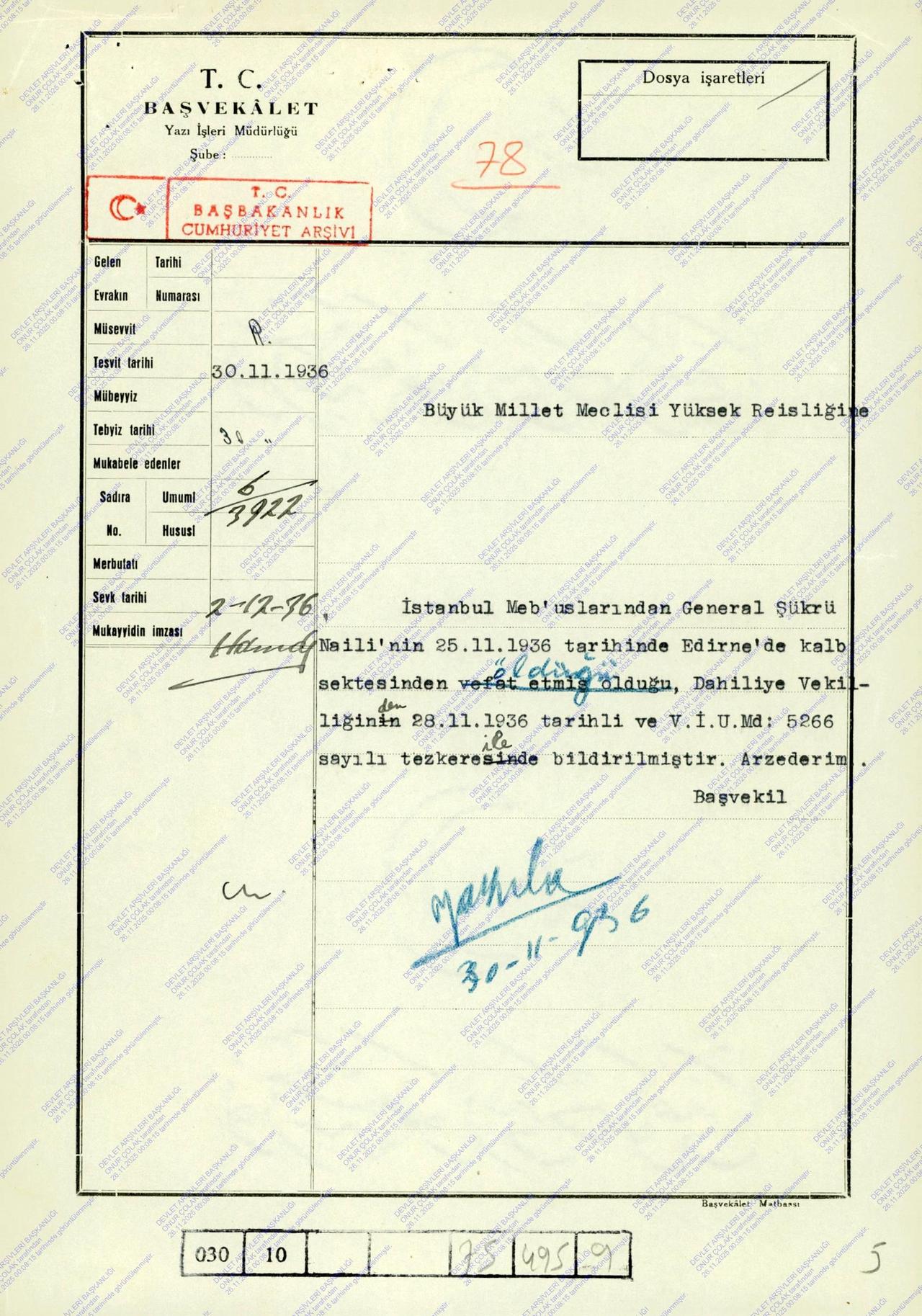
【14】
His body was brought from Edirne to Istanbul and buried at Edirnekapı Şehitliği. Gökberk’s grave remained there for many years and was later relocated to Ankara under the State Cemetery regulations; he was reburied in the State Cemetery in Ankara on 25 October 1988.
Ultimately, Gökberk, who served as a corps commander during the transition from the Ottoman Empire to the Republic and later as a member of parliament during the Republic, now rests among the commanders interred in the State Cemetery.
Ankara University Institute of Turkish Revolution History. *Sakarya Meydan Muharebesi Ve Haymana Uluslararası Sempozyumu: Sakarya Battle And Haymana International Symposium.* Edited by Temuçin F. Ertan and Kadri Unat. Publication No. 55. Ankara, 2017. Accessed November 25, 2025. https://tite.ankara.edu.tr/wp-content/uploads/sites/154/2018/12/V.-ULUSLARARASI-SAKARYA-MEYDAN-MUHAREBESI-VE-HAYMANA-SEMPOZYUMU.pdf.
Bozkurt, Celil, and Erdal Korkmaz. “Yunanlıların Millî Mücadele Döneminde Bursa’da İdare-i Muhtariye Kurma Girişimi.” *Yakın Dönem Türkiye Araştırmaları* 47 (2025): 99–113. DOI: 10.26650/YTA2025-1466899. Accessed November 25, 2025. https://dergipark.org.tr/tr/download/article-file/3855917.
General Staff Presidency, General Staff Military History and Strategic Studies Presidency. *Biographies of Commanders Who Participated in the Balkan Wars (Regiment and Higher Unit Commanders).* General Staff Military History and Strategic Studies Presidency Publications. Ankara: General Staff Printing House, 2004. Accessed November 25, 2025. https://www.msb.gov.tr/Content/Upload/Docs/askeritariharsiv/balkan_savasina_katilan_komutanlarin_yasam_oykuleri.pdf.
General Staff Presidency, General Staff Military History and Strategic Studies Presidency. *Biographies of Regiments and Higher-Command Officers Who Participated in the First World War. Volume II.* General Staff Military History and Strategic Studies Presidency Publications. Ankara: General Staff Printing House, 2009. Accessed November 25, 2025. https://www.msb.gov.tr/Content/Upload/Docs/askeritariharsiv/132-komutanbiyog2.pdf.
Koç Keskin, Neslihan. “Bir Yeniden Canlandırma ‘Sadabad Günü İhtifali’.” *Millî Folklor* 133 (Spring 2022): 79–91. Accessed November 25, 2025. https://dergipark.org.tr/tr/download/article-file/1592243.
Kurt, Emin. “Türk Sivil Havacılık Tarihinde Unutulmuş Bir Girişim: Aero Kulüp Ve Türk Basınındaki Yankısı.” *Atatürk Yolu Dergisi* 68 (Spring 2021): 531–572. DOI: 10.46955/ankuayd.943776. Accessed November 25, 2025. https://dergipark.org.tr/tr/download/article-file/1791341.
Reyhan, Cenk. “Şükrü Naili Paşa (Gökberk) (1876–1936).” *Atatürk Ansiklopedisi.* Accessed November 25, 2025. https://ataturkansiklopedisi.gov.tr/detay/260/%C5%9E%C3%BCkr%C3%BC-Naili-Pa%C5%9Fa-%28G%C3%B6kberk%29-%281876%E2%80%931936%29.
Türkiye Büyük Millet Meclisi Genel Sekreterliği, Basın ve Halkla İlişkiler Müdürlüğü. *TBMM Albümü 1920–2010. Cilt 1.* TBMM Basın ve Halkla İlişkiler Müdürlüğü Yayınları, no. 1, April 2010. Accessed November 25, 2025. https://acikerisim.tbmm.gov.tr/items/030acf9a-7173-4b67-9c92-7c9547ebfd1f.
Türkiye Cumhuriyeti Millî Savunma Bakanlığı. "Şükrü Naili Gökberk." Accessed November 25, 2025. https://ata.msb.gov.tr/Sayfa/SayfaGoster/sukru-naili-gokberk.
Türkiye Cumhuriyeti Millî Savunma Bakanlığı. “Korgeneral Şükrü Naili Gökberk (1876–1936).” Accessed November 25, 2025. https://www.msb.gov.tr/DevletBuyuklerimizDetay/sukru-naili-gokberk.
Çelik, Eray. “Büyük Taarruz Başlangıcında Batı Cephesi Birlik Ve Komutanlarının Tespitine Dair Bir Analiz.” *Harp Tarihi Dergisi* 6 (December 2022): 143–179. Accessed November 25, 2025. https://dergipark.org.tr/tr/download/article-file/2771201.
Özdemir, Fatih. “Bir Türk Subayının Portresi: ‘Şükrü Naili Gökberk’.” Master's thesis, OMÜ Lisansüstü Eğitim Enstitüsü, 2022. Accessed November 25, 2025. https://www.academia.edu/103402583/B%C4%B0R_T%C3%9CRK_SUBAYININ_PORTRES%C4%B0_%C5%9E%C3%9CKR%C3%9C_NA%C4%B0L%C4%B0_G%C3%96KBERK.
Öztürk, Kâzım, and Turkish Parliamentary History Research Group. *Türk Parlamento Tarihi: TBMM – II. Dönem 1923–1927.* Türkiye Büyük Millet Meclisi Vakfı Yayınları, Publication No. 3. Accessed November 25, 2025. https://cdn.tbmm.gov.tr/TbmmWeb/Yayinlar/Dosya/598eccba-a790-450c-98a5-01866e93833e.pdf.
[1]
Türkiye Büyük Millet Meclisi Genel Sekreterliği, Basın Ve Halkla İlişkiler Müdürlüğü. TBMM Albümü 1920–2010. Cilt 1. TBMM Basın Ve Halkla İlişkiler Müdürlüğü Yayınları, No. 1, Nisan 2010. s. 264.
[2]
Fatih Özdemir, “Bir Türk Subayının Portresi: ‘Şükrü Naili Gökberk’” (yüksek lisans tezi, OMÜ Lisansüstü Eğitim Enstitüsü, 2022), s. 9-10.
[3]
Fatih Özdemir. (a.g.e), s. 10.
[4]
Fatih Özdemir. (a.g.e), s. 11.
[5]
Genelkurmay Başkanlığı, Genelkurmay Askerî Tarih Ve Stratejik Etüt Başkanlığı. Birinci Dünya Savaşı’na Katılan Alay Ve Daha Üst Kademedeki Komutanların Biyografileri. Cilt II. Genelkurmay Askerî Tarih Ve Stratejik Etüt Başkanlığı Yayınları. Ankara: Genelkurmay Basımevi, 2009. Erişim tarihi: 25 Kasım 2025. s. 543.
[6]
Fatih Özdemir. (a.g.e), s. 54-55.
[7]
Türkiye Cumhuriyeti Millî Savunma Bakanlığı, “Korgeneral Şükrü Naili Gökberk (1876–1936),” Erişim tarihi: 25 Kasım 2025. https://www.msb.gov.tr/DevletBuyuklerimizDetay/sukru-naili-gokberk.
[8]
Fatih Özdemir. (a.g.e), s. 59.
[9]
Fatih Özdemir. (a.g.e), s. 61-62.
[10]
Fatih Özdemir. (a.g.e), s. 70.
[11]
Fatih Özdemir. (a.g.e), s. 71.
[12]
Fatih Özdemir. (a.g.e), s. 84.
[13]
Naili'nin ölüm tarihi MSB'de 26 Ekim, Atatürk Ansiklopedisi'nde ise 23 Kasım olarak yer almaktadır. Buna karşın Cumhuriyet Arşivi, 75-495'de bulunan belge Naili'nin ölüm tarihinin 25 Kasım olduğunu göstermektedir.
[14]
Devlet Arşivleri Başkanlığı, Cumhuriyet Arşivi. Başbakanlık: Muamelât Genel Müdürlüğü, Kutu: 75, Gömlek: 495, Sıra: 9.

Birth | Thessaloniki 1876 | ||||||||
|---|---|---|---|---|---|---|---|---|---|
Death | 25 November 1936 (Republic Archives) 23 November 1936 (Atatürk Encyclopedia) 26 October 1936 (MSB) | ||||||||
Initial Burial Place | Istanbul Edirnekapı Martyrdom Cemetery | ||||||||
Transfer of the Funeral to Ankara | 25 October 1988 Ankara State Cemetery | ||||||||
Rank/Profession | Member of Parliament Lieutenant general Staff officer | ||||||||
Education | Staff College Military School Manastır High School | ||||||||
Military Duties | Commander of the 3rd Corps Chairman of the Adana Region Occupation and Handover Commission Commander of Ankara Commander of the 15th Infantry Division Commander of the 50th Infantry Division Chief of Staff of the 7th Nizamiye Division Chief of Staff of the 14th Nizamiye Brigade Staff of the 29th Piriştine Reserve Division Instructor and inspector in reserve battalions under the 3rd Army | ||||||||
Political Positions | Member of Parliament for Istanbul in the 5th Term (1935–1936) Member of Parliament for Kırklareli in the 2nd Term (1923–1924) | ||||||||
Promotions | Lieutenant general (30 August 1926) Major general (31 August 1922) Lieutenant colonel (1 September 1917) Major (during World War I) Captain (6 December 1907) | ||||||||
Awards and Medals | Independence Medal and Grand National Assembly of Türkiye Certificate of Appreciation Second Class Iron Cross Third Class Order of Saint Alexander Fourth Class Order of Osmanie Fifth Class Order of Medjidie Silver Merit Medal War Medal | ||||||||
No Discussion Added Yet
Start discussion for "Şükrü Naili Gökberk" article
Family Origins, Childhood, and Education Years
Rise in the Ottoman Army (1902–1912)
The Balkan Wars Period
The Çanakkale Front and World War I Years
Chief of Staff of a Nizamiye Division
50th Infantry Division and the Macedonia Front
The Iran–Iraq Front and Command of the 50th Division in the Euphrates Group
Participation in the National Struggle and Role on the Western Front
Return from Bulgaria and Transition to Anatolia
Command of the 15th Infantry Division and the Kütahya–Eskişehir Battles
The 15th Infantry Division in the Battle of Sakarya
Command of Ankara, Evacuation and Handover Operations in the Adana Region
Command of the 3rd Corps, the Great Offensive, and Pursuit Operations
Corps Command and Entry into Istanbul (1922–1923)
Appointment as Commander of the 3rd Corps
Entry into Istanbul (6 October 1923)
Generalship and Command in Istanbul
Military and Political Life in the Republican Period
Proclamation of the Republic, Istanbul Command, and the 3rd Corps
Second Term as Member of Parliament for Kırklareli (1923–1924)
Retirement and Fifth Term as Member of Parliament for Istanbul
Personal Life, Decorations, and Death
Family and Private Life
Decorations and Medals
Death, Burial, and Transfer of Remains