


This article was automatically translated from the original Turkish version.
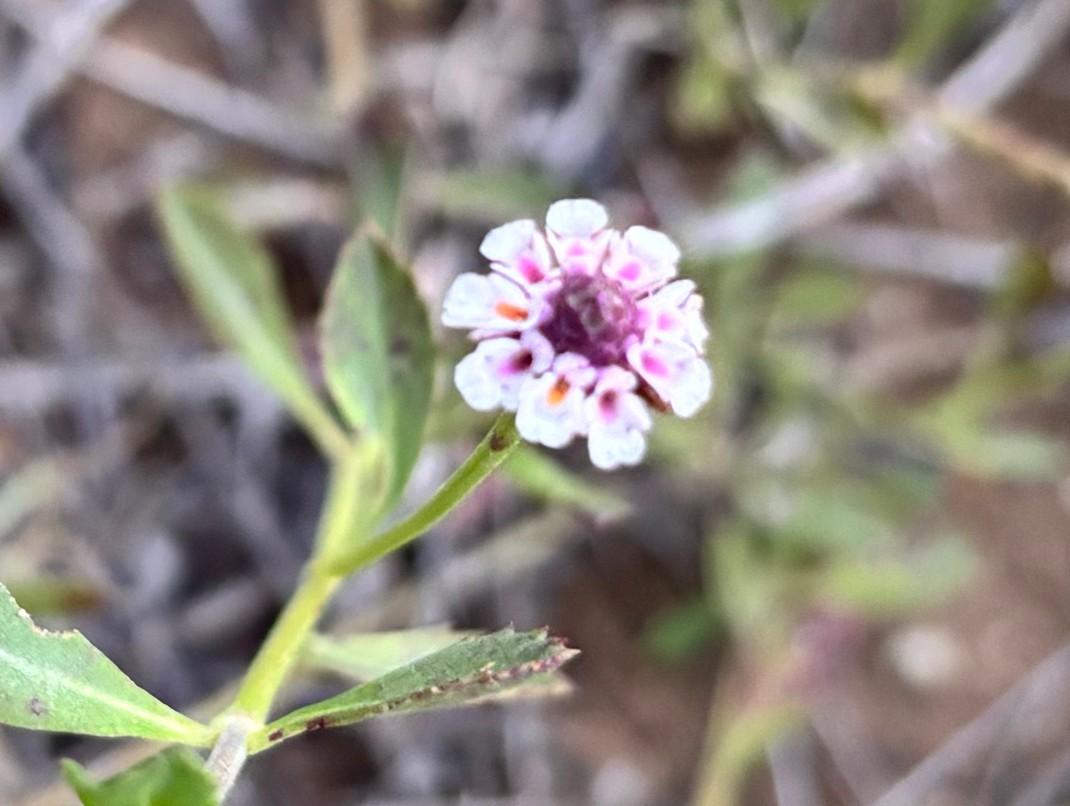
Suçileği (Phyla nodiflora (L.) Greene) Plant (Photo: Gaye Durmuş)
Family | Verbenaceae | ||||||||
|---|---|---|---|---|---|---|---|---|---|
Common Names | Suçileği Frogfruit | ||||||||
Distribution Areas | Global; both native and invasive populations | ||||||||
Habitat | Wet meadows Disturbed areas Roadside areas Irrigation channels Coastal areas Riverbanks | ||||||||
Climate(s) | Common in tropical and subtropical climates | ||||||||
Flowering Period | Can flower throughout the year; particularly active during warm seasons | ||||||||
Height(s) | Stems are approximately 4 cm long | ||||||||
Growth Form | Prostrate-growing, perennial, and grass-like in spreading habit | ||||||||
Soil Preference | Grows in limestone-rich, low-organic-matter, compacted and well-drained soils; also shows adaptability to poor soils | ||||||||
Role in the Ecosystem | Water quality improvement (via ground cover) Biodiversity support Soil stabilization | ||||||||
Phyla nodiflora (L.) Greene is a perennial herbaceous plant belonging to the Verbenaceae family, exhibiting a prostrate growth habit. Native to the Americas, this species naturally occurs in humid and warm climate regions and has been introduced to other continents through human activity, adapting to a variety of habitats. P. nodiflora exhibits both native and invasive populations worldwide and is notable for its wide distribution and high genetic diversity. This characteristic necessitates detailed investigation of its phylogenetic structure and biogeography. Its high ecological tolerance, historical use in traditional medicine, and phytochemical composition make it a species of significant interest in botany and pharmaceutical research.
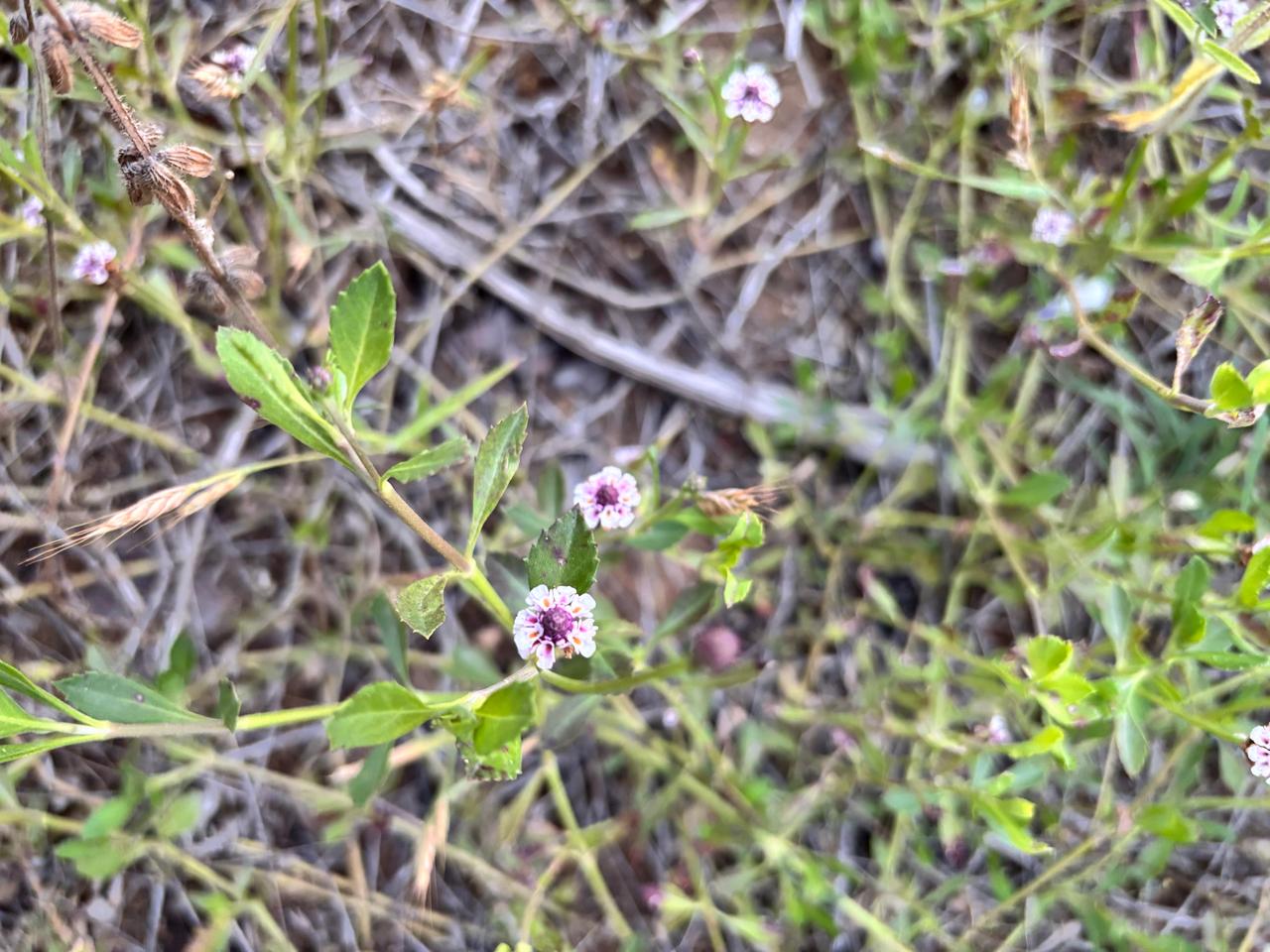
Common Frogfruit (Phyla nodiflora (L.) Greene) Plant (Photo: Gaye Durmuş)
Phyla nodiflora is a perennial herbaceous plant of the Verbenaceae family with a prostrate growth form. Its stems are prostrate, bearing numerous lateral branches that root at the nodes, enabling vegetative spread. Leaves are oppositely arranged, obovate in shape, typically rounded at the apex and rarely pointed; margins are toothed toward the upper portion. The leaf surface is covered with fine hairs and exhibits gray-green tones, reaching up to approximately 2.5 cm in length.
Flowers are small, ranging in color from white to pale pink, with a distinctive purple ringed structure at the center. Each flower head is about 3 mm long and borne terminally on erect peduncles approximately 4 cm in length. Flowering duration is prolonged, with observations in some regions indicating year-round blooming. Flowers possess a tubular base and a two-lipped calyx, with two lobes on the lower lip and three on the upper lip.
Fruits are ovate, approximately 16 mm long, and each contains two brown seeds. The seeds are too small to be distinguished by the naked eye. The plant forms dense, mat-like coverings through its prostrate and compact growth habit, functioning effectively as a ground cover.
Phyla nodiflora (L.) Greene is a perennial species with high environmental flexibility and broad ecological tolerance. It naturally thrives in tropical and subtropical climates, particularly in moist and warm environments. Its habitat preferences are highly diverse, allowing it to colonize both natural and human-impacted areas such as riverbanks, wetlands, coastal plains, moist grasslands, agricultural fields, roadside verges, and disturbed soils. Its ability to grow in low-elevation, calcareous, low-organic-matter soils demonstrates its resilience to edaphic factors.
The plant’s ability to root at stem nodes and form dense surface coverings slows surface runoff, reduces erosion risk, and contributes to soil stabilization. Additionally, this dense prostrate structure indirectly helps maintain water quality by limiting the transport of sediments and pollutants.
P. nodiflora serves as an important nectar source for pollinators such as bees, butterflies, and moths, thereby contributing to ecosystem functions through pollinator-fauna interactions. It also acts as a host plant for the larvae of butterfly species including Junonia coenia, Phyciodes phaon, and Anartia jatrophae, supporting the continuity of trophic networks.
Its tolerance to saline winds and temporary flooding makes it a promising candidate for landscaping and ecological restoration projects. However, due to its invasive potential in certain regions, where it may suppress native flora, it must be carefully evaluated in ecological management plans.
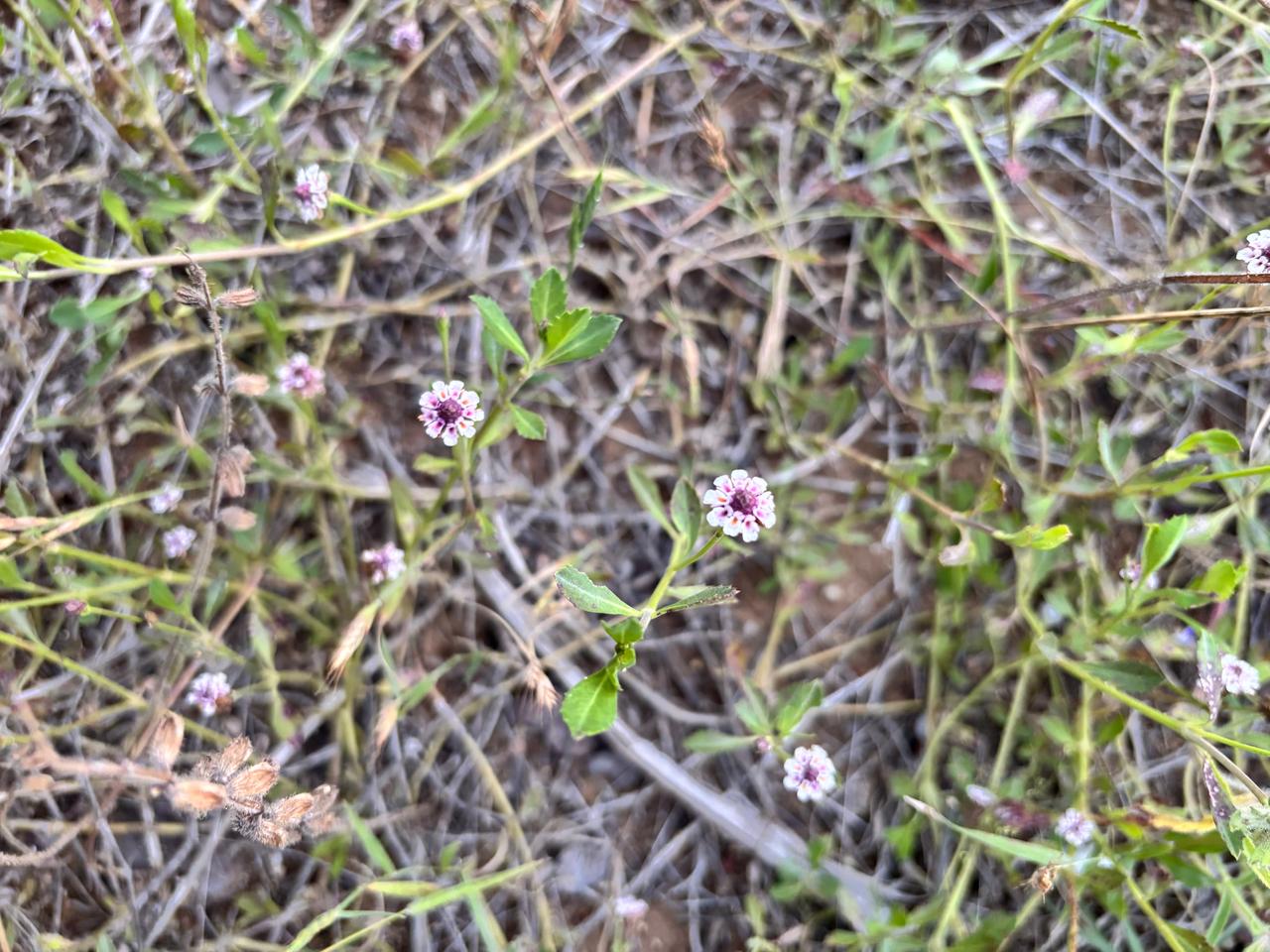
Common Frogfruit (Phyla nodiflora (L.) Greene) Plant (Photo: Gaye Durmuş)
Phyla nodiflora is a prostrate-growing plant capable of reproduction through both vegetative and sexual means. Nodes along the stem can develop roots upon contact with soil, representing an effective vegetative propagation strategy. Simultaneously, the plant reproduces sexually through flowering, attracting insects with small but dense clusters of flowers.
Phylogenetic studies have revealed variation in reproductive strategies across different geographic regions. Limited genetic diversity observed in some ribotypes suggests that clonal reproduction may dominate in these areas, while high genetic diversity in native populations indicates active sexual reproduction. This dual reproductive capability enables Phyla nodiflora to rapidly adapt to diverse ecological conditions.
Phyla nodiflora indirectly contributes to water quality by forming a surface cover that limits erosion. Its rooting at stem nodes slows surface runoff, thereby reducing the amount of sediment and pollutants entering water bodies.
Capable of growing in soils with low organic matter and high calcium carbonate content, this species can serve as an alternative ground cover where turfgrass establishment is not feasible. This reduces the need for pesticides and fertilizers, thereby lowering chemical loads on water resources.
Its tolerance to saline winds and adaptability to various soil types make it suitable for use in coastal areas. It can help mitigate surface water pollution during tidal events and flooding periods. However, direct biological filtration mechanisms have not been documented in the literature; its contribution to water quality is primarily attributed to its physical spread and surface-covering properties.
Gross, Caroline L., Mohammad Fatemi, Mic Julien, Hannah McPherson, and Rieks Van Klinken. “The Phylogeny and Biogeography of Phyla nodiflora (Verbenaceae) Reveals Native and Invasive Lineages throughout the World.” Diversity 9, no. 2 (2017): 20. Accessed July 7, 2025. https://www.mdpi.com/1424-2818/9/2/20
Jabeen, Mehreen, Umair Jillani, Bashir Ahmad Chaudhary, and Muhammad Uzair. “Phytochemical and Pharmacological Studies of Phyla nodiflora (Verbenaceae): A Review.” Pakistan Journal of Pharmaceutical Research 1, no. 1 (2015): 49–60. Accessed July 7, 2025. https://www.academia.edu/download/97914152/27.pdf
Leonard-Mularz, Michelle, and Susie Reutling. “Frogfruit (*Phyla nodiflora*).” University of Florida, IFAS Extension, Monroe County, June 2021. Reviewed by Sandra Wilson. Accessed July 3, 2025. https://sfyl.ifas.ufl.edu/media/sfylifasufledu/monroe/docs/Frogfruit-Phyla-nodiflora.pdf

Suçileği (Phyla nodiflora (L.) Greene) Plant (Photo: Gaye Durmuş)
Family | Verbenaceae | ||||||||
|---|---|---|---|---|---|---|---|---|---|
Common Names | Suçileği Frogfruit | ||||||||
Distribution Areas | Global; both native and invasive populations | ||||||||
Habitat | Wet meadows Disturbed areas Roadside areas Irrigation channels Coastal areas Riverbanks | ||||||||
Climate(s) | Common in tropical and subtropical climates | ||||||||
Flowering Period | Can flower throughout the year; particularly active during warm seasons | ||||||||
Height(s) | Stems are approximately 4 cm long | ||||||||
Growth Form | Prostrate-growing, perennial, and grass-like in spreading habit | ||||||||
Soil Preference | Grows in limestone-rich, low-organic-matter, compacted and well-drained soils; also shows adaptability to poor soils | ||||||||
Role in the Ecosystem | Water quality improvement (via ground cover) Biodiversity support Soil stabilization | ||||||||
No Discussion Added Yet
Start discussion for "Suçileği (Phyla nodiflora (L.) Greene)" article
Botanical Structure and Morphological Characteristics
Habitat Adaptation and Ecosystem Role
Pollination and Reproductive Mechanisms
Water Quality and Filtration Function