


This article was automatically translated from the original Turkish version.
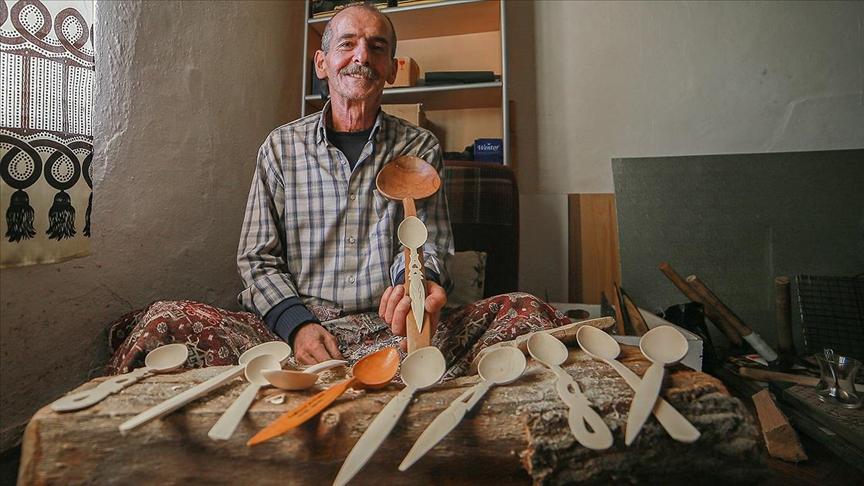
Spooning is a traditional craft that has endured from the depths of human history to the present day, forming an indispensable element of culinary culture. Although the materials used have varied over time, spoons have generally been made from natural substances such as wood, metal, or bone. In Turkish culture, spoon-making possesses a rich and multifaceted heritage.
Spooning (AA)
There is no definitive information on when or where the spoon first emerged. However, the earliest known examples of spoons have been found in archaeological excavations at Çatalhöyük near Konya in Anatolia, one of the key Neolithic settlements, as well as in Central Asia. Researchers note that until the 12th century, when the fork began to replace the spoon at the dining table, the spoon was the primary tool used by humanity for eating. Excavations in the lake regions of Switzerland have revealed that even cave dwellers used primitive spoons made from flat, hollowed stones.
The Turkish tradition of using spoons dates back to ancient times. Bronze spoons have been discovered among Ordos Hun artifacts from the 3rd century BCE, while the earliest spoons in Anatolia, dating to around 6000 BCE, were made of coarse fired clay. From the 2nd millennium BCE onward, forms closely resembling modern spoons began to appear. With the increasing use of spoons and ladles, wood became a vital raw material due to its ease of working.
Anatolian Turkish handicrafts developed through the artistic legacy of Turkic states originating from Central Asia, enriched by the cultural heritage of Anatolian civilizations such as the Hittites, Phrygians, Greeks, Romans, and Byzantines. Spoon examples directly linked to Turkish culinary culture became common in Anatolia from the Seljuk period onward. Konya, one of the Seljuks’ major artistic centers, also emerged as a prominent hub for spoon-making during the Ottoman era. Konya spoons enjoyed high demand not only in neighboring provinces but also in distant regions such as Syria, Egypt, Tunisia, and Algeria.
In the past, numerous regions including Konya, Kütahya, Akseki (Bademli Village), Gediz, Geyve, Taraklı, Bolu (Mudurnu, Göynük, Seben, Kıbrısçık), Kastamonu, Bursa, Bergama, Eskişehir, Anamur, and Silifke were centers of intense spoon-making activity. Today, traditional wooden spoon production continues in Pusacık, a village under the district of Gümüşhacıköy in Amasya, and partially in Çal village. It is known that spoon-making in Pusacık has a history of approximately two centuries and has been passed down from generation to generation through the master-apprentice relationship.
Spooning (AA)
Spoons are named according to their intended use: dining spoon, salad spoon, dessert spoon, ladle, sugar spoon, soup spoon, dowry spoon, and play spoon. Based on material type, they are called wooden spoons, steel spoons, silver spoons, porcelain spoons, or boxwood spoons. In particular, the type of wood used in wooden spoon production directly affects the spoon’s durability and functional use. Woods such as boxwood, linden, oak, and hornbeam are preferred for producing spoons of various sizes and types. Hornbeam (Carpinus) is the most commonly used wood in spoon-making. Maple (Acer hyrcanum), walnut, pear, and cherry trees are also utilized in spoon-making.
Originally produced as a basic necessity, spoons gradually transformed into artistic objects through the artistic touch of craftsmen. Decorative gift spoons and play spoons are also among the varieties produced.
According to traditional beliefs, ornamental carvings on spoons or spoons hung on walls are thought to protect homes and their inhabitants from the evil eye. The “tongurdaklı spoon,” used as a rhythmic instrument in Bursa’s folk dances, features a chain carved into its handle during production. These spoons, commonly found in the regions of Keles, Orhaneli, Harmancık, and Büyükorhan, are present in nearly every household. Named for the chain on their handles, tongurdaklı spoons are still crafted by local spoon masters today. Small-sized tongurdaklı spoons, decorated with flowers and various patterns, are hung in corners of homes as talismans against the evil eye. These spoons, a key figure in Bursa’s traditional folk dances, are stored in dowry chests to be passed on to future generations. Regional variations include the “Akpınar” (straight-handled) and “kertme boğaz” or “sevkiyat” (with two protrusions on the handle) types. Play spoons are typically produced in the kertme boğaz style with shorter handles.
Spooning (AA)
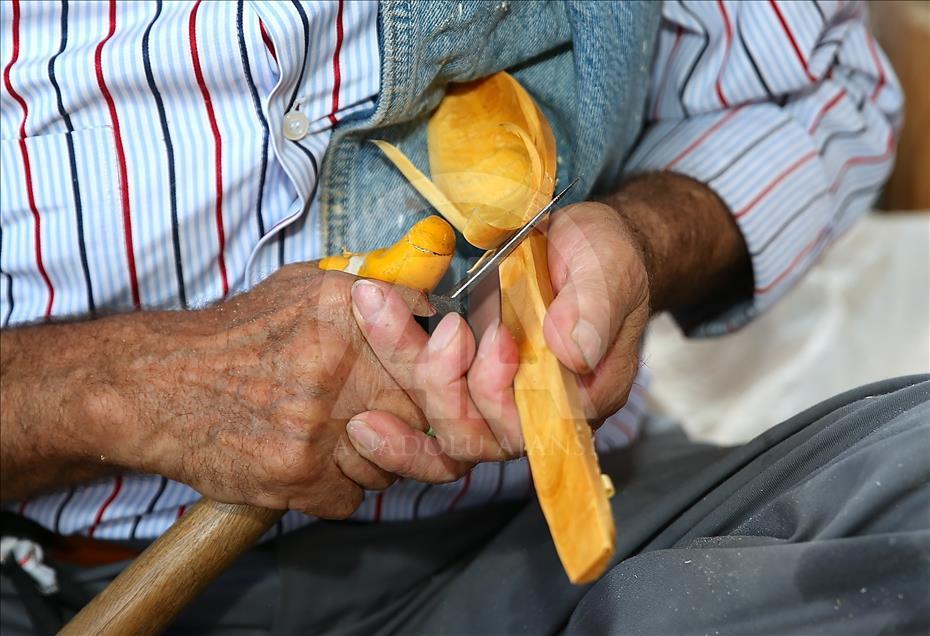
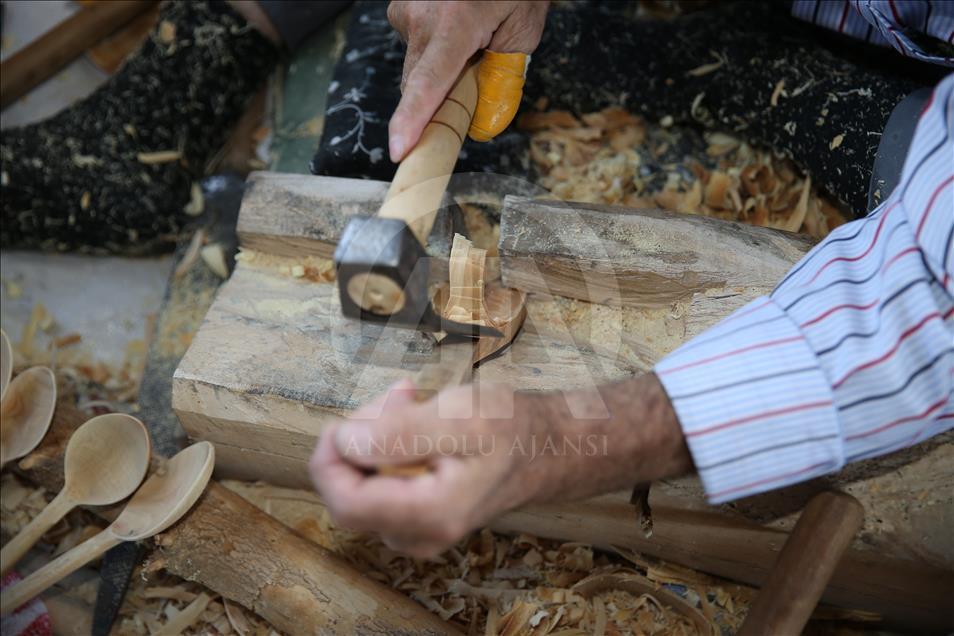
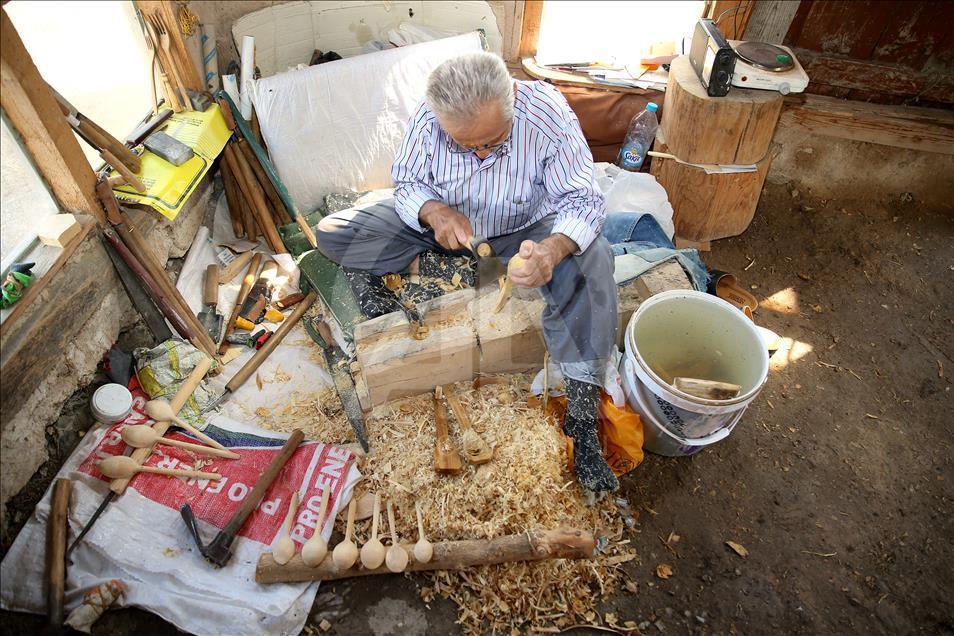
Spoon-making is generally carried out in a small workshop or a dedicated room. The main tools used in this process are:
Spooning (AA)
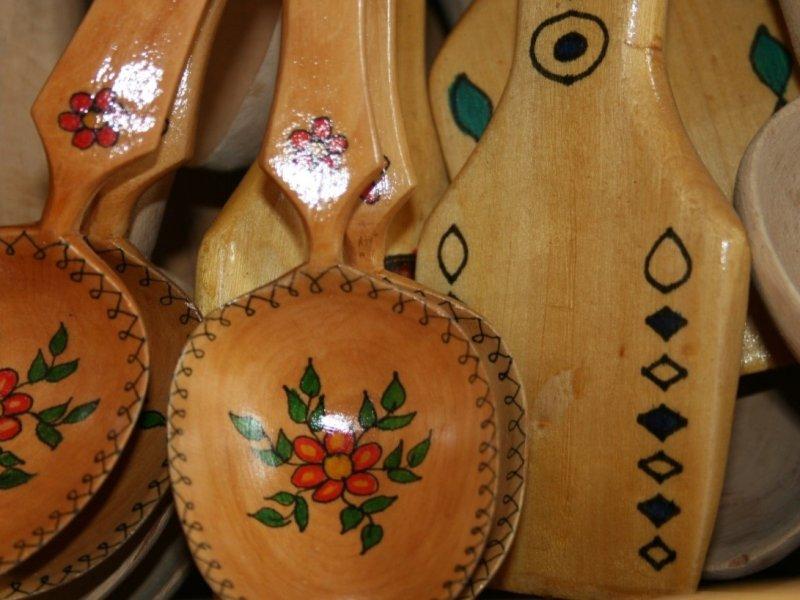
After sanding, spoons undergo a process called “ruanlama” or “ruganlama.” Ruan is a transparent varnish applied to the spoon’s surface. It is prepared by boiling a mixture of English varnish and pine resin in a special pot until it reaches the desired consistency, then applied in multiple layers after cooling. If decorative inlays are to be added, a base coat is first applied and allowed to dry before the ruganlama process.
Spooning (Go to Bursa)
Once dried, spoons are decorated with penwork designs on their bowls and handles. Floral motifs such as daisies, roses, hyacinths, carnations, and tulips, as well as medallions or architectural patterns, are typically drawn on the bowl, while meaningful phrases or poems are inscribed on the handles.
Within the art of spoon-making, special storage containers called “kaşıklıklar” hold a unique place. Commonly found in villages, these kaşıklıklar are made as wooden boxes or fabric pouches to protect spoons. Their exteriors are often adorned with wood carvings or penwork decorations featuring various motifs.
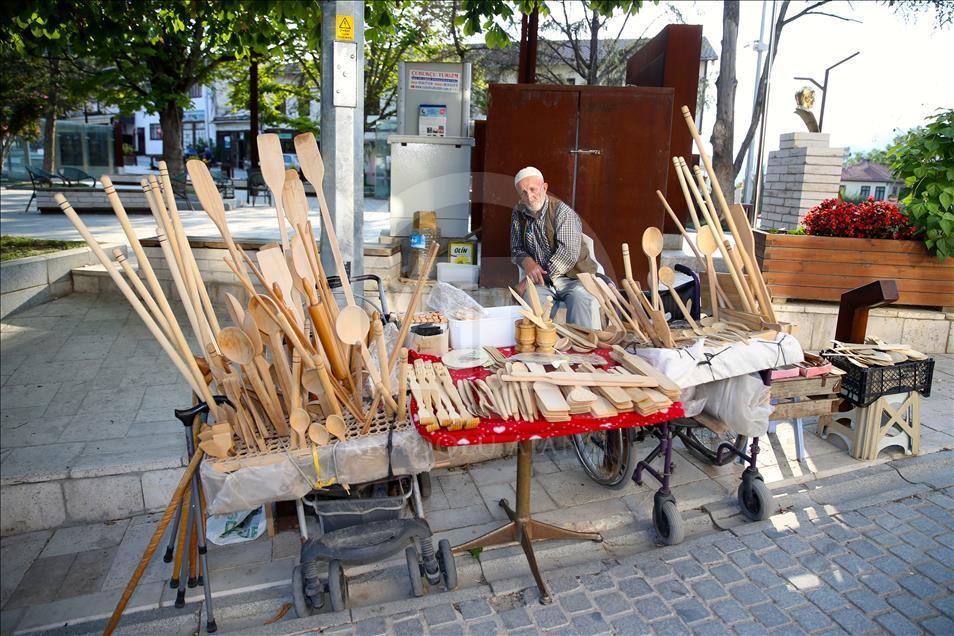
Like many other traditional crafts, spoon-making is undergoing a difficult transition in the face of modern technological advances. Most traditional spoon-making workshops have closed today. Handmade, ornate spoons are now rarely found except in souvenir shops, where they are typically mass-produced industrially.
Spooning is now regarded as one of the traditional crafts on the verge of extinction. Only a very small number of master artisans remain, supported by the Ministry of Culture, who strive to keep this art alive through national exhibitions. Greater research into the art of spoon-making and the preservation of existing rare examples through museums are of great importance.
The declining demand for traditional spoons poses a serious challenge to the master-apprentice transmission of this craft. Although handmade spoon production has declined, spoon-making continues to survive as part of Anatolia’s cultural heritage in certain regions, maintained by its last remaining practitioners.
Spooning (AA)
Anadolu Ajansı. “Emekli Resim Öğretmeni, Baba Mesleği Tahta Kaşık Zanaatını Yaşatıyor.” Anadolu Ajansı, December 12, 2020 (updated December 13, 2020). Accessed June 30, 2025.https://www.aa.com.tr/tr/yasam/emekli-resim-ogretmeni-baba-meslegi-tahta-kasik-zanaatini-yasatiyor/2074477
Anadolu Ajansı. “‘Şimşir Kaşık’ Sabri Ustadan Sorulur.” Anadolu Ajansı, August 20, 2018. Photo gallery. Accessed June 30, 2025.https://www.aa.com.tr/tr/pg/foto-galeri/simsir-kasik-sabri-ustadan-sorulur/13
GoKonya. "Kaşıkçılık." Konya Deneyim Platformu. Accessed June 30, 2025.https://gokonya.com/tr/kasikcilik-1
GotoBursa. "Kaşıkçılık." Bursa Turizm Portalı. Accessed June 30, 2025.https://www.gotobursa.com.tr/tr/icerik/kasikcilik-254/
Güzel, Cavit. “Kültürel Bir Miras ‘Gümüşhacıköy/Pusacık Geleneksel Tahta Kaşıkçılığı.’” *Uluslararası Sosyal Araştırmalar Dergisi* 13, no. 29 (March 15, 2020): 109–122. Accessed June 30, 2025.https://dergipark.org.tr/tr/download/article-file/1005102
Koca, Selçuk Kürşad, and Serdar Uğurlu. “Yesi Şehrinden Taraklı’ya Kaşıkçılık.” *Medeniyet Araştırmaları Dergisi* 1, no. 1 (June 1, 2008): 122–127. Accessed June 30, 2025.https://dergipark.org.tr/tr/pub/mahder/issue/36127/405851

Origins and Historical Journey
Types of Spoons and Woods Used
Tools Used in Production
Production Process
Spooning Today