

+1 More

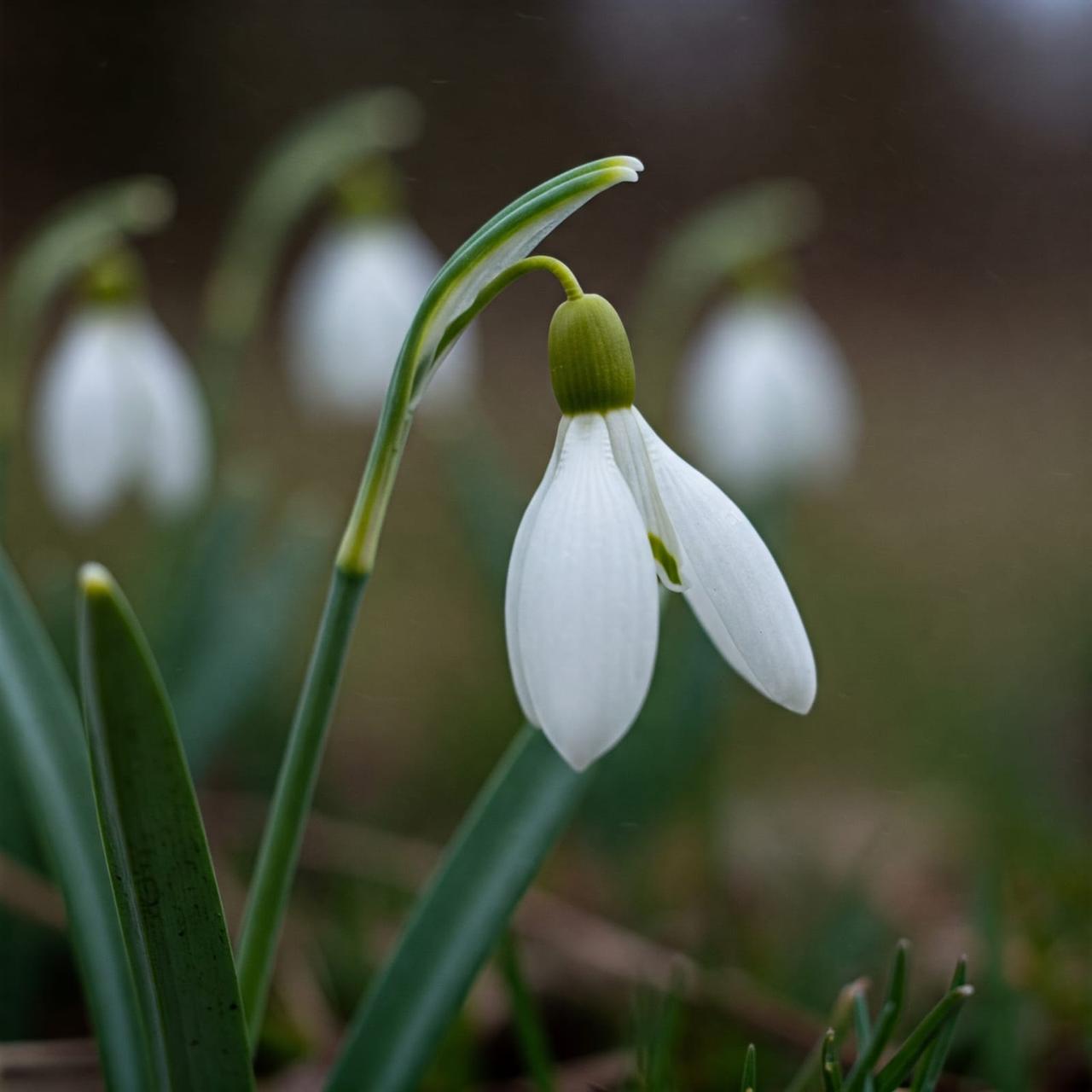
Snowdrop Flower
Family | Amaryllidaceae | ||||||||
|---|---|---|---|---|---|---|---|---|---|
Ecological Requirements | Light: Partial shade. Temperature: Cool climates Soil: Well-drained, humus-rich, slightly acidic soils | ||||||||
Characteristics | An early-flowering, white-flowered bulbous plant. | ||||||||
Distribution Area | Western Asia Central and Eastern Europe | ||||||||
Galanthus nivalis, commonly known as the snowdrop flower, is a geophytic plant belonging to the Amaryllidaceae family, characterized by its resilience to cold climatic conditions and its early flowering habit. Native to Central and Eastern Europe as well as Western Asia, this species holds significant medicinal value due to its content of the alkaloid galantamine, which is used in the treatment of Alzheimer's disease.
From an ecological perspective, the snowdrop emerges towards the end of winter, symbolizing the renewal of nature. However, due to threats such as habitat loss, overharvesting, and climate change, the species increasingly requires conservation efforts.
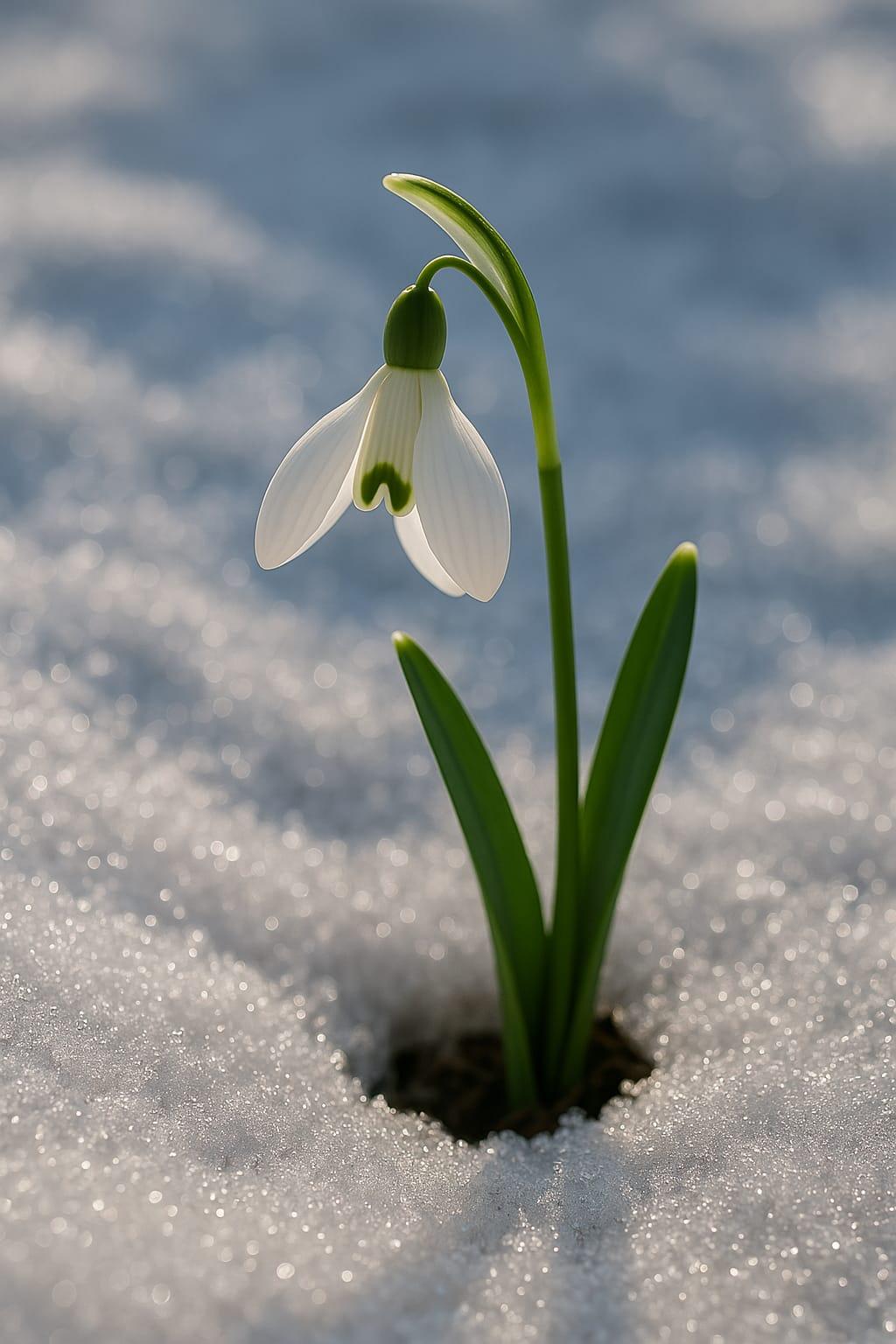
Snowdrop flower (Created by AI)
Galanthus nivalis typically grows to a height of 10–25 cm and is known as one of the first flowers to bloom each year. Its white, solitary flowers are distinguished by their long and slender outer tepals. The flowers bloom before the emergence of the leaves, exhibiting a pale white coloration with a characteristic green marking at the tips. The bulbs are spherical, measuring 1.5–3 cm in diameter, and are covered by a brown, membranous outer layer.
Galanthus nivalis is typically found in forest understories, meadows, and mountainous regions. Its ecological requirements can be summarized as follows:
The successful cultivation of Galanthus nivalis requires the provision of appropriate environmental conditions and proper management practices. Detailed information regarding its cultivation process is presented below:
Key aspects of Galanthus nivalis maintenance are as follows:
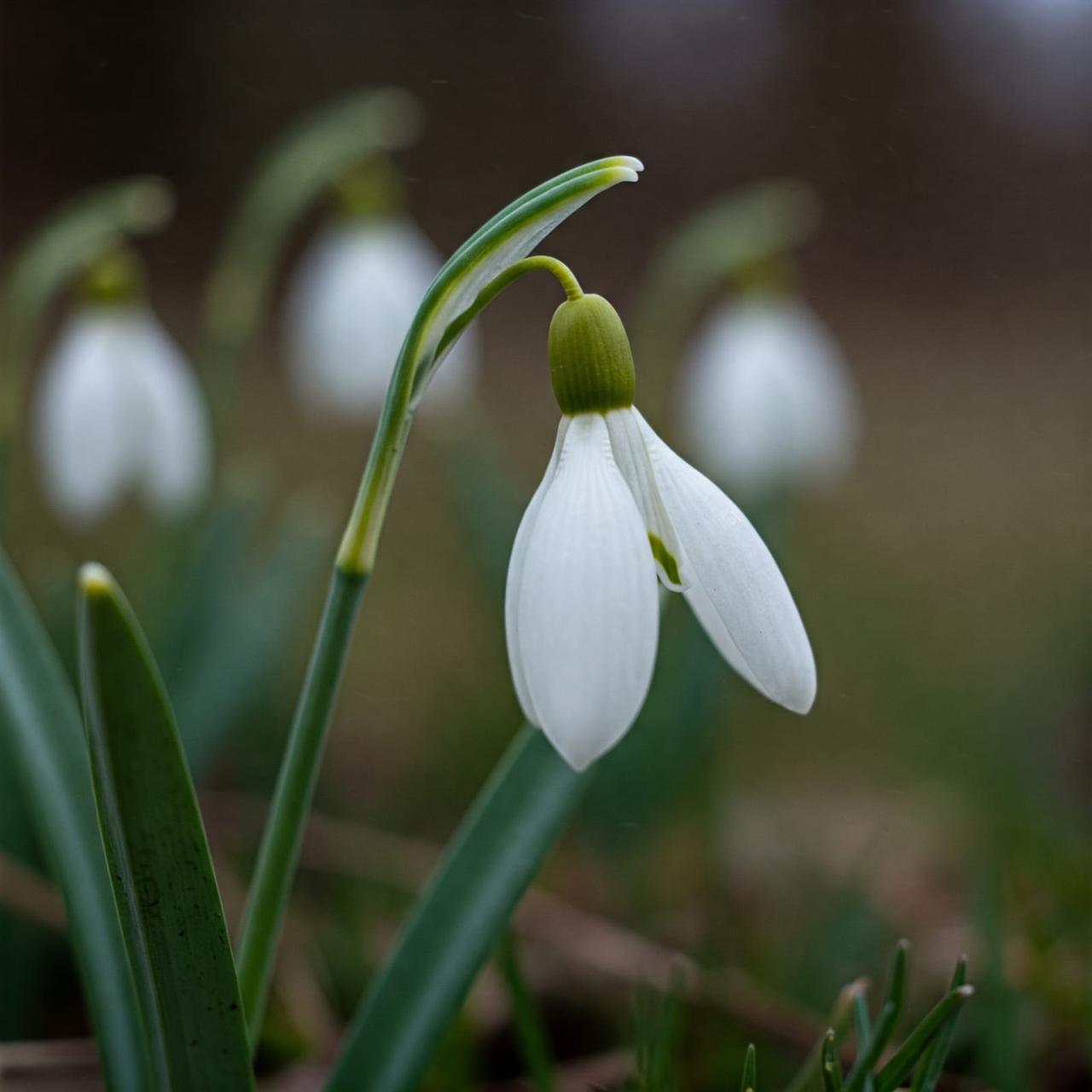
Snowdrop Flower (Crteated by AI)
Galanthus nivalis faces significant threats due to habitat loss and overharvesting. Its populations are declining in natural habitats primarily as a result of environmental degradation. The species is listed under Appendix II of CITES, which regulates its international trade (Ekim et al., 2000). To support the conservation of local biodiversity, the following measures are recommended:
Ekim, Tuna, et al. Red Data Book of Turkish Plants (Pteridophyta and Spermatophyta). Ankara: Turkish Association for the Conservation of Nature, 2000.
Heinrich, Michael, and Hwee Ling Teoh. "Galanthamine from Snowdrop—the Development of a Modern Drug Against Alzheimer’s Disease from Local Knowledge." Journal of Ethnopharmacology 92, no. 2-3 (2004): 147–162. https://doi.org/10.1016/j.jep.2004.02.012.
Keller, Marcel, and Johannes Kollmann. "Effects of Seed Provenance on Germination of Herbs for Agricultural Compensation Sites." Agriculture, Ecosystems & Environment 72, no. 1 (1999): 87–99. https://doi.org/10.1016/S0167-8809(98)00165-0.

Snowdrop Flower
Family | Amaryllidaceae | ||||||||
|---|---|---|---|---|---|---|---|---|---|
Ecological Requirements | Light: Partial shade. Temperature: Cool climates Soil: Well-drained, humus-rich, slightly acidic soils | ||||||||
Characteristics | An early-flowering, white-flowered bulbous plant. | ||||||||
Distribution Area | Western Asia Central and Eastern Europe | ||||||||
Morphological Characteristics
Ecological Requirements
Cultivation Techniques
Propagation Methods
Soil and Fertilization
Maintenance Practices
Conservation Status and Sustainability
This article was created with the support of artificial intelligence.