


This article was automatically translated from the original Turkish version.

Smart Manufacturing Systems
Component | Artificial intelligence Data analytics Automation Digital twins Robotic systems IoT | ||||||||
|---|---|---|---|---|---|---|---|---|---|
Application | Textile Food Electronics Automotive | ||||||||
Smart manufacturing systems consist of an integration of advanced technologies that make industrial production processes more efficient, flexible, and sustainable. These systems operate in conjunction with technologies such as artificial intelligence (AI), machine learning (ML), Internet of Things (IoT), robotics, big data, and cloud computing. Smart manufacturing creates a digital ecosystem that connects all production processes, enabling data exchange between machines, robots, sensors, and software.

General architecture of MAS (Dergipark)
The goal of smart manufacturing is to enable faster, error-free, and flexible production in industrial processes. These systems collect, analyze, and optimize operations based on data at every stage of production. In this article, we will examine in detail the components, advantages, application areas, and future development perspectives of smart manufacturing systems.
In smart manufacturing systems, sensors and actuators play a critical role in monitoring and controlling production processes. Sensors are used to monitor the status of production machines. For example, they continuously track environmental factors such as temperature, pressure, humidity, and vibration to assess machine operating conditions. These sensors can detect potential machine failures, predict maintenance needs, and enhance efficiency on the production line.
Actuators are devices that perform physical actions based on data received from sensors. Actuators carry out functions such as activating motors, opening valves, or moving robotic arms. These devices control machines and systems on the production line, ensuring smooth and continuous operation of production processes.
The integration of sensors and actuators enables continuous monitoring of every stage of the production process and allows for intervention when necessary. This makes production more efficient, flexible, and safe.
Artificial intelligence (AI) and machine learning (ML) are fundamental components of smart manufacturing systems. AI analyzes data from production processes to identify the most efficient and error-free production methods. AI algorithms analyze large datasets to optimize production processes. For instance, AI can assist in detecting faults on production lines, reducing quality control errors, or optimizing production speed.
Machine learning predicts future states of production processes by learning from historical data. This technology can forecast the likelihood of machine failures, disruptions in the material supply chain, or inefficiencies in production lines. Smart manufacturing systems can anticipate potential disruptions and respond immediately based on these predictions, thereby minimizing production stoppages and errors.
AI and machine learning also provide systems that continuously learn and evolve. This feature enables production processes to become more efficient over time and allows for automatic process improvement.
Industrial robots and collaborative robots (cobots) hold a significant place in smart manufacturing systems. Industrial robots handle repetitive tasks such as assembly, material handling, and welding with high precision, while collaborative robots optimize production processes by working alongside humans. Collaborative robots increase efficiency by taking over many tasks traditionally performed by humans. These robots can interact with humans in shared workspaces, enabling more efficient use of labor.
In smart manufacturing, robotics technology not only increases production speed but also improves workplace safety. Robots take over repetitive and hazardous tasks, allowing human workers to focus on more creative and technical roles. Additionally, the integration of robots enhances production line efficiency while minimizing human errors.
Internet of Things (IoT) is a technology that enables communication between devices and machines in smart manufacturing systems. IoT allows machines, sensors, robots, and other devices on the production line to connect and exchange data. This makes the production process real-time monitorable and manageable.
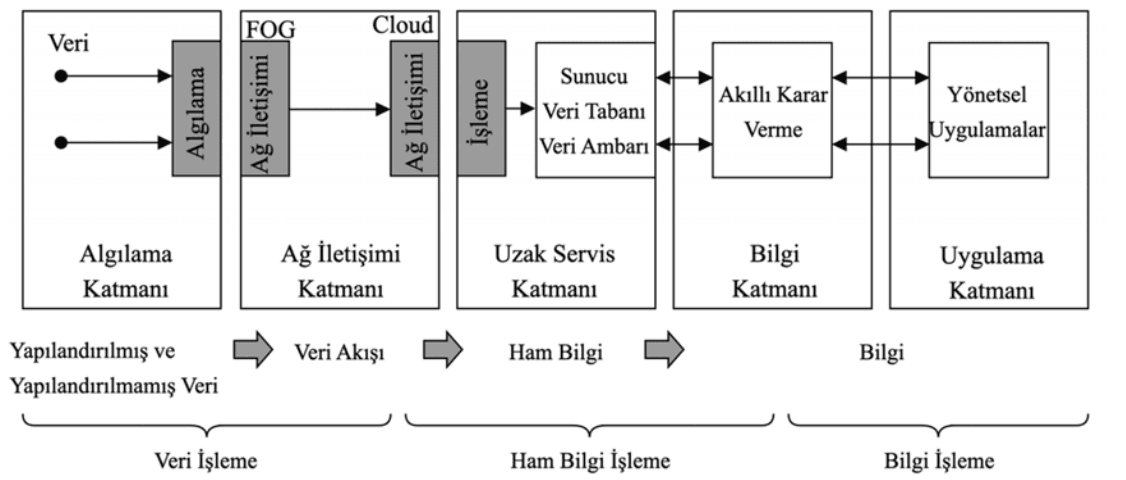
Five-layer IoT architecture (DergiPark)
IoT devices monitor the status of every machine on the production line and analyze the collected data. This data provides real-time reports to production managers, enabling process optimization. For example, a minor malfunction in a machine can be immediately detected and maintenance initiated. Moreover, IoT devices ensure seamless communication between machines, helping each stage of the production process operate efficiently.
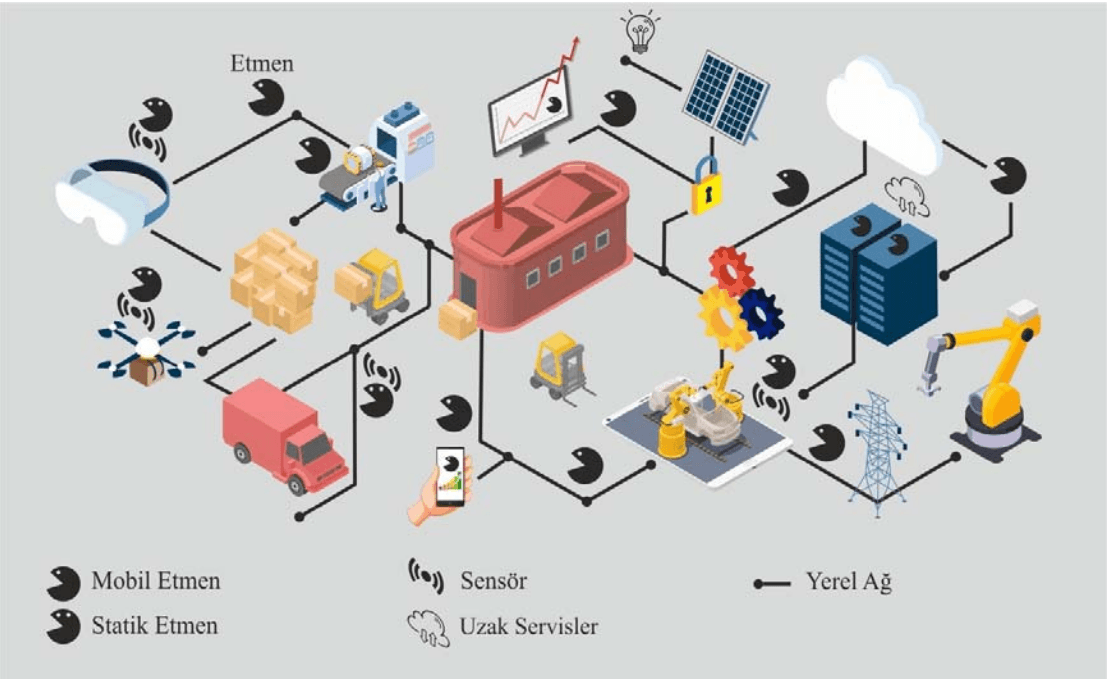
MAS-oriented IoT collaboration architecture (DergiPark)
Big data and cloud computing provide the necessary data processing and storage infrastructure for smart manufacturing systems to function efficiently. Big data is used to analyze the large volumes of data collected during production and extract meaningful insights. This data is gathered from every stage of the production line and processed through various analytical methods, making production processes more efficient.
Cloud computing stores and processes this data. Cloud platforms enable centralized data storage and allow access to data from anywhere. Cloud computing makes production processes more flexible and scalable. Additionally, data from production processes is processed faster, enabling real-time reporting. This supports rapid and accurate decision-making at every stage of production.
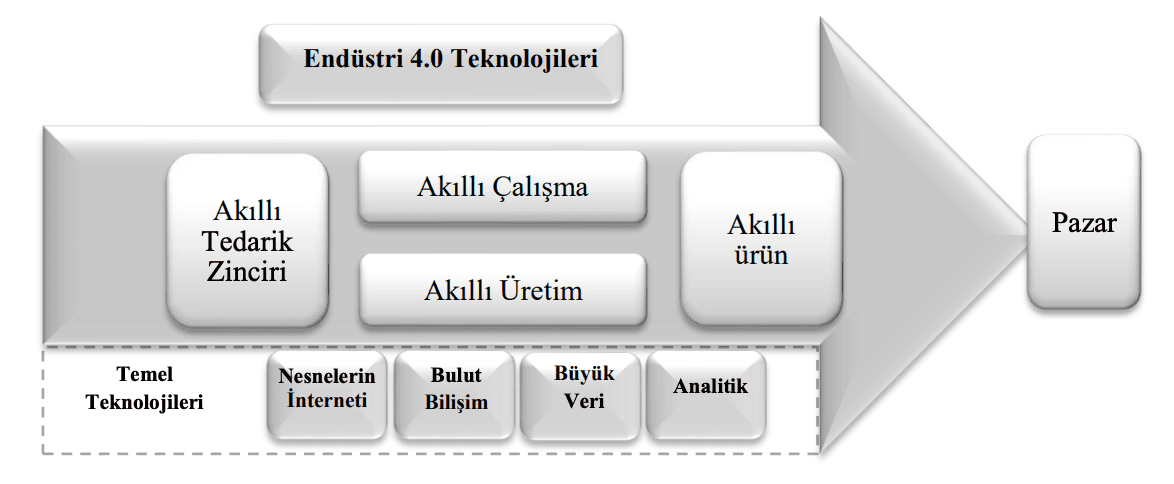
Theoretical framework of Industry 4.0 technologies (Dergipark)
Smart manufacturing increases efficiency by monitoring and analyzing every stage of the production process. High-level integration among machines, robots, and sensors eliminates unnecessary downtime and ensures continuous machine operation. AI and machine learning algorithms optimize production processes, increasing production speed and improving overall efficiency. Continuous monitoring of machines and robots enables immediate detection of performance declines, facilitating early intervention.
Smart manufacturing systems can quickly adapt to changing customer demands thanks to flexible production lines. Machines on the production line can be easily reprogrammed to produce different products. This is a major advantage for customized production. Customized production offers the ability to manufacture products tailored to specific customer needs, providing a competitive advantage.
In smart manufacturing systems, predictive maintenance offers a significant advantage. Machines, sensors, and data analytics continuously monitor equipment. AI and machine learning algorithms analyze operating conditions to predict potential failures. This allows maintenance to be performed before breakdowns occur, preventing production line interruptions and reducing maintenance costs.
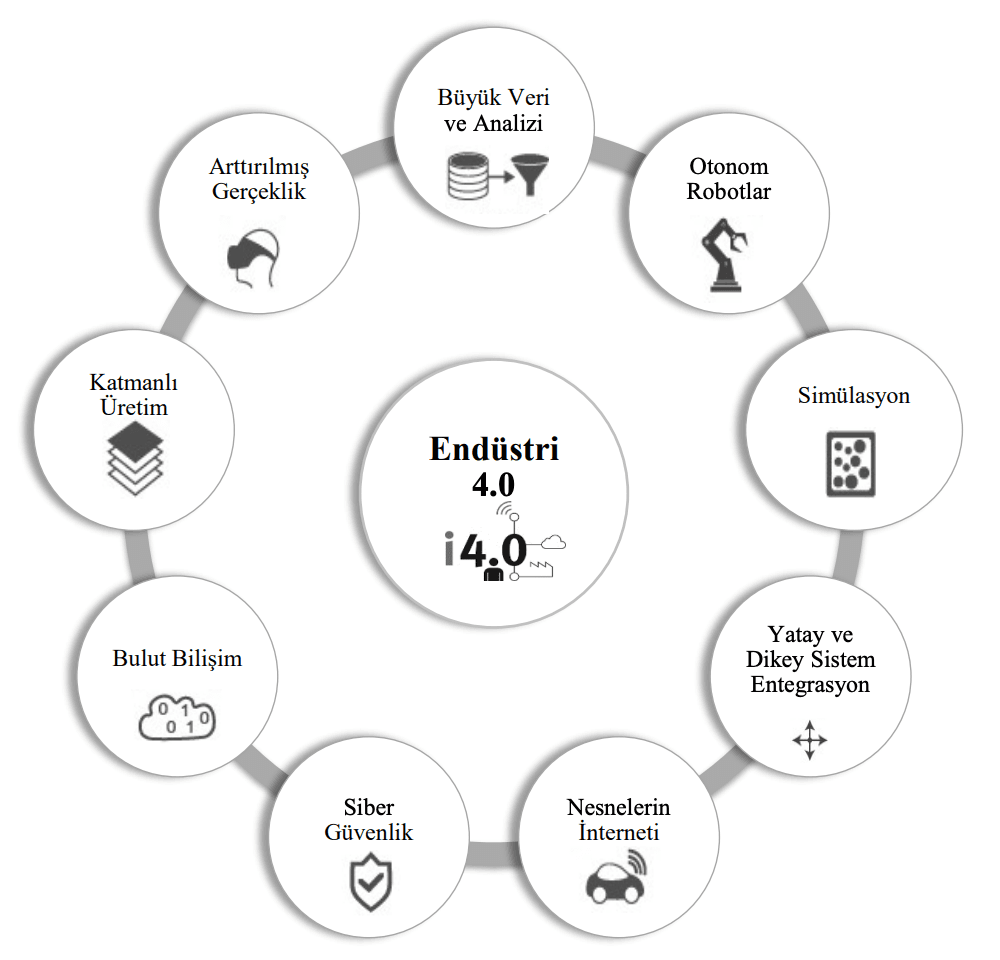
Key technologies of Industry 4.0 (DergiPark)
Smart manufacturing optimizes material and energy consumption. Through big data and IoT, every stage of production can be monitored, ensuring optimal resource utilization. Unnecessary material waste and energy consumption are minimized. This reduces costs and lowers environmental impact. Sustainable production ensures more efficient use of resources.
Smart manufacturing systems enable real-time monitoring of every stage of the production line. Any disruption is immediately detected and addressed. Real-time monitoring allows full control over every detail of the production process, enhancing efficiency while maintaining high quality.
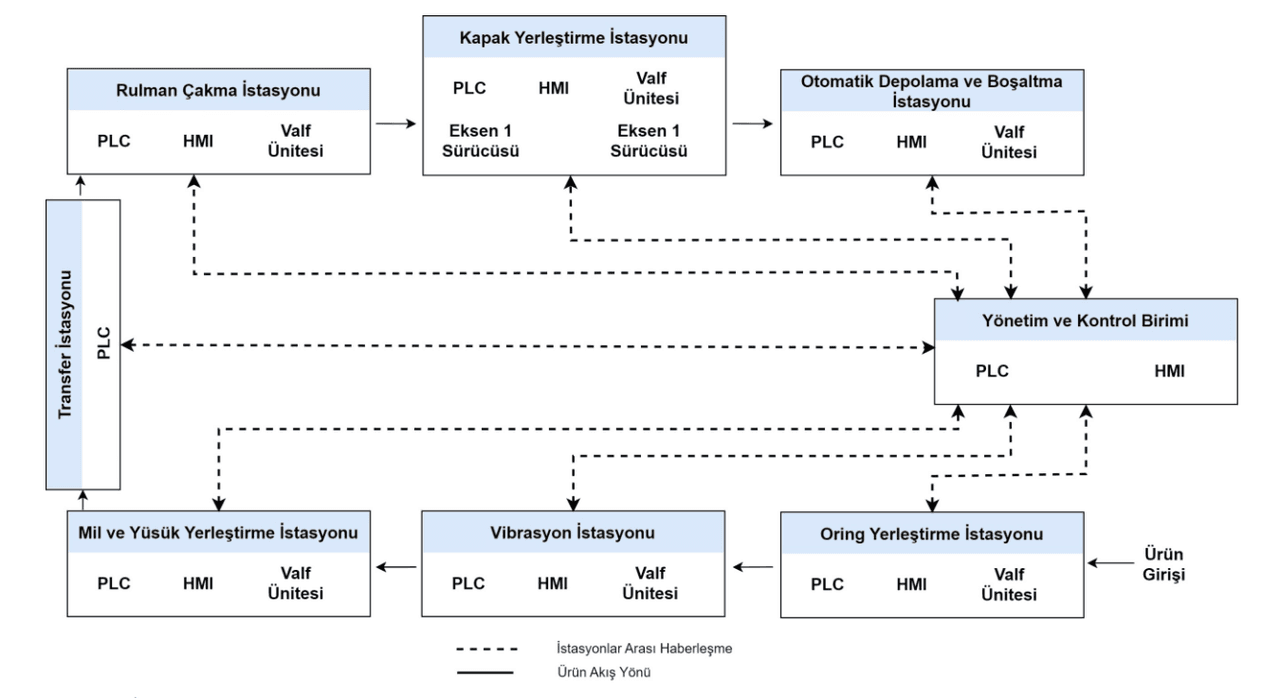
Block diagram of communication between stations and central control (DergiPark)
In the automotive sector, smart manufacturing systems manage complex assembly processes quickly and accurately. Additionally, quality control, material supply management, and customized production are digitized. Maximum efficiency is achieved on automotive production lines through Industry 4.0 standards, enabling cost reduction and faster production processes.
Electronics manufacturing, which requires precise assembly of complex components, benefits from smart manufacturing systems that ensure accurate and rapid component assembly, improving production line efficiency. Quality issues arising during production can be detected and corrected immediately. Smart manufacturing technologies also provide flexible production capabilities, enabling mass production of customized electronic products. This allows companies in the sector to reach a broader customer base.
The food and beverage industry is strictly bound by hygiene, quality, and safety standards. Smart manufacturing systems continuously monitor production processes to ensure quality and compliance. For example, sensors enable real-time tracking of product temperature, humidity, and other environmental factors. Material and energy consumption are optimized, reducing waste. Smart manufacturing also enhances transparency and traceability in the food supply chain, building consumer trust and supporting sustainable production.
The textile and fashion industry faces significant challenges in meeting rapidly changing demands while maintaining high quality sustainably. Smart manufacturing systems increase production speed in textile factories and improve fabric quality control. They also enable rapid production of fashion-compliant products, allowing quick adaptation to demand shifts. Customized fashion products can be produced faster and at lower cost through smart manufacturing. Additionally, smart manufacturing systems can be used in recycling processes to reduce environmental impact.
The future of smart manufacturing systems will continue to play a vital role in industrial transformation. Smart manufacturing will not only transform industrial production processes but will also reshape all business processes, from supply chains to workforce management. As technology advances rapidly, smart manufacturing applications will become more widespread across additional sectors, and these systems will become even more efficient.
In the future, artificial intelligence (AI) and machine learning (ML) algorithms are expected to become even more advanced. These developments will enable smart manufacturing systems to become more autonomous. Machines and robots will be able to carry out production processes independently, without human intervention. This will further increase production speed and reduce costs.
AI algorithms will enable more precise optimization of production processes. For example, AI systems that analyze machine operating speeds, production volumes, and energy consumption in real time will immediately improve processes based on this data. This will lead to production processes with higher efficiency and lower costs.
Looking ahead, 5G technology is expected to play a major role in smart manufacturing systems. 5G enables faster and more reliable data transmission, allowing machines and sensors on production lines to communicate more quickly and seamlessly. This will facilitate faster processing of real-time data and more effective management of production processes.
The integration of IoT devices with 5G will enable the creation of broader and faster data networks between machines. As a result, every device on the production line will be able to share data more rapidly, allowing disruptions to be detected and addressed in real time.
Digital twin technology creates a digital replica of physical production processes. Through this technology, every machine and system on the production line can be monitored via a virtual model.
Production managers can use these digital twins to develop strategies for improving production line efficiency. Digital twins can predict potential failures and identify maintenance needs. Additionally, production processes can be simulated through virtual factories, allowing future production scenarios to be tested.
Smart manufacturing systems are revolutionizing the industrial production landscape. These systems offer significant advantages in terms of efficiency, flexibility, quality, and sustainability. As technology continues to advance rapidly, smart manufacturing applications will expand to broader areas and become more sophisticated. Industries will continue to adopt these technologies to manage production processes more effectively and efficiently, gaining a critical competitive advantage. In the future, the benefits of smart manufacturing systems will extend beyond production processes to encompass broader areas such as workforce management and reduction of environmental impact.
Smart manufacturing is not merely a technology-driven development but a transformation that promotes a more efficient, sustainable, and flexible approach to production. This transformation will shape the future of industry and bring significant changes to the way business is conducted.
Duman, Aslı, and Sibel Karğın. “Akıllı Üretimin İşletme Performansına Etkisi: Vaka Analizi Yaklaşımı.” *Mülkiye Dergisi* 47, no. 5 (2020): 91–109.https://doi.org/10.32951/mufider.930504.
Sağbaş, Aysun, and Hilal Özdil. “Konfeksiyon İşletmelerinde Endüstri 4.0 Perspektifinde Akıllı Üretim Sistemleri Entegrasyonu İçin Bir Model Önerisi.” *Düzce Üniversitesi Bilim ve Teknoloji Dergisi* 10, no. 1 (January 2022): 434–447.https://doi.org/10.29130/dubited.909139.
Çakır, Kadir. *Akıllı Üretim Sistemlerinin Küçük ve Orta Ölçekli İşletmelerde Uygulanması*. PhD thesis, Dokuz Eylül Üniversitesi, 2017. ProQuest Dissertations & Theses Global, 30845850.https://www.proquest.com/openview/79359b7489bf53f07bd514a494d60168/1?cbl=2026366&diss=y&pq-origsite=gscholar
Çalış Uslu, Banu. “IoT Uygulamalarında Çok Etmenli Sistemlerin (MAS) Birlikte Çalışabilirliğinin Rolü: Akıllı Üretim Sistemlerindeki Son Gelişmeler Üzerine Bir Araştırma.” *Gazi Üniversitesi Mühendislik Mimarlık Fakültesi Dergisi* 38, no. 2 (2023): 1279–1298.https://doi.org/10.17341/gazimmfd.944264
Öncül, Merve, and Vildan Ateş. “İşletmelerin Akıllı Üretim Modeline Geçiş Sürecinde Karşılaştıkları Sorunların Belirlenmesi.” *Organizasyon ve Yönetim Bilimleri Dergisi* 12, no. 2 (2020): 116–132.https://dergipark.org.tr/en/download/article-file/1035532.
Öztürk, Fatih. “Smart Factories, Smart Production: An Overview of Industry 4.0.” *International Eurasian Conference on Science, Engineering and Technology* (EurasianSciEnTech 2018), November 22–23, 2018, Ankara, Türkiye.https://www.researchgate.net/publication/330764615_Smart_factories_smart_production_an_overview_of_industry_40
İnan, İbrahim. “Rekabet Ortamında Bir Türk Otobüs Fabrikasında Endüstri 4.0 Perspektifinde Akıllı Üretim Uygulamaları.” *Çukurova Üniversitesi Sosyal Bilimler Enstitüsü Dergisi* 31, no. 1 (2022): 21–37.https://doi.org/10.35379/cusosbil.906962.
Şahin, Yakup Yasin, Sezai Taşkın, and Faruk Kartal. “Akıllı Üretim Sistemlerinde Kontrol ve Otomasyon Uygulamaları İçin Esnek Üretim Sistemi Deney Seti Geliştirilmesi.” *Journal of Materials and Mechatronics: A* 4, no. 2 (2023): 409–423.https://doi.org/10.55546/jmm.1271191

Smart Manufacturing Systems
Component | Artificial intelligence Data analytics Automation Digital twins Robotic systems IoT | ||||||||
|---|---|---|---|---|---|---|---|---|---|
Application | Textile Food Electronics Automotive | ||||||||
No Discussion Added Yet
Start discussion for "Smart Manufacturing Systems" article
Components of Smart Manufacturing Systems
Sensors and Actuators
Artificial Intelligence (AI) and Machine Learning (ML)
Robotics Technology
Internet of Things (IoT)
Big Data and Cloud Computing
Advantages of Smart Manufacturing Systems
Increased Efficiency
Flexibility and Customized Production
Advanced Maintenance (Predictive Maintenance)
Reduced Waste and Resource Consumption
Real-Time Monitoring and Control
Application Areas of Smart Manufacturing Systems
Automotive Industry
Electronics Manufacturing
Food and Beverage Industry
Textile and Fashion Industry
Future Perspectives
More Advanced AI and Autonomy
5G and IoT Communication
Digital Twins and Virtual Factories