


This article was automatically translated from the original Turkish version.
Sleep is a fundamental biological process essential for maintaining physical and mental health. This process, necessary for individuals to sustain daily functioning, is linked to both bodily renewal and the preservation of mental balance. However, contemporary living conditions, technological stimuli, workloads, and psychosocial stress factors can lead to changes in sleep patterns. Within this context, sleep deprivation—the inability to obtain the required duration and quality of sleep—is becoming increasingly prevalent and can cause measurable changes in cognitive, emotional and physiological functions.
Sleep is not merely a passive resting process but a dynamic activity during which the brain and body perform specific functions. Sleep is divided into two main stages: non-REM (NREM) sleep and REM (rapid eye movement) sleep. NREM sleep consists of three stages: stage 1 (transition to sleep), stage 2 (light sleep), and stage 3 (deep sleep). During stage 3, immune system activity increases, tissue repair processes occur, and growth hormone secretion takes place.
REM sleep is associated with dreaming, increased brain activity, memory-related processes, and emotional processing. A healthy sleep cycle is defined by the repeated occurrence of these stages throughout the night. Sleep deprivation can alter this cycle and induce changes in physical and cognitive processes.
Reduced sleep duration has been linked to various changes in cognitive performance. Research indicates measurable declines in attention, short-term memory, and decision-making abilities.
Memory consolidation, which primarily occurs during REM and deep NREM sleep, is related to the transfer of learned information into long-term memory. Sleep deficiency can disrupt this process, altering the capacity to acquire new information and recall existing knowledge.
Changes have also been observed in executive functions. Reduced activity in the prefrontal cortex indicates that individuals experience greater difficulty in complex thinking, planning, and problem-solving tasks. This can affect performance in occupations requiring sustained attention and rapid decision-making.
Sleep deprivation is also associated with disruptions in emotional regulation. Insufficient sleep can weaken the connection between the amygdala and the prefrontal cortex, leading to altered emotional responses. Some studies have observed up to a 60 percent increase in amygdala activity in sleep-deprived individuals, a phenomenon linked to increased anger, anxiety, and depressive symptoms.
Chronic sleep disorders show correlations with psychiatric conditions such as depression and anxiety. Additionally, elevated cortisol levels create a persistent stress response in the body, while alterations in leptin and ghrelin hormones affect appetite regulation. These physiological changes can also influence parameters such as weight control and body perception.
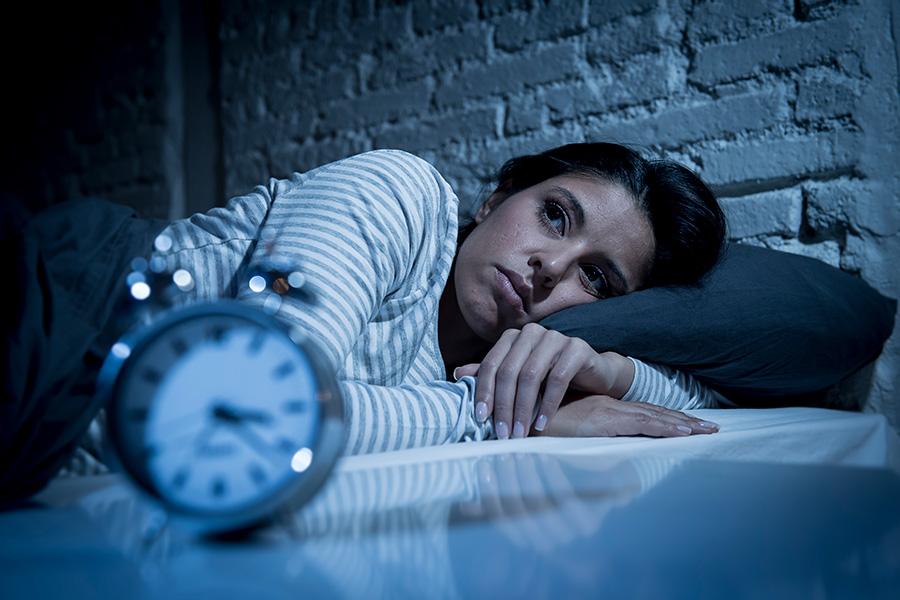
Uyku Yoksunluğu (Nhlbi)
Sleep deprivation can have societal impacts beyond individual health, affecting workplace productivity and traffic safety. Reduced attention, diminished motivation, and altered decision-making processes can increase error rates in both occupational and driving contexts. Some research has reported that performance under severe sleep deprivation resembles that induced by alcohol intoxication at certain levels.
To mitigate these effects, recommendations focus on improving sleep hygiene. These include limiting screen use before bedtime, establishing a regular sleep-wake rhythm, and reducing caffeine intake. For chronic sleep problems, structured psychological interventions such as cognitive behavioral therapy for insomnia (CBT-I) are supported by research as effective approaches.
Sleep deprivation is increasingly reported in modern lifestyles. Disruptions in the normal progression of sleep stages can lead to alterations in mental and physical functioning. Research demonstrates that this condition can affect cognitive performance, emotional responses, immune system activity, and overall health indicators.
Therefore, there is scientific consensus that issues related to sleep patterns should be addressed not only through individual habits but also within the frameworks of mental health screening and public health policy. Interventions aimed at improving sleep quality can lead to meaningful enhancements in individuals’ quality of life and health indicators.
Goel, Namni, Hengyi Rao, James S. Durmer, and David F. Dinges. "Neurocognitive Consequences of Sleep Deprivation." Seminars in Neurology 29, no. 4 (2009): 320–339.
Harrison, Yvonne, and Jim A. Horne. "The Impact of Sleep Deprivation on Decision Making: A Review." Journal of Experimental Psychology: Applied 6, no. 3 (2000): 236–249.
Institute of Medicine (US) Committee on Sleep Medicine and Research. *Sleep Disorders and Sleep Deprivation: An Unmet Public Health Problem.* Washington, DC: National Academies Press (US), 2006.https://www.ncbi.nlm.nih.gov/books/NBK526132/.
Irish, Leah A., Christopher E. Kline, Heather E. Gunn, Daniel J. Buysse, and Martica H. Hall. "The Role of Sleep Hygiene in Promoting Public Health: A Review of Empirical Evidence." Sleep Medicine Reviews 22 (2015): 23–36.
Lim, Jean, and David F. Dinges. "A Meta-Analysis of the Impact of Short-Term Sleep Deprivation on Cognitive Variables." Psychological Bulletin 136, no. 3 (2010): 375–389.
Medic, Goran, Michael Wille, and Michiel EH Hemels. "Short- and Long-Term Health Consequences of Sleep Disruption." Nature and Science of Sleep 9 (2017): 151–161.
National Heart, Lung, and Blood Institute. *Insomnia*. Last modified March 24, 2022.https://www.nhlbi.nih.gov/health/insomnia.
Walker, Matthew P., and Robert Stickgold. "Sleep, Memory, and Plasticity." Annual Review of Psychology 57 (2006): 139–166.
Yoo, Seung-Schik, Ninad Gujar, Peter Hu, Ferenc A. Jolesz, and Matthew P. Walker. "The Human Emotional Brain without Sleep—A Prefrontal Amygdala Disconnect." Current Biology 17, no. 20 (2007): R877–R878.

Stages and Functions of Sleep
Effects on Cognitive and Executive Functions
Emotional Regulation, Psychological Health, and Physiological Consequences
Societal Implications and Intervention Strategies