


This article was automatically translated from the original Turkish version.
Skyscrapers are defined as tall buildings, typically exceeding 150 meters in height, that define the silhouettes of modern cities. These structures have become an important component of urbanization due to increasing population density and limited land availability. The development of skyscrapers has brought significant innovations in architectural design, engineering and environmental sustainability.
The emergence of skyscrapers dates back to the late 19th century. The Home Insurance Building in Chicago, constructed in 1885, is widely regarded as the first skyscraper. This structure, built using a steel frame system, laid the foundation for modern high-rise buildings. The steel frame structure enabled the construction of taller buildings by reducing the load-bearing function of walls.
In the early 20th century, buildings such as the Woolworth, Chrysler and Empire State in New York were constructed. These structures were designed using steel frame systems and wind bracing to overcome the structural challenges posed by height.
In the 1960s, the development of the tubular structural system ushered in a new era in high-rise design. This system made it possible to build taller structures using less material by treating the building’s exterior facade as a load-bearing tube. This approach was widely adopted and became standard in the industry.
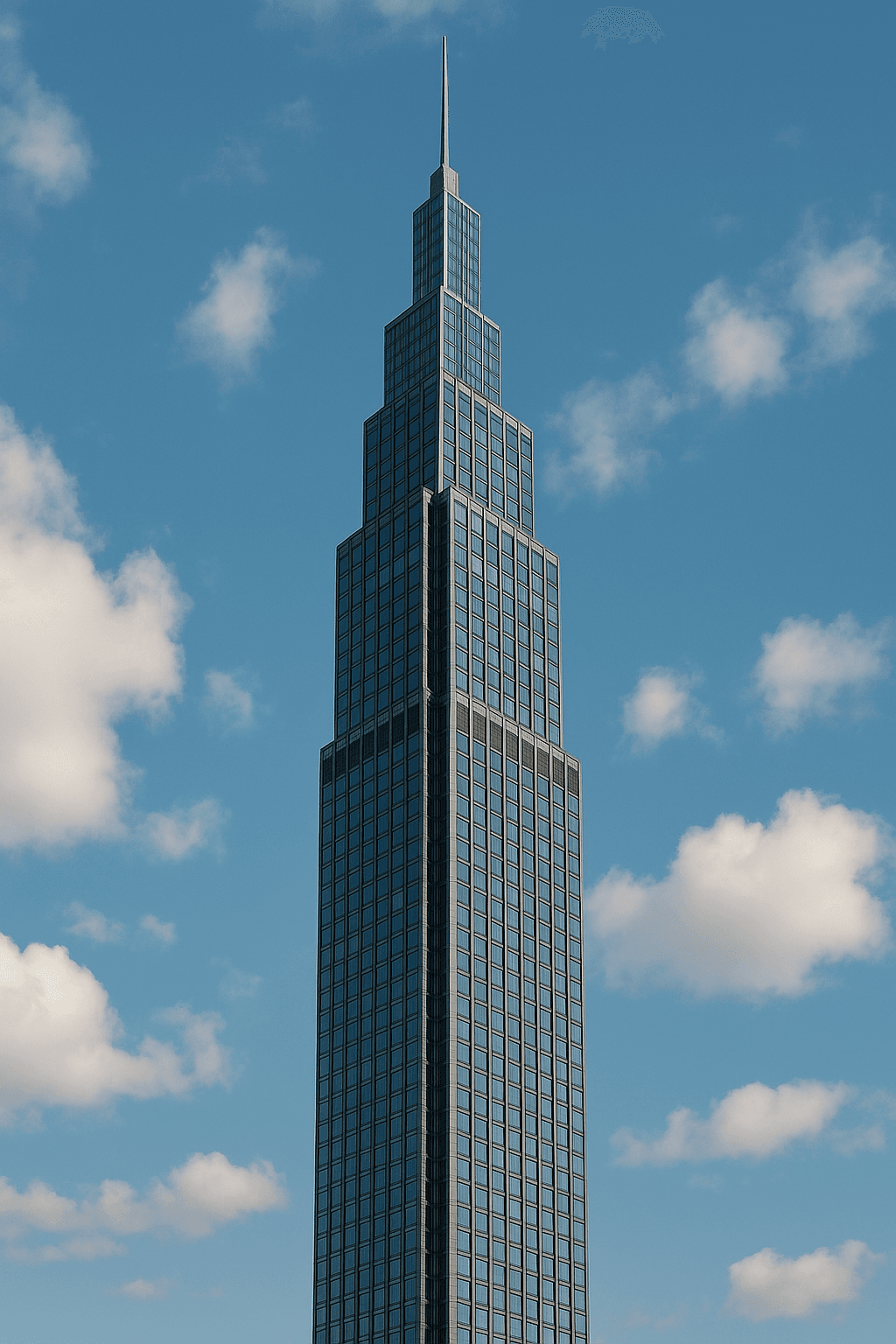
Generated by artificial intelligence.
Various structural systems have been employed in skyscraper design. While steel frame systems were initially dominant, later solutions such as tubular systems and core-and-outframe systems were developed. Efforts have also been made to construct skyscrapers using sustainable materials like cross-laminated wood. Thanks to cross-laminated wood technology, several projects have emerged demonstrating the feasibility of wooden skyscrapers.
In recent years, there has been a growing number of skyscraper projects equipped with solar panels, wind turbines and other innovative technologies to enhance energy efficiency. Such projects represent significant advances in both environmental sustainability and building energy performance.
Skyscrapers have significant impacts on energy consumption, carbon emissions and urban microclimates. To mitigate their environmental effects, solutions such as green roofs and walls are being implemented. These systems contribute to energy savings and carbon absorption. Additionally, environmental impacts such as water efficiency, material use and waste management are increasingly considered in the design of sustainable buildings.
Furthermore, evaluating the environmental impacts of high-rise buildings is crucial for developing sustainable and resilient urban development strategies. These assessments encompass factors such as energy efficiency, material usage and environmental footprint.
Burj Khalifa is a structure located in Dubai, United Arab Emirates, rising to a height of 828 meters. Completed in 2010, this building holds the distinction of being the tallest structure in the world. Burj Khalifa is not merely an office and residential complex but also a mixed-use project incorporating shopping malls, restaurants and luxury hotels. The technology and engineering solutions used in its construction have made it a symbol of modern architecture.
Skyscraper construction in Türkiye has accelerated significantly since the 2000s. Istanbul is clearly the country’s leader in this field. The city’s limited horizontal expansion space and growing population pressure have made vertical growth inevitable. Areas such as Maslak, Levent and Ataşehir have become focal points of skyscraper clustering.
Structures such as Istanbul Sapphire, Skyland Towers and Metropol İstanbul rank among Türkiye’s tallest buildings. These buildings have been constructed using steel-concrete hybrid systems and energy-efficient technologies.
In Türkiye, skyscrapers are observed to be designed not only for office and residential purposes but also as mixed-use structures. These buildings, which combine shopping malls, hotels, residences and offices, function as micro-cities within the urban fabric.
However, debates continue regarding the impact of skyscrapers on Türkiye’s urban fabric. Their effects on the skyline, pressure on infrastructure and earthquake safety play critical roles in the planning process. In Istanbul and many other cities, ground studies, legal regulations and engineering oversight are decisive factors in skyscraper design and construction.
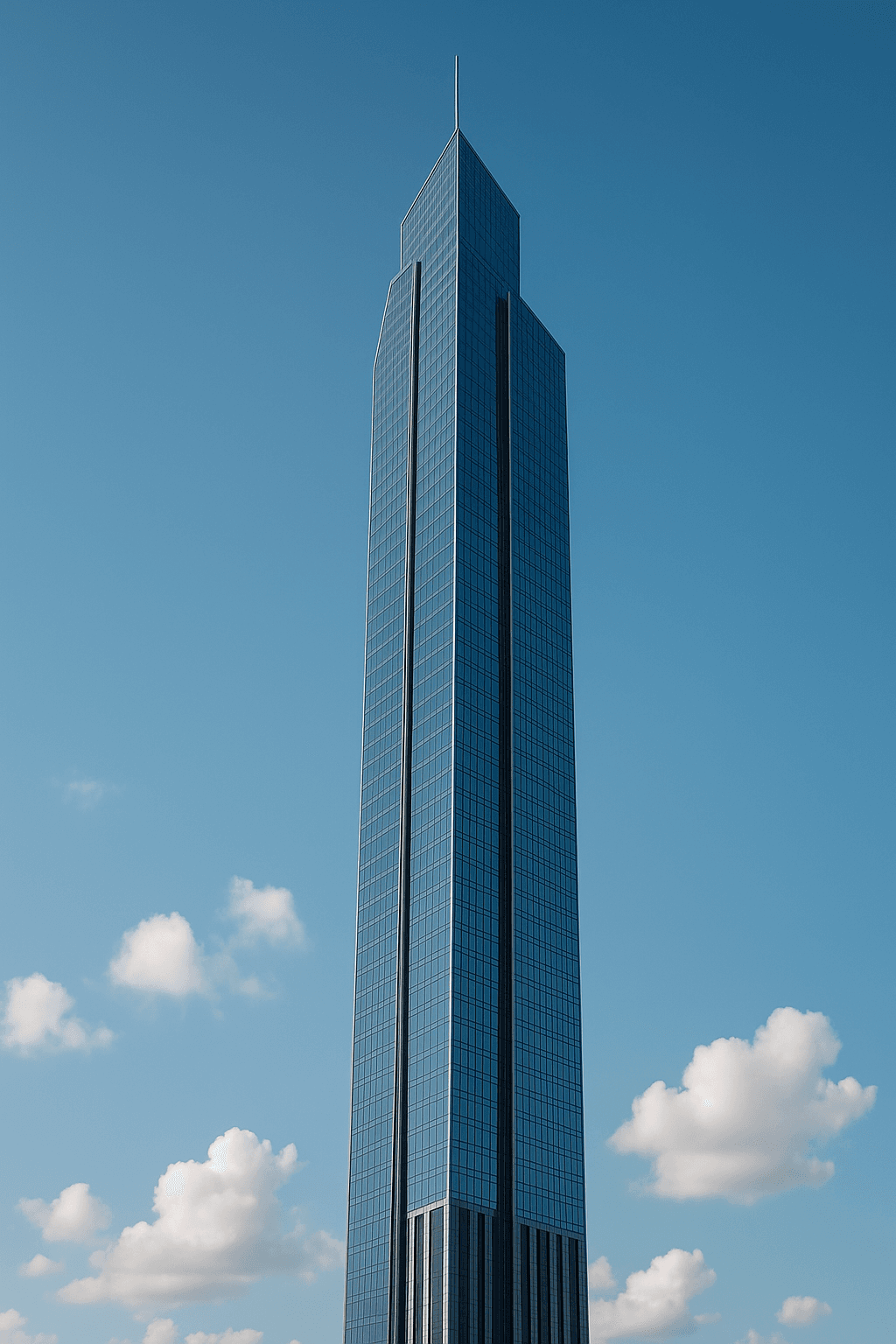
Generated by artificial intelligence.
Skyscrapers represent major advancements in architecture and engineering while also having significant environmental and sustainability implications. In the future, skyscraper designs are expected to place greater emphasis on environmental sustainability and energy efficiency.
Adrian Smith and Gordon Gill, “Toward Zero Carbon: The Chicago Central Area DeCarbonization Plan and the Role of Tall Buildings,” *CTBUH Journal*, no. 1 (2011): 12–17, https://smithgill.com/work/chicago_decarb.
CTBUH (Council on Tall Buildings and Urban Habitat), “The Skyscraper Center – Tallest Buildings,” Accessed April 9, 2025,https://www.skyscrapercenter.com.
Council on Tall Buildings and Urban Habitat (CTBUH). "Türkiye." The Skyscraper Center. Accessed April 9, 2025.https://www.skyscrapercenter.com/country/turkiye.
Fazlur R. Khan, “Recent Structural Systems in Steel for High-Rise Buildings” (paper presented at the British Constructional Steelwork Association Conference on Steel in Architecture, London, 1969),https://www.researchgate.net/publication/361813905_Structural_Systems_for_Tall_Buildings.
High Rise and Urban Habitat Council (CTBUH). "The SkyscraperCenter," "Burj Khalifa." Accessed April 9, 2025.https://www.skyscrapercenter.com/building/burj-khalifa/3.
Kheir Al-Kodmany, “Skyscrapers and the Vertical Urbanism in the Middle East: Case of Istanbul,” *Buildings* 10, no. 9 (2020): 1–20,https://www.mdpi.com/2075-5309/10/9/156.
Kheir Al-Kodmany, “Tall Buildings and Urban Habitat of the 21st Century: A Global Perspective,” *Buildings* 2, no. 4 (2012): 384–423,https://www.mdpi.com/2075-5309/2/4/384.
Mir M. Ali and Kyoung Sun Moon, “Structural Developments in Tall Buildings: Current Trends and Future Prospects,” *Architectural Science Review* 50, no. 3 (2007): 205–223,https://www.researchgate.net/publication/228347447_Structural_Developments_in_Tall_Buildings_Current_Trends_and_Future_Prospects.

Historical Development
Architectural and Structural Systems
Environmental Impacts and Sustainability
Burj Khalifa
Skyscrapers in Türkiye