This article was automatically translated from the original Turkish version.
Type of Geographical Indication | Mahreç Sign | ||||||||
|---|---|---|---|---|---|---|---|---|---|
Registration Number | 1358 | ||||||||
Registration Date | 17.05.2023 | ||||||||
Product / Product Group(s) | Handicraft products other than carpets kilims and textiles | ||||||||
Province(s) | Sivas | ||||||||
Applicant/Registrant(s) | Sivas Provincial Directorate of Culture and Tourism | ||||||||
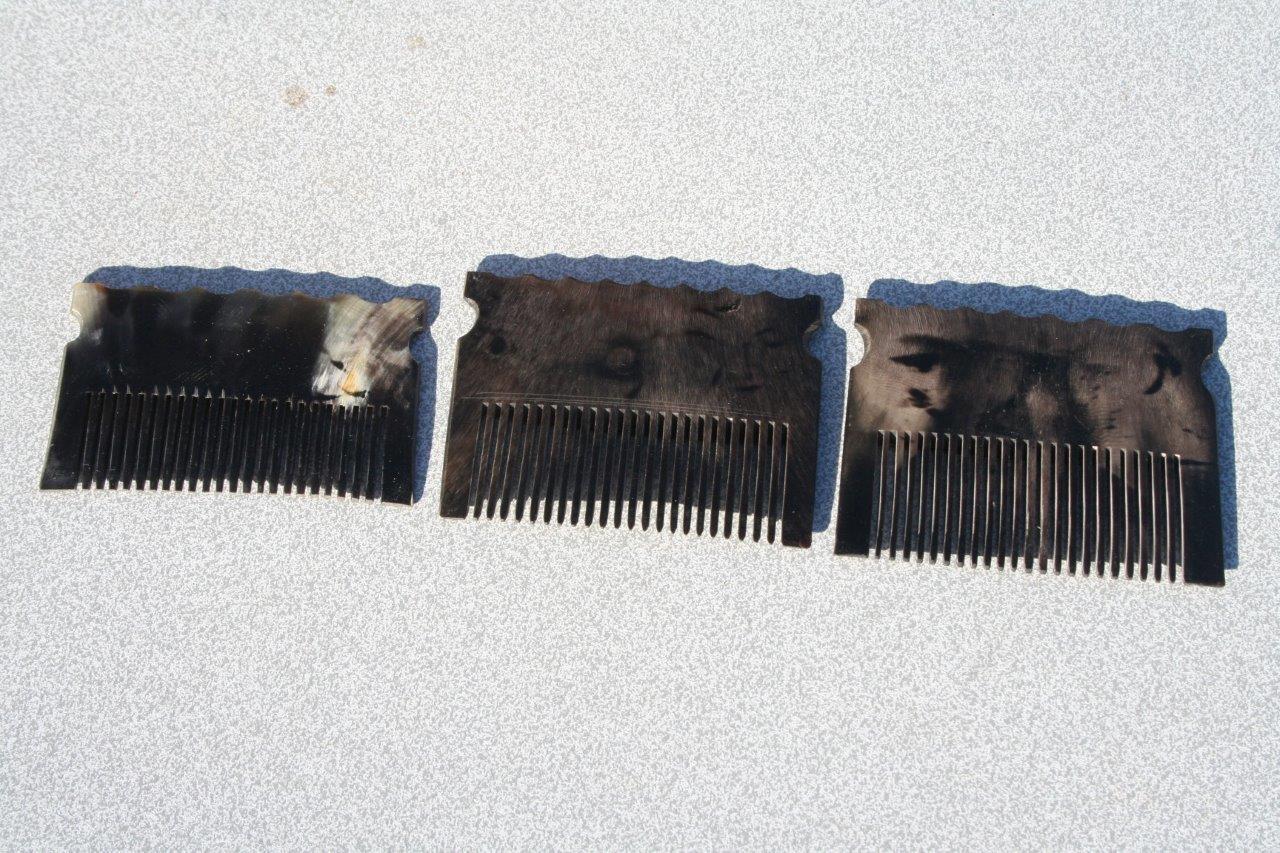
Sivas Bone Comb is a traditional craft product made in Sivas Province using the horns of large and small livestock, with a history dating back to antiquity. Horns from animals such as bull, ox, buffalo, ram, and wild mountain goat are commonly used in its production. The color of the comb varies depending on the type of horn used. For instance, ox horn is typically black or white and may contain red, orange, brown, and purple veins, while buffalo horn is black and ram horn may be speckled or yellow. Different varieties of this comb are produced for both women and men. Historically, these combs were made entirely by hand, but today they are manufactured using machines and polish. Registered on 17.05.2023, the Sivas Bone Comb has established a geographical indication due to its significant role in the economy and traditional crafts of Sivas Province.
The Sivas Bone Comb possesses characteristics derived from the horns of large and small livestock used as its primary material. The color and pattern of the comb vary according to the type of horn used.
The production of the Sivas Bone Comb follows the same fundamental stages regardless of the type of horn used or the final comb variety. The production process for all combs except decorative ones is outlined below.
All production stages of the Sivas Bone Comb must be carried out within the geographical boundaries of Sivas Province due to its historical significance and its esteemed status in the region’s traditional crafts. Oversight of the Sivas Bone Comb is conducted by a three-member monitoring body established under the coordination of the Sivas Provincial Directorate of Culture and Tourism. This body comprises one expert each from the Sivas Blacksmiths’ Guild and Artisans’ Chamber, the Sivas Public Education Center, and the Sivas Provincial Directorate of Culture and Tourism. Inspections are carried out at least once annually; additional inspections may be conducted at any time upon complaint or necessity.
During inspections, the following aspects are verified:
The monitoring body has the authority to procure expert personnel or services from public or private institutions as needed. The registering institution carries out all necessary legal procedures to protect the legal rights associated with the product.
Turk Patent and Trademark Office. "Sivas Kemik Tarağı." Geographical Indications Portal. Accessed October 25, 2025. https://ci.turkpatent.gov.tr/cografi-isaretler/detay/5972.
Turkish Patent and Trademark Office. "Sivas Kemik Tarağı Sicil Belgesi" Geographical Indications Portal. Accessed October 25, 2025. https://ci.turkpatent.gov.tr/Files/GeographicalSigns/a3cbea71-637b-4fc7-8359-0353ef8c99bf.pdf.

Type of Geographical Indication | Mahreç Sign | ||||||||
|---|---|---|---|---|---|---|---|---|---|
Registration Number | 1358 | ||||||||
Registration Date | 17.05.2023 | ||||||||
Product / Product Group(s) | Handicraft products other than carpets kilims and textiles | ||||||||
Province(s) | Sivas | ||||||||
Applicant/Registrant(s) | Sivas Provincial Directorate of Culture and Tourism | ||||||||
Product Features
Production Method
Geographical Boundary and Oversight