


This article was automatically translated from the original Turkish version.
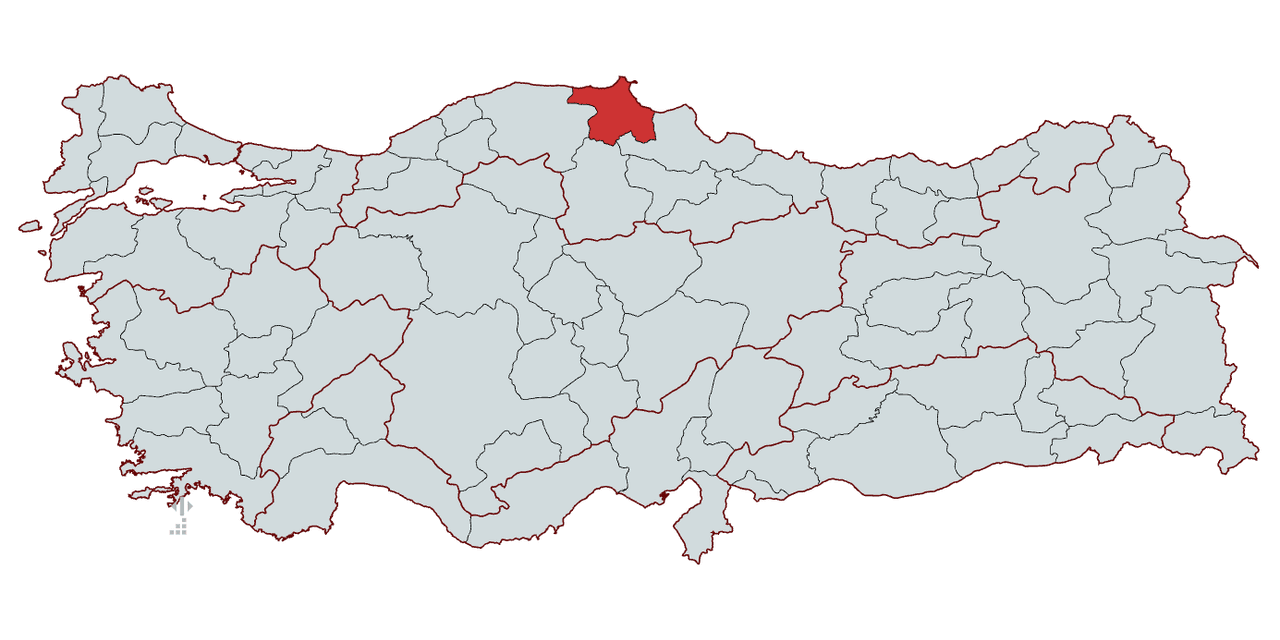
Sinop
Country | Türkiye | ||||||||
|---|---|---|---|---|---|---|---|---|---|
Area | 5.862 km² | ||||||||
Population | 226.957 | ||||||||
Districts | Ayancık Boyabat Dikmen Durağan Erfelek Gerze Saraydüzü Türkeli | ||||||||
Climate | Black Sea climate | ||||||||
License Plate | 57 | ||||||||
Area Code | 368 | ||||||||
Mayor | Metin GÜRBÜZ | ||||||||
Governor | Dr. Mustafa ÖZARSLAN | ||||||||
Important Structure | Sinop Historical Prison Boyabat Castle Paşa Tabyası Pervane Medresesi Akgöl Hamsilos Nature Park Basalt Cliffs Seyit Bilal Türbesi Sinop Archaeology Museum | ||||||||
Sinop is a coastal city in Türkiye's Black Sea Region, home to İnceburun, the country's northernmost point. With a history stretching back to the 7th century BCE, Sinop became one of the most important trade centers in the Black Sea. The city, bearing traces from the Hellenistic, Roman, Byzantine, Seljuk and Ottoman periods, attracts attention with its natural beauty and historical structures.
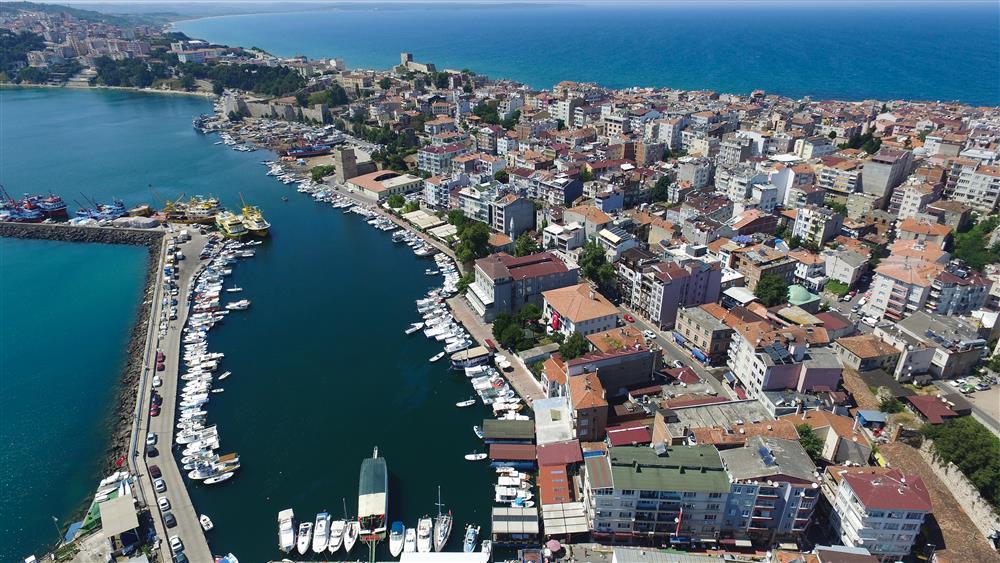
Sinop center (Photo: Sinop Provincial Directorate of Tourism)
There are various views regarding the origin of the name Sinop. The ancient city known as Sinope (Σινώπη) is explained through Greek mythology. According to legend, Sinope, a water nymph, was the daughter of the river god Asopos. The god Zeus fell in love with her and asked her to make a wish. Sinope requested that he never touch her, and thus settled in the region, naming it after herself.
Another view links the name Sinope to the Caucasian peoples of the northern Black Sea region. Some researchers suggest that the word may have originated from indigenous Anatolian or Caucasian languages. Additionally, it is claimed that the name Sinuwa appearing in Hittite texts may be connected to Sinop.
Sinop’s history extends back to the 7th century BCE. The city, known in antiquity as Sinope (Σινώπη), was founded as a colony by Milesian sailors. Thanks to its geographical location, Sinop became one of the most important trade and port centers in the Black Sea. In the 6th century BCE, Sinop came under the control of the Persian Empire. However, after Alexander the Great’s conquest of Anatolia in the 4th century BCE, Persian dominance ended and the city fell under Hellenistic influence.
In 183 BCE, King Pharnaces I of Pontus conquered Sinop and made it the capital of the Kingdom of Pontus. During this period, the city was fortified, temples were built, and it developed into a sophisticated port city. However, in 70 BCE, following a campaign led by the Roman general Lucullus, Sinop came under Roman rule. Throughout the Roman period, the city maintained its role as a military base and major trade hub, further developing through urban projects. After the Roman Empire split in 395 CE, Sinop remained under the control of the Eastern Roman (Byzantine) Empire.
After the division of Rome, Sinop became one of the Byzantine Empire’s key defensive and trade centers in the Black Sea. In the 6th century, Emperor Justinian I strengthened Sinop Kalesi and constructed several churches. During the Byzantine era, the city gained prominence through its commercial activities and Christian missionary efforts. In the 11th century, as the Byzantine Empire weakened, Sinop suffered Turkic raids and periodically came under the control of Muslim states. However, Byzantium retained control of the city for some time after the Battle of Manzikert (1071).
In 1214, a Turkish army under the command of Anatolian Seljuk Sultan I. İzzeddin Keykavus conquered Sinop. With this conquest, the city began to Turkify and developed as a trade center. The Seljuks strengthened Sinop Kalesi, repaired the harbor, and constructed various architectural structures.
During the Seljuk period, Sinop enhanced its commercial and military importance, becoming a major center for maritime trade. However, after the Mongols invaded Anatolia in 1243, Sinop came under Mongol rule. By the end of the 13th century, the city passed under the control of the Candaroğulları Beylik.
Sinop was incorporated into Ottoman territory in 1461 by Fatih Sultan Mehmet. During the Ottoman period, the city continued to serve as an important port and tersane center. Ships for the Ottoman navy were built in Sinop, renowned for its maritime trade and shipbuilding activities. During the Crimean War in 1853, the Sinop Limanı was heavily attacked by the Russian fleet. This assault became a pivotal moment in the Ottoman Empire’s modernization process, compelling the Ottomans to seek assistance from Britain and France. In the 19th century, Sinop maintained its military and strategic importance, although commercial activities declined in the late Ottoman period.
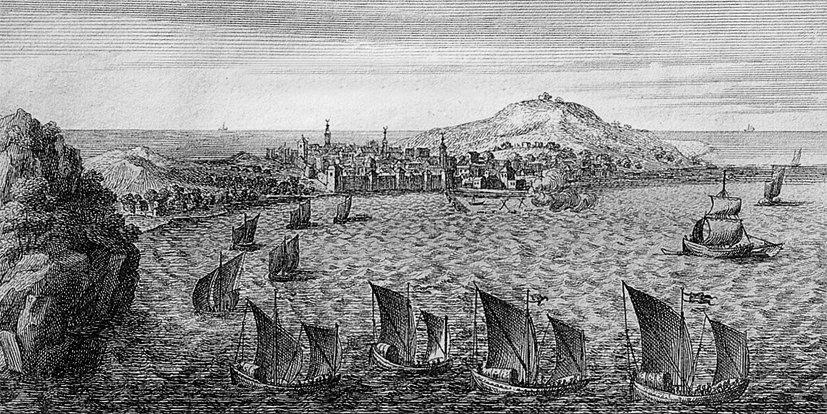
An engraving of Sinop in the early 18th century (Photo: TDV Islamic Encyclopedia)
After the proclamation of the Republic, Sinop remained one of Türkiye’s most important northern coastal cities. Although its military and commercial significance declined during the Ottoman era, the city continued its economic development through sectors such as agriculture, forestry, fishing and tourism. The Sinop Tarihi Cezaevi, a prison used since the Ottoman period and housing many notable prisoners, was closed in the 20th century and converted into a tourist site.
Sinop lies approximately between 42° 02' north latitude and 35° 09' east longitude. The city is situated on the Sinop Peninsula, which features a natural harbor on the Black Sea coast. This location has made it an important center for maritime trade throughout history. With a total area of 5,862 km², Sinop covers approximately 0.8% of Türkiye’s total land area.
To the west it borders Kastamonu, to the south Çorum, to the southeast Samsun, and to the north the Black Sea. The province’s total boundary length is 475 km, of which 300 km are land borders and 175 km are the Black Sea coastline. Natural formations such as Akliman and Hamsilos Koyu are found along Sinop’s coast. These bays have historically served as natural harbors and shelters.
Sinop experiences a Black Sea climate, characterized by mild and rainy conditions throughout the year. Summer months are generally cool, while winter months are mild and rainy. Snowfall is rare, with the highest precipitation occurring in autumn and winter. The average annual temperature in the province is around 14–15°C.
The warmest period is in July and August, when temperatures can reach up to 25°C. The coldest months are January and February, with temperatures dropping to an average of 3–4°C. Due to the influence of the Black Sea, humidity levels are high, especially along the coast. As one moves inland, the climate becomes more continental, with lower temperatures in winter and reduced precipitation.
Sinop’s vegetation is rich due to the moist and rainy conditions of the Black Sea climate. A large portion of the province is covered by forests, making it one of Türkiye’s most important forest areas. Broadleaf forests are common along the coast, while coniferous forests dominate inland regions. The most common tree species include beech, oak, hornbeam, chestnut, hazelnut, black pine and golden pine. Extensive forest areas are found particularly in regions such as Ayancık and Erfelek.
Coastal areas feature Mediterranean shrubland vegetation, with species such as laurel, strawberry tree, wild olive and heather. Additionally, wetland areas such as Sinop’s Akgöl and Sarıkum Gölü host rich aquatic vegetation and endemic plant species.
Sinop has a mountainous and rugged terrain, with mountains generally running parallel to the sea. As one approaches the central district, these elevations decrease and transition into coastal plains. Among the province’s highest points are Çangal Dağı (1,605 m) in Ayancık district and Dranaz Dağı (1,345 m) in Boyabat district.
Although Sinop lacks extensive agricultural lands, there are some flat areas suitable for farming along the coast and inland. The Boyabat Ovası, due to its proximity to the Kızılırmak, is a region with intensive agricultural activity. The Sinop Ovası is one of the largest flat areas near the center. These plains hold significant importance for agriculture and livestock farming.
Although there are no major rivers in the province, numerous small rivers flow into the Black Sea. The most important of these is the Gökırmak, which irrigates the Boyabat Ovası before joining the Kızılırmak. Other rivers such as Ayancık Çayı, Karasu Çayı, Kanlıçay (Güzelceçay), and Kabalı Çayı also reach the Black Sea.
Sinop also features natural lakes, particularly lagoon lakes along the coast. The most significant of these is Sarıkum Gölü. This lagoon lake on the Black Sea coast is of great importance for waterfowl and natural ecosystems. In addition, Akgöl in Ayancık district stands out as a valuable area for both its ecological structure and tourism potential, surrounded by forests.
The moist and rainy environment provided by the Black Sea climate has enhanced the province’s biological diversity, creating an important habitat, particularly for bird species. Sinop’s forested areas are home to mammals such as the brown bear, wolf, fox, jackal, roe deer, wild boar and badger. In inland and mountainous regions, species such as the badger, weasel and wild rabbit are also found.
Sinop’s coastal areas and lakes are of great importance for birdwatching. Sarıkum Gölü and Akgöl serve as vital stopover sites for migratory birds. The Sarıkum Nature Conservation Area is one of the breeding and sheltering grounds for several endangered waterfowl species. Common bird species along Sinop’s coasts and wetlands include the black kite, grey heron, great white egret, little egret, wild duck and shoveler. Additionally, raptors such as the hawk, sparrowhawk, falcon and owl are frequently observed along the coastline and in forested areas.
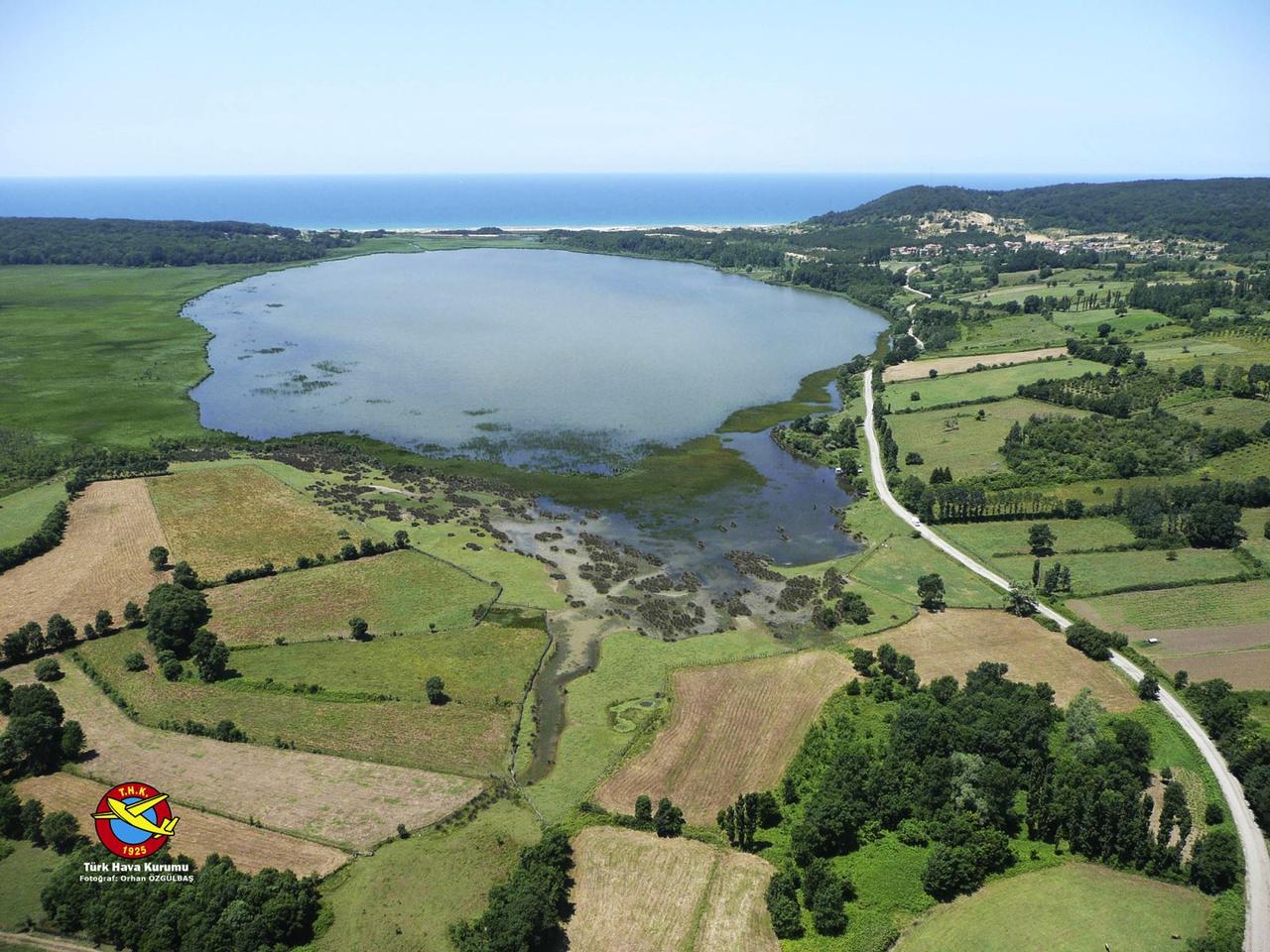
Sarıkum Gölü (Photo: Orhan Özgülbaş, Turkey Culture Portal)
With its Black Sea coastline, Sinop also serves as a transit point for migratory birds. Particularly in spring and autumn, storks and various waterfowl pass through the region. During winter months, sea ducks and gull species are commonly observed along the Black Sea coast.
Sinop’s natural structure and climate provide favorable conditions for wildlife, and studies are being conducted in protected areas to ensure the sustainability of bird populations. For this reason, Sinop is recognized as one of Türkiye’s key locations for wildlife and birdwatching.
According to the 2023 TÜİK results, Sinop’s total population is recorded as 226,957. This population constitutes approximately 0.27% of Türkiye’s total population of 85,372,377. A notable feature of the province’s demographic structure is the high proportion of elderly residents. According to 2023 data, individuals aged 65 and over account for 20.0% of the total population, placing Sinop among the provinces with the highest elderly population ratios in Türkiye.
Sinop’s demographic structure also affects its social and economic dynamics. The high proportion of elderly residents necessitates special arrangements in areas such as healthcare services, social support mechanisms and employment policies. Additionally, the declining youth population is an important factor that must be considered in the province’s long-term development plans.
Ayancık: 24,013
Boyabat: 45,494
Dikmen: 4,851
Durağan: 17,151
Erfelek: 12,795
Gerze: 30,100
Saraydüzü: 5,867
Türkeli: 16,635
Sinop’s total area is 586,200 hectares, of which 30% — 174,117 hectares — is suitable for agriculture. However, active farming occurs on 78,730 hectares. Major agricultural products include wheat, barley, maize and rice. Fruit and vegetable production also holds significant importance. Particularly apples, pears, plums and hazelnuts, as well as tomatoes, peppers and eggplants, are cultivated.
The livestock sector also plays a significant role in the province’s economy. In addition to large and small livestock farming, beekeeping and poultry farming are practiced. Furthermore, due to its Black Sea coastline, fishing is an important source of livelihood. Seafood harvesting and aquaculture hold economic value for communities living along the coast.
Sinop’s industry sector is primarily based on stone and earth-related industries and food processing. The province has seven registered chambers of artisans and tradespeople under the Union of Chambers of Artisans and Tradespeople. Businesses operating under these chambers contribute to the province’s commercial life. Industrial facilities are mostly small and medium-sized enterprises engaged in food processing, construction materials production and forest product processing.
The trade sector is developing in line with the province’s geographical location and transportation infrastructure. Sinop Port holds strategic importance for both cargo and passenger transport. Additionally, road connections facilitate domestic and international trade. Agricultural and livestock products are sold in local markets, while artisans and tradespeople offer various services.
Sinop province is notable for its rich cultural heritage and the transmission of traditional handicrafts from generation to generation. These crafts are important elements reflecting the province’s historical and cultural fabric.
In Sinop, weaving is particularly prominent in Ayancık district with flax production. Flax thread, obtained through a laborious process, is woven on looms called "düzen". From these textiles, garments such as göynek, nezgep and paça, as well as household items like sheets and towels, are produced. Additionally, woven headscarves known as "çember", worn as head coverings, are common in Boyabat, Durağan and Saraydüzü districts. Çember scarves feature striped borders and a solid central weave. "Mahrama" and "peşkir" are fine textiles used as hand and face towels, decorated with regional motifs. Mahrama is woven more densely than çember, while peşkir is thinner and longer.
Ship modeling and kotracılık, which began in the Sinop Cezaevi in the 1950s, has become a symbol of the province today. Initially practiced by prisoners, this craft later spread to the provincial center. Traditional handcrafted kots and boat models are favored as souvenirs by both local and foreign tourists. Different wood types such as walnut, hornbeam and beech are used in their production.
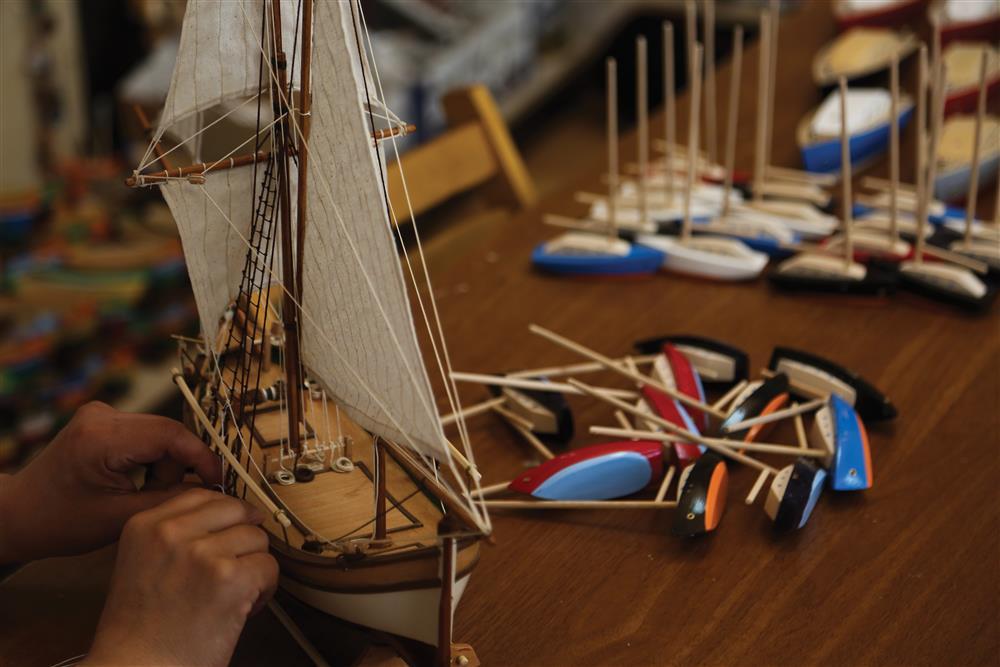
Ship modeling (Photo: Sinop Provincial Directorate of Tourism)
Knife making in Sinop is a traditional craft sustained by the Özekes family for four generations. Beginning as a hobby in 1890 by Usta Hüseyin, this tradition now plays a significant role in promoting the province. High-carbon Swedish steel is used for blades, while handles are made from buffalo or deer horn and rosewood roots. The knives produced include decorative, kitchen and hunting knives.
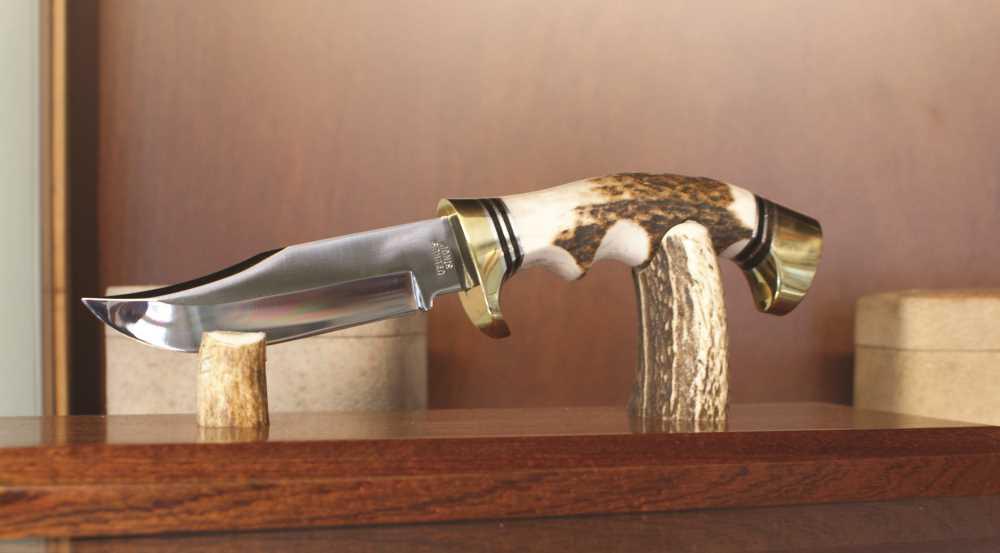
Sinop knife (Photo: Turkey Culture Portal)
Sinop’s traditional clothing reflects the province’s cultural richness. Men wear tight-legged trousers called "zıpka" and collarless shirts, while women prefer embroidered "göynek" garments and "üçetek" outfits. Head coverings include "nezgep", "fes" or "çember".
One of Sinop’s most famous structures, the Historical Sinop Prison, is built on a peninsula surrounded by sea on three sides. Constructed within the castle, the prison served various purposes over the years and is now open to visitors as a museum. Once housing famous prisoners such as Sabahattin Ali, the prison attracts attention for its architecture and history.
Hamsilos Koyu, a natural harbor, is known as Türkiye’s only fjord. This area, distinguished by its rich vegetation and natural beauty, is ideal for walking and nature photography. Hamsilos Nature Park is preserved as a unique natural wonder where green and blue merge.
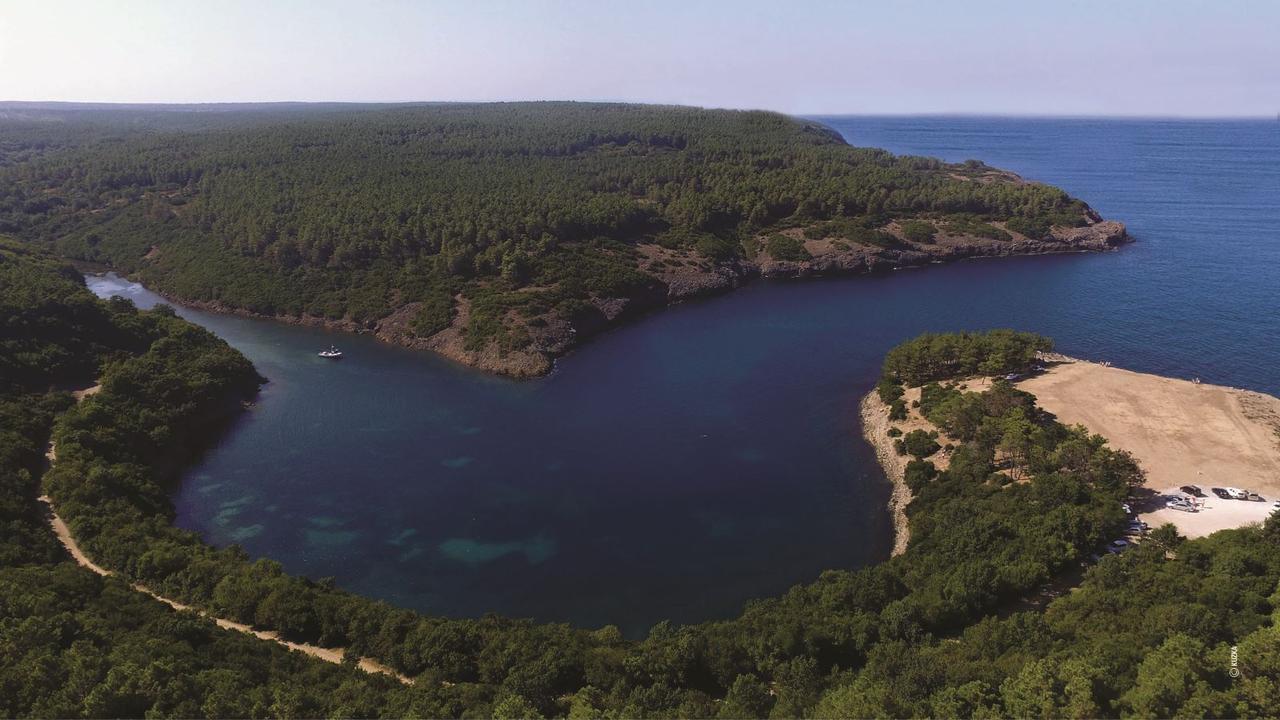
Hamsilos Nature Park (Photo: Turkey Culture Portal)
Located in Boyabat district, Boyabat Castle is built on a high rock and served as a strategic defensive point during the Byzantine, Seljuk and Ottoman periods. From the castle, one can view the landscape of Boyabat.
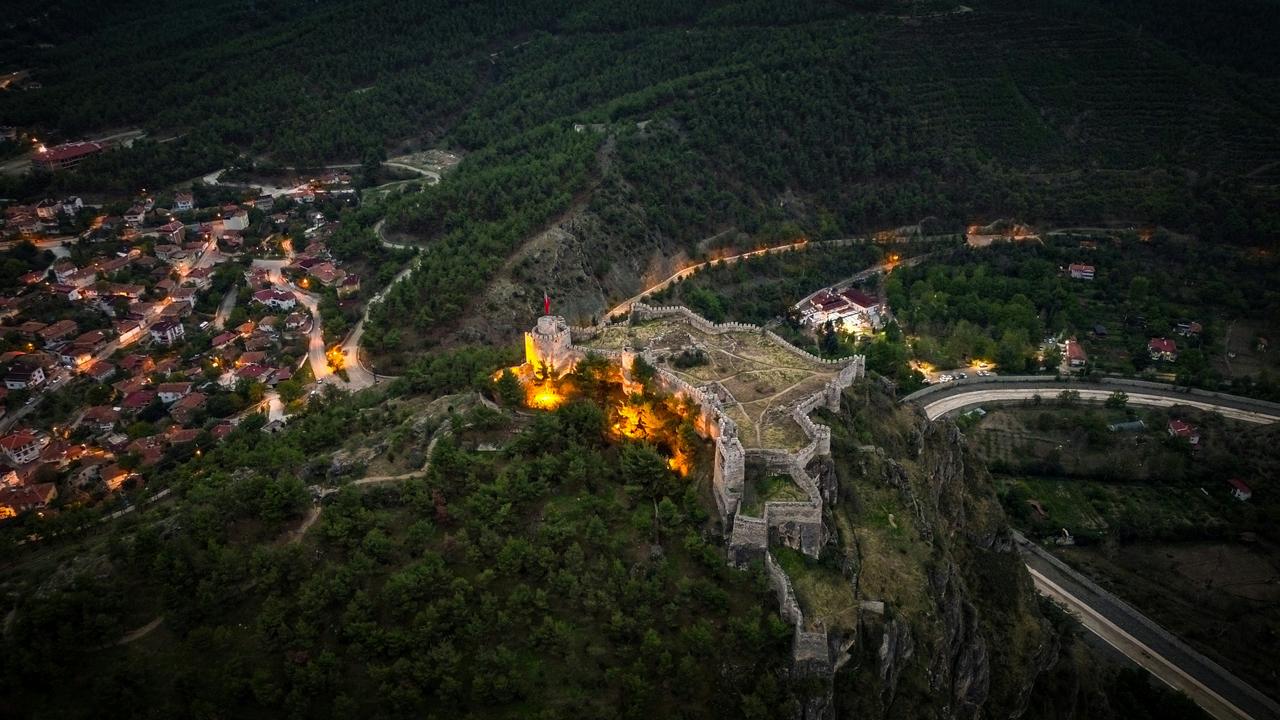
Boyabat Castle (Photo: Furkan Durmuş, pexels.com)
Akgöl, located in Ayancık district, is one of Sinop’s most important natural beauties. This lake, situated within a forest, is an ideal place for relaxation and spending time immersed in nature, thanks to its clean air and natural environment.
Built during the Ottoman period to protect Sinop Port, Paşa Tabyası stands out for its historical structure. This structure, which housed artillery batteries to defend against sea attacks, is now open to visitors.
The Sinop Archaeology Museum displays artifacts from various historical periods, revealing Sinop’s deep-rooted history. Exhibits include relics from the Roman, Byzantine and Ottoman eras.
Dating from the Seljuk period, Pervane Medresesi is currently used as an art gallery and handicraft center. It is an important stop for those wishing to view the historical structure and purchase local products.
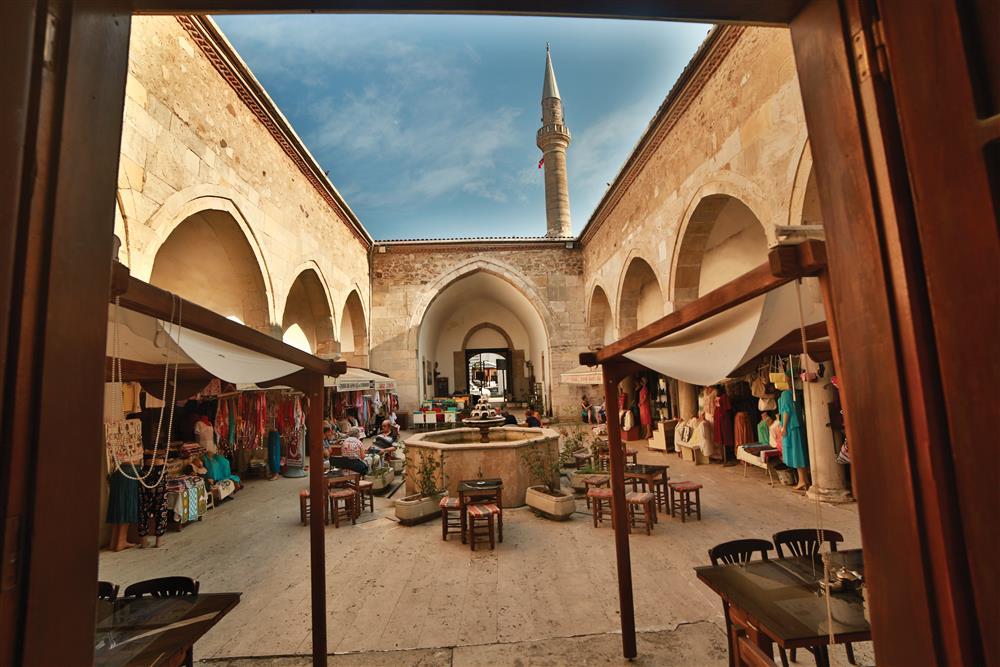
Pervane Medresesi (Photo: Sinop Provincial Directorate of Tourism)
One of Sinop’s most striking natural beauties, the Erfelek Tatlıca Waterfalls consist of 28 different cascades. The area is suitable for nature walks and camping.
The türbe of Seyit Bilal, regarded as one of the important figures in the spread of Islam in Anatolia, is an essential part of Sinop’s religious and cultural heritage.
The Basalt Cliffs, among Sinop’s natural beauties, are a geological formation created by volcanic activity, featuring columnar rock structures. Visitors can enjoy unique natural landscapes here.
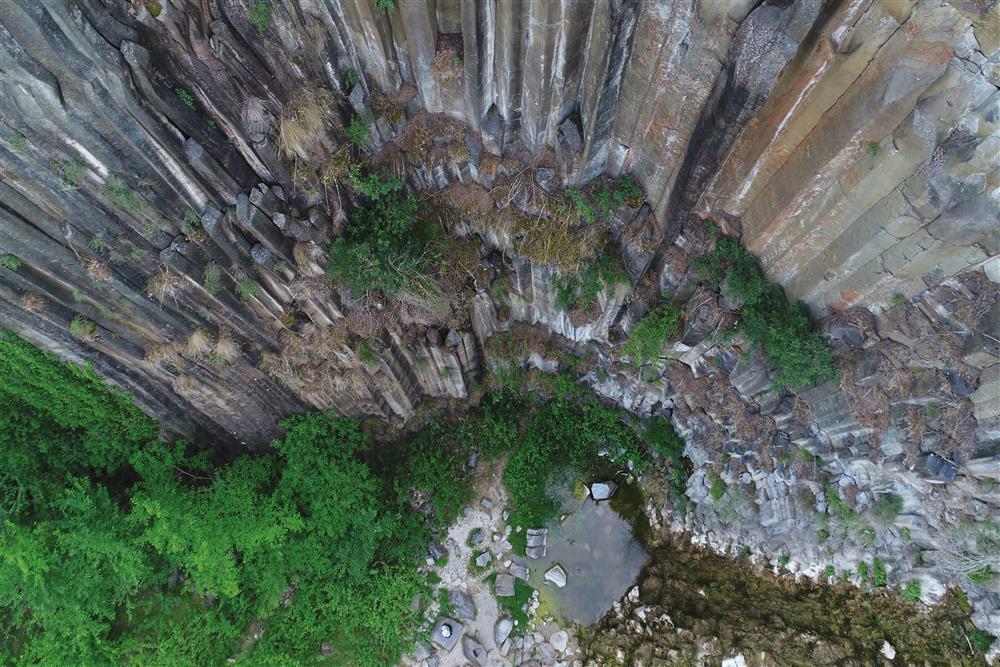
Basalt Cliffs (Photo: Sinop Provincial Directorate of Tourism)
Sinop is known as the birthplace of Diogenes (Diogenes), one of the most famous philosophers of Antiquity. The Diogenes Statue at the entrance to Sinop is a significant cultural symbol welcoming visitors. The statue depicts Diogenes holding a lantern, referencing the legend that he walked through the streets during daylight holding a lantern, saying, "I am searching for an honest man." A dog figure stands beside the statue, emphasizing Diogenes’ embrace of a natural lifestyle and his closeness to animals. This statue in Sinop not only preserves the philosopher’s legacy but also serves as a vital part of the city’s cultural identity, attracting visitors’ interest.
İçli tava, one of Sinop’s famous seafood dishes, is prepared primarily with anchovies and mackerel. After being coated in flour, the fish are fried and then baked in the oven with vegetables such as onion, tomato and pepper. Traditionally served with cornbread and salad.
Hamursuz tatlısı is a traditional dessert of Sinop cuisine. Although its name means "without dough", dough is used in its preparation. The dessert is made by rolling out a soft dough, baking it on a griddle, soaking it in water and layering it with walnuts.
Keşkek, a traditional dish with an important place in Black Sea cuisine, is prepared especially for special occasions such as weddings and festivals. Wheat and meat are cooked for a long time and then pounded into a porridge-like consistency. It is served with a sauce of red pepper sautéed in butter.
Boyabat ezmesi is a traditional dessert unique to Boyabat district, made from sugar, semolina, butter and walnuts. This dense dessert, typically prepared for guests, is traditionally garnished with crushed walnuts.
Nokul, one of Sinop’s most well-known pastry items, is made by rolling dough into a spiral shape after filling it with walnuts, raisins or minced meat. It comes in both sweet and savory varieties. Nokul is commonly consumed during breakfast or tea time and is an important part of Sinop’s cultural heritage.
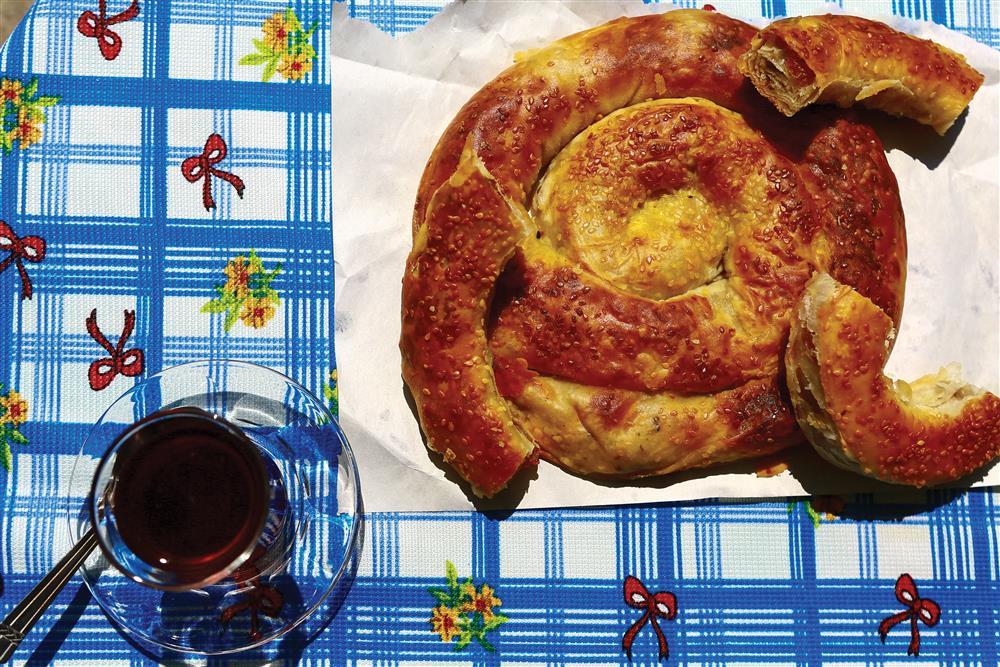
Sinop nokulu (Photo: Sinop Provincial Directorate of Tourism)
One of the most famous dishes of Sinop cuisine, Sinop mantı differs from other varieties by being made in larger pieces. The dumplings, closed in small pouch shapes, are served with yogurt and walnuts. The distinguishing feature of Sinop mantı is the addition of walnuts toasted in butter on top.
Boyabat incir uyutması is a traditional dessert unique to Boyabat district, made by allowing dried figs to naturally ferment in milk. This dessert, prepared without any additives, is both delicious and healthy due to its probiotic properties.
Sırık kebabı, a distinctive meat dish from Boyabat, is prepared by slowly rotating a whole lamb over a wood fire. The meat’s natural fats contribute to its unique flavor. This dish is particularly favored at large gatherings and special occasions and is one of the important meat dishes of Sinop cuisine.
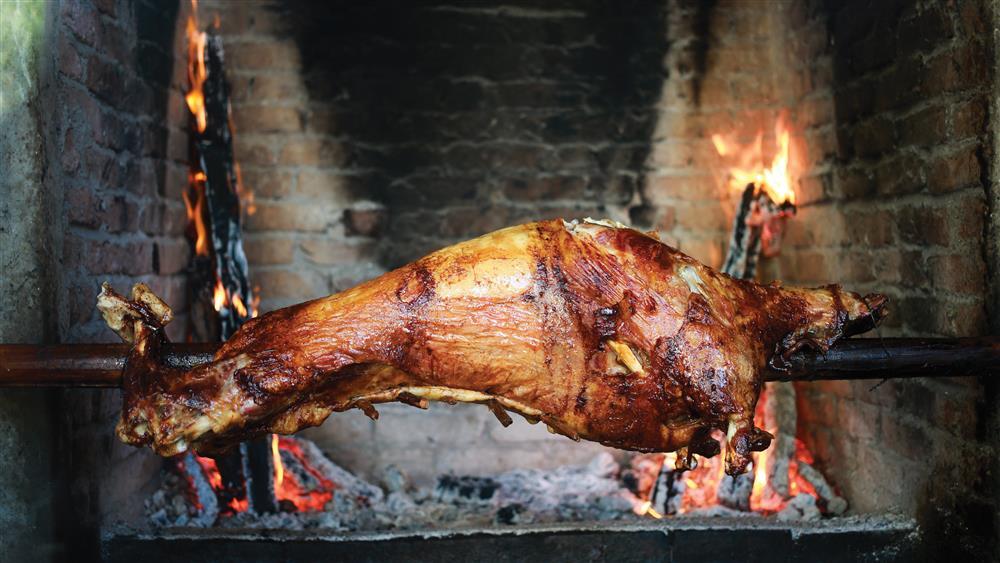
Boyabat Sırık Kebabı (Photo: Sinop Provincial Directorate of Tourism)
Sinop province has made significant progress in transportation and infrastructure. The province’s total road network spans 564 km, including 221.2 km of asphalt concrete and 342.8 km of surface paving. In road transport, the Çiftlik Tunnel and Demirciköy Tunnel on the Sinop-Samsun Motorway have made travel safer and faster. The Çiftlik Tunnel is 1,285 meters long and the Demirciköy Tunnel is 1,680 meters long.
Sinop’s maritime transport is provided through Sinop Limanı, one of the natural harbors of the Black Sea. However, the current port is primarily used as a fishing harbor and is not fully utilized for sea transport. For air transport, Sinop Havalimanı serves the province’s air traffic needs.
Governor
Dr. Mustafa ÖZARSLAN currently serves as the Governor of Sinop. Appointed to the position of Sinop Governor by Presidential Decree No. 2023/376 dated 09.08.2023, published in the Official Gazette No. 32275 on 10.08.2023, Dr. Mustafa ÖZARSLAN assumed office on 18.08.2023.【1】
Furkan, Durmuş. Boyabat Kalesi [JPG]. Accessedhttps://unsplash.com/photos/an-aerial-view-of-a-city-at-night-spwRWJFPPfc.
Mehmet, Öz. "Sinop." TDV İslam Ansiklopedisi. Accessed February 19, 2025.https://islamansiklopedisi.org.tr/sinop
Ministry of Culture and Tourism. "Akgöl." Türkiye Kültür Portalı. Accessed February 20, 2025.https://www.kulturportali.gov.tr/turkiye/sinop/gezilecekyer/akgol
Ministry of Culture and Tourism. "Alaaddin Camii." Türkiye Kültür Portalı. Accessed February 20, 2025.https://www.kulturportali.gov.tr/turkiye/sinop/gezilecekyer/alaaddin-cami
Ministry of Culture and Tourism. "Bazalt Kayalıkları." Türkiye Kültür Portalı. Accessed February 20, 2025.https://www.kulturportali.gov.tr/turkiye/sinop/gezilecekyer/bazalt-kayaliklari
Ministry of Culture and Tourism. "Boyabat Kalesi." Türkiye Kültür Portalı. Accessed February 20, 2025.https://www.kulturportali.gov.tr/turkiye/sinop/gezilecekyer/boyabat-kalesi
Ministry of Culture and Tourism. "Durakhan." Türkiye Kültür Portalı. Accessed February 20, 2025.https://www.kulturportali.gov.tr/turkiye/sinop/gezilecekyer/durakhan
Ministry of Culture and Tourism. "Hamsilos Tabiat Parkı." Türkiye Kültür Portalı. Accessed February 20, 2025.https://www.kulturportali.gov.tr/turkiye/sinop/gezilecekyer/hamsilos-tabiat-parki
Ministry of Culture and Tourism. "Hamursuz Tatlısı - Sinop." Türkiye Kültür Portalı. Accessed February 19, 2025.https://www.kulturportali.gov.tr/turkiye/sinop/neyenir/hamursuz-tatlisi
Ministry of Culture and Tourism. "Hamursuz Tatlısı." Türkiye Kültür Portalı. Accessed February 20, 2025.https://www.kulturportali.gov.tr/turkiye/sinop/neyenir/hamursuz-tatlisi
Ministry of Culture and Tourism. "Naltı Mağarası."Türkiye Kültür Portal. Accessed February 20, 2025.https://www.kulturportali.gov.tr/turkiye/sinop/gezilecekyer/nalti--magarasi
Ministry of Culture and Tourism. "Paşa Tabyası." Türkiye Kültür Portalı. Accessed February 20, 2025.https://www.kulturportali.gov.tr/turkiye/sinop/gezilecekyer/pasa-tabyasi
Ministry of Culture and Tourism. "Pervane Medresesi." Türkiye Kültür Portalı. Accessed February 20, 2025.https://www.kulturportali.gov.tr/turkiye/sinop/gezilecekyer/pervane-medresesi
Ministry of Culture and Tourism. "Sarıkum Tabiatı Protection Area - Sinop." Türkiye Kültür Portalı. Accessed February 19, 2025.https://www.kulturportali.gov.tr/turkiye/sinop/gezilecekyer/sarikum-tabiati-koruma-alani
Ministry of Culture and Tourism. "Seyit Bilal Türbesi." Türkiye Kültür Portalı. Accessed February 20, 2025.https://www.kulturportali.gov.tr/turkiye/sinop/gezilecekyer/seyit-bilal-turbesi
Ministry of Culture and Tourism. "Sinop Arkeoloji Museum."Türkiye Kültür Portal. Accessed February 20, 2025.https://www.kulturportali.gov.tr/turkiye/sinop/gezilecekyer/arkeoloji-muzesi818942
Ministry of Culture and Tourism. "Sinop Tarihi Cezaevi." Türkiye Kültür Portalı. Accessed February 20, 2025.https://www.kulturportali.gov.tr/turkiye/sinop/gezilecekyer/tarihi-cezaevi
Ministry of Culture and Tourism. "Sinop." Türkiye Kültür Portalı. Accessed February 19, 2025.https://www.kulturportali.gov.tr/turkiye/sinop/genelbilgiler
Ministry of Culture and Tourism. "Sinop’ta Gezilecek Yerler." Türkiye Kültür Portalı. Accessed February 20, 2025.https://www.kulturportali.gov.tr/turkiye/sinop/gezilecekyer
Ministry of Culture and Tourism. "Tatlıca Şelaleleri." Türkiye Kültür Portalı. Accessed February 20, 2025.https://www.kulturportali.gov.tr/turkiye/sinop/gezilecekyer/tatlica-selaleleri
Ministry of Culture and Tourism. "İçli Tava - Sinop." Türkiye Kültür Portalı. Accessed February 19, 2025.https://www.kulturportali.gov.tr/turkiye/sinop/neyenir/cli-tava
Ministry of Culture and Tourism. "İçli Tava." Türkiye Kültür Portalı. Accessed February 20, 2025.https://www.kulturportali.gov.tr/turkiye/sinop/neyenir/cli-tava
Ministry of Culture and Tourism. Knife Making in Sinop - Sinop [JPG]. Türkiye Kültür Portalı. Accessed [insert date from CITATION_LINK_0].https://www.kulturportali.gov.tr/turkiye/sinop/kulturatlasi/bicakcilik936875
Ministry of Culture and Tourism.Hamsilos Tabiat Park - Sinop [JPG]. Türkiye Kültür Portalı. Accessed [insert date from CITATION_LINK_0].https://www.kulturportali.gov.tr/turkiye/sinop/gezilecekyer/hamsilos-tabiat-parki
Ministry of Culture and Tourism.Sarıkum Tabiatı Conservation Area - Sinop [JPG]. Türkiye Kültür Portalı. Accessedhttps://www.kulturportali.gov.tr/turkiye/sinop/gezilecekyer/sarikum-tabiati-koruma-alani
Nişanyan Yeradları. "Sinop." Türkiye ve Çevre Ülkeler Yerleşim Birimleri Envanteri. Accessed February 19, 2025.https://www.nisanyanyeradlari.com/?y=Sinop&ul=Hepsi&o=c&s=1&n=0
Research Sources
Sinop Valiliği. "Seyyid İbrahim Bilal Hazretleri." T.C. Sinop Valiliği Resmi Web Sitesi. Accessed February 20, 2025.http://www.sinop.gov.tr/seyyid-ibrehim-bilal-hazretleri
Sinop Valiliği. "Sinop Ekonomisi." T.C. Sinop Valiliği Resmi Web Sitesi. Accessed February 20, 2025.http://www.sinop.gov.tr/ekonomi
Sinop Valiliği. "Sinop Turizm." T.C. Sinop Valiliği Resmi Web Sitesi. Accessed February 20, 2025.http://www.sinop.gov.tr/turizm
Sinop Valiliği. "Sinop’ta Eğitim." T.C. Sinop Valiliği Resmi Web Sitesi. Accessed February 20, 2025.http://www.sinop.gov.tr/egitim
Sinop İl Directorate of Culture and Tourism. "Coğrafi Konum." Ministry of Culture and Tourism of the Republic of Turkey. Accessed February 19, 2025.https://sinop.ktb.gov.tr/TR-168345/cografi-konum.html
Sinop İl Directorate of Culture and Tourism. "Galeri." Ministry of Culture and Tourism of the Republic of Türkiye. Accessed February 19, 2025.https://sinop.ktb.gov.tr/TR-382225/galeri.html
Sinop İl Directorate of Culture and Tourism. "Sinop Florası." Ministry of Culture and Tourism of the Republic of Turkey. Accessed February 19, 2025.https://sinop.ktb.gov.tr/TR-168308/sinop-florasi.html
Sinop İl Directorate of Culture and Tourism. "İklim." Ministry of Culture and Tourism of the Republic of Turkey. Accessed February 19, 2025.https://sinop.ktb.gov.tr/TR-168344/iklim.html
T.C. Sinop Valiliği. "Coğrafya." Accessed February 19, 2025.http://www.sinop.gov.tr/cografya
T.C. Sinop Valiliği. "Demografik Yapı." Accessed February 19, 2025.http://www.sinop.gov.tr/demografik-yapi
T.C. Sinop Valiliği. "El Sanatları." Accessed February 19, 2025.http://www.sinop.gov.tr/el-sanatlari
T.C. Sinop Valiliği. "Ne Yenir?" Accessed February 19, 2025.http://www.sinop.gov.tr/ne-yenir
T.C. Sinop Valiliği. "Ne Yenir?" Accessed February 20, 2025.http://www.sinop.gov.tr/ne-yenir
T.C. Sinop Valiliği. "Orman." Accessed February 19, 2025.http://www.sinop.gov.tr/orman
T.C. Sinop Valiliği. "Tarih." Accessed February 19, 2025.http://www.sinop.gov.tr/tarih
T.C. Sinop Valiliği. "Tarım." Accessed February 19, 2025.http://www.sinop.gov.tr/tarim
T.C. Sinop Valiliği. "Vali." Accessed February 20, 2025.http://www.sinop.gov.tr/vali-mustafa-ozarslan
T.C. Sinop Valiliği. “Diyojen.” Accessed February 20, 2025.http://www.sinop.gov.tr/diyojen
Türkiye İstatistik Kurumu. "Toplam Nüfus." Accessed February 19, 2025.https://cip.tuik.gov.tr/
Visual Sources
[1]
T.C. Sinop Valiliği,“Vali,” Son erişim: 20 Şubat 2025, http://www.sinop.gov.tr/vali-mustafa-ozarslan

Sinop
Country | Türkiye | ||||||||
|---|---|---|---|---|---|---|---|---|---|
Area | 5.862 km² | ||||||||
Population | 226.957 | ||||||||
Districts | Ayancık Boyabat Dikmen Durağan Erfelek Gerze Saraydüzü Türkeli | ||||||||
Climate | Black Sea climate | ||||||||
License Plate | 57 | ||||||||
Area Code | 368 | ||||||||
Mayor | Metin GÜRBÜZ | ||||||||
Governor | Dr. Mustafa ÖZARSLAN | ||||||||
Important Structure | Sinop Historical Prison Boyabat Castle Paşa Tabyası Pervane Medresesi Akgöl Hamsilos Nature Park Basalt Cliffs Seyit Bilal Türbesi Sinop Archaeology Museum | ||||||||
Etymology
History of Sinop
Ancient Period
Byzantine Period
Seljuk Period
Ottoman Period
Republican Period
Geography
Location and Boundaries
Climate and Vegetation
Topography
Mountains
Plains
Rivers and Lakes
Wildlife
Demographic Structure
Districts and Population (2023)
Economy
Agriculture and Livestock
Trade and Industry
Culture and Tourism
Traditional Handicrafts
Weaving and Textile Products
Ship Modeling and Kotracılık
Knife Making
Traditional Clothing
Tourist Sites
Sinop Tarihi Cezaevi
Hamsilos Nature Park
Boyabat Castle
Akgöl
Paşa Tabyası
Sinop Archaeology Museum
Pervane Medresesi
Erfelek Tatlıca Waterfalls
Seyit Bilal Türbesi
Basalt Cliffs
Diogenes Statue
Cuisine
İçli Tava
Hamursuz Tatlısı
Keşkek
Boyabat Ezmesi
Sinop Nokulu
Sinop Mantısı
Boyabat İncir Uyutması
Boyabat Sırık Kebabı
Transportation and Infrastructure
Local Administration