


This article was automatically translated from the original Turkish version.
+1 More
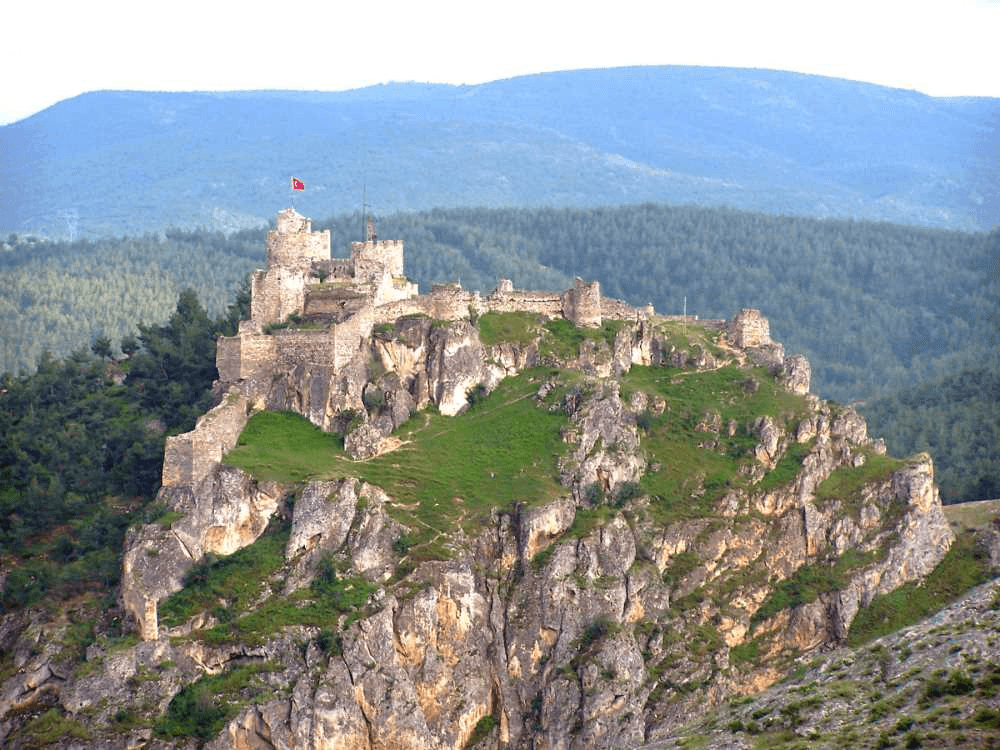
Boyabat Castle
Location | Boyabat Türkiye Sinop | ||||||||
|---|---|---|---|---|---|---|---|---|---|
Original Construction Date | 7th century BC | ||||||||
Periods of Use | Roman Empire Byzantine Empire Ottoman State Paphlagonia | ||||||||
Founding Civilization | Paphlagonia | ||||||||
Boyabat Castle is a historical fortress located in the Boyabat district of Sinop, in Türkiye’s Black Sea Region. Originally constructed by the Paphlagonians in the 7th century BCE, the castle was subsequently used during the Roman, Byzantine, and Ottoman periods, reflecting the architectural styles of these eras. Built on a steep cliff overlooking the Gökırmak Valley, the structure is not only a defensive fortification but also stands out as an archaeological site due to its underground cities and tunnels.
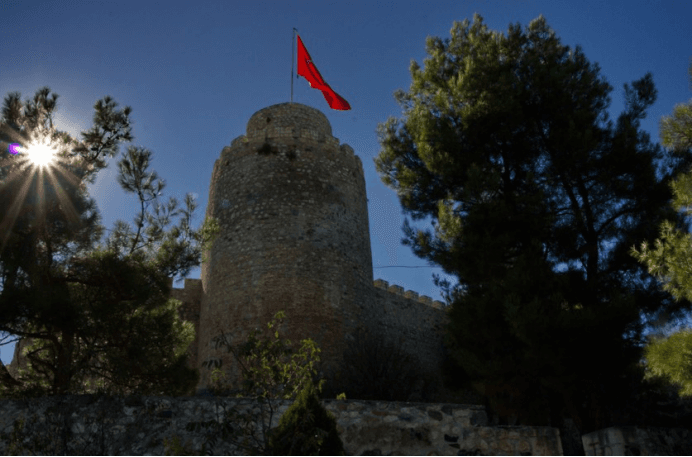
Side view of Boyabat Castle. (Boyabat Municipality)
Boyabat Castle is situated on one of two opposing steep cliffs in the Gökırmak Valley. The fortress was constructed in harmony with the natural topography, preserving the original form of the rock formations. This strategic location provided substantial defensive advantages.
The castle walls incorporate both circular and rectangular towers. Stone staircases lead up to the internal towers. Access to the castle is via a small gate located beside the large circular tower in the southeast corner. The castle’s exterior appearance and building materials reflect Ottoman architectural style.
Beneath the castle lies an underground city composed of labyrinthine tunnels. According to archaeologists, these tunnels extend beneath the district of Boyabat, forming an extensive subterranean network. Remains dating to the Roman and Byzantine periods have been found within these underground chambers.
Boyabat Castle attracts the interest of history and archaeology enthusiasts due to its historical significance as well as its natural and mysterious structure. Its striking appearance during misty weather offers an appealing landscape for photographers. The castle is one of the cultural and touristic heritage assets that enrich the region.
Boyabat Belediyesi. "Natural Beauties." *Boyabat Municipality Official Website*. Accessed May 24, 2025. https://www.boyabat.bel.tr/icerik/dogal-guzellikler
Ministry of Culture and Tourism of the Republic of Türkiye. "Boyabat Kalesi." *Kültür Portalı*. Accessed May 13, 2025. https://www.kulturportali.gov.tr/turkiye/sinop/gezilecekyer/boyabat-kalesi
NTV. "Boyabat Kalesi 2 Bin 700 Yıldır Tarihe Meydan Okuyor." NTV Yaşam-Gezi. Accessed May 24, 2025. https://www.ntv.com.tr/galeri/n-life/gezi/boyabat-kalesi-2-bin-700-yildir-tarihe-meydan-okuyor,lVn0OODmZUe9IssbT6gjSw
T.C. Ministry of Culture and Tourism. "Kaleler." *Sinop İl Kültür veTurizm Müdürlüğü. Accessed May 24, 2025. https://sinop.ktb.gov.tr/TR-74872/kaleler.html

Boyabat Castle
Location | Boyabat Türkiye Sinop | ||||||||
|---|---|---|---|---|---|---|---|---|---|
Original Construction Date | 7th century BC | ||||||||
Periods of Use | Roman Empire Byzantine Empire Ottoman State Paphlagonia | ||||||||
Founding Civilization | Paphlagonia | ||||||||
History
Location and Natural Setting
Architectural Features
Underground City and Tunnels
Cultural and Touristic Value