


This article was automatically translated from the original Turkish version.
+1 More
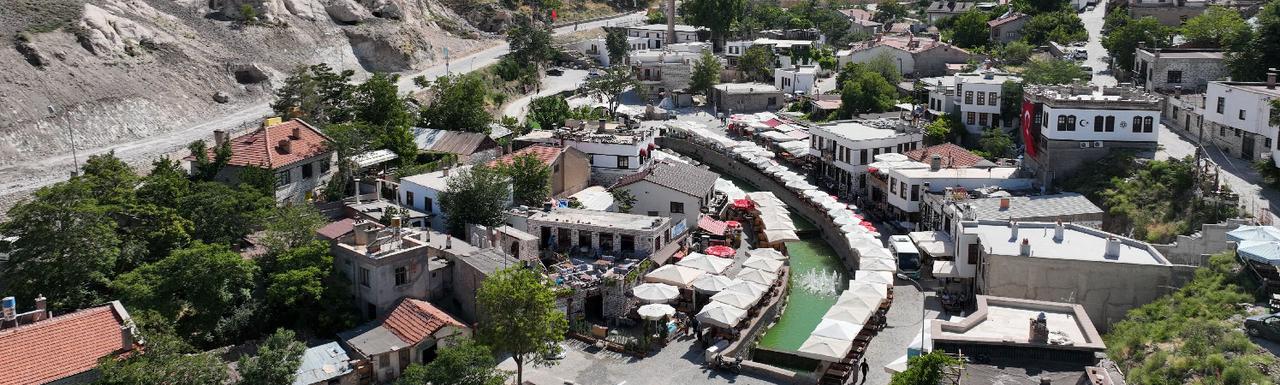
Sille Ancient City
Location | Konya Province Türkiye Selçuklu District | ||||||||
|---|---|---|---|---|---|---|---|---|---|
History | It has a history of approximately 5,000 years. | ||||||||
Tourism and Conservation | Sille has been proposed for UNESCO World Heritage status. | ||||||||
Sille is a neighborhood under the district of Selçuklu in Konya Province, located in Türkiye’s Central Anatolia Region. Geographically, it lies in the northwestern part of the Konya Plain, approximately 7 to 8 kilometers from the current city center. The region is rich in natural geographical features and water resources; particularly, the valley of the Sille Stream has provided a favorable microclimate and agricultural opportunities for settlement. Thanks to these characteristics, Sille has been a sustainable settlement throughout history.
Archaeological and historical research indicates that Sille has a settlement history of approximately five thousand years. In this context, the region is regarded as one of Anatolia’s oldest and continuously inhabited areas. Throughout history, Sille has come under the rule of numerous civilizations including the Hittites, Phrygians, Lydians, Persians, Romans, Byzantines, Seljuks and Ottomans. As a result, the region presents a culturally and historically layered structure.
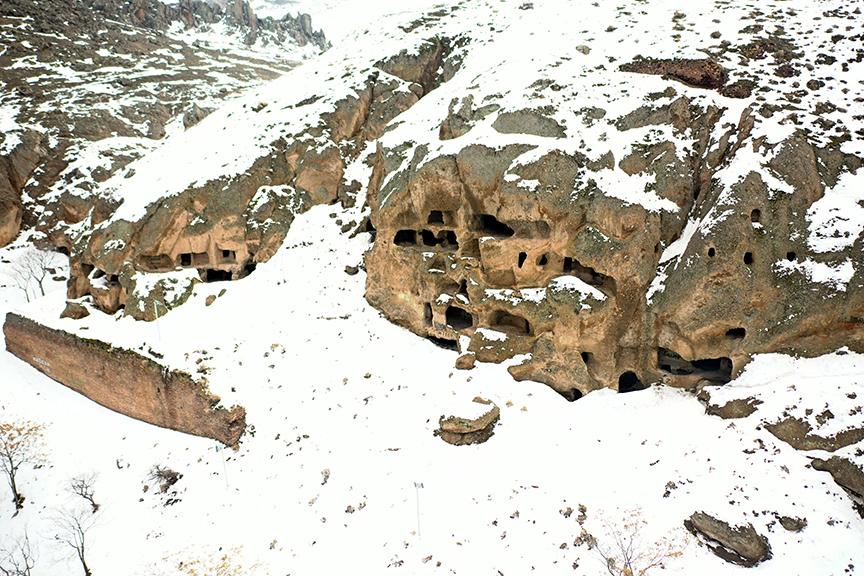
Sille - Anadolu Ajansı
Its location along important trade routes in early Anatolia facilitated Sille’s development and encouraged interaction among diverse cultures. The region especially rose to prominence as a significant religious and cultural center during the Roman and Byzantine periods. With the spread of Christianity during the Byzantine era, rock-hewn churches, monasteries and places of worship were constructed in Sille. These structures have enhanced the region’s significance in the history of early Christianity.
Geographically, Sille is situated in a valley surrounded by hills and mountains. This naturally protected location provided advantages for the security and continuity of settlement throughout history. The region’s distinctive local stone and limestone were used in construction, giving Sille its unique architectural silhouette. The orchards, gardens and agricultural fields within the settlement have formed the economic and cultural foundation of Sille’s way of life.
Throughout history, Sille has been one of the rare settlements in Anatolia where different ethnic and religious groups lived together. This settlement, where Muslim and Christian communities coexisted in harmony, has survived to the present day as a concrete example of Anatolia’s multicultural structure.
Sille’s historical background possesses the character of a microcosm of Anatolia’s broader historical geography. Due to its geographical position, natural environment and multi-layered historical processes, Sille continues to be an important area of research for understanding the development of Anatolian civilizations.
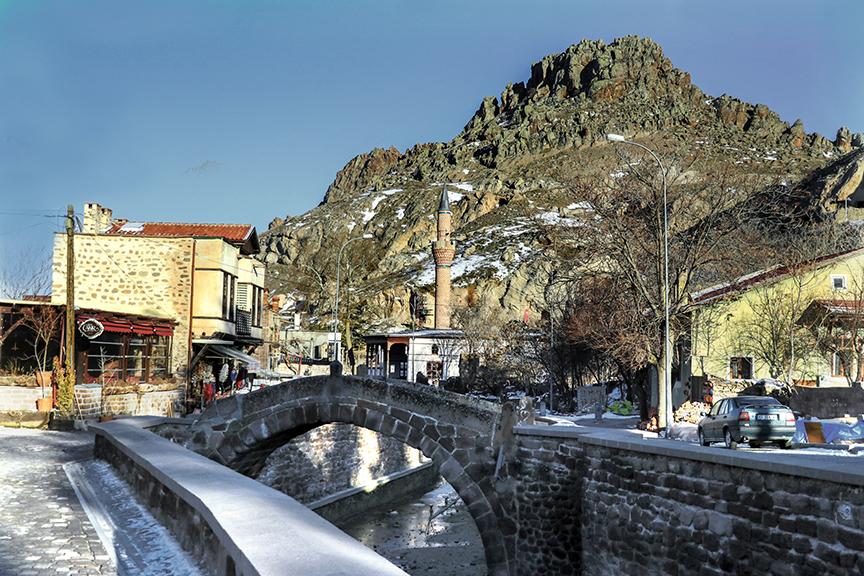
Sille Antik Kenti(Anadolu Ajansı)
One of the most significant structures in Sille’s history is the Church of Saint Helena, built in 327 CE by Helena, mother of the Byzantine Emperor Constantine I. During a pilgrimage to Jerusalem, Helena visited Konya and, upon seeing the carved sanctuaries in the area, decided to commission a church in Sille. Records indicate she personally attended the foundation ceremony. The Church of Saint Helena has been preserved to the present day through various restoration and repair efforts over the centuries.
The church is among the important religious structures of the Early Christian period in Anatolia. Additionally, the mosques in the region have served as vital spaces for both religious and social life. The materials, decorations and architectural styles used in these mosques are tangible indicators of the artistic and cultural interactions in the area. Examples can be seen in the interior and exterior architecture where Seljuk and Ottoman artistic styles are blended.
The survival of these works of Seljuk and Ottoman architecture is the result of restoration and conservation efforts in the region. These structures function not only as historical heritage but also as living spaces that preserve the region’s cultural memory. The architectural monuments of Sille possess the character of an open-air museum, offering observable evidence of the cultural transformations and architectural evolution Anatolia has undergone throughout history.
Sille is one of the rare settlements in Anatolia where Muslims and non-Muslims have lived together throughout history. The neighborhood contains both churches and mosques, reflecting its religious diversity and historical atmosphere of peace. Sille’s social structure is composed of a cultural mosaic shaped by traditional customs, habits and ways of life.
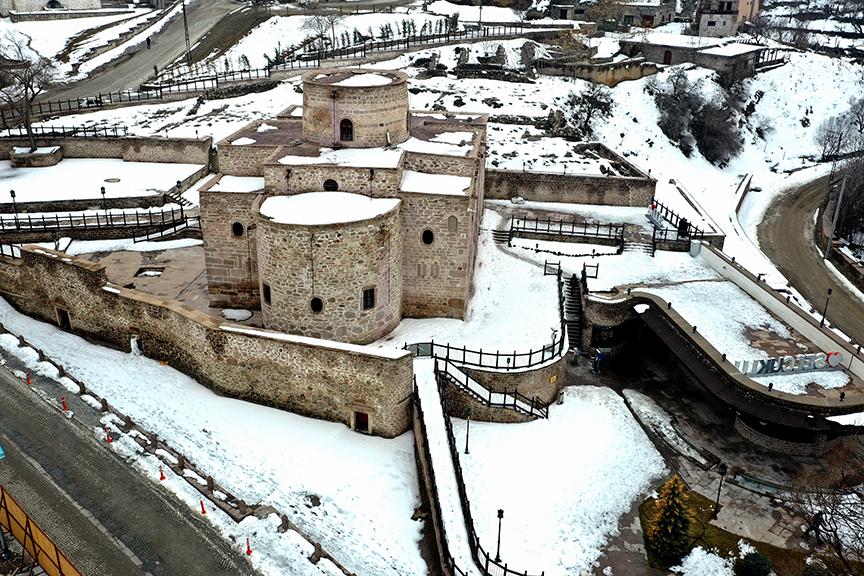
Sille Antik Kenti(Anadolu Ajansı)
In recent years, Sille has become a focal point for both domestic and international tourists due to its historic houses and natural beauty. The rehabilitation of the stream connected to the Sille Dam and the opening of social spaces have enhanced the region’s appeal. Historic houses, caves, the Zaman Museum, Karataş Mosque and Şeytan Köprüsü are among the sites visited extensively by tourists. The region is particularly significant for photography and cultural tourism.
Opened in 2017 after restoration by the Selçuklu Municipality, the Sille Museum showcases the region’s cultural and historical richness. In this two-story museum covering 750 square meters, visitors are presented with artifacts including the Kisve-i Şerif (inner covering of the Kaaba) discovered during the restoration of Çay Camii, manuscripts from the Sille Medresesi, pottery, carpets, clothing and objects related to the hammam culture. The museum also houses rubber sandals made from the first patented product of Konya: truck tires. The museum is open six days a week, except on Mondays, and offers free guided tours.
Sille(Konya Büyükşehir)
Culture Portal, "Sille", Accessed May 15, 2025.
Selçuklu Belediyesi, “Sille Müzesi, Konya ve Sille’nin Tarihi ve Kültürel Geçmişine Işık Tutuyor”, Accessed May 15, 2025.
Selçuklu Belediyesi, “Sille”, Accessed May 15, 2025.
Tapur, T. (2015). *Konya’da tarihi bir yerleşim merkezi: Sille*. Dergipark, 2009 (53), 15–30.https://dergipark.org.tr/tr/download/article-file/198463, Accessed May 15, 2025.
YouTube. "Sille Tarihi ve Kültürel Tanıtım Videosu." Accessed May 15, 2025.https://www.youtube.com/watch?v=tXlZR1Gx0o4
Özyurt, M. Ş., & Dişli, G. (2025). *Tarihi Sille Kenti UNESCO Dünya Miras Adaylığı Önerisi*. Dergipark.https://dergipark.org.tr/en/download/article-file/1105035, Accessed May 15, 2025.

Sille Ancient City
Location | Konya Province Türkiye Selçuklu District | ||||||||
|---|---|---|---|---|---|---|---|---|---|
History | It has a history of approximately 5,000 years. | ||||||||
Tourism and Conservation | Sille has been proposed for UNESCO World Heritage status. | ||||||||
Early Christianity and the Church of Saint Helena
Cultural and Social Structure
Tourism and Conservation Efforts
Sille Museum and the Preservation of Cultural Heritage