


This article was automatically translated from the original Turkish version.
Silifke Cennet Cehennem Caves
Geographical Shape | Obruk | ||||||||
|---|---|---|---|---|---|---|---|---|---|
Location | Mersin Silifke | ||||||||
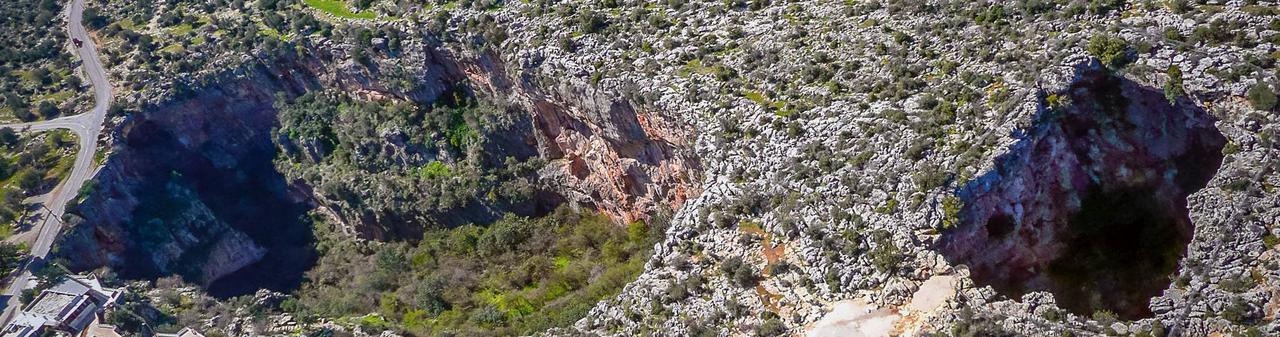
Paradise Sinkhole is located approximately 25 km from the town center of Silifke, 2 km from Narlıkuyu Port and 5 km from Korykos (Kızkalesi)place. This natural formation is a collapse caused by the dissolution of limestone layers by underground water movements. The entrance of this elliptical sinkhole measures 250 by 110 meters and has a depth of 70 meters.
The Paradise Sinkhole is a collapse structure formed by underground water flow dissolving limestone layers and gradually expanding over time. Its formation is the result of millions of years of subterranean processes. This collapse occurred as the limestone beds in the earth’s crust dissolved and the vertical strata sank downward.
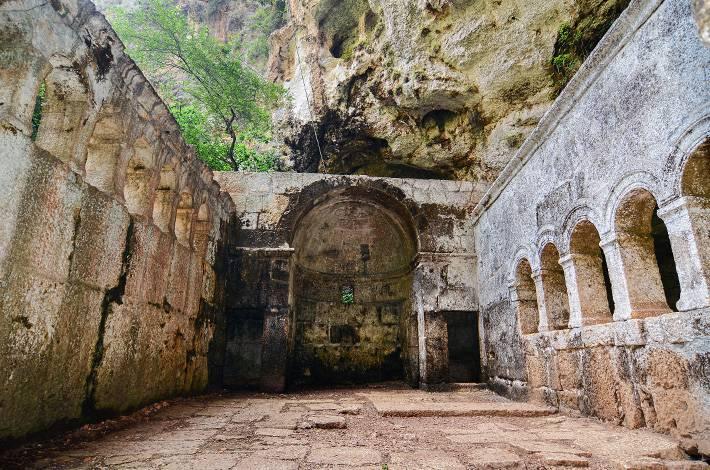
At the bottom of the Paradise Sinkhole stands a church built with cut stone blocks, the Church of the Virgin Mary. The church has a rectangular plan oriented in an east-west direction. Its apse is decorated with frescoes depicting figures from Christian iconography, including Jesus Christ and the Apostles. This structure, dated to the 5th century AD, has become one of the most significant religious sites in the region over time.
Access to the Paradise Sinkhole is via a staircase consisting of 450 steps, which leads down to the entrance of the cave. This area offers visitors the opportunity to observe its natural and historical beauty and serves as an accessible point for those wishing to explore the region’s geological and cultural heritage.
Hell Sinkhole is located approximately 75 meters north of the Paradise Sinkhole. Its entrance measures 75 by 50 meters and has a depth of 128 meters. Due to its concave edges, descent into the sinkhole is impossible. The physical structure of the sinkhole has created a deep and hazardous natural depression.
Hell Sinkhole holds a significant place in Greek mythology. According to myth, Zeus defeated the many-headed dragon Typhon here and imprisoned him in this location for a time before burying him beneath Mount Etna. This mythological association enhances the sinkhole’s historical and cultural significance and reinforces regional interest.
The Hell Sinkhole, like the Paradise Sinkhole, is a collapse formed by the action of underground water flow. However, unlike the Paradise Sinkhole, the Hell Sinkhole has concave edges that prevent descent into it. With a depth of 128 meters, the surrounding rocky formations enhance its visual impact.
Paradise-Hell Sinkholes - Müze Kart
Temple of Zeus is located at the southern end of the Paradise Sinkhole. This structure dates to the Hellenistic Period and was built in the Doric order. The temple draws attention due to its size and architectural design, although only limited portions have survived to the present day.
On the stones of the temple’s northern wall, the names of 130 priests from the Hellenistic and Roman periods are inscribed. These inscriptions indicate that the temple was used over a long period and that its religious function continued through different eras. The temple served not only as a center of worship but also as a reflection of the region’s political and cultural structure.
Over time, with the transition to Christianity, the temple was converted into a church. This transformation reflects the religious changes in the region. The southern portion of the temple was later destroyed and has not survived to the present day. The internal modifications of the temple reveal the evolution of religious architecture in the area.
The Paradise and Hell Sinkholes are natural collapses formed by the dissolution of limestone layers due to underground water movements. These geological formations emerged over millions of years. The subterranean water activity in the region enabled the creation of such sinkholes, making this process of great importance to the area’s natural history.
The structures surrounding the Paradise and Hell Sinkholes are integral parts of the region’s historical and cultural heritage. The Church of the Virgin Mary, the Temple of Zeus, and other ancient structures are significant remnants reflecting the religious and cultural past of the area. These buildings hold both historical and architectural value.
The Paradise and Hell Sinkholes are not merely natural formations but also sites containing deep archaeological layers. Ancient churches, temples, and other religious structures provide evidence of the region’s different historical periods. These archaeological layers are of great importance for understanding the historical evolution of the region.
Anadolu Ajansı. (2021, July 9). Yenilenen yüzüyle Cennet Cehennem Obrukları'na yılda 500 bin turist çekmek hedefleniyor. *Anadolu Ajansı*. Accessedhttps://www.aa.com.tr/tr/turkiye/yenilenen-yuzuyle-cennet-cehennem-obruklarina-yilda-500-bin-turist-cekmek-hedefleniyor/2262569.
Türkiye Cumhuriyeti Kültür ve Turizm Bakanlığı. (n.d.). *Cennet-Cehennem Obrukları* [Online]. Accessedhttps://muze.gov.tr/muze-detay?SectionId=CCO01&DistId=CCO.

Silifke Cennet Cehennem Caves
Geographical Shape | Obruk | ||||||||
|---|---|---|---|---|---|---|---|---|---|
Location | Mersin Silifke | ||||||||
No Discussion Added Yet
Start discussion for "Silifke Cennet Cehennem Caves" article
Paradise Sinkhole
Location and Physical Characteristics
Geological Formation and Structure
Church of the Virgin Mary
Access and Visit Conditions
Hell Sinkhole
Location and Physical Characteristics
Mythological and Cultural Context
Geological Features
Temple of Zeus
Location and Architectural Features
Hellenistic and Roman Period Traces
Transformation Process and the Christian Period
Natural and Historical Values
Geological Significance of the Paradise and Hell Sinkholes
Historical Structures and Cultural Heritage of the Region
Archaeological Layers and Significance of the Region