


This article was automatically translated from the original Turkish version.
The Demonstration and Practice Method is a teaching strategy used in educational sciences, primarily aimed at developing practical skills. This method is based on the principle that the teacher first demonstrates a skill or procedure through their own performance, after which students imitate this demonstration and apply the skill themselves in practice. Although the method’s core mechanism is considered a teacher-centered approach, it also requires active student participation. Therefore, this method supports not only the transmission of theoretical knowledge but also the development of motor skills and practical understanding.
The implementation process of the method generally consists of two main stages: Demonstration (modeling) and Practice (application).
In the first stage, the teacher or an expert demonstrates the skill to be taught step by step, clearly and with correct technique. During this process, the teacher acts as a model. Students carefully observe and attempt to understand the demonstrated steps and techniques. This observational phase helps encode knowledge into students’ minds by integrating visual and auditory learning. The teacher’s verbal explanation of the process during demonstration and emphasis on key points enhance students’ comprehension of the topic.
In the second stage, known as “Practice,” students begin to apply the skill themselves by imitating the teacher’s modeling. This stage involves active use and reinforcement of learned knowledge rather than passive reception. As students develop their skills through practice, the teacher provides guidance and feedback. The teacher can correct mistakes, reinforce correct applications, and offer individualized support tailored to students’ differences. This reciprocal interaction enhances the durability and accuracy of learning.
The Demonstration and Practice Method is used across various subjects and educational levels. It is particularly effective in fields requiring practical skills. For example, in computer science lessons, this method is highly effective for teaching how to use a program or perform an application. The teacher demonstrates keyboard shortcuts or a software interface to students, then allows them to replicate the same process on their own computers. This practice enables students to integrate theoretical knowledge with practical application and rapidly develop their skills.
The method is also applied in subjects involving abstract concepts, such as mathematics. In topics with strong visual elements, such as geometry, demonstrating how to draw a shape or apply a theorem can help students understand the material more easily. Research has shown that this method improves student achievement and the retention of knowledge in sixth-grade mathematics, particularly in geometry learning. This demonstrates that the method is not only effective for motor skills but also holds potential for developing cognitive abilities.
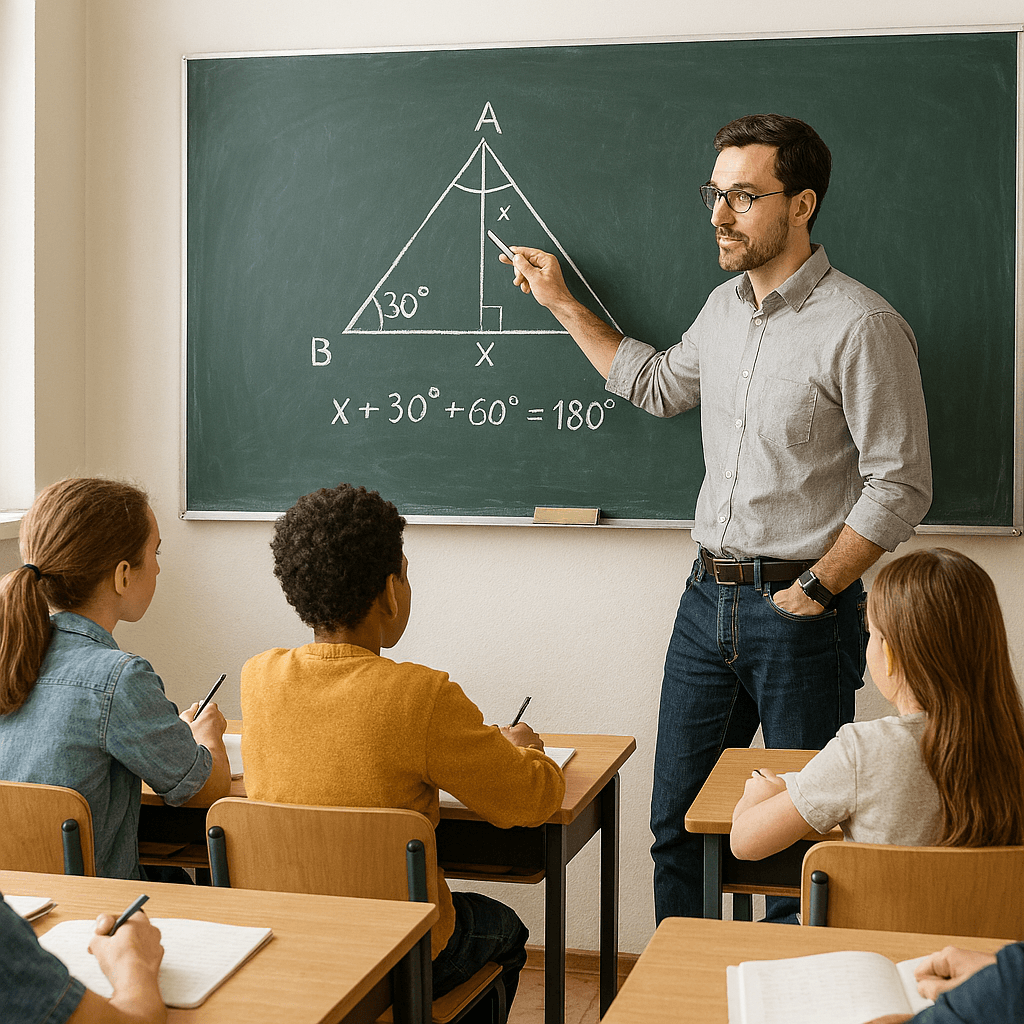
A visual symbolizing the “Demonstration” Stage of the Demonstration and Practice Method (Generated by Artificial Intelligence)
Teachers’ perceptions of teaching methods are also important in determining the method’s place in education. Effective use of the method depends on the teacher’s thorough understanding of the subject matter and students’ needs.
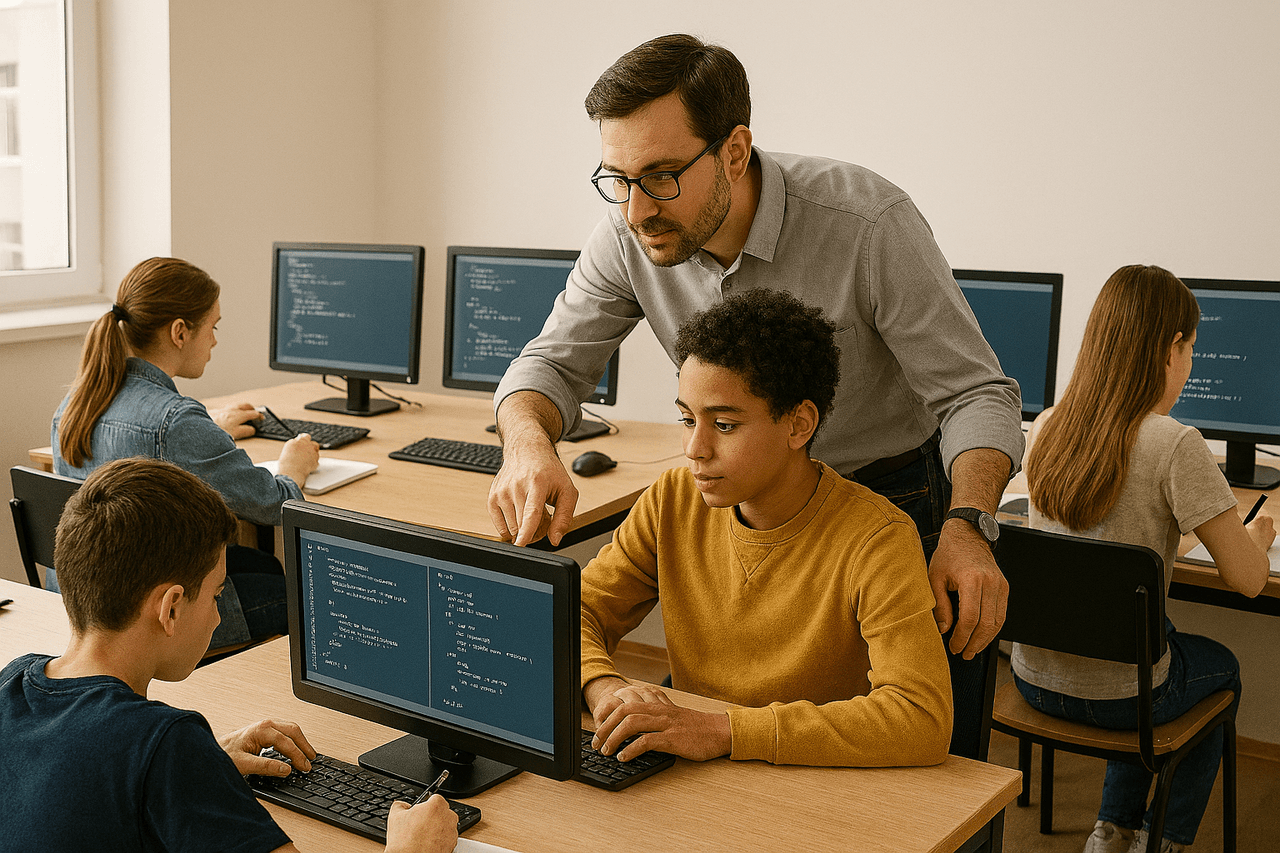
A visual symbolizing the “Practice” Stage of the Demonstration and Practice Method (Generated by Artificial Intelligence)
One of the most important advantages of the Demonstration and Practice Method is that learned knowledge is reinforced through practice, thereby increasing its retention. Since students learn a skill not only by listening but also by doing, the information becomes more firmly embedded in memory. Additionally, by simultaneously engaging visual and auditory learning channels, the method can accommodate different learning styles. The teacher’s modeling helps simplify complex concepts and encourages students to feel secure and courageous enough to try new skills.
However, the method has certain limitations. Although it involves active student participation, its fundamental nature remains a teacher-centered approach. This can limit the development of creativity and higher-order thinking skills. The method is primarily based on imitation and repetition and may not directly support students’ independent problem-solving or discovery abilities. Moreover, in large classes, providing sufficient feedback and guidance to each student can be challenging, potentially causing some students to fall behind. Therefore, the effectiveness of the method depends on class size and the teacher’s classroom management skills.
Akdemır, Ömür, and Aysel Memış. “Temel Bilgisayar Dersinde Gösterip Yaptırma ve Probleme Dayalı Öğrenme Yöntemlerinin Öğrencilerin Akademik Başarıya Etkilerinin İncelenmesi.” *Cagdas Egitim Dergisi* 349 (2008). Accessed September 8, 2025. https://search.ebscohost.com/login.aspx?direct=true&profile=ehost&scope=site&authtype=crawler&jrnl=1300249X&asa=Y&AN=31240618&h=frTSpNN%2BznuqlCYQkpFLetk4Bx3DZy2TGcWuyhdf6c0rK%2BcmCnvGsUH%2FSIbk0wSYmdwA4KHULBCdAr%2Fsp6M7ow%3D%3D&crl=c.
Demirkan, Özden, and Gülçin Saraçoğlu. “Anadolu Lisesi Öğretmenlerinin Derslerde Kullandıkları Öğretim Yöntem ve Tekniklerine İlişkin Görüşleri.” *The Journal of International Lingual Social and Educational Sciences* 2, no. 1 (2016): 1–11. Accessed September 8, 2025. https://dergipark.org.tr/en/download/article-file/217954.
Karağaçlı, Mustafa. *Öğretisel İlkeler ve Yöntemler (2021-8).* 2021. Accessed September 8, 2025. https://avesis.gazi.edu.tr/publication/details/593583e2-b06a-4883-850f-5882ef7a75f0/ogretisel-ilkeler-ve-yontemler-2021-8.
Keskinkılıç, Volkan. *Ortaokul 6. Sınıf Matematik Dersi Geometri Öğrenme Alanında Gösterip Yaptırma Yönteminin Öğrenci Başarısına ve Kalıcılığına Etkisi.* Master's thesis, Kırşehir Ahi Evran University, 2019. Accessed September 8, 2025. https://search.proquest.com/openview/729dea1ca1edeeeb6cb72b65af111b9c/1?pq-origsite=gscholar&cbl=2026366&diss=y.
Özkan, Yeşim Özer, and Meltem Acar Güvendir. “Öğrencilerin Ölçme ve Değerlendirme Dersinin Sunulmasında Tercih Ettikleri Öğretim Yöntemleri.” *Journal of Measurement and Evaluation in Education and Psychology* 4, no. 1 (2013): 1–14. Accessed September 8, 2025. https://dergipark.org.tr/en/pub/epod/issue/5801/77215.
No Discussion Added Yet
Start discussion for "Show and Have Done Method" article
Impacts and Applications of the Method in Education
Advantages and Limitations of the Method