

`educational-sciences` Related Article Results
Fatih Sultan Mehmet Foundation University (FSMFU)
Fatih Sultan Mehmet Vakıf Üniversitesi (FSMVÜ) was established in Istanbul in 2010 through the merger of five endowments under the General Directorate of Foundations of the Republic of Türkiye. These endowments are: Fatih Sultan Mehmet Han Vakfı, Sinan Ağa bin Abdurrahman Vakfı, Nurbanu Valide Sultan Vakfı, Hatice Sultan Vakfı, and Abdullahoğlu Hacı Abdülaziz Ağa Vakfı. Alongside Bezmiâlem Vakıf Üniversitesi, it is one of two universities affiliated with the General Directorate of Foundations. I
EN
Alperen Çok
 Ka
KaKartopu Technique
The snowball sampling technique is used when it is difficult to access units comprising the population or when information about the population (such as size and information depth) is incomplete. This technical on researcher, Associate Professor Ali Baltacı, defines the purpose of snowball sampling as “reaching different phenomena by moving from person to person and from person to situations.” The sample is expanded through referrals, beginning with an initial interviewee and subsequently contac
EN
Büşra Bircan
InInverse Face Learning
Flipped learning (FL) is a teaching approach that reverses the structure of traditional instruction and places the learner at the center. In this model, the transmission of information is moved outside the classroom, allowing students to prepare for the topic in advance using pre-prepared instructional materials such as videos, texts, or digital content. Class time is then devoted to activities focused on higher-order thinking skills such as discussion, application, group work, and problem solvi
EN
Melahat Pamuk
AcAcademy Entrance Exam (AEE)
The Academic Entrance Exam (AGS) is a centralized examination administered by the Ministry of National Education (MNE) in Türkiye for admission to academic positions and teacher training programs. Organized by the Measurement, Selection and Placement Center (ÖSYM), this exam aims to assess candidates’ levels in educational sciences, subject-specific knowledge and general ability. Purpose of the Exam The AGS is conducted to evaluate the academic competencies of prospective teachers in Türkiye and
EN
Hamza Aktay
ShShow and Have Done Method
The Demonstration and Practice Method is a teaching strategy used in educational sciences, primarily aimed at developing practical skills. This method is based on the principle that the teacher first demonstrates a skill or procedure through their own performance, after which students imitate this demonstration and apply the skill themselves in practice. Although the method’s core mechanism is considered a teacher-centered approach, it also requires active student participation. Therefore, this
EN
Muhammed Samed Acar

International Student Assessment Program (PISA)
PISA (Programme for International Student Assessment) is an evaluation program conducted by the OECD that measures the competencies of 15-year-old students in reading, mathematics, and science at an international level. The program not only assesses student performance but also provides data to inform the development of policies and educational reforms by revealing the strengths and weaknesses of education systems. PISA is one of the most comprehensive international student assessment programs i
EN
Ömer Faruk Tuğla
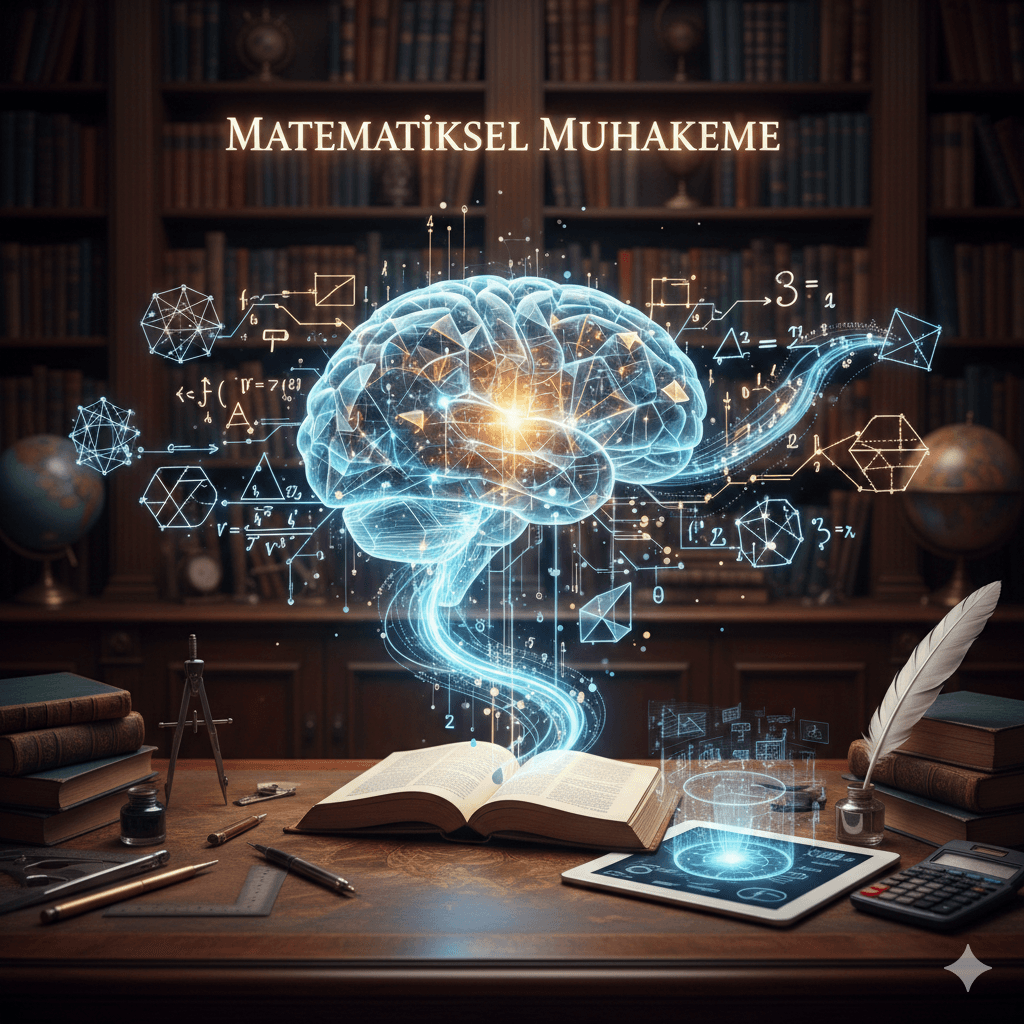
Mathematical Reasoning
Mathematical Reasoning is the process by which an individual thinks critically about data, draws logical inferences, analyzes a situation in all its dimensions, forms hypotheses, and justifies and defends the conclusions reached. As a higher-order form of thinking—one of the most fundamental characteristics of the human mind—this process goes beyond simple recall or procedural skill to involve the transfer of existing knowledge to new contexts and the application of logical foundations in proble
EN
Şehrinaz İrem Canbaba

International Student Assessment Program (PISA)
PISA (Programme for International Student Assessment) is an evaluation program conducted by the OECD that measures the competencies of 15-year-old students in reading, mathematics and science at an international level. The program does not only assess student performance but also provides data to inform the development of policies and educational reforms by revealing the strengths and weaknesses of education systems. PISA is one of the world’s most comprehensive international student assessment
EN
Ömer Faruk Tuğla

Graduated Rating Scale (Rubric)
A rubric is a systematic assessment tool that enables the evaluation of student performance against predetermined criteria and levels. In educational literature, these tools are also referred to as scoring guidelines, assessment criteria, rating scales, or evaluation scales. The key distinction between rubrics and other assessment methods such as checklists, which merely identify the presence or absence of a behavior, and traditional rating scales, is that rubrics allow for evaluation by definin
EN
Beyza Yıldız