


This article was automatically translated from the original Turkish version.
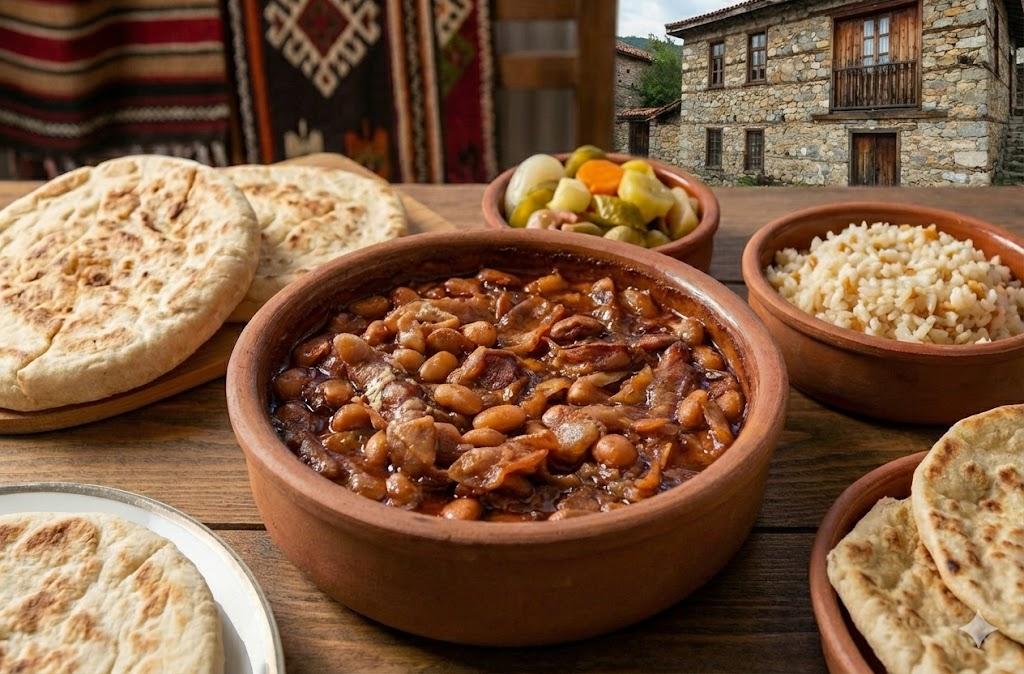
(Generated by artificial intelligence.)
Shellfish Dish
Type(s) | Traditional Vegetable Dish (Pot Dish) | ||||||||
|---|---|---|---|---|---|---|---|---|---|
Distinguishing Materials | Olive Oil Garlic Pomegranate Molasses Corn Flour | ||||||||
Traditional Accompaniments | Pickles Pilaf Bazlama Yufka | ||||||||
Serving Temperature | Hot | ||||||||
Consumption Season | Winter | ||||||||
Preparation Technique | Cooked with Boiled and Roasted Sauce (Miyaneli) | ||||||||
Main Material | Dried Fresh Green Beans (Without Strings) | ||||||||
Geographical Sign / Region | Muğla (Aegean Region) | ||||||||
Kabuklu Yemeği is a traditional vegetable dish based on the practice of drying fresh beans for consumption during winter months. Also known as “Çamaşırlı,” the dish is prepared by drying, boiling, and cooking shell-less (beardless) beans with onion, tomato paste, and spices. In the regions of Alanya and Muğla, Kabuklu Yemeği is considered part of the local cuisine and is included among traditional dishes that use dried vegetables.
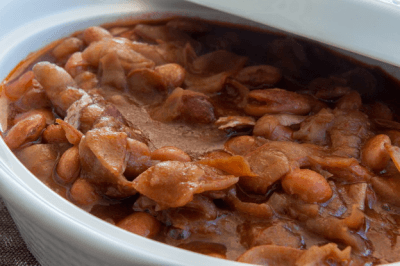
Kabuklu Yemeği (Culture Portal) Image credit: Aydın Duru
Kabuklu dried bean dish is classified among vegetable dishes in the local cuisines of Alanya and Muğla. It is evaluated within the regional culinary tradition alongside other local dishes. In Alanya cuisine, the dish known as “kabuklu kuru fasulye düzmesi” is situated among culinary practices rooted in local produce.
The main ingredients used in preparing Kabuklu Yemeği are:
Dried fresh beans are boiled in boiling water. In a separate pot, olive oil is heated and chopped onions are sautéed. Cornmeal is added to the sautéed onions; once the flour is lightly toasted, tomato paste and ground red pepper are incorporated. The cooking liquid from the boiled beans is added to form a sauce, which is then brought to a boil. The boiled beans are then added to the pot, and the dish is cooked further until the oil rises to the surface. After cooking is complete, a mixture of crushed garlic and pomegranate molasses is poured over the dish. It is served hot.
Kabuklu Yemeği is categorized among vegetable dishes in the local cuisines of Alanya and Muğla. It is assessed alongside other traditional dishes within the regional culinary framework. In this regard, Kabuklu Yemeği exemplifies traditional cooking practices based on the use of dried vegetables.
Duman, Ahmet, and Saniye Gül Güneş. “Gastronomi Turizmi Kapsamında Antalya Lezzet Rotası.” *Journal of Tourism and Gastronomy Studies* 12, no. 1 (2024). Accessed February 3, 2026. https://jotags.net/index.php/jotags/article/view/2079.
Ministry of Culture and Tourism of the Republic of Turkey. *Muğla Mutfağı*. Türkiye Kültür Portalı e-Book, 68–69. Accessed February 3, 2026. https://www.kulturportali.gov.tr/mrepo/eKitap/eb-MuglaMutfagi/68-69/.
Nebioğlu, Oğuz. “Gastronomik Kimlik ve Gastronomik Turizm Ürünlerinin Sınıflandırılması Üzerine Nitel Bir Araştırma: Alanya Örneği.” *Journal of Tourism and Gastronomy Studies*. Accessed February 3, 2026. https://jotags.net/index.php/jotags/article/view/229.
T.C. Ministry of Culture and Tourism. "Kabuklu Yemeği." Türkiye Kültür Portalı. Accessed February 3, 2026. https://www.kulturportali.gov.tr/turkiye/mugla/neyenir/kabuklu-yemegi-1.
Tuncer, Alparslan Mustafa, and Meral Yılmaz. *Yörük Mutfak Kültürü*. Ankara: Detay Yayıncılık, 2023. Accessed February 3, 2026. https://www.researchgate.net/publication/379038930_Yoruk_Mutfak_Kulturu.

(Generated by artificial intelligence.)
Shellfish Dish
Type(s) | Traditional Vegetable Dish (Pot Dish) | ||||||||
|---|---|---|---|---|---|---|---|---|---|
Distinguishing Materials | Olive Oil Garlic Pomegranate Molasses Corn Flour | ||||||||
Traditional Accompaniments | Pickles Pilaf Bazlama Yufka | ||||||||
Serving Temperature | Hot | ||||||||
Consumption Season | Winter | ||||||||
Preparation Technique | Cooked with Boiled and Roasted Sauce (Miyaneli) | ||||||||
Main Material | Dried Fresh Green Beans (Without Strings) | ||||||||
Geographical Sign / Region | Muğla (Aegean Region) | ||||||||
Geographical and Cultural Context
Ingredients
Preparation and Cooking Method
Place Within Local Cuisine