


This article was automatically translated from the original Turkish version.
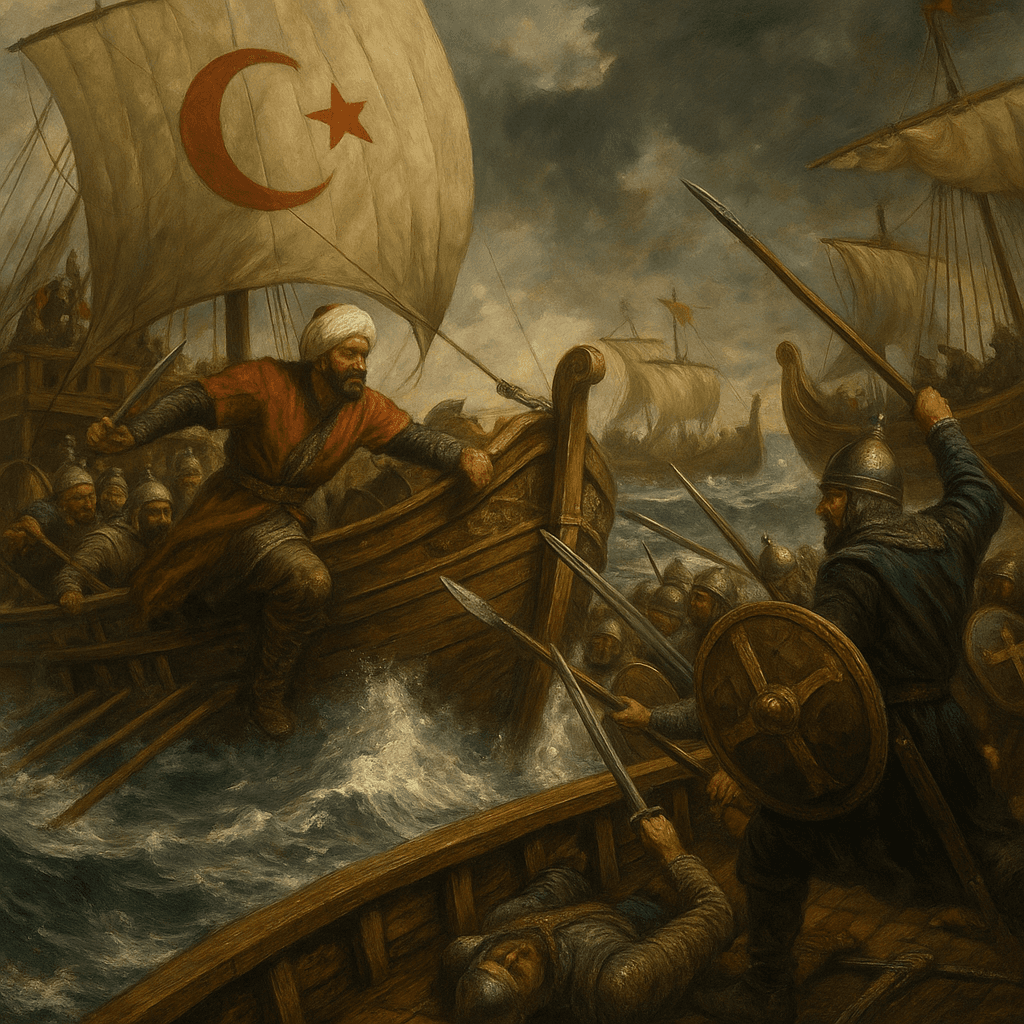
Start Date | 19 May 1090 | ||||||||
|---|---|---|---|---|---|---|---|---|---|
Place | Aegean Sea Koyun Adaları (between Chios and Karaburun) | ||||||||
Side | The Turkish fleet under Çaka Bey versus the Byzantine fleet (Niketas Kastamonites) | ||||||||
Result | Turkish victory Most of the Byzantine fleet was sunk or captured. | ||||||||
Significance | It was the first naval victory in Turkish maritime history. | ||||||||
War of the Sheep Islands, fought on 19 May 1090 between the Turk fleet under the command of Çaka Bey and the Byzantine fleet, was the first open-sea naval victory in Turkish maritime history. This naval battle, fought near the Sheep Islands between Sakız Island and the Karaburun Peninsula in the Aegean Sea, represents the first major military success of the Turks in naval warfare.
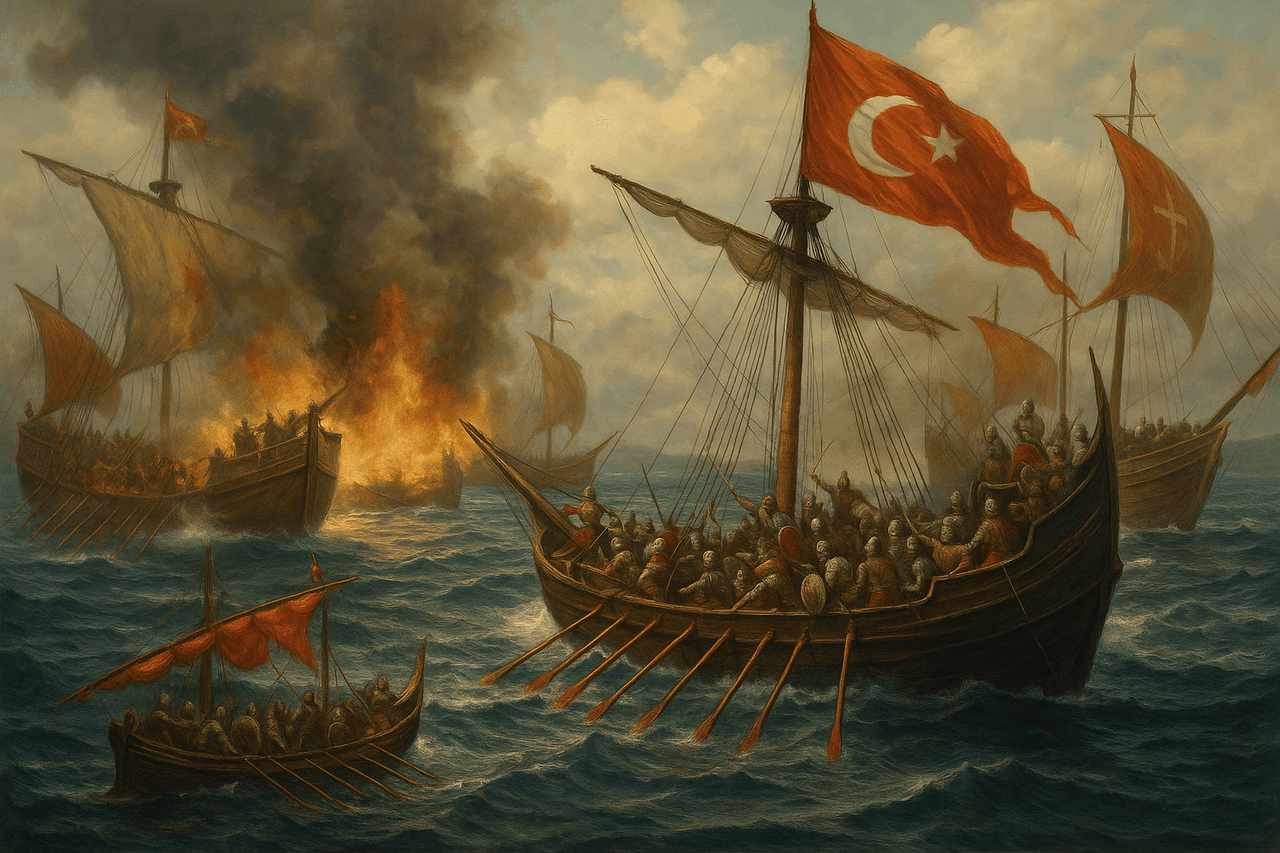
Koyun Adaları Savaşı’nı temsilen (Görsel Yapay Zeka Tarafından Oluşturulmuş)
By the end of the 11th century, the Byzantine Empire’s military and naval power along the Aegean coast had weakened. During this period, Çaka Bey established a principality centered in İzmir and began naval operations, laying the foundation of Turkish naval power through the shipyard he built in İzmir. After capturing port cities such as Klazomenai (Urla) and Foça, Çaka Bey turned his attention to the islands of the Aegean Sea and conquered major islands including Midilli, Sakız, İstanköy, Rhodes, and Sisam.
In response to these developments, Byzantine Emperor I Alexios Komnenos dispatched a fleet under the command of Niketas Kastamonites to reclaim the islands.
In early May 1090, Çaka Bey set sail from İzmir with a fleet of 17 galleys and 33 sailing ships and captured Midilli Island, followed by Sakız Island. Upon receiving intelligence from reconnaissance units that the Byzantine fleet was advancing southward from the Çandarlı waters, Çaka Bey moved to confront it.
On 19 May 1090 at midday, the two fleets encountered each other near the Sheep Islands. Çaka Bey ordered his ships to ram and lock onto Byzantine vessels, employing a close-quarters, destruction-based naval warfare tactic. The bloody battle lasted until midnight, during which the majority of the Byzantine fleet was either sunk or captured. Only a few Byzantine ships managed to escape the battlefield.
The War of the Sheep Islands holds great significance as the first open-sea naval victory in Turkish maritime history. Çaka Bey’s fleet inflicted a heavy defeat on the Byzantine fleet and subsequently captured Sakız and Sisam islands. Çaka Bey’s success demonstrated that the Turks could be effective not only on land but also at sea.
Following the battle, Çaka Bey became a serious threat to the Byzantine Empire. He began strategic preparations to capture Gelibolu and Thrace with the aim of besieging Istanbul. To this end, he formed alliances with the Pechenegs in the Balkans and with Ebu’l-Kasım, who briefly held power in the Anatolian Seljuk throne. He also attempted to recruit Turkish mercenaries serving in the Byzantine army to his side.
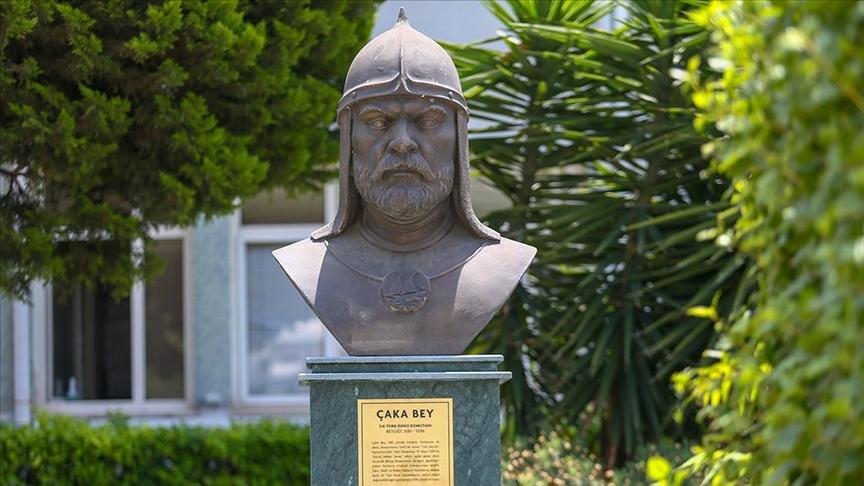
Çaka Bey (AA)
After the War of the Sheep Islands, the Byzantines were forced to launch larger-scale military operations against Çaka Bey. However, during this conflict, Emperor I Alexios Komnenos’s diplomatic maneuvers proved effective, leading to the deterioration of Çaka Bey’s relations with the Anatolian Seljuk Sultan I Kılıç Arslan. The subsequent Crusades and Byzantine military pressure ultimately brought an end to Çaka Bey’s maritime principality.
After Çaka Bey’s death, Turkish naval activity entered a prolonged period of stagnation; Turkish maritime operations in the Aegean Sea were interrupted for nearly a century. The Turks would not become actively involved in naval warfare again until the period of the Western Anatolian beyliks.
Akgün, Adnan. “Türkiye Selçukluları Zamanında Denizcilik Faaliyetleri ve Deniz Ticari Antlaşmaları.” *Türk Kültürü ve Hacı Bektaş Velî Araştırma Dergisi* 92 (2020): 175–192. Accessed May 15, 2025.https://dergipark.org.tr/tr/download/article-file/1371408
Altuntaş, Murat. “Anadolu Selçuklularında Denizcilik Faaliyetleri.” *Türkiyat Mecmuası* 29 (2017): 1–18. Accessed May 15, 2025.https://dergipark.org.tr/en/download/article-file/901635.
Anadolu Ajansı. “Türk Denizciliğinin Kurucusu, İzmir Fatihi Çaka Bey.” *Anadolu Ajansı*, January 27, 2022.https://www.aa.com.tr/tr/portre/turk-denizciliginin-kurucusu-izmir-fatihi-caka-bey/2621549. Accessed May 15, 2025.
Deniz Kuvvetleri Komutanlığı. "Koyun Adaları Savaşı." Accessed May 15, 2025.
Işık, Mehmet. “Urla Özbek Köyü Sözlü Kültüründe Emir Çaka Bey ve Fetihleri.” *Akademik Tarih ve Düşünce Dergisi* 10, no. 1 (2023): 35–51.https://dergipark.org.tr/tr/download/article-file/2928033. Accessed May 15, 2025.

Start Date | 19 May 1090 | ||||||||
|---|---|---|---|---|---|---|---|---|---|
Place | Aegean Sea Koyun Adaları (between Chios and Karaburun) | ||||||||
Side | The Turkish fleet under Çaka Bey versus the Byzantine fleet (Niketas Kastamonites) | ||||||||
Result | Turkish victory Most of the Byzantine fleet was sunk or captured. | ||||||||
Significance | It was the first naval victory in Turkish maritime history. | ||||||||
Background of the War
Course of the War
Outcomes and Significance of the War
Developments After the War