


This article was automatically translated from the original Turkish version.
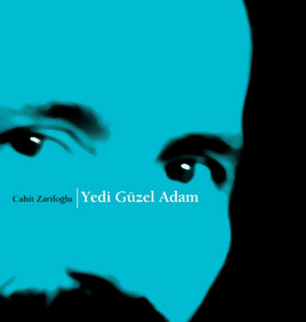
Seven Good Men (Cahit Zarifoğlu)
Author(s) | Cahit Zarifoğlu | ||||||||
|---|---|---|---|---|---|---|---|---|---|
Genre | Poetry Book | ||||||||
Number of Pages | 136 | ||||||||
ISBN | 9789754735413 | ||||||||
"The Seven Beautiful Men" is a work by Cahit Zarifoğlu within Turkish literature. First published in the 1980s, this text explores various human conditions on both individual and societal levels. Written in a style close to poetic expression, the work addresses themes such as metaphysical concerns, the inner world of the individual, and relationships with modern society. The text is also regarded as a reflection of the author’s intellectual approach beyond its literary merits.
The central focus of the work is seven characters, described as "the seven beautiful men," each possessing distinct spiritual inclinations. These characters symbolically represent the individual’s inner transformation and their relationship with fundamental existential questions. The main themes examined throughout the work include the search for personal identity, social conflicts, the questioning of spiritual values, and the impact of the modern world on the individual.
Zarifoğlu, through these characters, meticulously examines the human inner journey and the mental, moral, and spiritual transformations encountered along it. Each character embodies a different aspect or stage of the human soul.
Social critique also forms a significant part of the work. Zarifoğlu addresses the effects of modernization on the individual within the context of the erosion of traditional and spiritual values. The text offers a profound exploration of the individual’s struggle with loneliness, alienation, and the quest for inner peace.
Cahit Zarifoğlu’s language possesses a structure distinct from traditional narrative forms. The author incorporates poetic elements into his writing and frequently employs symbols and imagery. This characteristic contributes to a layered narrative structure. The characters’ psychological states and inner processes are expressed not through direct exposition but through symbolic language.
Symbolism and imagery are central elements of the narrative. This approach enables multiple levels of interpretation. Zarifoğlu’s style maintains a balance between conceptual depth and linguistic simplicity. This structure allows the text to engage with both individual and societal themes. The narrative technique follows a path outside classical patterns in Turkish literature and draws attention through its use of diverse narrative methods.
Yedi Güzel Adam. Kitapyurdu. Accessed May 3, 2025. https://www.kitapyurdu.com/kitap/yedi-guzel-adam/288869.html?srsltid=AfmBOoplma63MzQVswuUus-AvvkeOgOLfJdgPk_0AOJJe59esXwHvYnb.
Zarifoğlu, Cahit. Yedi Güzel Adam. İstanbul: Beyan Yayınları, 2014.

Seven Good Men (Cahit Zarifoğlu)
Author(s) | Cahit Zarifoğlu | ||||||||
|---|---|---|---|---|---|---|---|---|---|
Genre | Poetry Book | ||||||||
Number of Pages | 136 | ||||||||
ISBN | 9789754735413 | ||||||||
No Discussion Added Yet
Start discussion for "Seven Good Men (Book)" article
Thematic Structure and Content Analysis
Literary Style and Narrative Features