This article was automatically translated from the original Turkish version.
+1 More
Realm | Animalia | ||||||||
|---|---|---|---|---|---|---|---|---|---|
Branch | Chordata | ||||||||
Class | Aves | ||||||||
Team(s) | Accipitriformes | ||||||||
Family | Sagittariidae | ||||||||
Specie(s) | Sagittarius serpentarius | ||||||||
Genus | 0.9 - 1.2 metres | ||||||||
Weight(s) | 2.3 - 4.27 kg | ||||||||
Wingspan | Females: 1.2 - 1.32 m; males: 1.26 - 1.35 m | ||||||||
Distribution(s) | Sub-Saharan Africa (from Senegal to Somalia and South Africa) | ||||||||
Conservation Status | Vulnerable – IUCN Red List | ||||||||
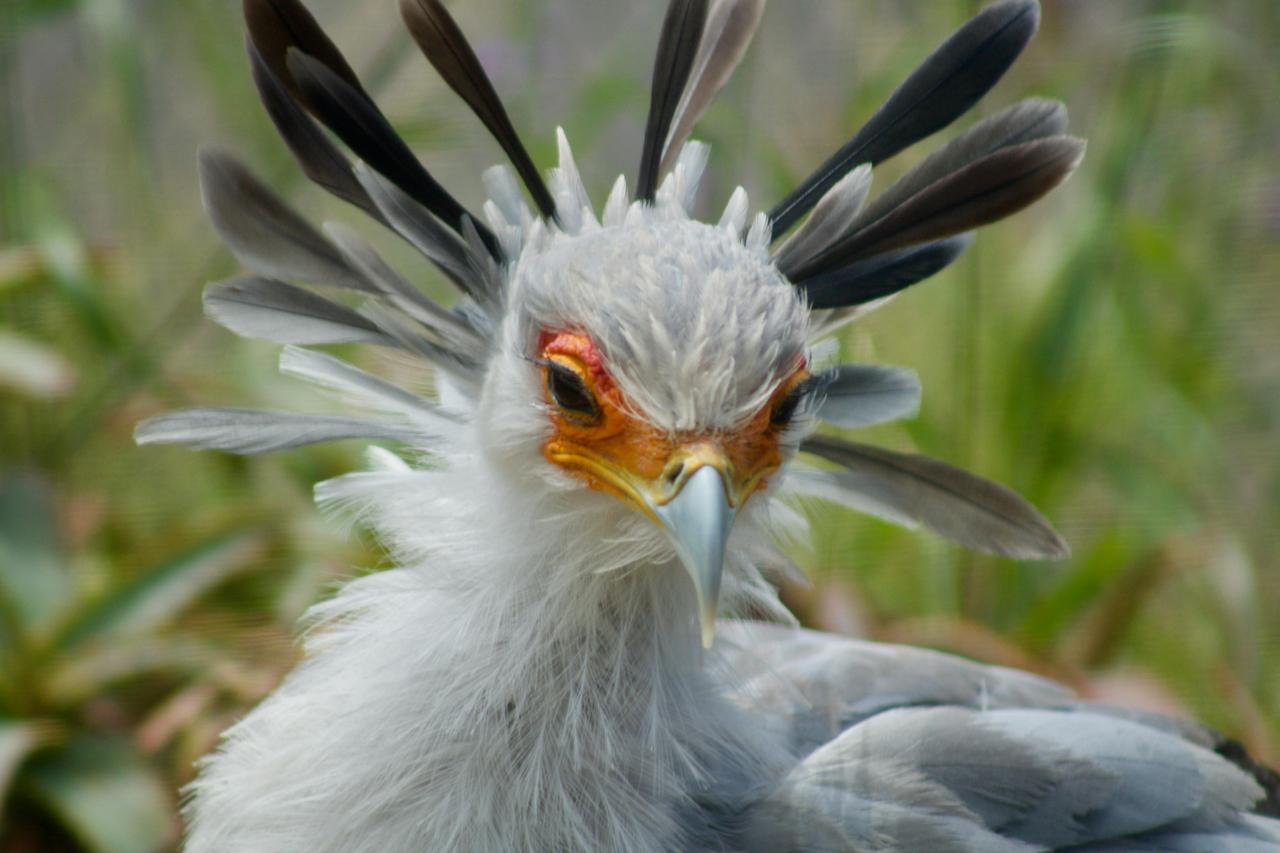
Secretary bird (Sagittarius serpentarius) is the only terrestrial predator in the order Accipitriformes. It is recognized by its long legs and elegant posture. Its average height ranges from 1.2 to 1.5 meters, with a wingspan of 1.26 to 1.35 meters in males and 1.2 to 1.32 meters in females. Weights typically range from 2.3 to 4.3 kilograms. Its plumage is gray, with black wingtips and crown feathers. The bare skin on its face is brightly orange or red. Females are generally smaller than males.
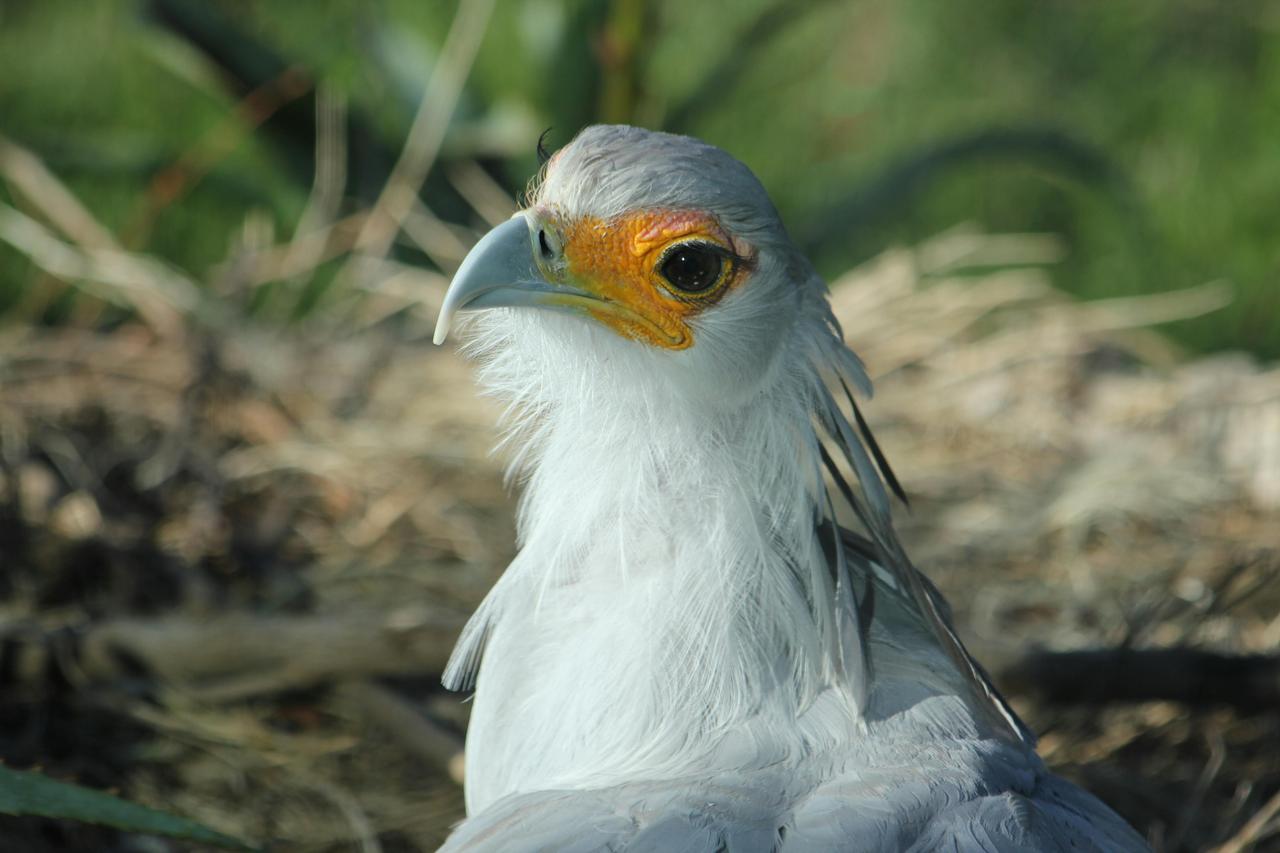
Secretary bird (Pexels)
The secretary bird is widespread across a large part of Africa south of the Sahara Desert. It is not found in Guinea, Ivory Coast, Liberia, or dense forested areas. It generally prefers open savannas, short grasslands and agricultural regions. It can live at elevations up to 3,000 meters above sea level.
The secretary bird spends most of its time on the ground and hunts by walking. It can cover distances of 20 to 30 kilometers in a single day. Its diet includes grasshoppers, insects, small mammals, reptiles and birds. It is particularly known for its ability to kill venomous snakes. It typically incapacitates prey with its beak or feet. After killing large prey, it may swallow it whole or tear it into pieces before consuming it.
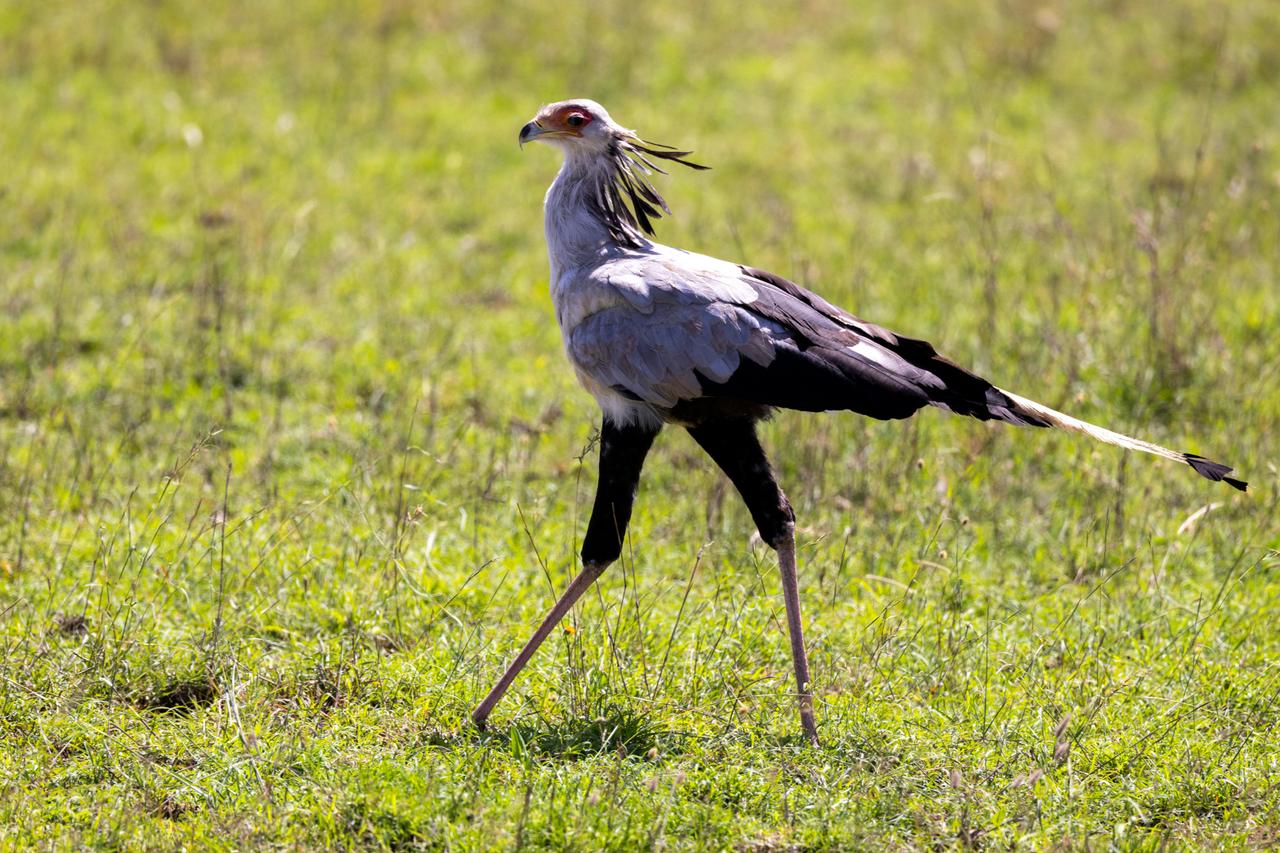
Secretary bird (Pexels)
Secretary birds are monogamous and can breed throughout the year. They build large, sturdy nests typically on the tops of acacia trees. The female lays one to three eggs every two to three days. Incubation lasts 42 to 46 days, and both males and females take turns sitting on the eggs. Chicks usually fledge within 60 days and learn to fly between 64 and 106 days of age. Parents teach their young hunting and independent living skills.
The secretary bird is listed as "Least Concern" on the IUCN Red List. However, habitat loss and human activities pose threats to local populations. The species is protected under CITES Appendix II.
Animal Diversity Web. *Sagittarius serpentarius: Secretary Bird*. University of Michigan Museum of Zoology. Accessed June 22, 2025. https://animaldiversity.org/accounts/Sagittarius_serpentarius/
Pexels. "Beyaz Kuş Yakın Çekim Fotoğrafçılık." Accessed June 29, 2025. https://www.pexels.com/tr-tr/fotograf/beyaz-kus-yakin-cekim-fotografcilik-36703/
Pexels. "Doğa, Kuş, Beyaz Kafa." Accessed June 29, 2025. https://www.pexels.com/tr-tr/fotograf/doga-kus-beyaz-kafa-18046755/
Pexels. "Doğa, Kuş, Yürümek, Hayvan." Accessed June 29, 2025. https://www.pexels.com/tr-tr/fotograf/doga-kus-yurumek-hayvan-15994082/
San Diego Zoo Animals. "Secretary Bird." San Diego Zoo Wildlife Alliance. Accessed June 22, 2025. https://animals.sandiegozoo.org/animals/secretary-bird

Realm | Animalia | ||||||||
|---|---|---|---|---|---|---|---|---|---|
Branch | Chordata | ||||||||
Class | Aves | ||||||||
Team(s) | Accipitriformes | ||||||||
Family | Sagittariidae | ||||||||
Specie(s) | Sagittarius serpentarius | ||||||||
Genus | 0.9 - 1.2 metres | ||||||||
Weight(s) | 2.3 - 4.27 kg | ||||||||
Wingspan | Females: 1.2 - 1.32 m; males: 1.26 - 1.35 m | ||||||||
Distribution(s) | Sub-Saharan Africa (from Senegal to Somalia and South Africa) | ||||||||
Conservation Status | Vulnerable – IUCN Red List | ||||||||
No Discussion Added Yet
Start discussion for "Secretary Bird (Sagittarius serpentarius)" article
Geographic Distribution and Habitat
Behavior and Diet
Reproduction and Young
Conservation Status