


This article was automatically translated from the original Turkish version.
+1 More
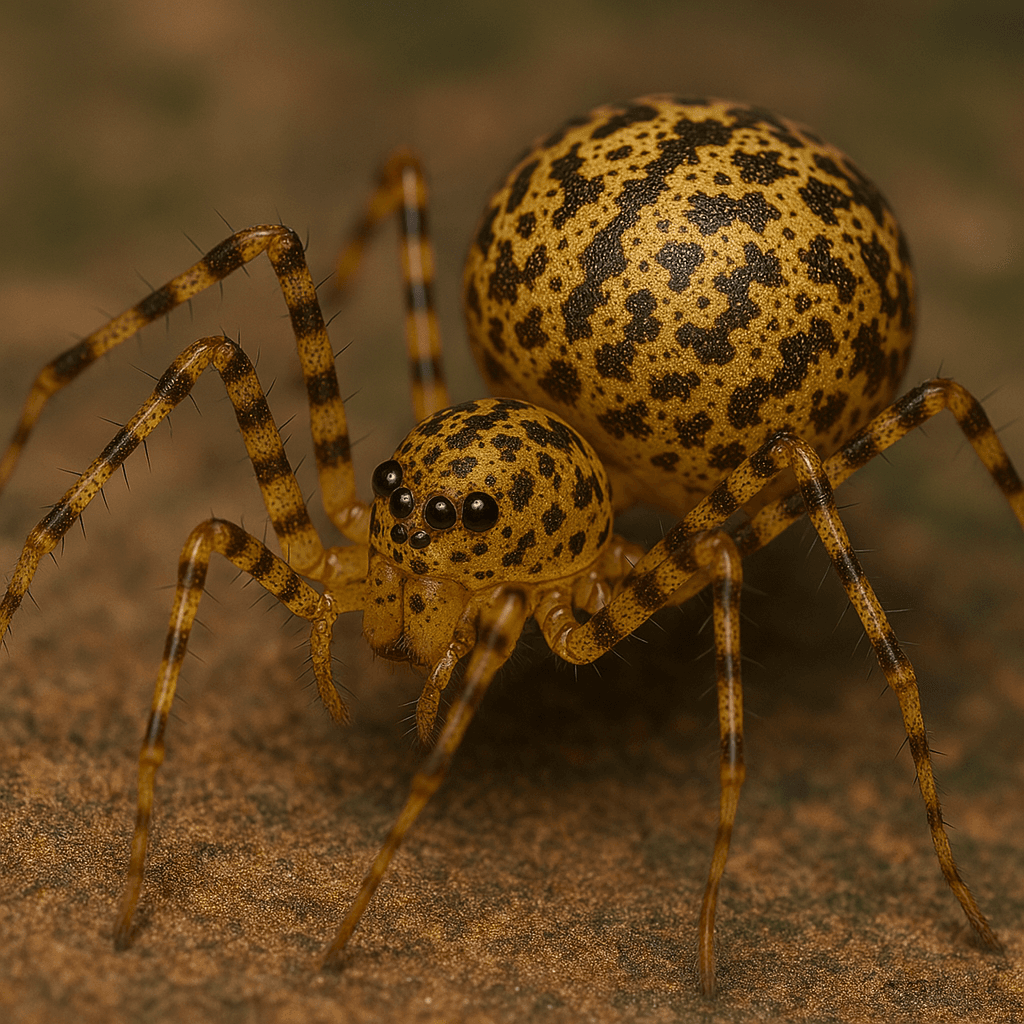
An AI-generated Scytodes globula
Team(s) | Araneae | ||||||||
|---|---|---|---|---|---|---|---|---|---|
Subteam | Araneomorphae | ||||||||
Family | Scytodidae | ||||||||
Scytodes globula, known as the "spitting spider," is a species distinguished by its behavioral and morphological characteristics from other spider species. Spiders of the genus Scytodes are recognized for immobilizing prey by spitting a sticky, venomous silk. Scytodes globula, endemic to South America, has been the subject of intensive research in recent years due to its behavioral and morphological traits.
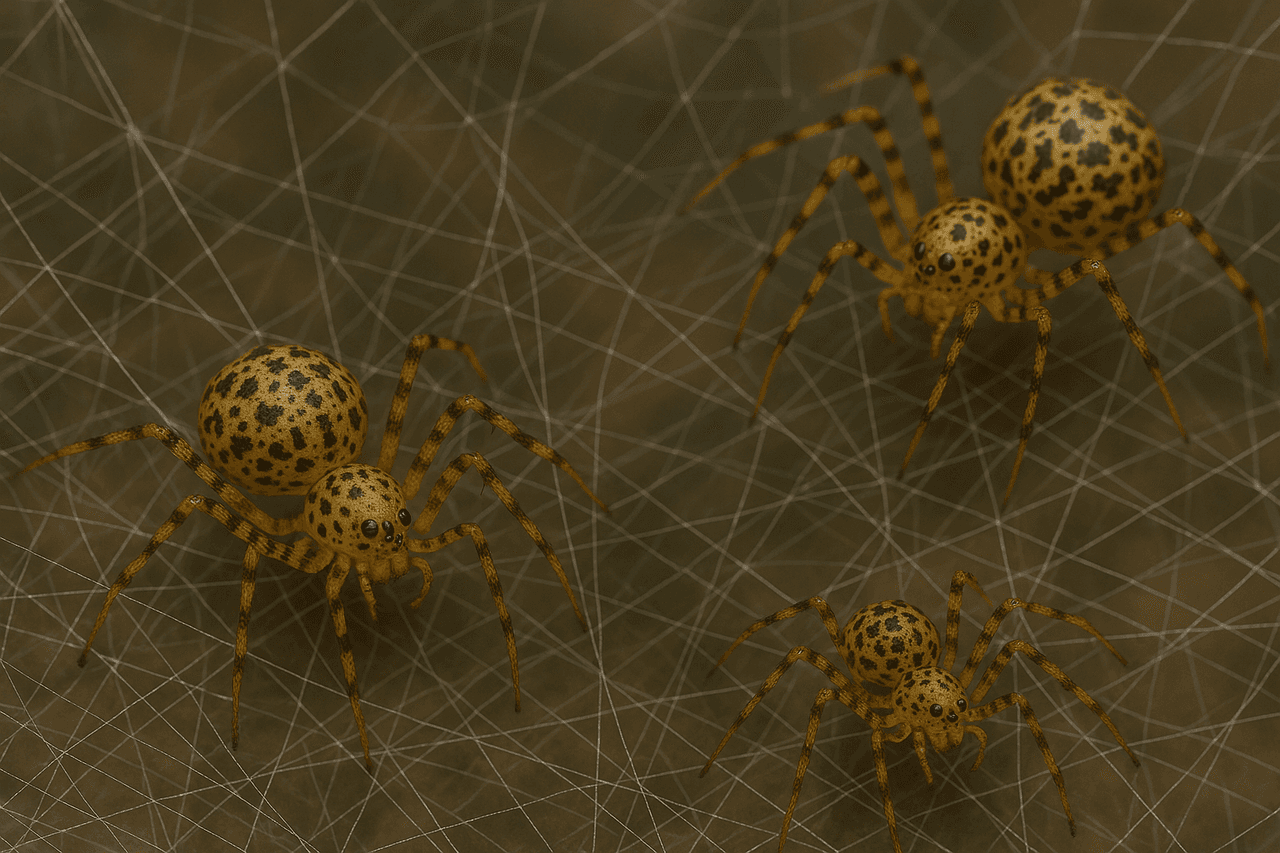
AI-generated image of a Scytodes globula group
S. globula is a spider species belonging to the family Scytodidae. Taxonomically:
Order: Araneae
Suborder: Araneomorphae
Family: Scytodidae
Genus: Scytodes
Species: Scytodes globula
Morphologically, this species is characterized by a distinctive globular prosoma (cephalothorax) structure, slender legs, and an abdomen with a yellowish-orange base marked with brown spots. It differs from typical spiders by having three pairs of eyes. The cheliceral structures contain modified glands involved in silk production. These features play a key role in both predation and defense.
S. globula employs a complex prey capture method. It immobilizes its prey by spitting a sticky silk in a zigzag pattern from its venom and silk-producing glands. This behavior has been observed in both solitary and social hunting contexts. It typically constructs its irregular webs in crevices and sheltered areas at ground level; these webs serve both for hunting and protection.
Interactions between S. globula and other arthropods, particularly the eight-legged species Discocyrtus invalidus, are noteworthy. Behavioral analyses show that the spider’s ability to neutralize D. invalidus varies depending on the size and defensive behaviors of the target. These interactions reveal the complexity of the spider’s decision-making processes.
Advances in sequencing technologies have enabled detailed examination of the S. globula genome. In a study by Fernández et al. (2017), gene expression related to venom production, silk synthesis, and sensory adaptations was analyzed. In particular, genes coding for spidroin (silk protein) and toxin peptides were found to be highly expressed in the cephalothorax region. These molecular traits support the spider’s complex hunting mechanism.
The spitting spider Scytodes globula is a species that draws attention not only through its behavioral and morphological features but also through its molecular-level distinctions. Integrating field observations with laboratory-based genetic analyses enhances our understanding of its ecological role. Future anatomical, behavioral, and systematic studies will further solidify the taxonomic position of S. globula.
Binford, Greta J., Cheryl A. Wells, Lauren E. Smith, Jessica M. Esposito, Tonia M. Nystrom, Adriana O. Fernández, Shamus P. Modahl, et al. “An Integrative Approach to Understanding Venom Composition and Function in Spitting Spiders.” *Neuropharmacology* 64 (May 2013): 274–284. https://doi.org/10.1016/j.neuropharm.2012.06.063.
Fernández, Rosa, Mercedes Gulia-Nuss, Jason M. Durden, G. Bradley Schatz, Monica C. Poelchau, and Jason E. Bond. “Comparative Genomics of the Arachnid Orders Reveals an Ancient Genome Duplication in Spiders and Scorpions.” *BMC Genomics* 18, no. 1 (2017): 1–13. https://doi.org/10.1186/s12864-017-3987-9.
Rodríguez-Artigas, Sandra M. and Alfredo V. Peretti. “Behavioral Analysis of the Interaction between the Spitting Spider Scytodes globula (Araneae, Scytodidae) and the Harvestman Discocyrtus invalidus (Opiliones, Gonyleptidae).” ResearchGate. Date Published May 2014. https://www.researchgate.net/publication/262090870.
“Tigre.” *Aracnología Universidad de Concepción*. Accessed March 18, 2013. https://web.archive.org/web/20130318031224/http://www2.udec.cl/~aracnologia/comun/tigre.html.

An AI-generated Scytodes globula
Team(s) | Araneae | ||||||||
|---|---|---|---|---|---|---|---|---|---|
Subteam | Araneomorphae | ||||||||
Family | Scytodidae | ||||||||
Taxonomy and Morphology
Prey Capture Behavior and Web Structure
Interspecific Interactions
Molecular Analysis and Physiological Traits