This article was automatically translated from the original Turkish version.
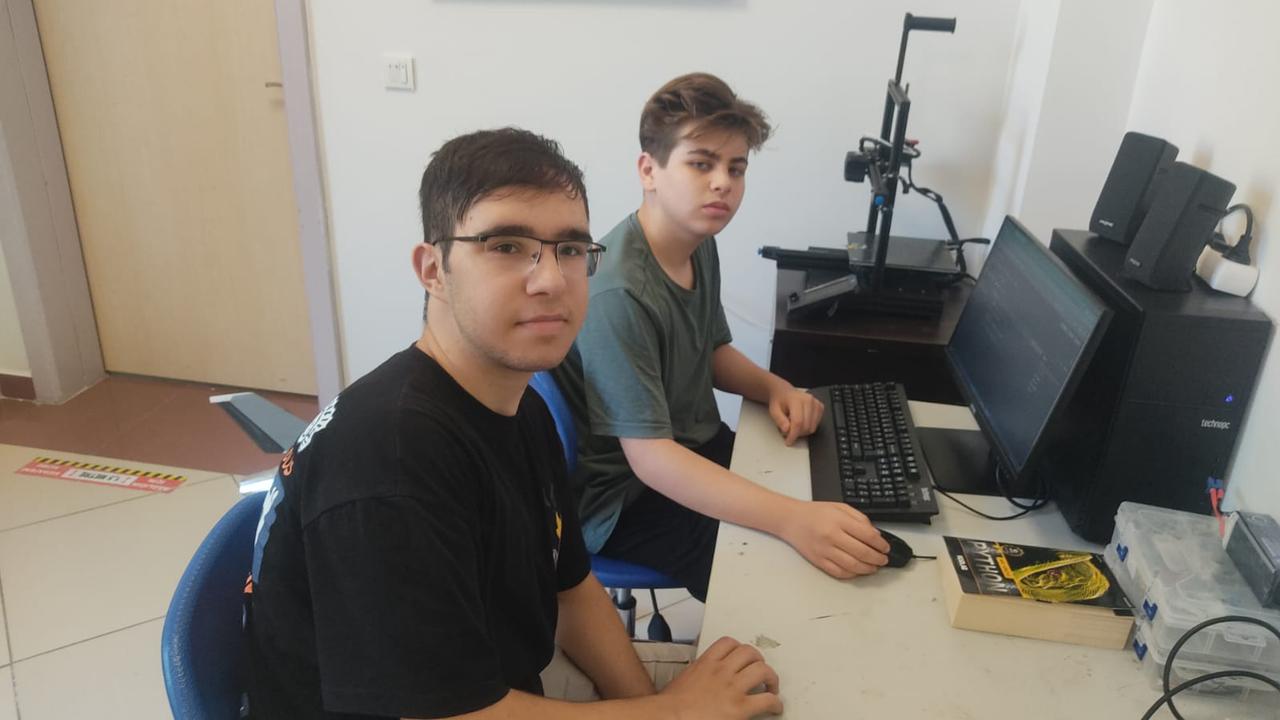
As researchers and curious students from our school, Şehit Hakan Gülşen Anatolian Imam Hatip High School, located in the Menemen district of İzmir, we founded the SATGUARD team in January 2025. Our team is a high school-level student group participating in the TEKNOFEST 2025 “Secure Satellite Communication Competition,” developing solutions in the fields of cybersecurity, artificial intelligence, and wireless communication. As a team, we conduct our work with a focus on digital independence in Türkiye, the use of domestic hardware, and forward-looking technological development. Despite all challenges, we continue to improve ourselves with determination.
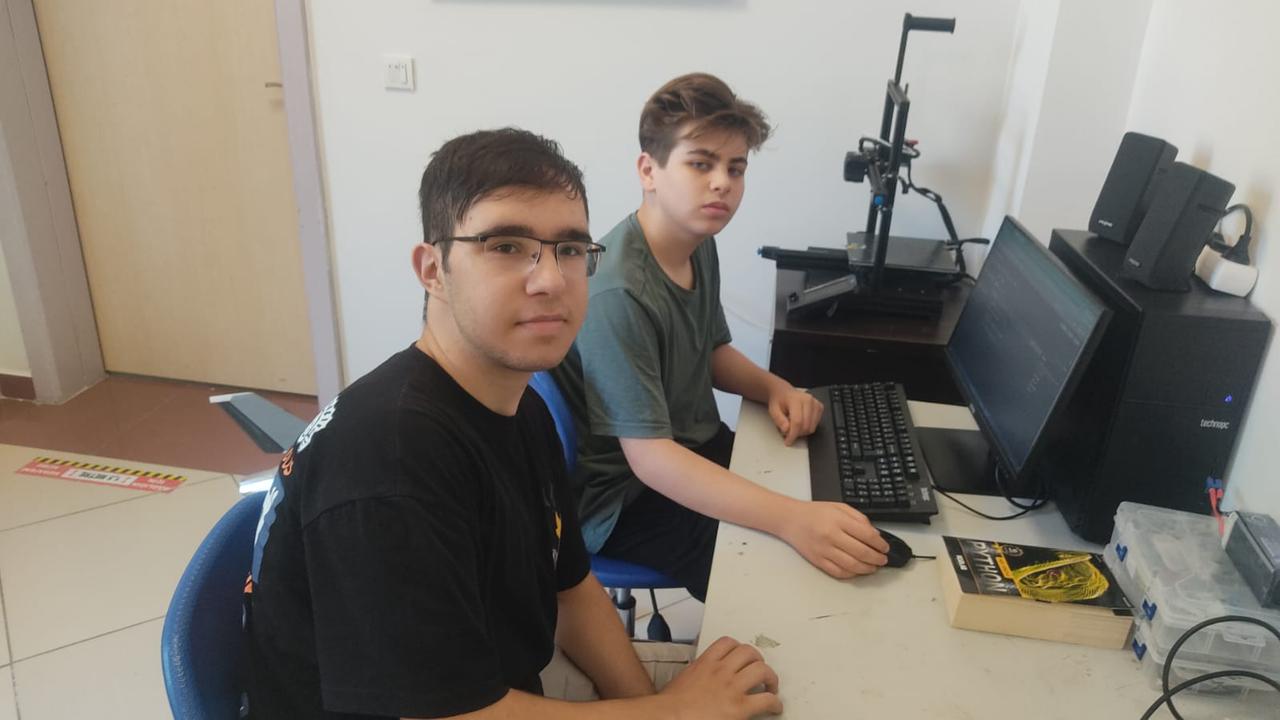
The SATGUARD Team During Project Development (Eymen Kurt)
The year is 2025. We had no idea that while eating simit and cheese in the school cafeteria, we would be opening a door to space. But here we are now: with our project named GÖK-KİLİT, we have reached the TEKNOFEST semifinals. It all began when Burak Selim Gündüz one day said in the cafeteria, How will we protect satellite ground stations from cyberattacks? At that time, other teams were building drones, while we asked ourselves, Are we thinking too much? No—we had barely thought enough...
When forming the team, our first goal was simply to say, Let’s do something different. Our idea of combining cybersecurity, artificial intelligence, and hardware was a bit crazy, but we wholeheartedly believed in this madness.
Utku, even though he was only in the 10th grade, kept running around saying, My AI model is working! Eymen, on the other hand, would say, I can crack this encryption—but it’s unethical; I’ll write something better! and spent day and night researching blockchain.
As the project progressed, everything spiraled out of control: the Jetson Nano learning facial recognition, the OTP system generating QR codes, the ESP32 sending data. Do you know what was the funniest part?
One day, while Burak was testing facial recognition, the Jetson failed to recognize him because it wasn’t looking at the camera. On the Jetson screen it read: “Access denied—User not recognized.” Burak said, So even robots don’t recognize me anymore...”
“You’re only 16—why are you getting involved with satellites?” our teachers said. But at 16, we wrote a six-layer security system. And now we are in the TEKNOFEST semifinals. This story is about those who had the courage to begin.
When we first held the Jetson Nano in our hands, we were thrilled. But when we tried to run it, we noticed something: the Jetson seemed to operate not on RAM, but on prayers. One day, while Burak was installing OpenCV, the system crashed; when he tried to reinstall it, the power adapter burned out. At that moment we said:
"Let’s forget facial recognition—it’s not even looking at our faces anyway."
Yet we did not give up. We upgraded the RAM, rebuilt the system from scratch, encountered errors again—but each time we rebuilt it. Because we believed in this project.
The ESP32 was the entity testing our nerves. One day it would send data, the next it would ask, Was there even Wi-Fi here? While trying to connect to the ESP32, Eymen said, I no longer trust myself—I don’t even trust the ESP anymore.”
But we did not quit. We visualized data using Node-RED, set up an MQTT broker, and controlled an LED from our mobile phones. Sometimes when the ESP32 finally worked, we all applauded. Those cheers were the sound of real, small victories.
One day the system worked—but only the facial recognition functioned; the OTP did not arrive. The next day the OTP arrived—but the Jetson crashed. That day we realized: We are not just building a project—we are learning patience.
We did not start this project just to win a competition;
Terms like artificial intelligence, blockchain, and post-quantum cryptography may sound like “university projects.” But we learned them in high school, between classes, late at night at our computers, amid Python error messages.
This is our team!
SATGUARD Takımı. GÖK-KİLİT Project Documents and Technical Documentation. Team Internal Publication, 2025.
Our Foundation
Intent came first, code followed
Code entered, sleep left
We coded the challenges, reached the stars
Our computer has no RAM—we have no patience
ESP32 or legend?
The greatest struggle: code or us?
What did we aim for?
With our team, anything is possible
Where we are today