This article was automatically translated from the original Turkish version.
+2 More
Name | Sarıkaya Roman Bath | ||||||||
|---|---|---|---|---|---|---|---|---|---|
Other Name | Basilica Therma Aquae Sarvenae Therma | ||||||||
Type | Ancient Roman Thermal Bath Structure | ||||||||
Location | Sarıkaya Türkiye Yozgat | ||||||||
Geographic Region | Central Anatolia Region | ||||||||
Period | Roman Empire | ||||||||
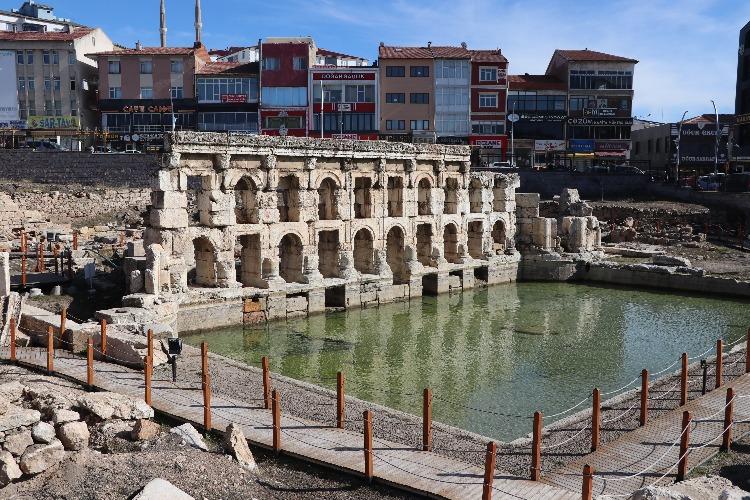
Sarıkaya Roman Bath is a monumental thermal bath structure dated to the Roman Empire period, located in the Sarıkaya district of Yozgat, within Türkiye’s Central Anatolia Region. The structure was built directly in relation to a natural hot spring source and is one of the most significant examples of Roman bath architecture in Anatolia. Ancient sources and modern research indicate that the site and settlement were referred to by the names Aquae Sarvenae, Therma and Basilica Therma.
The Sarıkaya Roman Bath is situated in the Kaplıca Neighborhood, which is part of the present-day Sarıkaya district center. The structure was built on the area where the natural thermal water source emerges to the surface. It is noted that the water from the springs still emerges at a temperature of approximately 48 °C today. This natural feature confirms that the structure was planned during the Roman period as a thermal center.
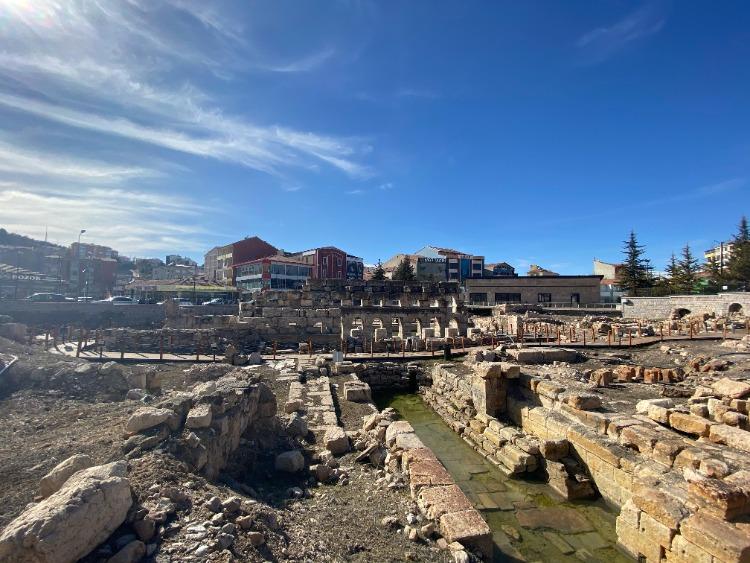
Sarıkaya Roman Bath Area (Anadolu Ajansı)
Sarıkaya and its surroundings lie within the intersection area of the ancient provinces of Cappadocia, Galatia and Bithynia-Pontus. Different names for the region and the bath are found in ancient and medieval sources. In the literature, the name Aquae Sarvenae emphasizes the region’s thermal characteristics, while the names Therma and Basilica Therma are associated with the administrative and religious status of the settlement during the Roman and Byzantine periods.
During the Byzantine period, the name Basilica Therma became widespread, as the settlement functioned as a bishopric center and was located along important military routes. In the Ottoman period, the settlement and its bath were referred to by names such as Terzili Hamamı, Ilısu Karyesi and Uyuz Hamamı.
The Sarıkaya Roman Bath reflects the characteristic features of Roman bath architecture. The most prominent architectural element surviving to the present is the monumental western façade. This façade is arranged in two stories and enriched with arched openings, pilasters and ornamental architectural elements. Corinthian-capital pilasters, architraves and frieze decorations are particularly notable.
Excavations and architectural studies have revealed that the building’s floor plan included spaces organized according to different temperature zones, as well as areas heated by a hypocaust system. In the hypocaust system, hot water and steam were conducted through cavities beneath the floor to heat the rooms.
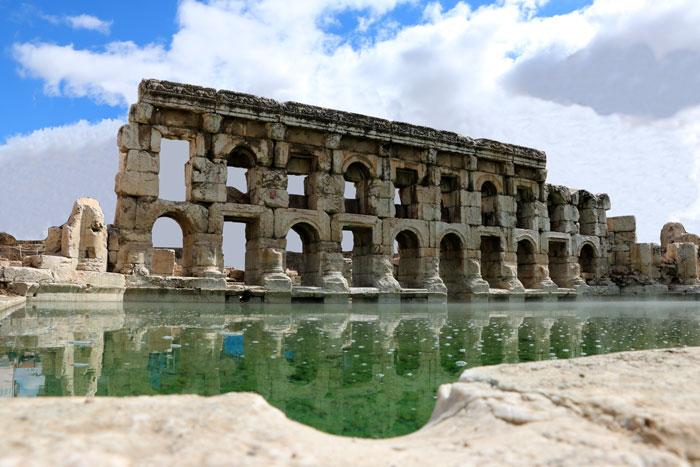
Sarıkaya Roman Bath (Sarıkaya District Governorship)
The Sarıkaya Roman Bath functioned as a thermal bath based on its natural hot spring source. During the Roman period, thermal baths were not only used for hygiene but also for health, therapy and social interaction. It is stated that the bath in Sarıkaya was also used within this multifunctional framework.
The large pools (natatio) within the bath complex are elements that supported the building’s communal use and thermal therapeutic functions.
Roman Bath (TRT Haber)
The first scientific observations at the Sarıkaya Roman Bath were conducted in the early 20th century, while comprehensive excavation and cleaning works were carried out between 2010 and 2015 under the supervision of the Yozgat Museum Directorate. These efforts revealed architectural remains and archaeological finds dating to the Roman, Byzantine, Seljuk and Ottoman periods.
Architectural elements uncovered during the excavations include marble flooring, columns, arches, pools and remnants of the hypocaust system. Additionally, coins recovered indicate that the building was in use at least until the 2nd century CE.
Today, the Sarıkaya Roman Bath holds the status of an immovable cultural heritage site requiring protection and is open to visitors as an archaeological area. The monumental façade and thermal pools are particularly prominent, and the site is evaluated within the framework of cultural heritage.
Bostan, Enes, and Nur Urfalıoğlu. “Yozgat Sarıkaya Roma Hamamı ile İlgili Bir Değerlendirme.” *Sanat ve Tasarım Araştırmaları Dergisi* 3, no. 4 (2022): 1–22. Accessed January 2, 2026.https://dergipark.org.tr/tr/pub/stardergisi/article/1024285
Kültür Portalı. "Sarıkaya Roma Hamamı." Accessed January 2, 2026.
Kültür Varlıkları ve Müzeler Genel Müdürlüğü. "Sarıkaya Roma Hamamı (Yozgat, 2018)." Accessed January 2, 2026.
Sarıkaya Kaymakamlığı. "Sarıkaya Antik Roma Hamamı." Accessed January 2, 2026.
TRT Haber. "Yozgat, Basilica Therma Roma Hamamı." YouTube. Accessed January 2, 2026.https://www.youtube.com/watch?v=2Up2WQ3UFuA
Tarih Arşivi. "Anadolu’nun Kalbinde 2 Bin Yıllık Sarıkaya Roma Hamamı." Accessed January 2, 2026.
Çınar, Hande Sanem, and Nilüfer Kart Aktaş. "Sarıkaya Roma Hamamı." *Türkiye Turizm Ansiklopedisi*. Accessed January 2, 2026.https://turkiyeturizmansiklopedisi.com/sarikaya-roma-hamami
Name | Sarıkaya Roman Bath | ||||||||
|---|---|---|---|---|---|---|---|---|---|
Other Name | Basilica Therma Aquae Sarvenae Therma | ||||||||
Type | Ancient Roman Thermal Bath Structure | ||||||||
Location | Sarıkaya Türkiye Yozgat | ||||||||
Geographic Region | Central Anatolia Region | ||||||||
Period | Roman Empire | ||||||||
No Discussion Added Yet
Start discussion for "Sarıkaya Roman Bath" article
Geographical Location and Natural Environment
Historical Background and Nomenclature
Architectural Features
Thermal Function and Use
Archaeological Research and Findings
Current Status and Conservation