This article was automatically translated from the original Turkish version.
Type of Geographical Indication | Mahreç Sign | ||||||||
|---|---|---|---|---|---|---|---|---|---|
Registration Number | 996 | ||||||||
Registration Date | 20.01.2022 | ||||||||
Product / Product Group(s) | Meals and soups | ||||||||
Province(s) | Afyonkarahisar | ||||||||
Applicant/Registrant(s) | Sandıklı Municipality | ||||||||
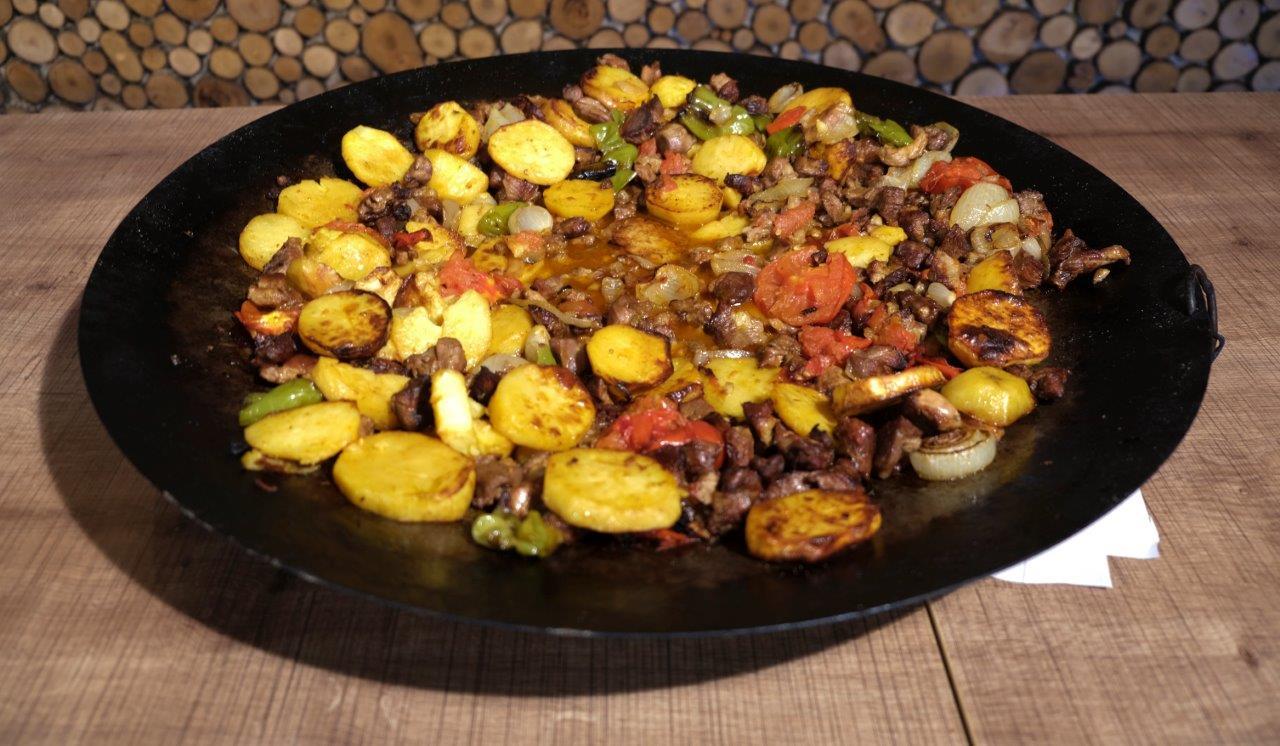
Sandıklı Saç Eti, Afyonkarahisar Province’s Sandıklı District is known for a traditional dish prepared in a stone oven using oak wood fire. This dish consists of lamb meat (leg, rib, or chop), potatoes, onions, peppers, tomatoes, animal fat, and margarine, arranged in a specific pattern on a flat iron steel pan called a saç and cooked accordingly. The method of preparation, along with the skill and technique involved, has established a geographical link and received official registration.
Sandıklı Saç Eti is produced using lamb meat, vegetables (potatoes, onions, peppers, tomatoes), animal fat, and margarine. The cooking method requires the entire oven to reach and maintain a uniform temperature of 250 °C to ensure even cooking. The saç pan serves both as a cooking and serving vessel. The distinguishing features of the dish are its preparation using oak wood fire in a stone oven and its unique layering arrangement.
The production of Sandıklı Saç Eti involves the following stages:
The production, processing, and all other stages of Sandıklı Saç Eti must take place within the geographical boundaries of the Sandıklı District of Afyonkarahisar Province. The dish’s historical roots and its dependence on local environmental conditions and specialized craftsmanship establish its unique association with this region.
Monitoring to safeguard the registered status of Sandıklı Saç Eti is carried out under the coordination of the Sandıklı Municipality. The monitoring body consists of at least four members, including experts from the Sandıklı District Governor’s Office, the Sandıklı Vegetable and Fruit Traders’ Guild, and the Sandıklı Municipality.
Monitoring is conducted at least once annually, and additional inspections are carried out in response to complaints or as deemed necessary. During inspections, the suitability of ingredients used, compliance with the production method, and the proper use of the designation “Sandıklı Saç Eti” and its official emblem are verified.
Turkish Patent and Trademark Office. "Sandıklı Saç Eti Coğrafi İşaret Sicil Belgesi." Accessed October 22, 2025. https://ci.turkpatent.gov.tr/Files/GeographicalSigns/2d5d4a88-69a3-4019-8e32-6292a2b5bf59.pdf
Turkish Patent and Trademark Office. "Sandıklı Saç Eti." Geographical Indications Portal. Accessed October 22, 2025. https://ci.turkpatent.gov.tr/cografi-isaretler/detay/3642

Type of Geographical Indication | Mahreç Sign | ||||||||
|---|---|---|---|---|---|---|---|---|---|
Registration Number | 996 | ||||||||
Registration Date | 20.01.2022 | ||||||||
Product / Product Group(s) | Meals and soups | ||||||||
Province(s) | Afyonkarahisar | ||||||||
Applicant/Registrant(s) | Sandıklı Municipality | ||||||||
No Discussion Added Yet
Start discussion for "Sandıklı Hair Flesh" article
Product Characteristics
Production Method
Geographical Boundary
Monitoring