


This article was automatically translated from the original Turkish version.
+2 More
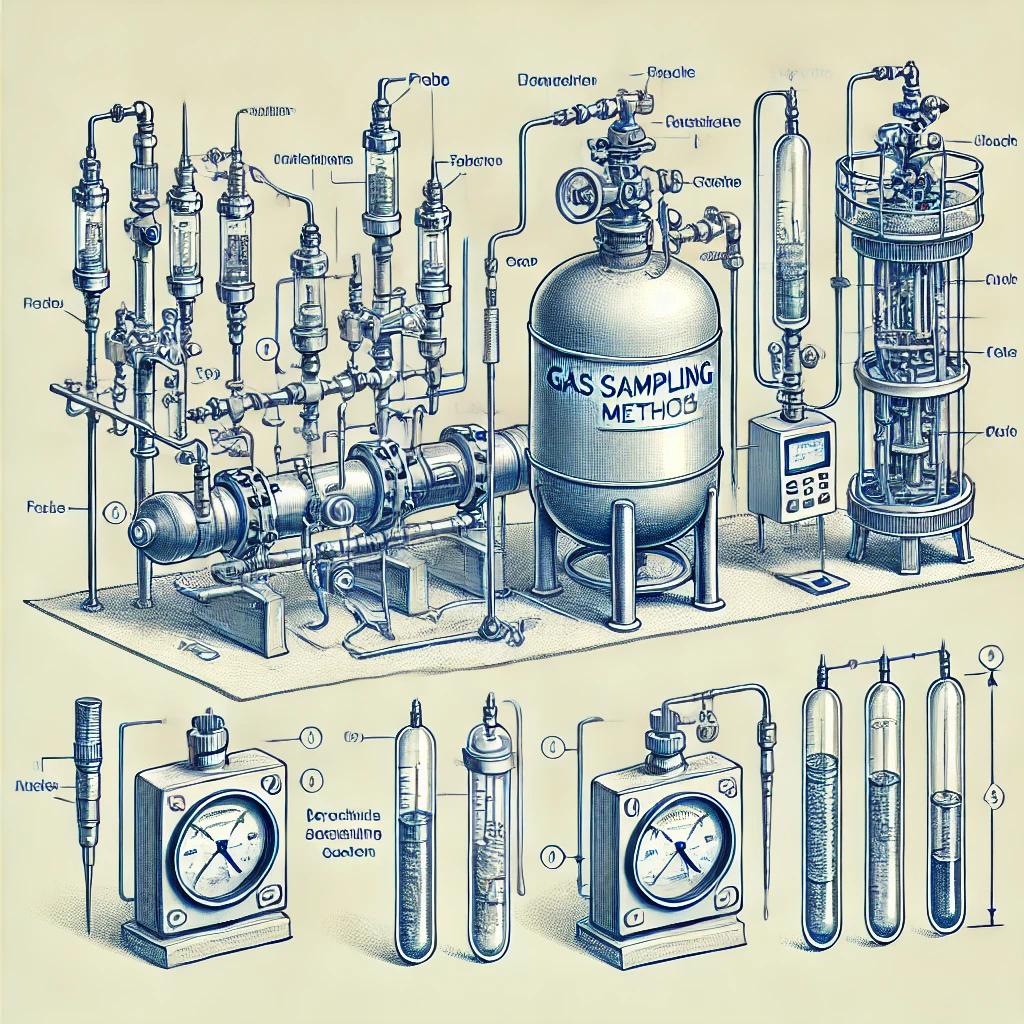
Sampling from Gases
Description | Due to its properties, the gas phase is the most difficult phase for sampling. Gas samples are collected using various methods and analyzed. | ||||||||
|---|---|---|---|---|---|---|---|---|---|
Sampling Methods and Equipment | Gas Sampling Vessel: A tubular container made of borosilicate glass, with gas inlet and outlet pipes sealed by a vacuum device. Sampling Gas from a Tank: It consists of a pressure gauge, velocity measurement flask, gas meter, and aspirator. The aspirator facilitates gas extraction, and the sample is collected while controlling pressure. Sampling Gas Flowing Through Pipes: A device with fine pipes of varying lengths is used to reach the axial line of the pipe through which the gas flows, allowing discrete samples to be collected. | ||||||||
The gas phase is the most difficult phase for sampling due to its properties.
This device consists of a series of fine tubes of varying lengths and is installed so that the longest tube aligns with the axis of the pipe through which the gas flows. This device is primarily used for discrete sampling.
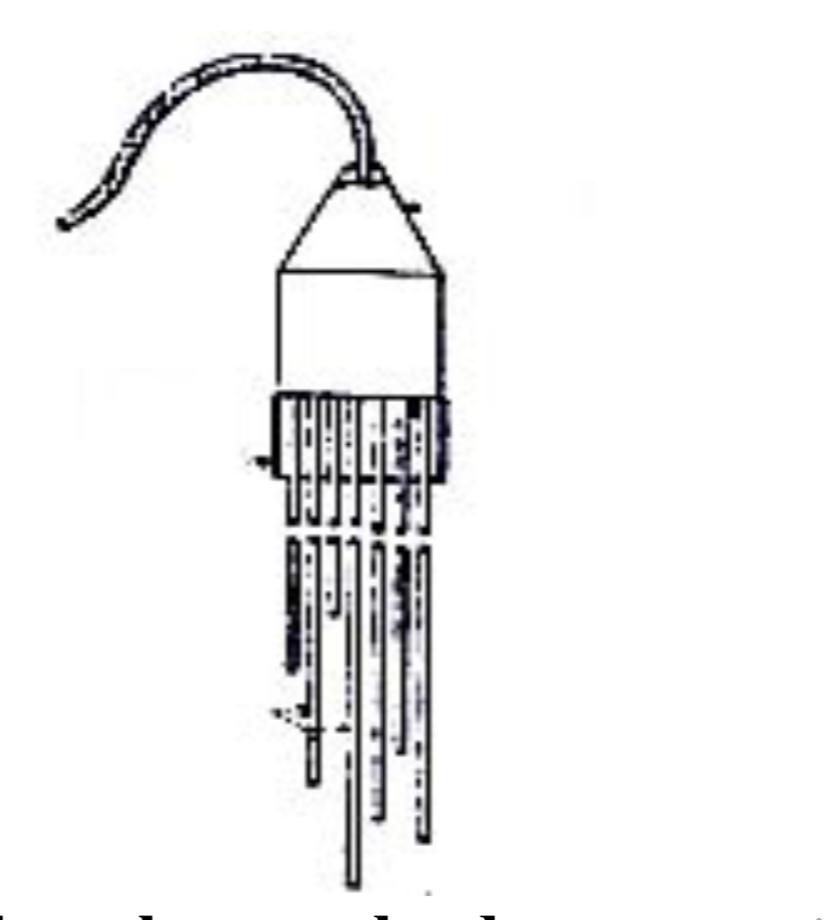
Device for sampling gases from pipes
The device consists of a pressure gauge, a velocity measurement flask, a gas meter, a pressure control meter, and a pressure scale. One end of the device is connected to an aspirator and the other end to the substance from which the sample is to be taken. The aspirator facilitates gas extraction. During sampling, the pressure reading on the pressure scale is adjusted to 20–25 mm Hg by moving the tube in the control device up and down. If the gas is under pressure, the aspirator, pressure control device, and pressure scale components are not used.
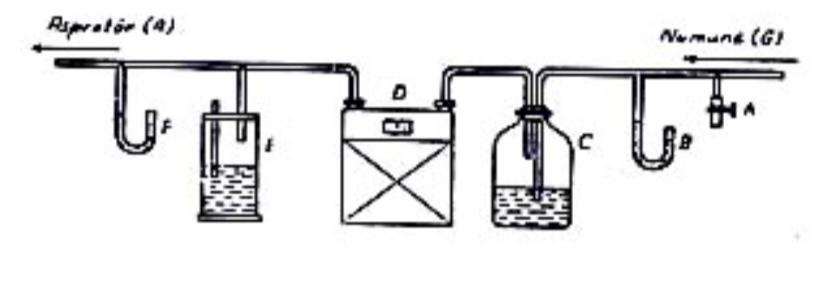
Device for sampling gas from a tank
A gas sample container is a tubular vessel made of borosilicate glass suitable for the chemical and thermal properties of the gas. The inlet and outlet pipes of this container are fitted with single-valve stopcocks whose tightness is verified by a vacuum device.
It is frequently used for sampling gases from tanks. The procedure for sampling using a gas sample container is as follows:
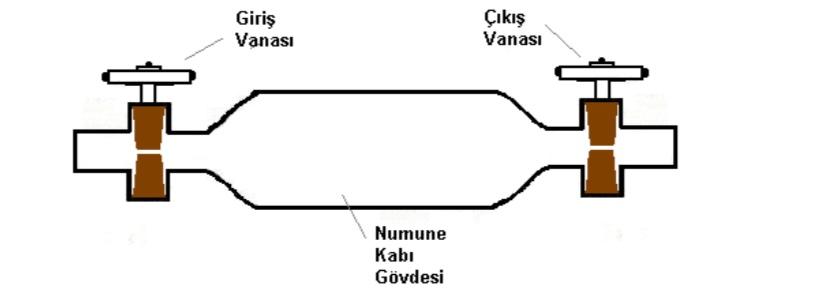
Gas sample container
During storage, physical, chemical, and biological changes occur in the sample. Preservation techniques only delay the natural chemical and biological changes that continue after the sample is removed from its source. Complete preservation of samples is difficult. Since most preservation agents react with the sample, analysis must be performed immediately. If samples are to be analyzed within a day, storage at low temperatures (+4°C) is the best method. Chemical preservatives may be used if they do not interfere with the intended analysis. When used, preservatives must be placed in the sample container beforehand and thoroughly mixed with the collected sample. The choice of preservation and storage methods must be determined by the type of analysis to be performed. Sample preservation methods are limited and aim to delay biological activity and hydrolysis of chemical compounds and complexes, as well as reduce volatility of components. Preservation and storage methods typically involve pH control, addition of chemical substances, cooling, and freezing. Samples must be delivered to the laboratory in the shortest possible time, and this period must not exceed 24 hours. During transport, precautions must be taken to prevent samples from being exposed to foreign odors, direct sunlight, or temperatures above 25°C.
Defining the sample is as important as collecting it. Immediately after sampling, identifying information must be written legibly with water- and oil-resistant ink or labeled on the container. Sample identification may also be performed electronically using barcode labels.
After analysis, recording measurement results is essential for maintaining continuous production. Reoccurrence of errors detected during analysis can be identified by reviewing historical records. Recurring errors recorded in the data indicate malfunctioning equipment or personnel failing to perform their duties. It is easier and more practical to store measurement results than to store the samples themselves. Measurement results are recorded by the analyzing personnel in the operational logbook or computer system. The following information must also be recorded along with the results:
During process trials and production tests, certain set values are determined for each process. Values for pressure, temperature, flow, level, and other variables are established. These values may change due to malfunctions or other reasons. Such deviations cause adverse changes in product quality. It must be known in advance which errors lead to which changes in product characteristics. The error indicated by the deviation detected through sample analysis is identified. The field personnel are informed of the error so that corrective action can be taken. A new sample is then collected and reanalyzed. This process is repeated until product quality reaches the desired values.
Results obtained from samples provide the most valuable information for directing production. To monitor the production process and implement appropriate corrective actions when needed, the following procedures must be followed.
International Organization for Standardization (ISO). ISO 10780: Stationary Source Emissions – Measurement of Velocity and Volume Flowrate of Gas Streams in Ducts. 2012.
Lodge, J. P. Methods of Air Sampling and Analysis. 3rd ed. CRC Press, 1989.
Perry, R. H., and Green, D. W. Perry’s Chemical Engineers’ Handbook. 8th ed. McGraw-Hill, 2007.
U.S. Environmental Protection Agency (EPA). Compendium of Methods for the Determination of Toxic Organic Compounds in Ambient Air (EPA/625/R-96/010). 1999.
Van Gemert, L. J. Compendium of Odor Threshold Values in Air, Water, and Other Media. Elsevier, 2011.

Sampling from Gases
Description | Due to its properties, the gas phase is the most difficult phase for sampling. Gas samples are collected using various methods and analyzed. | ||||||||
|---|---|---|---|---|---|---|---|---|---|
Sampling Methods and Equipment | Gas Sampling Vessel: A tubular container made of borosilicate glass, with gas inlet and outlet pipes sealed by a vacuum device. Sampling Gas from a Tank: It consists of a pressure gauge, velocity measurement flask, gas meter, and aspirator. The aspirator facilitates gas extraction, and the sample is collected while controlling pressure. Sampling Gas Flowing Through Pipes: A device with fine pipes of varying lengths is used to reach the axial line of the pipe through which the gas flows, allowing discrete samples to be collected. | ||||||||
No Discussion Added Yet
Start discussion for "Sampling from Gases" article
Sampling Methods and Equipment
Sampling Gases Flowing Through Pipes
Sampling Gas from a Tank
Sampling Using a Gas Sample Container
Safety Rules for Sampling
Sample Storage Methods
Sample Labeling
Recording Measurement Results
Error Detection
Directing Production Based on Measurement Results
Acceptance of routine and additional samples collected from the facility for process control
Analysis of routine samples collected from the facility for process control