This article was automatically translated from the original Turkish version.
+1 More
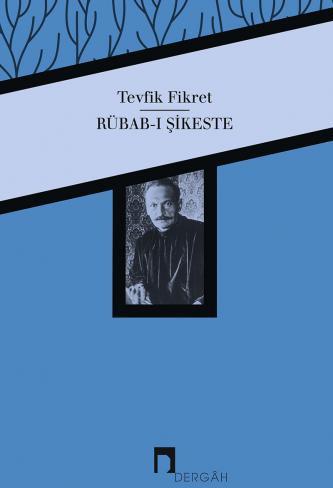
Author(s) | Tevfik Fikret | ||||||||
|---|---|---|---|---|---|---|---|---|---|
Prepared by | Sabahattin Çağın | ||||||||
Publisher(s) | Dergah Yayınları | ||||||||
Publication Year | December 2023 (5th Edition, Dergah Pub.) | ||||||||
Number of Pages | 309 | ||||||||
Type(s) | Poetry Book | ||||||||
Rübâb-ı Şikeste is a significant poetry collection by Tevfik Fikret, one of the pioneers of Servet-i Fünun poetry, written in the early 1900s and first published in 1911. The work reflects the poet’s literary personality, individual world, and the intellectual tendencies of his era. Through its poems and stylistic features, the book functions as a transitional text encompassing both personal and social dimensions. Notably, it captures the formal and thematic transformation of modern Turkish poetry along the continuum from Tanzimat to Servet-i Fünun, bringing together the poet’s personal fractures and the intellectual shifts of his time.
The title Rübâb-ı Şikeste means “broken rubab.” The rubab is a musical instrument used particularly in Eastern cultures, especially within Sufism and classical literature, symbolizing the poet’s inner world and emotions. The broken state of the rubab signifies not merely physical damage to an instrument but also the poet’s internal ruptures, disappointments, and personal collapse. This title serves as a direct reference to the thematic and emotional backdrop of the poems in the collection. It encapsulates both the tragedies in Tevfik Fikret’s personal life and his disillusionment toward social and political developments of his era.
Rübâb-ı Şikeste is primarily a poetry collection centered on individual themes. Poems infused with emotions such as love, nature, melancholy, solitude, and disappointment also reveal the poet’s sensitivity to social events. Imagery, especially drawn from natural elements, plays a crucial role in conveying these feelings. Tevfik Fikret is among the pioneering figures who introduced Western-style individualism into Turkish poetry, and in this regard, the work has been decisive in establishing personal sensitivity and inwardness as central elements in Turkish literature.
A significant portion of the poems in the collection reflect the poet’s inner conflicts and personal ruptures. Family problems, losses of friends, political repression, and the moral collapse he experienced in the face of a corrupt bureaucratic system are rendered through emotional and symbolic imagery. In this sense, the work is not merely an aesthetic text but also presents an intellectual and spiritual panorama of its time.
Rübâb-ı Şikeste reflects the transition from classical Arabic-Persian poetic forms toward greater formal freedom. Influenced by Western poetry, Tevfik Fikret introduced innovations in versification and developed a language and style bearing traces of Parnassianism and Symbolism. Although classical aruz meter is still employed, the diction, rhythm, imagery, and structure of the poems diverge significantly from tradition. In this context, the work is regarded as a forerunner of modernization in Turkish poetry.
Original imagery, allusions, and references in Tevfik Fikret’s poems stand out. Allusions—references to the past, mythological elements, or literary figures—are key components that enhance the intellectual depth of the work. The combination of allusions to divan poetry with motifs borrowed from Western literature transforms the collection into a quintessential transitional text of its era.
Within the Servet-i Fünun circle, Tevfik Fikret developed a highly individualistic poetic sensibility, and this work clearly mirrors the Westernizing tendencies among the intellectuals of his time. These poems, which foreground individual emotions over societal concerns, can also be read as texts questioning the limits of individual existence and freedom of expression under the repressive political climate of the period.
Rübâb-ı Şikeste is not merely a poetry collection but also carries the character of a literary manifesto, both through its poems and its poetic vision. The collection concretizes Tevfik Fikret’s thoughts on the individual, art, society, and life. The social conditions of the time—autocratic rule, censorship of the press, and the intellectual retreat inward—shaped the emergence of an individual-centered stance in the work.
Rübâb-ı Şikeste has been reprinted numerous times and has served as a foundational text for academic studies. Critical editions include detailed textual analyses addressing the original publication’s wording, typographical errors, and the linguistic features of the period. Particularly in modern editions, the semantic universe of the poems, the literary devices employed, and structural characteristics are thoroughly explained. Thanks to these editions, the work has become one of the primary sources for literary research and textual analysis.
The allusions and linguistic constructions within the poems enhance both the literary richness and linguistic depth of the text. In this sense, Rübâb-ı Şikeste stands as an important document of the transformation of Ottoman Turkish within modern literature.
Abdulla, Bokan Ahmed. *Tevfik Fikret’in Rübab-ı Şikeste’sinde Telmihler ve Terkipler*. Master's thesis, Eastern Mediterranean University (EMU)-Doğu Akdeniz Üniversitesi (DAÜ), 2018. Accessed July 16, 2025. https://i-rep.emu.edu.tr/xmlui/handle/11129/4856
Fikret, Tevfik. *Rübab-ı Şikeste*. Prepared by Sabahattin Çağın. Istanbul: Dergah Yayınları, 2017. Accessed July 8, 2025. https://www.dergah.com.tr/kitaplar/rubab-i-sikeste.
Fikret, Tevfîk, and Furkan Öztürk. *Rübâb-ı Şikeste (Eleştirel Basım)*. Vol. 41. İstanbul: DBY Yayınları, 2020. Accessed July 16, 2025. https://books.google.com/books?hl=tr&lr=&id=vn4hEAAAQBAJ.
Author(s) | Tevfik Fikret | ||||||||
|---|---|---|---|---|---|---|---|---|---|
Prepared by | Sabahattin Çağın | ||||||||
Publisher(s) | Dergah Yayınları | ||||||||
Publication Year | December 2023 (5th Edition, Dergah Pub.) | ||||||||
Number of Pages | 309 | ||||||||
Type(s) | Poetry Book | ||||||||
No Discussion Added Yet
Start discussion for "Rübab-ı Şikeste (Book)" article
Title and Symbolism
Thematic Structure and Content Features
Style and Formal Features
Place Within Its Era
Critical Editions and Academic Evaluations