


This article was automatically translated from the original Turkish version.
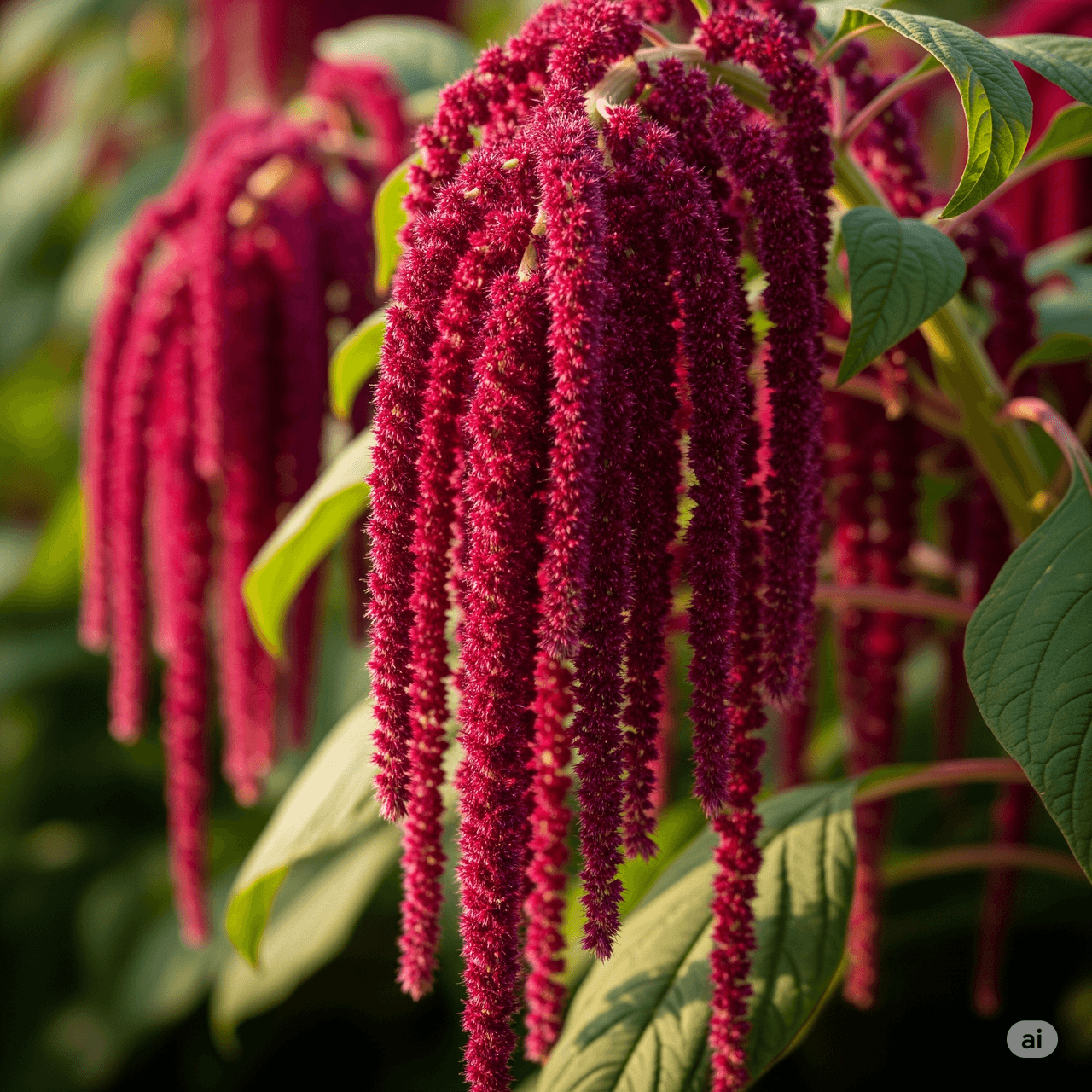
Rooster Axe Flower
Type Name | Amaranthus caudatus | ||||||||
|---|---|---|---|---|---|---|---|---|---|
Family | Amaranthaceae | ||||||||
Natural Distribution | Native to South America, tropical and temperate regions | ||||||||
Plant Type | Annual, non-woody plant | ||||||||
Size(s) | Can grow up to 1-2 meters in height | ||||||||
Leaf Characteristics | Broad, oval, opposite arrangement | ||||||||
Chemical Composition | Antioxidant proteins Phenolic compounds Stilbenoids Flavonoids | ||||||||
Area(s) of Use | Biofilm production Pharmaceutical research Functional food Food source | ||||||||
Rose amaranth, or love-lies-bleeding, scientifically known as Amaranthus caudatus, is an annual plant species belonging to the Amaranthaceae family, originally native to South America. Although its origins lie in the Andean region, this plant is now cultivated worldwide for nutritional and industrial purposes. Amaranthus caudatus has gained significant importance in the food and pharmaceutical industries due to the high nutritional value and functional properties of its seeds. The seeds are rich in protein, flavonoids, and phenolic compounds, highlighting their antioxidant properties. Additionally, they can be utilized in innovative applications such as biofilm production.
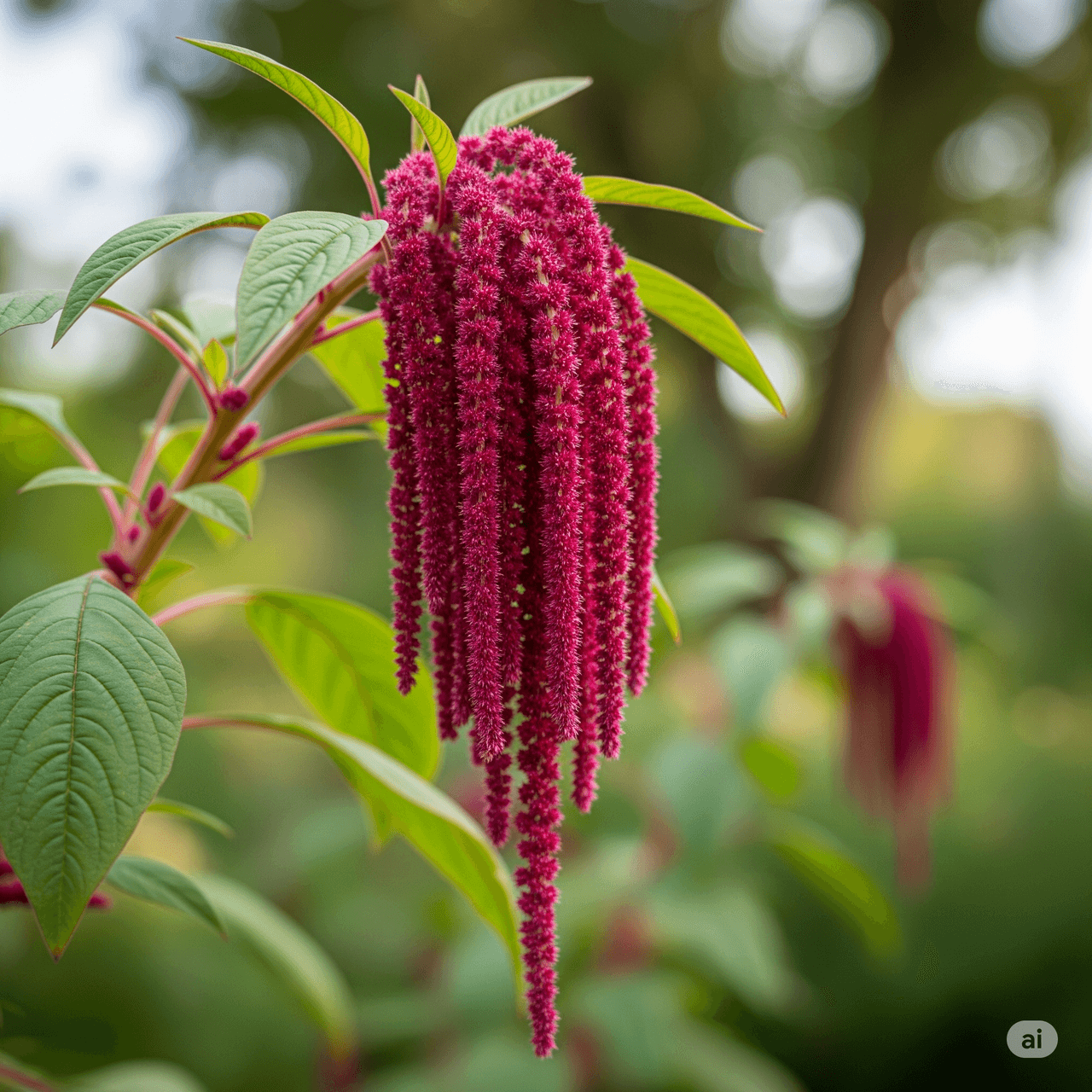
Rose Amaranth. (Generated by Artificial Intelligence.)
Rose amaranth is characterized by its slender, elongated stems and can grow up to 1–2 meters in height. Its leaves are broad, oval or egg-shaped, and arranged alternately. The most distinctive feature of the plant is its long, drooping, spike-like inflorescences. These flowers are typically red, purple, or pink in color, imparting a characteristic visual aesthetic to the plant. Rose amaranth blooms during the summer months and matures its seeds. While it prefers warm and temperate climates, it also exhibits moderate tolerance to dry conditions.
Rose amaranth has broad applications both as a food source and as a functional food. Its seeds are increasingly favored in healthy diets due to their high protein and amino acid content. Moreover, flour derived from the seeds serves as an alternative ingredient in gluten-free products. Beyond the food industry, the plant’s chemical constituents are also studied in pharmaceutical research. Its antioxidant properties are evaluated as natural preservatives, while its use in biofilm production enables innovative packaging and preservation solutions.
Rose amaranth is a culturally significant plant native to South America and has been used for centuries by local communities as a source of food and medicine. It also holds potential to improve soil structure and contribute to sustainable agricultural practices within farming ecosystems. The plant’s resilience and broad adaptability make it cultivable across diverse climates. Therefore, rose amaranth is of importance both to local economies and to global food security.
Scientific research is actively exploring the potential of Amaranthus caudatus in functional food and pharmaceutical applications. A deeper molecular understanding of its antioxidant and antimicrobial properties presents significant opportunities for discovering new natural compounds and expanding their health-related uses. Furthermore, its application in biofilm production and other industrial uses contributes to the development of sustainable and environmentally friendly technologies. In these respects, rose amaranth is regarded as a multifaceted resource in modern science and industry.
Broekaert, W. F., Marien, W., Terras, F. R. G., De Bolle, M. F. C., Proost, P., Van Damme, J., Dillen, L., Claeys, M., & Rees, S. B. (1992). Antimicrobial peptides from Amaranthus caudatus seeds with sequence homology to the cysteine/glycine-rich domain of chitin-binding proteins. *Biochemistry*, *31*(17), 4308–4314. https://doi.org/10.1021/bi00132a023
Conforti, F., Statti, G., Loizzo, M. R., Sacchetti, G., Poli, F., & Menichini, F. (2005). In Vitro Antioxidant Effect and Inhibition of α-Amylase of Two Varieties of Amaranthus caudatus Seeds. *Biological and Pharmaceutical Bulletin*, *28*(6), 1098–1102. https://doi.org/10.1248/bpb.28.1098
Karamać, M., Gai, F., Longato, E., Meineri, G., Janiak, M. A., Amarowicz, R., & Peiretti, P. G. (2019). Antioxidant Activity and Phenolic Composition of Amaranth (Amaranthus caudatus) during Plant Growth. *Antioxidants*, *8*(6), 173. https://doi.org/10.3390/antiox8060173
Martinez-Lopez, A., Millan-Linares, M. C., Rodriguez-Martin, N. M., Millan, F., & La Paz, S. M. (2019). Nutraceutical value of kiwicha (Amaranthus caudatus L.). *Journal of Functional Foods*, *65*, 103735. https://doi.org/10.1016/j.jff.2019.103735
Pedersen, B., Kalinowski, L. S., & Eggum, B. O. (1987). The nutritive value of amaranth grain (Amaranthus caudatus). *Qualitas Plantarum*, *36*(4), 309–324. https://doi.org/10.1007/bf01892352
Repo-Carrasco-Valencia, R., Hellström, J. K., Pihlava, J., & Mattila, P. H. (2009). Flavonoids and other phenolic compounds in Andean indigenous grains: Quinoa (Chenopodium quinoa), kañiwa (Chenopodium pallidicaule) and kiwicha (Amaranthus caudatus). *Food Chemistry*, *120*(1), 128–133. https://doi.org/10.1016/j.foodchem.2009.09.087
Tapia-Blácido, D., Sobral, P. J., & Menegalli, F. C. (2004). Development and characterization of biofilms based on Amaranth flour (Amaranthus caudatus). *Journal of Food Engineering*, *67*(1–2), 215–223. https://doi.org/10.1016/j.jfoodeng.2004.05.054

Rooster Axe Flower
Type Name | Amaranthus caudatus | ||||||||
|---|---|---|---|---|---|---|---|---|---|
Family | Amaranthaceae | ||||||||
Natural Distribution | Native to South America, tropical and temperate regions | ||||||||
Plant Type | Annual, non-woody plant | ||||||||
Size(s) | Can grow up to 1-2 meters in height | ||||||||
Leaf Characteristics | Broad, oval, opposite arrangement | ||||||||
Chemical Composition | Antioxidant proteins Phenolic compounds Stilbenoids Flavonoids | ||||||||
Area(s) of Use | Biofilm production Pharmaceutical research Functional food Food source | ||||||||
Botanical Characteristics
Applications
Ecological and Cultural Significance
Future Perspectives