


This article was automatically translated from the original Turkish version.
+1 More
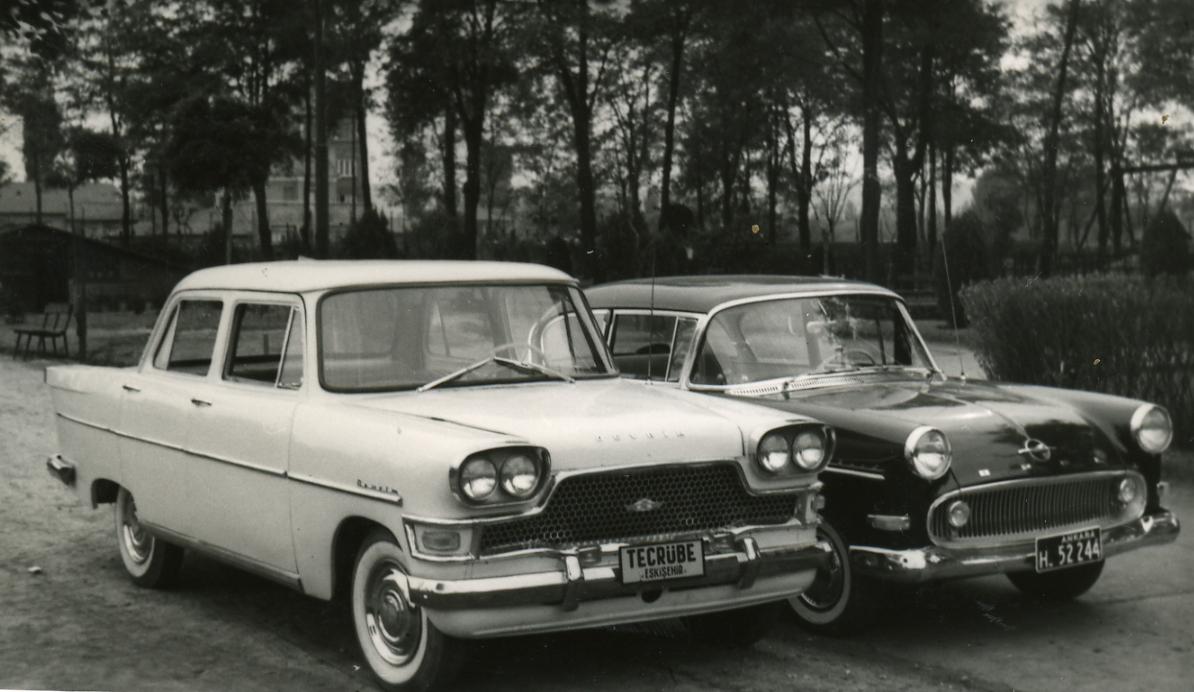
Manufacturer | Eskişehir Railway Factory (TÜLOMSAŞ) | ||||||||
|---|---|---|---|---|---|---|---|---|---|
Year of Production | 1961 | ||||||||
"Devrim Arabası", Türkiye's first indigenous automobile production initiative and a significant milestone in Turkish industrial history. In the early 1960s, as part of Türkiye's efforts to industrialize, the idea of producing a domestic automobile gained prominence and generated widespread social and political反响. The Devrim Arabası was not merely an attempt to build a car; it was a symbolic project tied to Türkiye's goal of economic independence. Despite encountering technical and political obstacles, the project ultimately failed to achieve its intended success but remains etched in memory as a crucial landmark in the development of Türkiye's automotive industry.
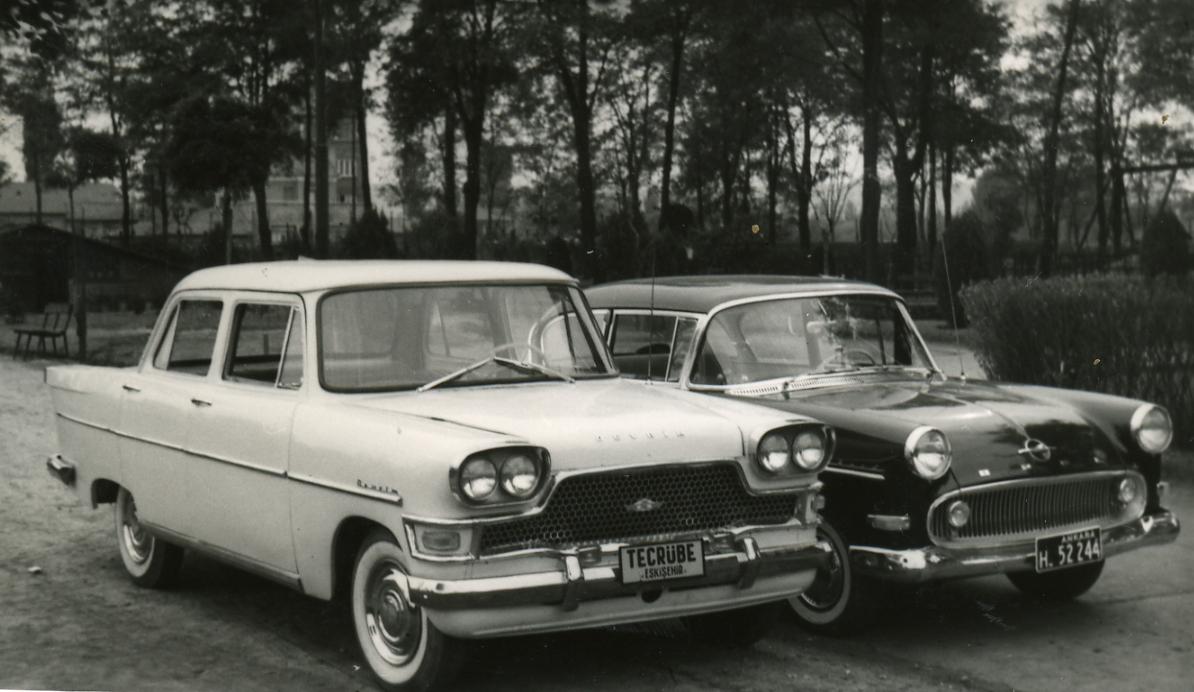
Devrim Arabaları (Source: Devrim Arabaları Museum)
The Devrim Arabası project began in early 1961 when President Cemal Gürsel brought the goal of domestic automobile production to national attention. At the time, Türkiye was striving to make major strides in industrialization. In this context, the initiative to produce a local automobile was not merely an industrial project but a critical step directly linked to the nation's objective of economic independence.
Following President Gürsel’s public announcement of the project, the idea of domestic automobile production rapidly gained momentum. The first concrete steps were taken in January 1961 when nine industrial firms gathered in Istanbul to form the “Turkish Machinery, Motor Vehicle and Auxiliary Industries Union.” This union conducted necessary discussions and established contact with government officials. It also maintained continuous communication with industrialists, engineers, academics, and chambers of commerce to secure support for the project.
The most important driving force behind the project was the support of state officials of the era. During this period, the active contributions of the Prime Minister, President Gürsel, and the Minister of Industry laid the groundwork for accelerating the domestic automobile production process. By official decree, research was launched to determine the feasibility of automobile manufacturing in Türkiye, and efforts to produce a prototype were intensified.
The union established in 1961 held multiple meetings with the government regarding Türkiye’s automobile production goals. With state backing, the project generated widespread enthusiasm across the country. In March 1961, following the first assessments on Türkiye’s capacity to produce an indigenous automobile, the Minister of Industry proposed sending a team to examine automobile manufacturing facilities in Europe. Based on the team’s findings, the decision to proceed with domestic automobile production was finalized, and the production process was officially launched within the same year.
The production of the Devrim Arabası began with great enthusiasm in line with Türkiye’s industrialization goals, yet it encountered numerous challenges. The first indigenous automobile prototype was initiated in the summer of 1961 at the TCDD’s Cer Workshop in Eskişehir. Considering the required infrastructure, workshop equipment, and engineering capacity available in Türkiye at the time, this represented a highly ambitious step.
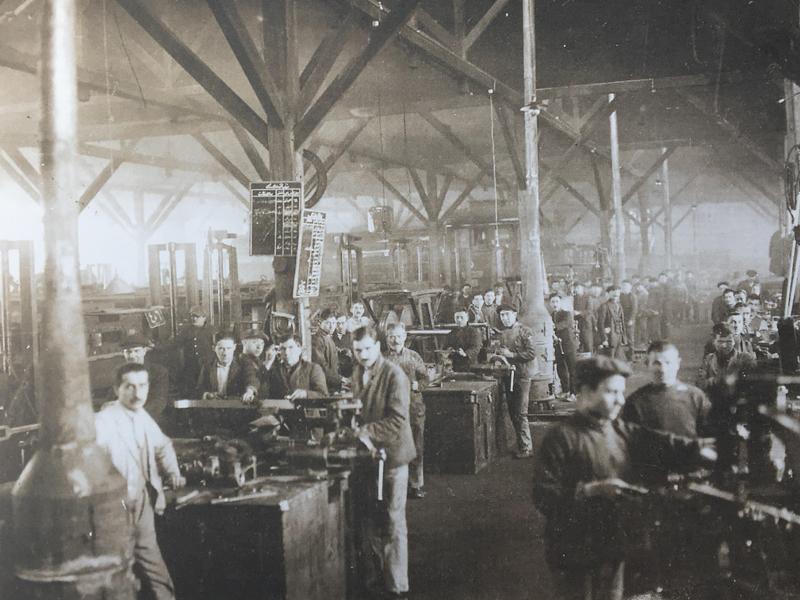
Eskişehir, Cer Workshop (Source: TÜRASAŞ)
The timeline set for the Devrim Arabası’s production was extremely short. Turkish engineers and technicians completed the car’s design and began prototype production within a mere 120 days. The project became a notable example of Turkish engineering potential and generated significant public anticipation. However, one of the greatest challenges during production was the lack of sufficient experience among Turkish engineers in automobile manufacturing. All components of the vehicle were required to be produced domestically. Yet, engine design and production were constrained by the limited engineering knowledge available at the time. Ensuring compatibility between engine parts and other vehicle components posed a major difficulty.
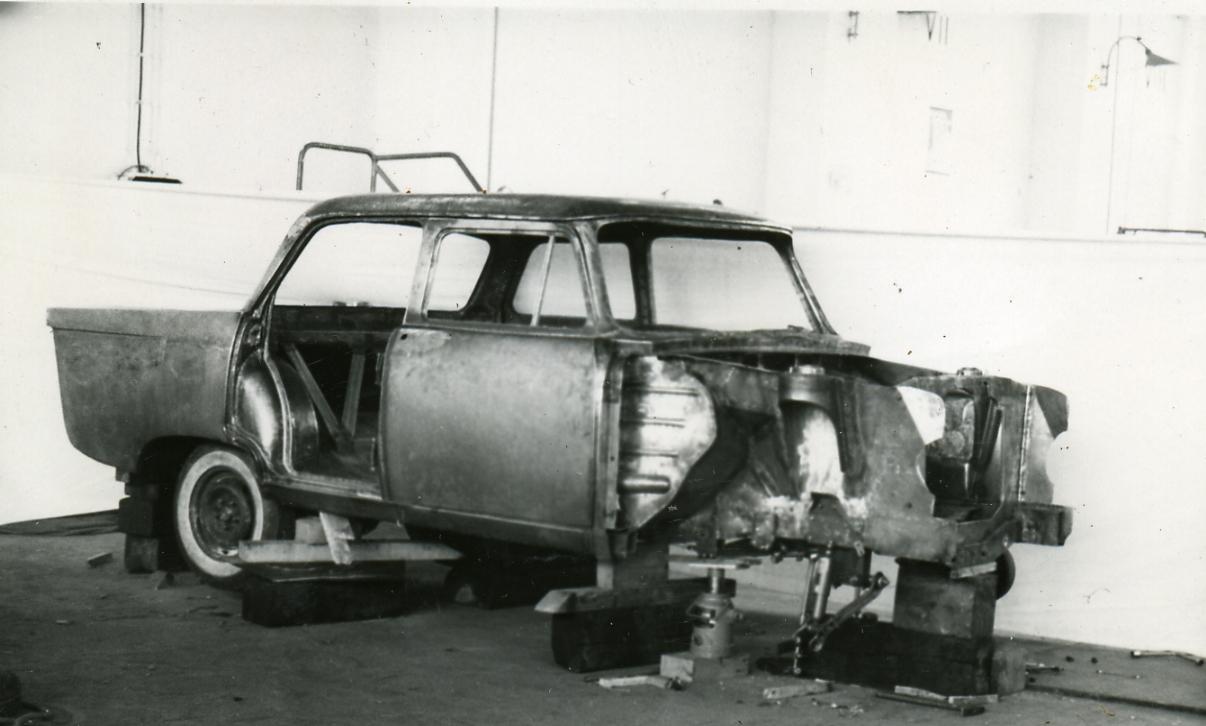
Devrim Arabası (Source: Devrim Arabası)
Although the engine of the Devrim Arabası was domestically produced, it contained several technical shortcomings. The materials used in the vehicle’s construction were a mix of local and imported components. While 80 percent of the engine was manufactured using local materials, certain engine parts and technological infrastructures exceeded Türkiye’s industrial capacity at the time. The chassis and body of the automobile were entirely domestically produced. However, reliance on foreign suppliers remained for the engine, engine components, and certain other parts.
The design of the Devrim Arabası was the result of a collective effort by Turkish engineers and designers of the era. However, technical difficulties and high costs during prototype production prevented the design from being fully realized as intended. The automobile’s aesthetic can be said to have aligned with the modern sensibilities of the time. Yet, it was also observed that the design lacked functional completeness and that the project needed to be accelerated.
A budget of 1,400,000 Turkish Lira was allocated for the project. The vehicle’s basic design was defined as a four- to five-seater weighing between 1,000 and 1,100 kilograms. Plaster models of the body were used to create molds, and sheet metal sections were pressed onto concrete blocks to form the car’s body. Components such as the engine and transmission were manufactured at TCDD factories in Sivas and Ankara. Engineers worked around the clock, even taking short naps at the workshop. By mid-October, the first vehicle was completed and test drives began.
On 29 October 1961, the Devrim Arabası was planned to make a highly anticipated appearance at the Republic Day ceremony. The vehicles departed from Eskişehir early in the morning. On this important day, the train carrying the cars was escorted by motorized units, but the fuel requirements of the vehicles were not properly assessed, leading to a critical oversight.
The first refueling provided only enough gasoline for one car. When it came time to refuel the second car, there was insufficient fuel for the vehicle carrying President Cemal Gürsel, which managed to travel only 100 meters. In response, President Gürsel uttered his famous remark: “You built the car with a Western mindset but forgot to refuel it with an Eastern mindset.”
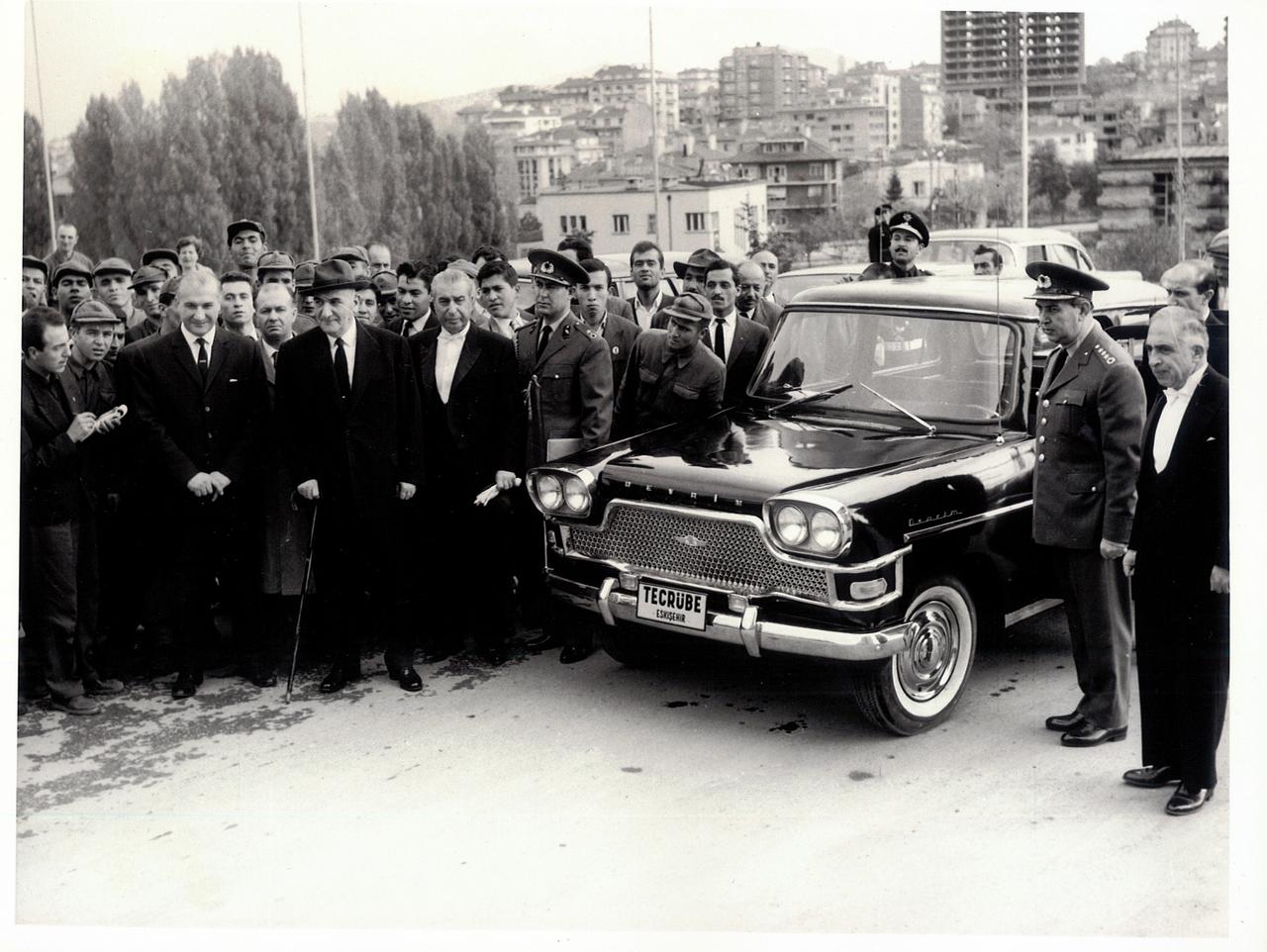
Devrim Arabası at the Republic Day Ceremony (Source: Devrim Arabası)
The Devrim Arabası generated significant media attention, but public opinion was divided. Some newspapers hailed it as a triumph of Turkish industry and supported the project, while others highlighted its technical shortcomings, high costs, and inadequate production processes. In particular, the fact that the car’s engine and certain components were not fully domestically produced was criticized in several publications. Newspapers generally argued that the project would not succeed and contended that such initiatives were incompatible with Türkiye’s existing economic and technological infrastructure.
On the other hand, some newspapers and segments of public opinion published reports that increased interest in the domestic automobile and encouraged support for the project. President Cemal Gürsel’s statements that “a car can be made in Türkiye” strengthened public confidence. However, the challenges and financial constraints encountered during the project limited the public’s sustained interest.
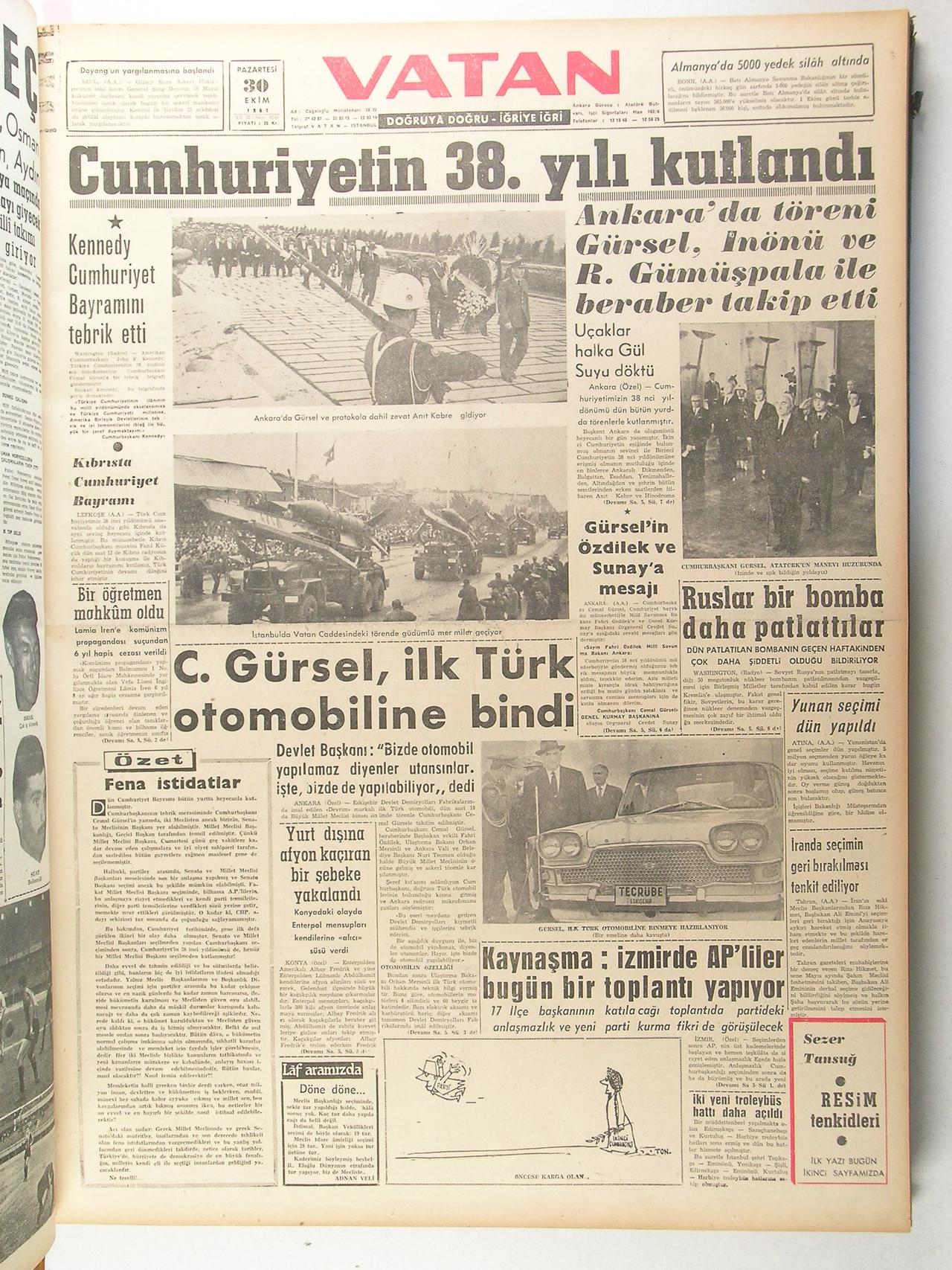
30 October 1931 Vatan Newspaper Cover (Source: Devrim Arabası)
The first prototype of the Devrim Arabası, equipped with a 56-horsepower engine, suffered from numerous deficiencies due to material and infrastructure shortages. As a result, considerable effort was made to complete the vehicle under unexpected conditions, leading to its nickname “Gecekondu.” The name became a symbol of both the hardships faced and the remaining shortcomings that needed to be addressed.
Mavi Boncuk, sharing the same engine power as Gecekondu, stood out due to its distinctive appearance. Its light blue color gave rise to its name. This color was chosen by Mustafa Ersoy, Director of the Eskişehir Railway Factory, and Senior Engineer Hamit İşeri of the Chassis Body Technical Group. Despite the technological limitations of the era, Mavi Boncuk emerged as a successfully completed vehicle, noted for its elegance in design.
Siyah Devrim, produced with a 60-horsepower engine, symbolized the official character of the project. This model received assistance from the Ankara Motor Factory for its engine and transmission components. The black-colored vehicle was originally designed for use as an official state car. Produced as a prestigious example of the project, Siyah Devrim eventually became one of the most important symbols of the Devrim Automobiles.
The beige-colored Devrim, powered by a 65-horsepower engine, attracted attention. Its engine was installed by the Ankara Motor Factory, while other components were completed by the Eskişehir Factory. It is the only surviving example among the four locally produced vehicles. Today, the Bej Devrim is exhibited at the TÜRASAŞ Devrim Automobiles Museum since 2018. It draws considerable attention from both Turkish and foreign tourists not only for its construction but also because it remains fully operational.
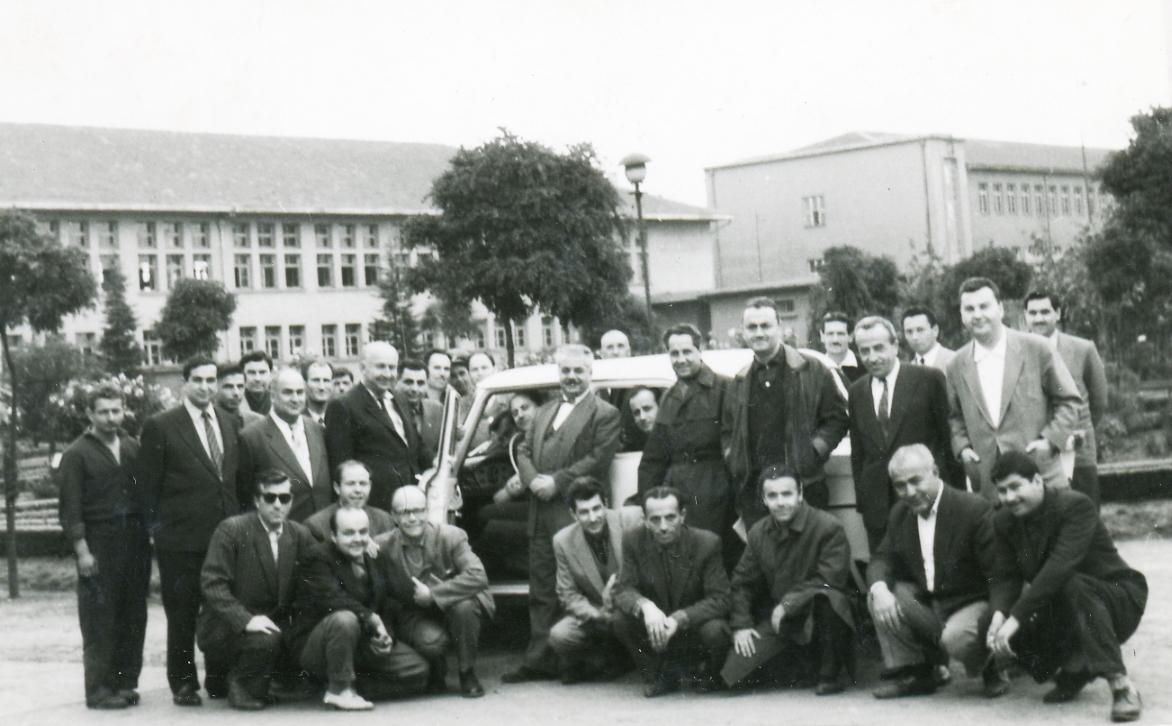
Personnel Involved in the Project (Source: Devrim Arabası)
Technical Team – Management Group
Technical Team – Management Group
Casting Operations
Procurement and Cost Calculations
Design Group
Bodywork Group
Suspension and Brake Group
Electrical Equipment
Welding Group
Arslan, Salih. "Devrim Arabasından Türkiye’nin Otomobiline: Toplumsal Zihniyetin Dönüşümü." *Balıkesir Üniversitesi Sosyal Bilimler Enstitüsü Dergisi* (BAUNSOBED), Volume 24, no. 46, December 2021, p. 1107. Accessed January 4, 2025.https://dergipark.org.tr/tr/pub/baunsobed
Barmak, Ahmet Taner. "Devrim Arabaları ve Türk Otomotiv Sanayisine Etkisi." May 30, 2021.
Devrim Arabası Official Website. "Devrim Arabası." Accessed January 4, 2025.http://devrimarabasi.com.tr/tr/
Hürriyet. "Devrim Arabası Ne Zaman Yapıldı? Hikayesi Nedir? İlk Yerli Araba Devrim Otomobili Özellikleri." Accessed January 4, 2025.https://www.hurriyet.com.tr/bilgi/galeri-devrim-arabasi-ne-zaman-yapildi-hikayesi-nedir-ilk-yerli-araba-devrim-otomobili-ozellikleri-42161801/4
T.C. Eskişehir Valiliği. "Devrim Arabası." Accessed January 4, 2025.http://www.eskisehir.gov.tr/devrim-arabasi.
TRT Haber. "Devrim." Accessed January 4, 2025.https://interaktif.trthaber.com/2018/devrim/.

Manufacturer | Eskişehir Railway Factory (TÜLOMSAŞ) | ||||||||
|---|---|---|---|---|---|---|---|---|---|
Year of Production | 1961 | ||||||||
The Project's Origins
Production and Technical Details of the Devrim Arabası
Production Process
Technical Specifications and Material Selection
Innovations and Challenges in Design
Arrival in Ankara and Misfortune
Social and Media Reactions
The Devrim Automobiles
Gecekondu
Mavi Boncuk
Siyah Devrim
Bej Devrim
Key Figures in the Project