

This article was automatically translated from the original Turkish version.
+1 More
Registration Number(Text) | 1454 | ||||||||
|---|---|---|---|---|---|---|---|---|---|
Registration Date(Text) | 21.08.2023 | ||||||||
Applicant/Registrant(s) | Reşadiye Municipality | ||||||||
Application Date(Text) | 02.02.2022 | ||||||||
Type of Geographical İndication | Mahreç Sign | ||||||||
Place of Production | Tokat, Türkiye | ||||||||
Product / Product Group(s) | Handicraft products other than carpets and textiles kilims | ||||||||
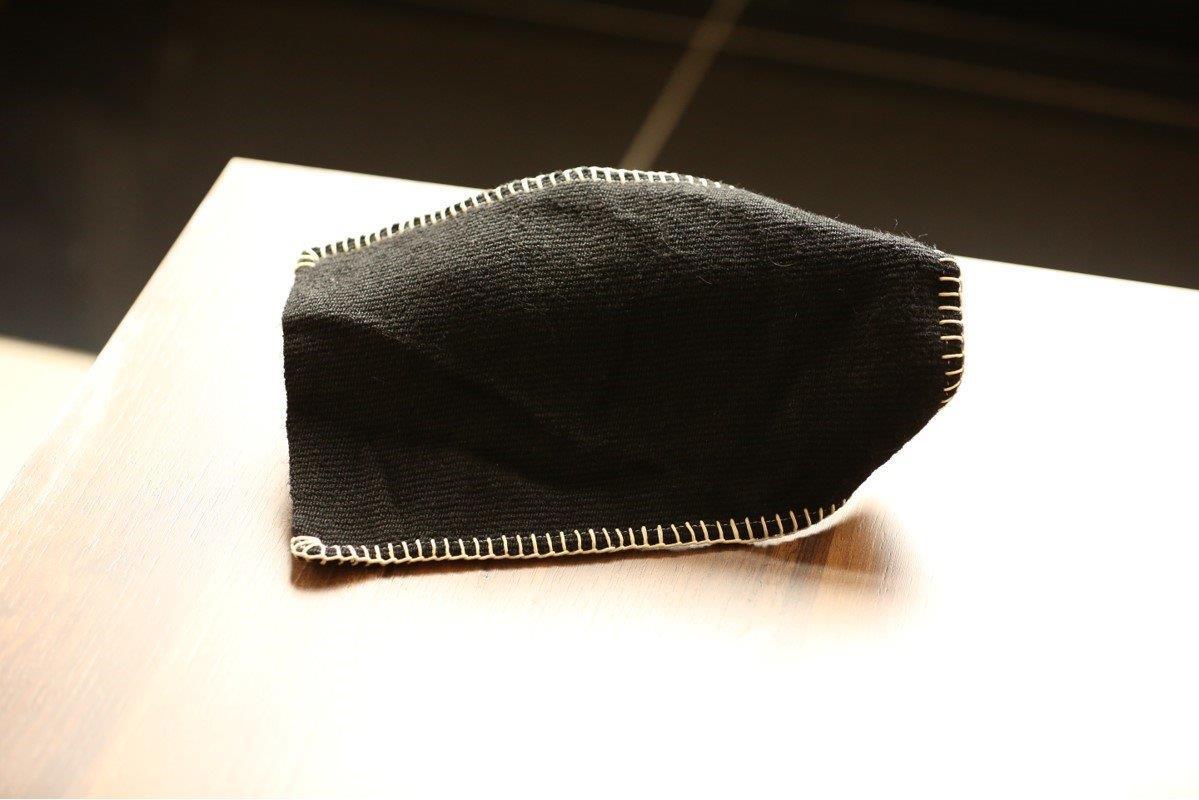
Reşadiye Hamam Kesesi is a traditional, stiff-textured, black-dyed bath towel produced in the Reşadiye district of Tokat Province, Türkiye, using traditional methods. The primary raw material is sheep’s wool, and the towel is handwoven on looms in a rectangular shape (30–32 cm x 15–16 cm). For centuries, it has been an original component of Reşadiye’s weaving heritage and bath culture, reflecting the regional identity.
The Reşadiye Hamam Kesesi was registered as a geographical indication on 21.08.2023 under Law No. 6769 on Industrial Property, establishing a direct link between the product’s reputation and its geographical origin. The registration application was submitted by the Reşadiye Municipality, and it is mandatory for the product name and geographical indication emblem to be clearly displayed on packaging or within production facilities.
Wool sheared from local sheep is cleaned, carded, combed, and spun into yarn. The yarn is wound into balls using a spindle and placed on the loom. The main tools used are:
Weaving is performed by casting loops and applying firm sword strikes. These techniques produce the distinctive stiff texture of the towel.
The woven fabric is boiled for one day in a cauldron containing salt and black dye. It is then hung to dry, washed again, and ironed before sewing. The fabric is cut to rectangular dimensions, folded in half, and sewn by hand or machine with one narrow edge left open. After attaching a hanging loop, the product is ready for sale.
All production stages are carried out within the boundaries of the Reşadiye district of Tokat Province. The historical and cultural origins of the product are rooted in Reşadiye’s local weaving and bath traditions; therefore, its reputation is directly tied to its geographical origin.
Monitoring is conducted at least once annually under the coordination of the Reşadiye Municipality, with participation from experts of the Reşadiye District Governorate and the Tokat Provincial Directorate of Culture and Tourism. Additional inspections may be carried out as needed or upon complaint. These inspections cover the suitability of production tools and the correct use of the geographical indication emblem.
Reşadiye Hamam Kesesi. Mahreç İşareti No: 1454. Ankara: Türk Patent ve Marka Kurumu, 2023. Accessed July 7, 2025. https://ci.turkpatent.gov.tr/Files/GeographicalSigns/15f09520-200a-4ddb-81d1-bd453a54e915.pdf
Registration Number(Text) | 1454 | ||||||||
|---|---|---|---|---|---|---|---|---|---|
Registration Date(Text) | 21.08.2023 | ||||||||
Applicant/Registrant(s) | Reşadiye Municipality | ||||||||
Application Date(Text) | 02.02.2022 | ||||||||
Type of Geographical İndication | Mahreç Sign | ||||||||
Place of Production | Tokat, Türkiye | ||||||||
Product / Product Group(s) | Handicraft products other than carpets and textiles kilims | ||||||||
No Discussion Added Yet
Start discussion for "Reşadiye Hamam Kesesi" article
Geographical Indication and Registration Details
Production Method and Technical Tools
Dyeing and Finishing Process
Geographical Limitation and Cultural Context
Monitoring Mechanism