


This article was automatically translated from the original Turkish version.
The foundation of radiosonde devices lies in the development efforts of French scientists Bure and Idrac in the early 1920s and the independent work of Russian scientist Pavel Molchanov. These devices were designed to collect information about atmospheric conditions at various levels and transmit this data to Earth via radio waves. In 1930, Molchanov developed the first radiosonde, widely recognized as the precursor to modern instruments. Within a short time, this system began to be adopted by meteorological offices in many countries.
A radiosonde is an instrument that measures temperature, pressure, humidity, wind direction, and wind speed in the atmosphere. Deployed into the atmosphere attached to a balloon filled with helium or hydrogen gas, these devices transmit real-time data to ground stations via radio waves. Modern radiosondes are equipped with GNSS (Global Navigation Satellite System) technology, and the data collected is used in meteorological analyses, weather forecasting models, and other research.
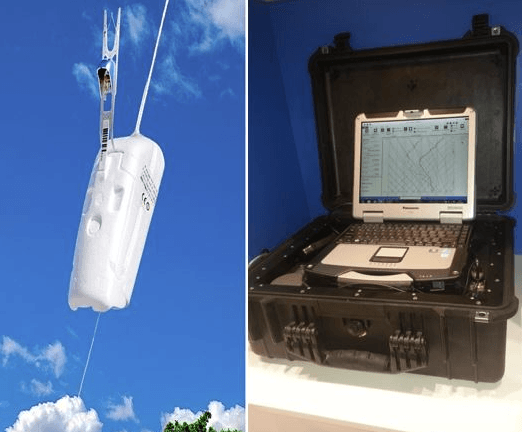
Radiosonde Instrument (Source: MGM)
The radiosonde instrument ascends to altitudes of up to 30–40 kilometers using a balloon. During this ascent, it measures parameters such as temperature, pressure, and humidity at different atmospheric levels. Using GNSS technology, the device’s position data is also obtained, from which wind direction and speed are calculated. The data transmitted by the instrument is received and analyzed by ground stations for use in weather forecasting and other meteorological studies.
The balloon rises at a speed of approximately 360 meters per minute during flight. When it reaches a diameter of about 10 meters, it bursts due to internal pressure, and the instrument descends safely to the ground using a parachute.
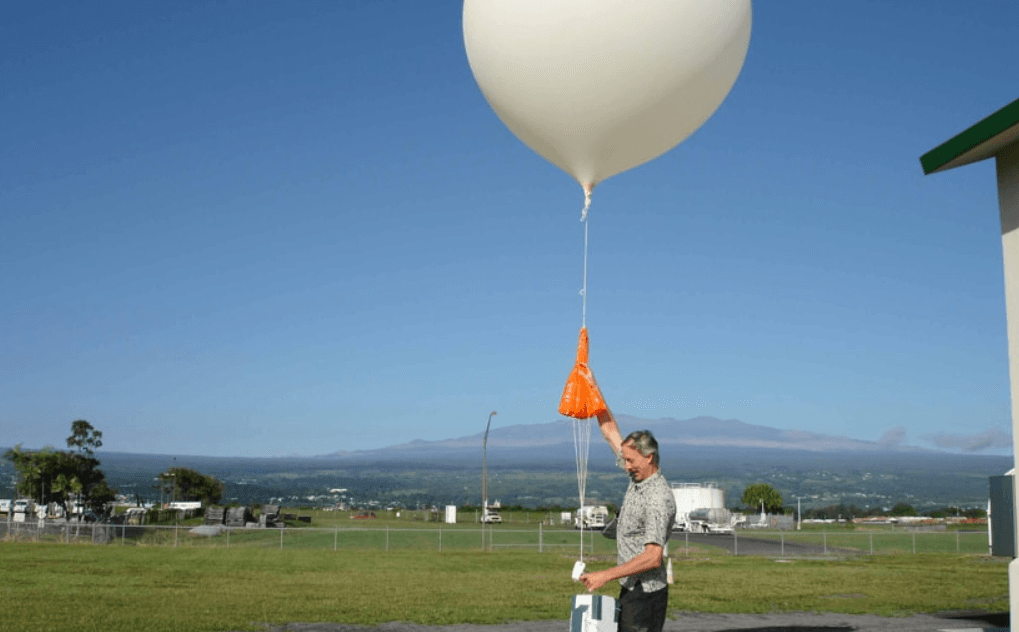
Radiosonde Balloon
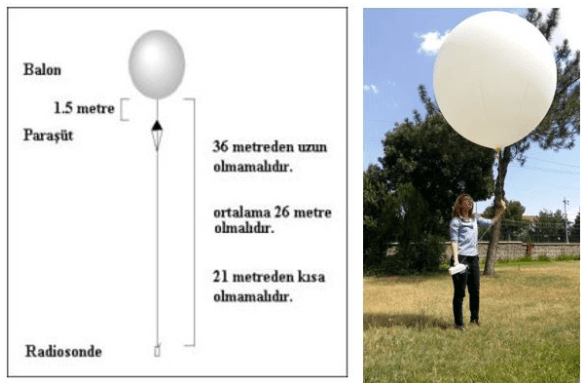
Radiosonde Balloon (Source: MGM)
Türkiye has nine radiosonde stations. These are:
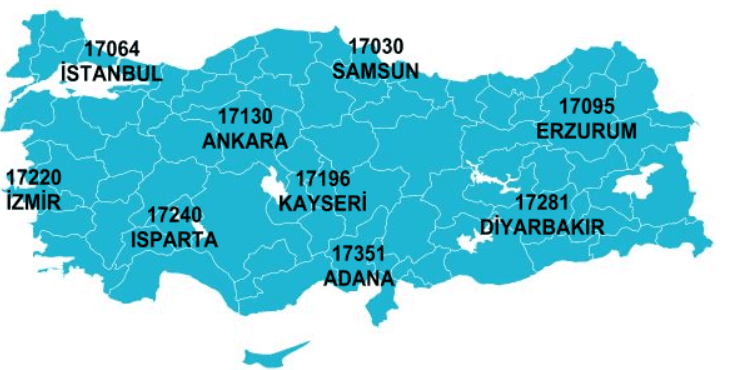
Radiosonde Stations (Source: MGM)
These stations were established to monitor air masses affecting Türkiye and to meet national meteorological needs. The World Meteorological Organization (WMO) recommends placing radiosonde stations 250 kilometers apart over land and 1000 kilometers apart over oceans. Turkish stations are positioned in accordance with these criteria and conduct observations twice daily (at 00 UTC and 12 UTC).
Radiosonde observations are used in the following areas:
Hydrogen gas is commonly used to inflate radiosonde balloons. Due to hydrogen’s high flammability, safety measures such as gas detection sensors, fire suppression systems, and flame detectors are implemented. Alternatively, helium gas may be used, especially in areas where safety is a critical concern.
"Radyosonda." Kim Ne Zaman İcat Etti? Accessed January 14, 2025.https://www.kimnezamanicatetti.com/radyosonda/.
Devlet Meteoroloji İşleri Genel Müdürlüğü. "Yüksek Atmosfer Ölçümünde Kullanılan Aletler." Accessed January 14, 2025.https://www.mgm.gov.tr/genel/meteorolojikaletler.aspx?s=10.
Sönmez, İbrahim. "Meteoroloji 11 - ASA." Açık Ders - Ankara Üniversitesi. Accessed January 14, 2025.https://acikders.ankara.edu.tr/pluginfile.php/3490/mod_resource/content/0/meteoroloji_11_ASA.pdf.

No Discussion Added Yet
Start discussion for "Radiosonde Observations" article
Operating Principle
Equipment and Systems
Turkish Radiosonde Station Network
Applications
Safety Measures