


This article was automatically translated from the original Turkish version.
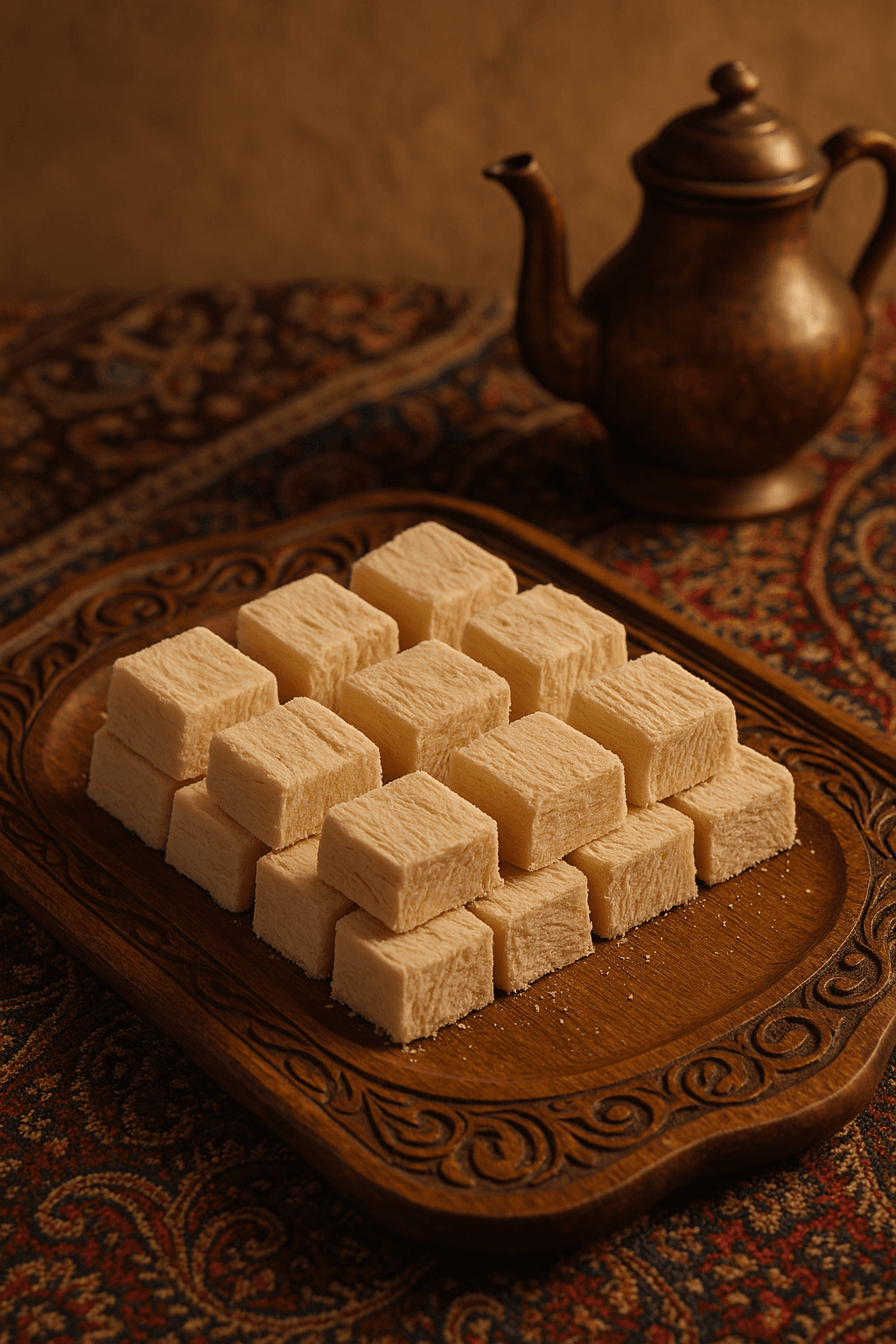
Çekme helva, a traditional Turkish dessert made by mixing flour, sugar, and butter using a special technique that stretches and pulls the mixture into fibrous strands. It is particularly associated with theKastamonuregion and is known for its texture that dissolves in the mouth.
Çekme helva is one of Kastamonu’s most famous traditional desserts and has a deep historical roots. Historians note that its origins trace back to medieval Anatolia. The emergence of çekme helva dates to the Seljuk Turkish period, when Turkish communities living in the Kastamonu region are believed to have begun producing it. Traditionally made with grape molasses, flour, and butter, this helva was consumed across Anatolia, especially during winter months, as an energy-rich food. In Kastamonu, it is noted that from the 19th century onward, this delicacy acquired a distinctive form and became one of the city’s symbolic sweets (Kastamonu Governorate, 2018).
class=\
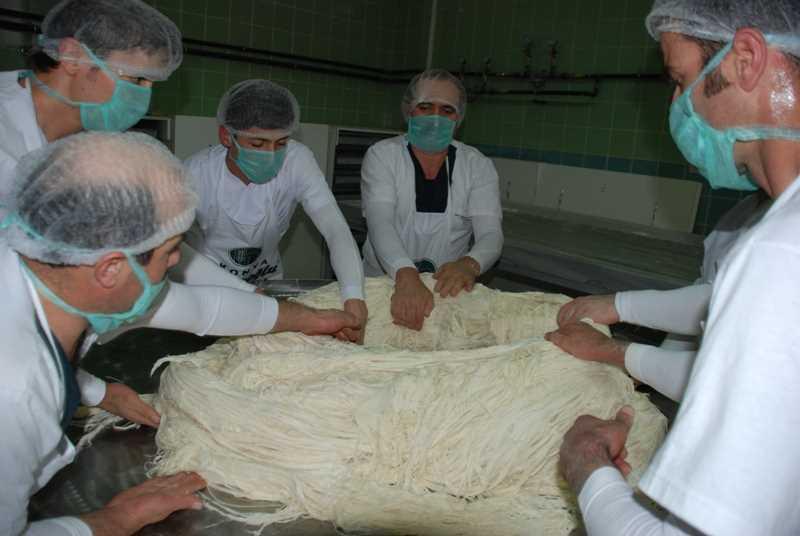
The preparation of çekme helva requires a specialized method and considerable skill. First, wheat flour and butter are roasted together in a cauldron. Then sugar and water are added and stirred until the desired consistency is achieved. The mixture is then transferred to a marble surface and manually stretched into ring-shaped strands resembling simit. These rings are pulled by four to six people to achieve the fine, thread-like texture. Finally, the softened and fibrous mixture is pressed into molds and left to cool. After cooling, it is cut with a knife and served. Traditional çekme helva contains no preservatives or additives.
Çekme helva production continues in Kastamonu to this day. Approximately 20 traditional producers operate in the city center and districts, preserving a centuries-old tradition and continuing to produce çekme helva, one of Kastamonu’s most important flavors.
class=\
Çekme helva holds an important place in the social life of Kastamonu, particularly:
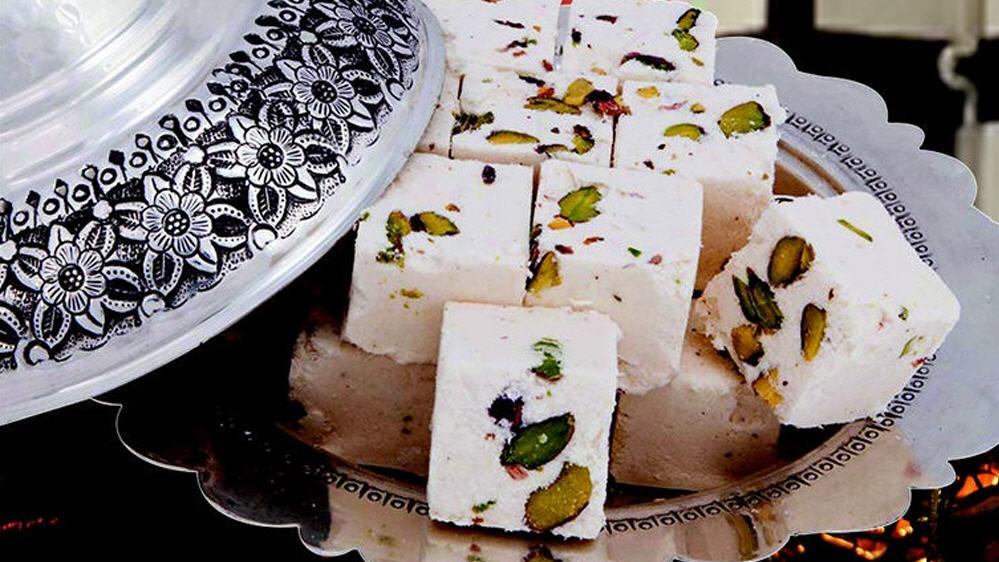
In 2017, Kastamonu çekme helva was officially registered as a geographical indication by the Turkish Patent and Trademark Office (Turkish Patent Institute, 2017). This status is of great importance for preserving the authenticity of the product. In today’s era, when traditional flavors are often overshadowed by fast food culture, Kastamonu çekme helva continues to thrive. Produced by local artisans and family businesses, it attracts tourists and reaches all corners of Türkiye through online sales channels.
class=\
In addition to Kastamonu çekme helva, similar desserts are found in other regions of Türkiye. Notable examples include:
This dessert from Diyarbakır is prepared by kneading thin, stretched vermicelli kadayıf with sugar syrup or grape molasses. Unlike Kastamonu çekme helva, it uses kadayıf instead of flour. It is traditionally served with walnuts or pistachios.
Produced in Kırşehir, this helva is made using a method similar to that of Kastamonu çekme helva. However, it uses more neutral oil instead of butter, resulting in a softer texture. It is especially served at weddings and holidays.
Produced inKahramanmaraş, this dessert is served together with Maraş ice cream. Prepared in a pounded helva form, it is sprinkled over the ice cream, offering a unique combination of cold and warm flavors.
Found in Gaziantep cuisine, this helva is made with semolina, milk, and sugar syrup. Unlike the molasses-based version from Kastamonu, it is lighter in color and appearance. It is served garnished with Antep pistachios.
InAfyon, this helva is made with buffalo cream. Roasted flour, sugar syrup, and cream are mixed and kneaded, then stretched to achieve a fibrous texture.
These examples illustrate the richness and regional diversity of Anatolian culinary culture. These traditional desserts, produced in different regions, stand out with their unique flavors and preparation techniques.
Afyon Kocatepe Üniversitesi (2018). Afyon Mutfağında Süt Ürünleri ve Tatlılar. Afyon: AKÜ Yayınları.
Diyarbakır Ticaret ve Sanayi Odası (2016). Diyarbakır Mutfak Kültürü. Diyarbakır: DTSO Yayınları.
Gaziantep Büyükşehir Municipality (2020). *Gaziantep Tatlıları ve Helva Çeşitleri*. Accessed [insert date in Month Day, Year format].www.gaziantep.bel.tr
Güneş, E. (2019). Türk Mutfağında Kaybolan Lezzetler. Ankara: Kültür Yayınları.
Kastamonu Valiliği. *Kastamonu Gastronomi Raporu*. Accessedwww.kastamonu.gov.tr.
Kırşehir Valiliği. *Kırşehir’de Geleneksel Lezzetler*. Accessedwww.kirsehir.gov.tr.
Turkish Patent and Trademark Office (2017). *Kastamonu Çekme Helvası Coğrafi İşaret Tescil Belgesi*. Accessedwww.turkpatent.gov.tr.
Türk Patent ve Marka Kurumu (2020). Geleneksel Gıdalar ve Coğrafi İşaretler. Ankara: TPE Yayınları.
Türk Patent ve Marka Kurumu (2021). Kahramanmaraş Dondurması ve Helvası Coğrafi İşaret Raporu. Ankara: TPE Yayınları.

1. Diyarbakır Burma Kadayıf (Çekme Helva)
2. Kırşehir Çekme Helva
3. Maraş Dondurmalı Çekme Helva
4. Gaziantep Beyaz Çekme Helvası
5. Afyon Kaymaklı Çekme Helva