


This article was automatically translated from the original Turkish version.
+1 More
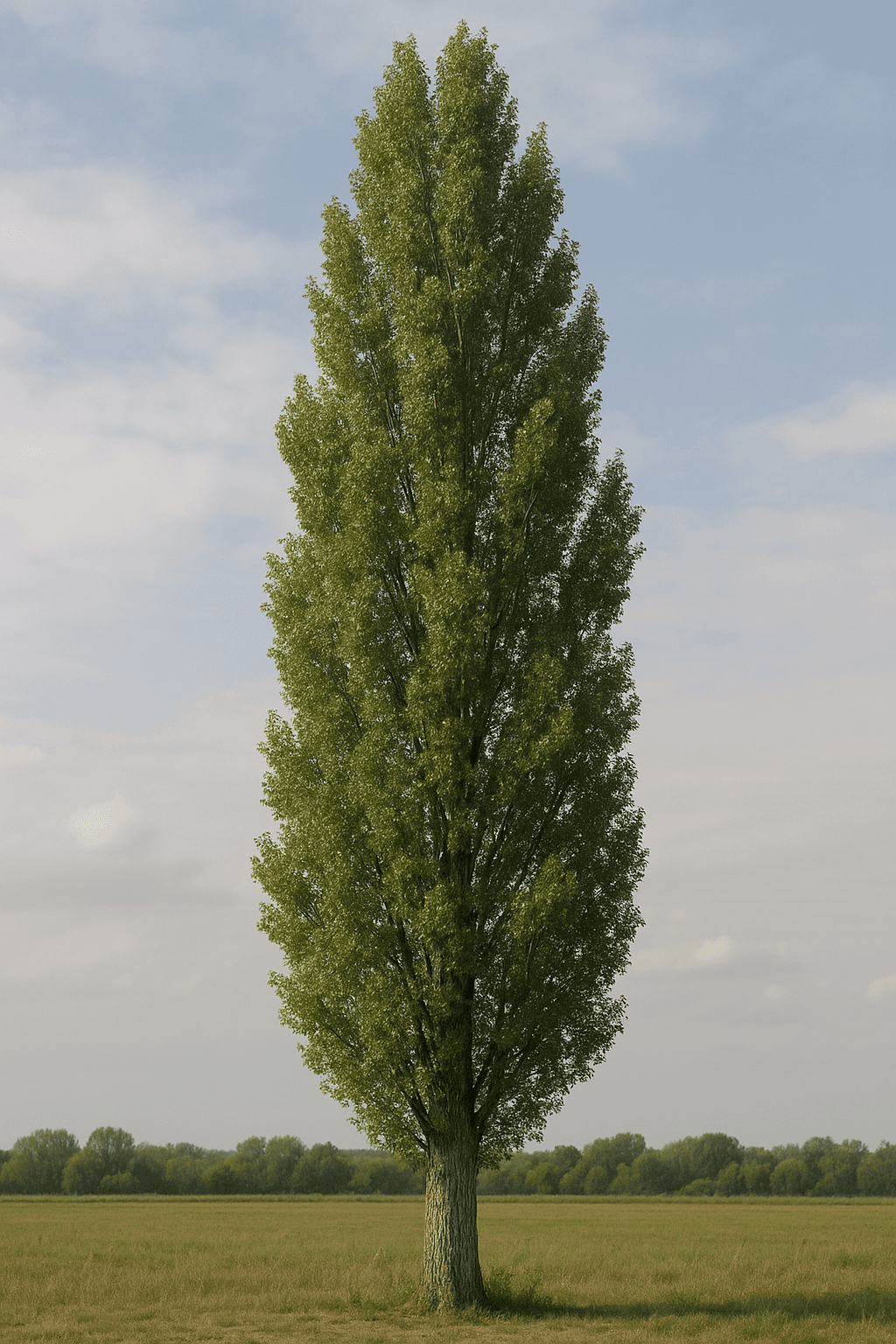
Poplar Tree (Generated with Artificial Intelligence)
Scientific Name(s) | Populus spp. | ||||||||
|---|---|---|---|---|---|---|---|---|---|
Family | Salicaceae (Willow family) | ||||||||
Distribution Area | North America North Africa Asia Europe | ||||||||
Species in Türkiye | hybrids P. euphratica P. nigra (Black poplar) P. alba (White poplar) Populus tremula (Aspen) | ||||||||
Habitat | forest clearings valley floors Riverbanks | ||||||||
Elevation Range | 0–2350 metres | ||||||||
Morphology | broad-crowned tree straight-stemmed deciduous Fast-growing | ||||||||
Leaf Characteristics | margins toothed trembling leaves Long-stalked | ||||||||
Reproduction Method | Dioecious; wind pollination (anemogamy) | ||||||||
Flowering Period | March – April | ||||||||
Seed Dispersal | White cottony tufts (especially from female trees) | ||||||||
Economic Use | matches prosthesis production furniture plywood paper Timber | ||||||||
Ecological Role | Pioneer species; rapidly colonizes open spaces | ||||||||
Allergen Status | Pollen may cause allergies in some individuals; cottony tufts are not pollen | ||||||||
Cultural Significance | Folk tree; found in place names, proverbs, and traditions | ||||||||
Threats / Problems | Short lifespan, trunk rot, risk of root damage to infrastructure | ||||||||
The poplar tree (Populus spp.) is a fast-growing, deciduous, woody plant that typically develops in an upright form. This dioecious species has male and female flowers on separate individuals, is wind-pollinated, and disperses its seeds via fluffy seed capsules. In Türkiye, poplars are widely distributed and commonly found both in natural forest cover and in agricultural areas. The trembling poplar (Populus tremula L.) is a tree species belonging to the genus Populus within the Salicaceae (willow) family, recognized by its leaves that quiver even in the lightest breeze due to the structure of their petioles. It is a dioecious plant; male and female flowers occur on separate individuals, and flowering takes place before leaf emergence. Seeds are dispersed enclosed in capsules surrounded by white, fluffy structures.
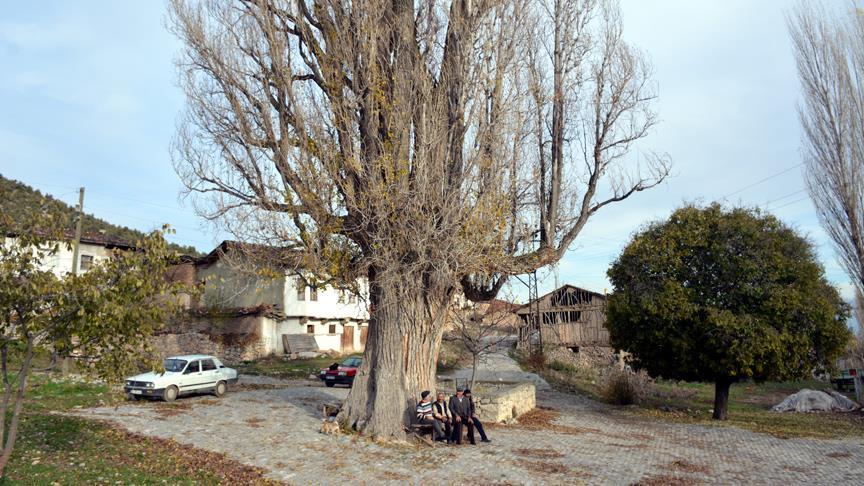
An Old Poplar Tree (Anadolu Ajansı)
The trembling poplar naturally occurs across a broad geographic range including Europe, North Africa, the Middle East, the Caucasus, Siberia, northern China, and Japan. In Türkiye, it is found in all forested areas outside the steppe region, particularly along riverbanks and within forest clearings. It can grow at elevations up to 2,000 meters, and occasionally up to 2,350 meters. It is naturally distributed in many provinces including Kırklareli, İstanbul, Ankara, Trabzon, Kayseri, Antalya, and Hakkâri.
The trembling poplar is a tolerant species. Its lightweight, easily dispersed seeds and its resistance to drought and frost during early growth stages make it one of the pioneering species that first colonize gaps in forests. However, for optimal development, it prefers nutrient-rich, well-drained soils; its growth is limited in sandy or heavy clay soils.
The trembling poplar is a tree with a cylindrical trunk that can reach heights of 20–30 meters, featuring a broad conical crown and dense branching. Its bark is smooth, with a bright greenish or olive-green color that remains intact without cracking as the tree ages. Shoots and buds are reddish and sticky; young shoots are hairless. Leaves on short shoots are spherical or heart-shaped, while those on long shoots are ovate with a acuminate tip and cordate base. Leaf margins are irregularly toothed. The petiole is long, laterally flattened, and hairless—a feature that causes the leaves to tremble easily, giving the tree its common name.
Flowering occurs in March–April. Male flowers typically have five stamens (rarely eight to twelve), with dark red anthers. Female flowers bear a two-lobed stigma. The fruit capsule is swollen and two-valved.

Trembling Poplar Tree ((OGM)
The trembling poplar and other Populus species are anemophilous (wind-pollinated) plants. Male individuals release pollen into the air during spring (March–April). Female individuals do not produce pollen; however, the white, fluffy seed structures (commonly called “cotton”) produced after pollination are often mistaken by the public for pollen. In reality, these structures have no connection to pollen, and no poplar pollen is present in the atmosphere during this period.
Atmospheric pollen studies conducted in Türkiye have detected Populus pollen primarily in March and April. Research has revealed allergic sensitivity to poplar pollen in individuals at rates ranging from 0.7% to 43.1%.
The trembling poplar and other poplar species exhibit rapid growth and therefore hold significant importance in commercial forestry. Poplar wood is light and soft, making it easy to work with. It is used in numerous applications including matchstick production, paper and pulp industries, furniture veneers, and packaging boards. It also has specialized uses in prosthetics, drafting tables, and musical instrument manufacturing.
Due to their rapid growth and relatively short lifespan, poplars often develop internal decay as they age. This condition can lead to branch breakage, posing risks to human safety and property. Additionally, their shallow root systems can crack asphalt pavements and damage water infrastructure. The cotton-like seed structures produced by female trees contribute to environmental pollution and may trigger allergic symptoms in some individuals.
The poplar tree has long been an integral part of agricultural and settlement patterns across Anatolia. It forms green corridors along valley floors and has become a key component of rural landscapes. Due to its rapid growth and windbreak properties, it is frequently planted along farm boundaries, field edges, and waterways.
In Anatolian culture, the poplar is regarded as a “people’s tree.” It frequently appears in local place names (such as Kavaklıdere and Aynalı Kavak) and folk expressions. A tradition exists among villagers of planting a poplar tree to celebrate the birth of a child. In urban areas, poplars are preserved in parks and gardens for both economic and aesthetic reasons, becoming an integral part of the city’s identity.
Anadolu Ajansı. “Köylüler Asırlık Kavak Ağacı Anıt Ağaç Olsun İstiyor.” March 12, 2019. https://www.aa.com.tr/tr/yasam/koyluler-asirlik-kavak-agaci-anit-agac-olsun-istiyor/1354749.
Bıçakçı, Adem, Aycan T. Tosunoğlu, Mustafa Kemal Altunoğlu, and Gülşah Saatçıoğlu. “Türkiye’de Salicaceae Familyasına Ait Populus (Kavak Ağacı) ve Salix (Söğüt Ağacı) Polenlerinin Havadaki Dağılımları.” Asthma Allergy Immunology 12 (2014): 157–170. https://www.researchgate.net/publication/308918200.
Orman Genel Müdürlüğü. "Titrek Kavak." Accessed May 22, 2025. https://www.ogm.gov.tr/tr/yararli-bilgiler/haftanin-agaci/titrek-kavak.
Öztan, Yüksel, and Şükran Şahin. *Anadolu Peyzajının Geleneksel ve Simgesel Tasarım Elemanlarından Kavak Ağacının Dünü, Bugünü, Yarını*. Türkiye Milli Kavak Komisyonu VII. Olağan Kurulu Tebliğler Kitabı, 89–95. İzmit: Kavak ve Hızlı Gelişen Orman Ağaçları Araştırma Enstitüsü, 2003. https://www.researchgate.net/publication/351165607.

Poplar Tree (Generated with Artificial Intelligence)
Scientific Name(s) | Populus spp. | ||||||||
|---|---|---|---|---|---|---|---|---|---|
Family | Salicaceae (Willow family) | ||||||||
Distribution Area | North America North Africa Asia Europe | ||||||||
Species in Türkiye | hybrids P. euphratica P. nigra (Black poplar) P. alba (White poplar) Populus tremula (Aspen) | ||||||||
Habitat | forest clearings valley floors Riverbanks | ||||||||
Elevation Range | 0–2350 metres | ||||||||
Morphology | broad-crowned tree straight-stemmed deciduous Fast-growing | ||||||||
Leaf Characteristics | margins toothed trembling leaves Long-stalked | ||||||||
Reproduction Method | Dioecious; wind pollination (anemogamy) | ||||||||
Flowering Period | March – April | ||||||||
Seed Dispersal | White cottony tufts (especially from female trees) | ||||||||
Economic Use | matches prosthesis production furniture plywood paper Timber | ||||||||
Ecological Role | Pioneer species; rapidly colonizes open spaces | ||||||||
Allergen Status | Pollen may cause allergies in some individuals; cottony tufts are not pollen | ||||||||
Cultural Significance | Folk tree; found in place names, proverbs, and traditions | ||||||||
Threats / Problems | Short lifespan, trunk rot, risk of root damage to infrastructure | ||||||||
No Discussion Added Yet
Start discussion for "Poplar tree Populus tremula L." article
Distribution and Ecological Characteristics
Morphological Characteristics
Pollen Characteristics and Allergic Effects
Economic and Utilization Characteristics
Ecological and Urban Problems
Cultural and Landscape Value