

This article is not approved yet.
Primary Use | Thermal Energy Storage | ||||||||
|---|---|---|---|---|---|---|---|---|---|
Applications | Building, Electronics, Automotive, Solar Energy | ||||||||
Key Property | Enhanced Thermal Conductivity | ||||||||
Reinforcement | Nanoparticles (e.g., Carbon Nanotubes, Graphene) | ||||||||
Base Component | Phase Change Material (PCM ) | ||||||||
Material Type | Nanocomposite | ||||||||
Challenge(s) | Cost Long-term Stability | ||||||||
Advantage(s) | High Thermal Conductivity Leakage Prevention | ||||||||
Phase change nanocomposites are advanced materials engineered by dispersing nanoparticles into a phase change material (PCM) matrix. These composites are designed to enhance the thermal energy storage and transfer properties of conventional PCMs. By integrating nanomaterials such as carbon nanotubes, graphene, or metal oxides, the resulting nanocomposite exhibits improved thermal conductivity and stability. This technology is being developed for applications requiring efficient thermal management, including solar energy storage, advanced battery cooling, and smart textiles.
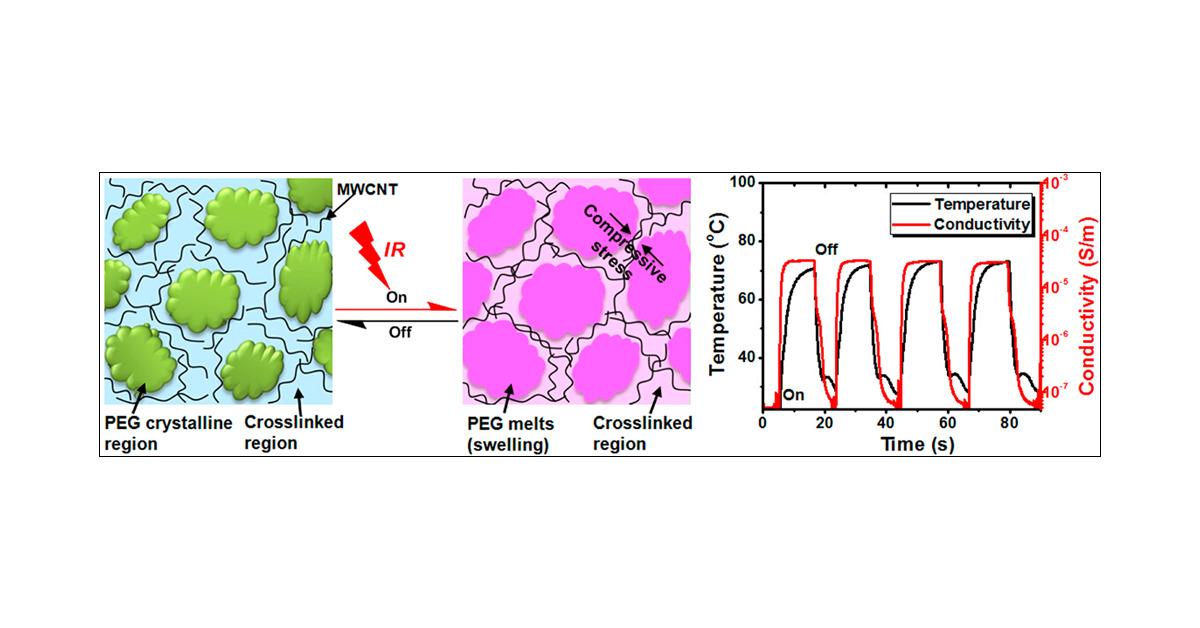
Phase change nanocomposites are fundamentally composed of two main components: a phase change material (PCM) matrix and dispersed nanoparticles. The PCM is a substance with a high latent heat of fusion which, upon melting and solidifying at a specific temperature, can store and release large amounts of thermal energy. Common PCMs include paraffin waxes, fatty acids (organic), and hydrated salts (inorganic). The nanoparticles, typically with dimensions under 100 nanometers, are selected for their high thermal conductivity. Examples include carbon-based materials like graphene and carbon nanotubes (CNTs), metallic nanoparticles such as silver or copper, and metal oxides like alumina (Al₂O₃) or titania (TiO₂). The working principle relies on the PCM's ability to absorb heat during its phase transition from solid to liquid and release it upon reversing the process. The dispersed nanoparticles form a conductive network within the PCM matrix, facilitating faster heat transfer into and out of the material, thereby improving the charging and discharging rates of the thermal energy storage system.
A primary objective for creating phase change nanocomposites is to overcome the inherently low thermal conductivity of most PCMs, which limits their heat storage and release rates. The introduction of highly conductive nanoparticles significantly enhances this property. For instance, adding a small weight percentage of graphene or CNTs can increase the thermal conductivity of a paraffin-based PCM by several orders of magnitude. This enhancement is attributed to the formation of percolating networks of nanoparticles that act as pathways for rapid heat conduction. In addition to improved conductivity, nanoparticles can influence other properties. They can act as nucleating agents, reducing the supercooling effect—a phenomenon where the PCM remains liquid below its freezing point—thus ensuring more reliable and efficient heat release. The nanoparticles can also improve the mechanical stability and shape-retention of the composite material, preventing leakage of the PCM when it is in its liquid state.
The enhanced thermal properties of phase change nanocomposites make them suitable for a wide range of advanced thermal management applications. In the renewable energy sector, they are used for thermal energy storage in concentrated solar power plants, allowing for electricity generation even when sunlight is not available. In electronics and electric vehicles, they are being developed for the thermal management of batteries, absorbing excess heat during rapid charging or discharging to prevent overheating and extend battery life. Other applications include smart building materials that regulate indoor temperatures, advanced textiles for personal thermal comfort, and thermal protection for sensitive components in aerospace systems. Despite their potential, several challenges remain for widespread commercialization. These include ensuring the long-term stability and uniform dispersion of nanoparticles within the PCM matrix, the high cost of some nanomaterials, and the need to scale up manufacturing processes from the laboratory to an industrial level.
Khlissa, Faïçal, et al. “Recent Advances in Nanoencapsulated and Nano-Enhanced Phase-Change Materials for Thermal Energy Storage: A Review.” MDPI. Accessed August 16, 2025. https://www.mdpi.com/2227-9717/11/11/3219.
Perumalsamy, Jidhesh, et al. “Enhancing Phase Change Characteristics of Hybrid Nanocomposites for Latent Heat Thermal Energy Storage.” MDPI. Accessed August 16, 2025. https://www.mdpi.com/2504-477X/9/3/120.
Sudheesh Chandran, and V.K. JebaSingh. “Polymer Phase Change Materials: Innovations, Applications, and Future Directions.” STM Journals. Accessed August 16, 2025. https://journals.stmjournals.com/jorachv/article=2024/view=177151.

Primary Use | Thermal Energy Storage | ||||||||
|---|---|---|---|---|---|---|---|---|---|
Applications | Building, Electronics, Automotive, Solar Energy | ||||||||
Key Property | Enhanced Thermal Conductivity | ||||||||
Reinforcement | Nanoparticles (e.g., Carbon Nanotubes, Graphene) | ||||||||
Base Component | Phase Change Material (PCM ) | ||||||||
Material Type | Nanocomposite | ||||||||
Challenge(s) | Cost Long-term Stability | ||||||||
Advantage(s) | High Thermal Conductivity Leakage Prevention | ||||||||
No Discussion Added Yet
Start discussion for "Phase Change Nanocomposites Create" article
Composition and Working Principle
Enhancement of Thermophysical Properties
Applications and Current Challenges
This article was created with the support of artificial intelligence.