This article was automatically translated from the original Turkish version.
+1 More
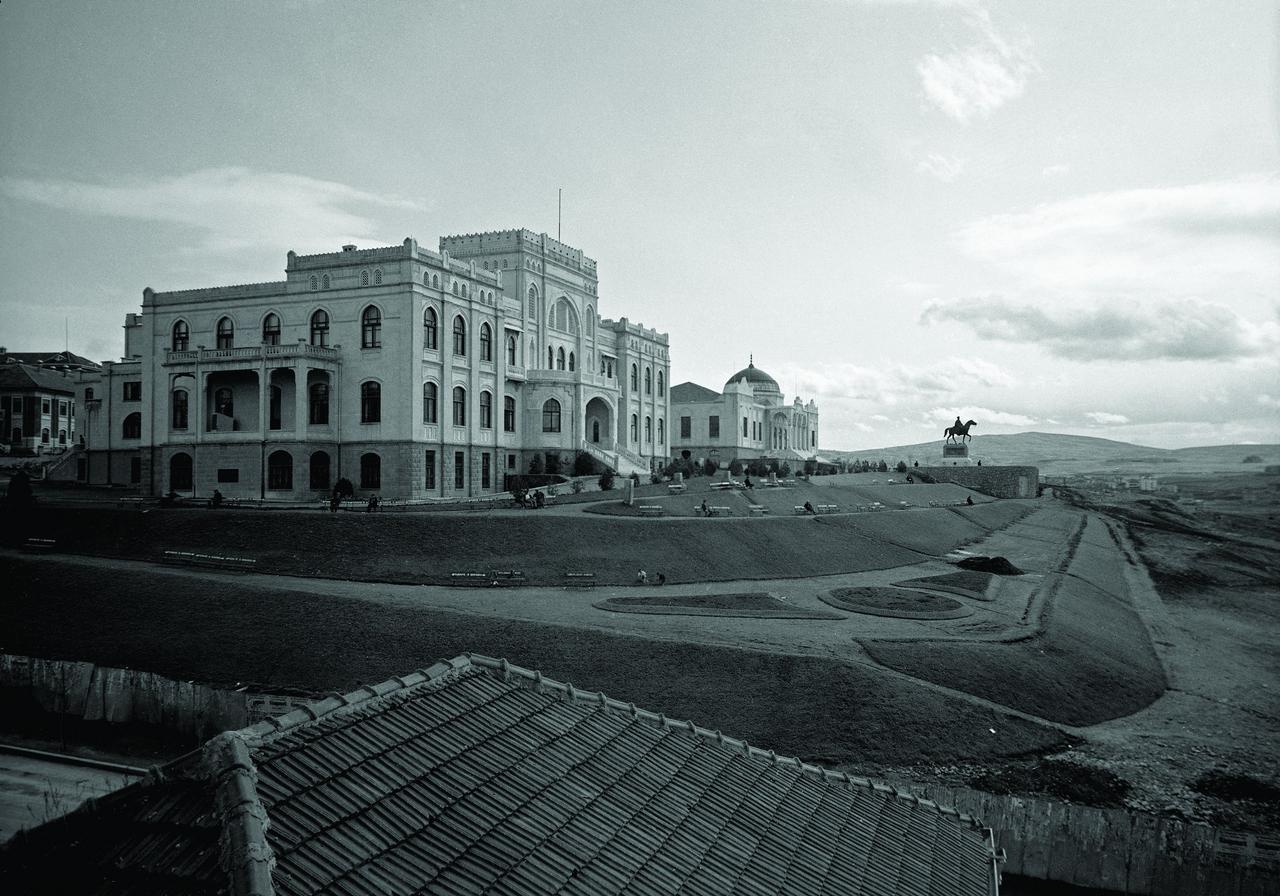
Ankara Halkevi Building, 1930s
Founding Year | 1932 | ||||||||
|---|---|---|---|---|---|---|---|---|---|
Closure Year | 1951 | ||||||||
Number of Branches (1950) | 478 People's House, 432 People's Room | ||||||||
Area of Activity | Culture, education, art, sports, social aid, villageism | ||||||||
Related Persons | Reşit Galip, İsmail Hakkı Tonguç, Mehmet Fuat Köprülü, Behice Boran | ||||||||
Halkevleri were institutions that embodied the populist cultural policies adopted in the early period of the Republic of Türkiye (1932–1951). Operating as associations serving the public interest, Halkevleri were first opened on 19 February 1932 in 14 provincial centers under the leadership of Mustafa Kemal Atatürk and later expanded to many provinces of Türkiye, engaging in cultural activities such as education, health, housing, environmental protection, and the defense of women’s rights. After the Democratic Party came to power following the elections of 14 May 1950, the entire network of Halkevleri was closed on 8 August 1951 by Law No. 5830, passed by the Grand National Assembly of Türkiye, and all their assets were transferred to the state treasury【1】.
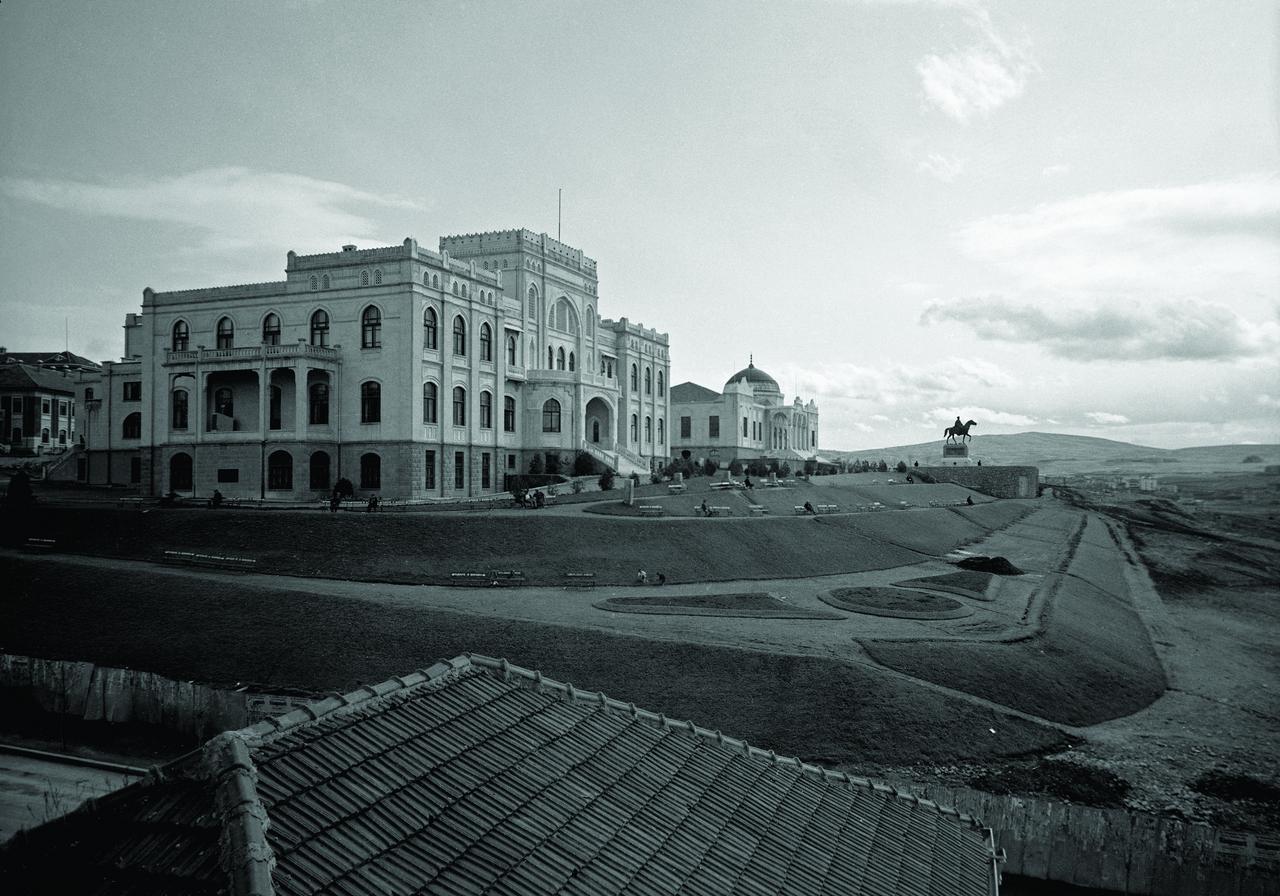
Ankara Halkevi, 1930s (Presidency Archives of the Republic of Türkiye)
Halkevleri embodied one of the six foundational principles of the Turkish Constitution: “Populism.” Their initial purpose was to construct a national culture in Anatolia. Second, they aimed to bridge the gap between the intellectual elite and the general public by teaching the foundational values of civilization and the nationalist, secular ideas of the Republican regime. In essence, Halkevleri entered social life as representatives of the new regime tasked with familiarizing the masses with Republican ideals. Thus, Halkevleri served as democratic and populist gateways born from the Republic’s passion for enlightenment during the processes of socialization and nation-building.
Halkevleri were envisioned as protective havens that gathered and united youth while shielding them from harmful ideologies. The knowledge and education provided in these popular education centers were designed to align with the spirit of the existing regime, thereby eliminating any risk of youth corruption. According to İsmail Hakkı Baltacıoğlu, no family, friendship circle, or club in Türkiye possessed the capacity to instill a national and modern culture in Turkish youth. In contrast, Halkevleri, both in their organizational structure and spiritual orientation, were highly suitable for this task, and all young people should be enrolled in them, with all education outside school taking place within Halkevleri.【2】
Although Halkevleri operated under a centralized organizational structure, they established an extensive network of public engagement through local branches. Initially established in 14 provinces, by 1950 they had expanded to 67 provincial centers, 388 districts and subdistricts, totaling 478 branches and 432 People’s Halls. These institutions were subordinate to the General Headquarters of the Republican People’s Party, but daily operations were managed by local administrators, teachers, civil servants, and volunteer intellectuals.
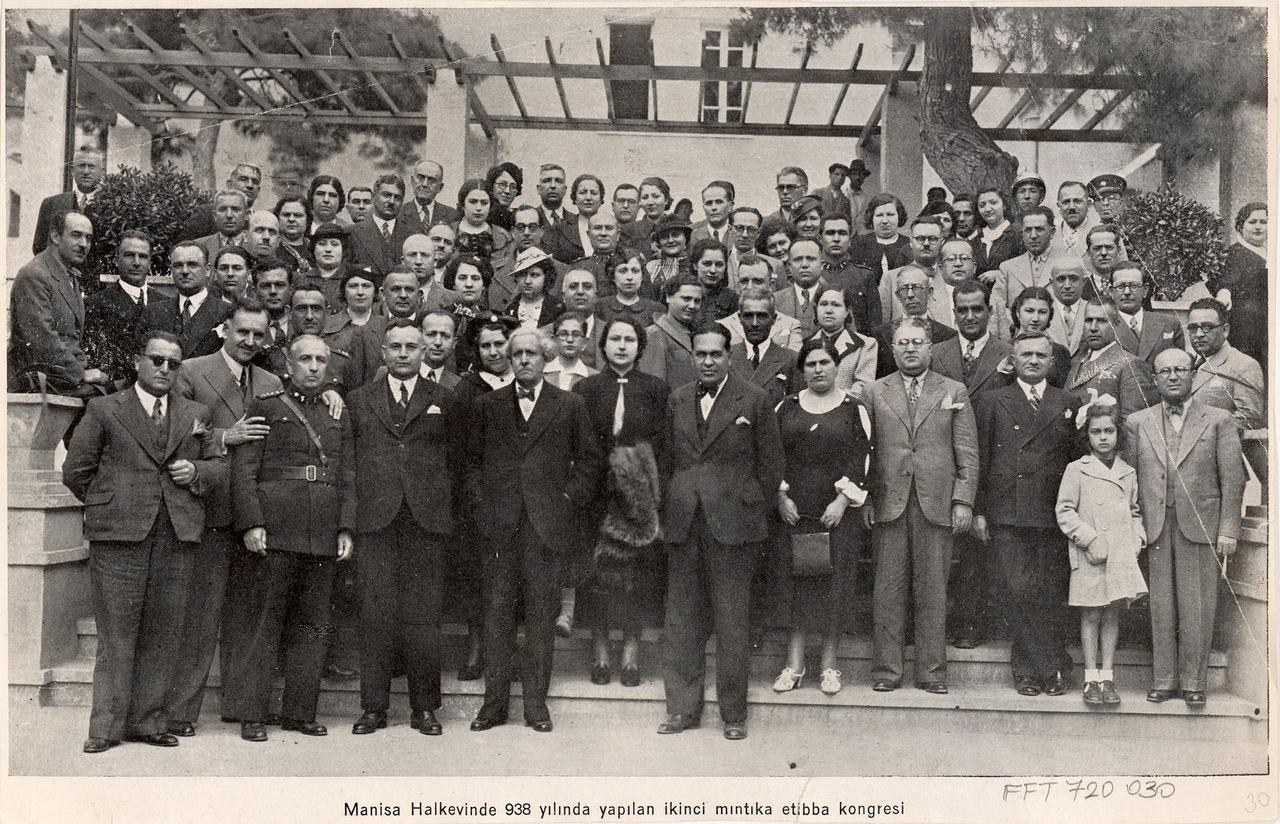
Second Regional Medical Congress held at Manisa Halkevi in 1938 (Salt Archive)
Each Halkevi was managed by a council composed of a president, a secretary, and branch heads. Branch heads were appointed separately for each area of activity, and their management was typically assumed by volunteer local intellectuals, teachers, or public officials. Central administration played a coordinating, supervisory, and guiding role.
Institutionally, Halkevleri:
The nine main activity branches of Halkevleri were defined in the Halkevleri Regulations as follows: Language, History and Literature Branch; Fine Arts Branch; Performance Branch; Sports Branch; Social Assistance Branch; People’s Classes and Courses Branch; Library and Publication Branch; Village Affairs Branch; and Museum and Exhibition Branch.
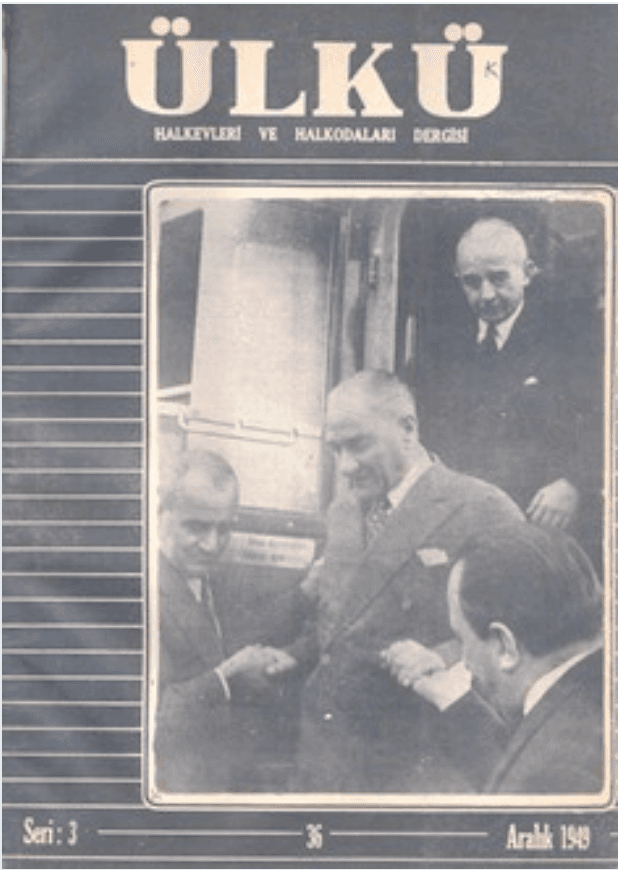
Ülkü Halkevleri ve Halkodaları Dergisi, December 1949 (Turkish Historical Society Library)
Ülkü, published by Ankara Halkevi between February 1933 and August 1950 in three phases, issued a total of 272 issues. During its first phase, which lasted until August 1941, it was edited by Nusret Kemal Köymen and Necip Ali Küçüka. In July 1936, starting with issue 41, Mehmet Fuat Köprülü was appointed as editorial director. A total of 102 monthly issues were published. On 1 October 1941, it was relaunched in a new format and size under the editorship of Ahmet Kutsi Tecer, publishing 126 issues until 16 December 1946, with two issues released each month. In its third phase, from January 1947 to August 1950, under the management of H. Tahsin Banguoğlu and Mehmet Tuğrul, it resumed publication as a monthly magazine, starting again from issue one, and published an additional 44 issues before ceasing publication.
Akhan, Nadire Emel, Durmuş Yılmaz, and Nadire Emel (Süntar) Akhan. “İlk Dönem Halkevlerinin Eğitim Faaliyetleri ‘Konya Halkevi Örneği’.” Karadeniz Araştırmaları 29, no. 29 (September 2011): 59-95. Accessed July 8, 2025.https://dergipark.org.tr/tr/pub/karadearas/issue/10067/124122
Arıç, Ahmet. "ANA HATLARIYLA HALKEVLERİNİN OLUŞUMU VE ŞUBELERİNİN FAALİYETLERİ (1932-1945)." Karaelmas Sosyal Bilimler Dergisi, June 2024, 2(1):12–33. Accessed July 8, 2025.https://dergipark.org.tr/en/download/article-file/3591141
Berkes, Niyazi. Türkiye’de Çağdaşlaşma. İstanbul: Yapı Kredi Yayınları, 2002.
Cumhuriyet Halk Fırkası. “Halkevleri Talimatnamesi”. Hakimiyeti Milliye Matbaası, 1932. Accessed July 8, 2025.https://acikerisim.tbmm.gov.tr/items/aaf84d72-005a-4e8a-b4da-52f03d7ff1fc
Hasar, Veysel. “Ankara Halkevi Ve Faaliyetleri (1932-1938).” Gazi Akademik Bakış 17, no. 34 (June 2024): 151–72. Accessed July 8, 2025. Accessed Linki:https://dergipark.org.tr/tr/pub/gav/issue/85045/1498830
Official Gazette, "Laws," *Resmi Gazete*. August 11, 1951, No. 7882. Accessed July 8, 2025. Link:https://www.resmigazete.gov.tr/arsiv/7882.pdf
SALT Arşiv. “Manisa Halkevi’nde 1938 Yılında Yapılan İkinci Mıntıka Etibba Kongresi,” SALT Archive. Accessed July 8, 2025. Accessed Linki:https://archives.saltresearch.org/handle/123456789/25062.
Taşçı, Esma. "Eskişehir Halkevi." Master's thesis, Yök Tez Merkezi No: 394868. Accessed July 8, 2025.https://tez.yok.gov.tr/UlusalTezMerkezi/TezGoster?key=WBc656i315e2eV6-EZV1oiZLJiIEp4FTj52bDjp2aTOowB_bS-RDF9N1OcS_N0nI
Turk TarihKurumu Kütüphanesi. "Ülkü: Halkevleri ve Halkodaları Dergisi." Accessed [insert date in Month Day, Year format].https://kutuphane.ttk.gov.tr/details?id=580749&materialType=CR&query=Mehmet,+Ahmet,+1941-
Türkiye Cumhuriyeti Başkanlık Arşivi. *Flickr.* Accessed July 8, 2025.https://www.flickr.com/photos/dgpi/16230092164/in/album-72157650912939090
Zürcher, Erik Jan. Modernleşen Türkiye’nin Tarihi. İstanbul: İletişim Yayınları, 2004.
[1]
Resmi Gazete, "Kanunlar", Resmi Gazete. 11 Ağustos 1951, Sayı:7882. Son Erişim Tarihi: 8 Temmuz 2025. Erişim Linki: https://www.resmigazete.gov.tr/arsiv/7882.pdf
[2]
Taşçı, Esma. "Eskişehir Halkevi", Yüksek Lisans Tezi, Yök Tez Merkezi No: 394868. Son Erişim Tarihi: 8 Temmuz 2025. Erişim Linki: https://tez.yok.gov.tr/UlusalTezMerkezi/TezGoster?key=WBc656i315e2eV6-EZV1oiZLJiIEp4FTj52bDjp2aTOowB_bS-RDF9N1OcS_N0nI
Ankara Halkevi Building, 1930s
Founding Year | 1932 | ||||||||
|---|---|---|---|---|---|---|---|---|---|
Closure Year | 1951 | ||||||||
Number of Branches (1950) | 478 People's House, 432 People's Room | ||||||||
Area of Activity | Culture, education, art, sports, social aid, villageism | ||||||||
Related Persons | Reşit Galip, İsmail Hakkı Tonguç, Mehmet Fuat Köprülü, Behice Boran | ||||||||
Historical Background and Founding Purpose
Organization and Areas of Activity
Structural Organization
Activity Branches
Ülkü Magazine