


This article was automatically translated from the original Turkish version.
+1 More
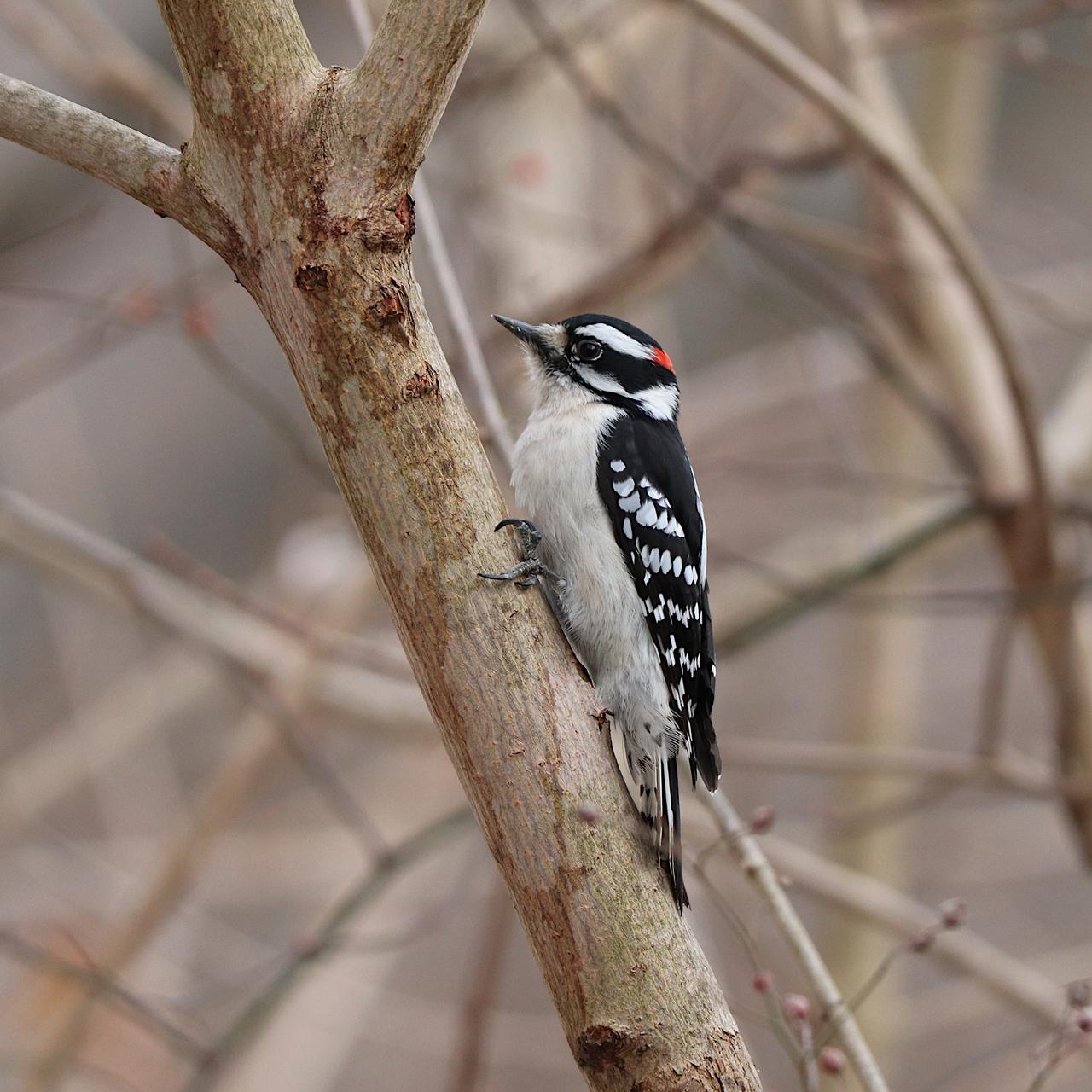
Orman Alaca Ağaçkakanı
Kingdom | Animalia | ||||||||
|---|---|---|---|---|---|---|---|---|---|
Branch | Chordata | ||||||||
Class | Aves | ||||||||
Team | Ağaçkakangiller | ||||||||
Family | Ağaçkakanlar | ||||||||
Genus | Dendrocopos | ||||||||
Latin | Dendrocopos major | ||||||||
English | Great spotted woodpecker | ||||||||
French | Pic épeiche | ||||||||
German | Buntspecht | ||||||||
Russian | Большой пёстрый дятел | ||||||||
State | Nesting - resident or migratory | ||||||||
Forest woodpecker is 20–26 cm in length, weighs 70–98 grams, and has a wingspan of 38–44 cm. Europe and Asia are home to this widespread species. Its upperparts are glossy blue-black, with white cheeks and neck edges. It has black stripes extending from the shoulders to the nape and base of the bill. The wing and tail feathers display a black-and-white pattern. The underparts are typically white, with reddish tones on the lower abdomen and tail. Males have a red patch on the nape. The eyes are reddish-brown, the bill is dark gray, and the legs are pale greenish-gray. Females have the same coloration as males but lack the red nape patch. Juveniles have paler tones overall, with a red crown.
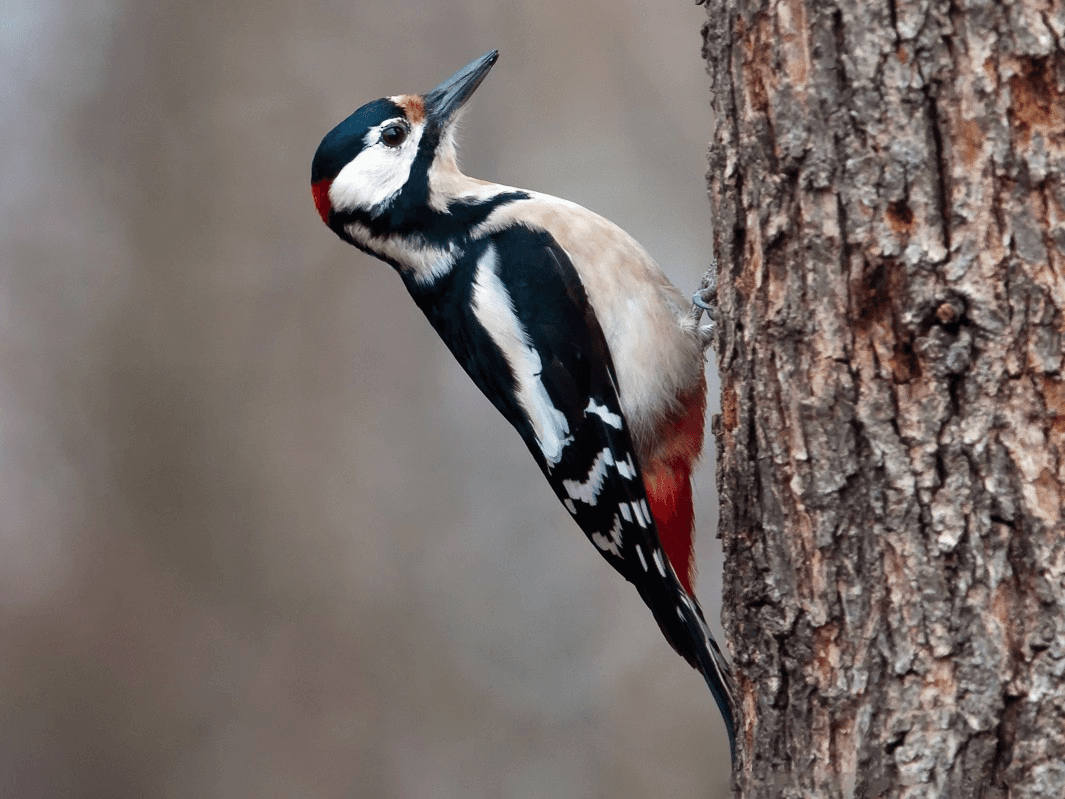
Forest Woodpecker (Dendrocopos major) (Source: EBird)
Juveniles resemble adults in coloration but have a red patch on the crown. The white spots on their wings are more prominent.
The forest woodpecker communicates with sharp, high-pitched “kik... kik” calls. It also produces a drumming sound that is shorter (0.6–0.7 seconds) and increases in frequency toward the end, compared to other spotted woodpeckers.
Sounds of the Forest Woodpecker (Source: TRTBelgesel)
The forest woodpecker inhabits a wide geographic range extending from boreal taigas to Mediterranean climate zones, living in various forested areas, shrublands, fruit orchards, parks, and large gardens. This species is common in the northern parts of the Palaearctic region, stretching from the Atlantic Ocean in the west to East Asia in the east. It is also observed in certain areas of North Africa, including Morocco and Tunisia, the British Isles, the Canary Islands, and the major Mediterranean islands of Corsica, Sardinia, and Sicily. In Eastern Türkiye, it is particularly found in northern forested areas.
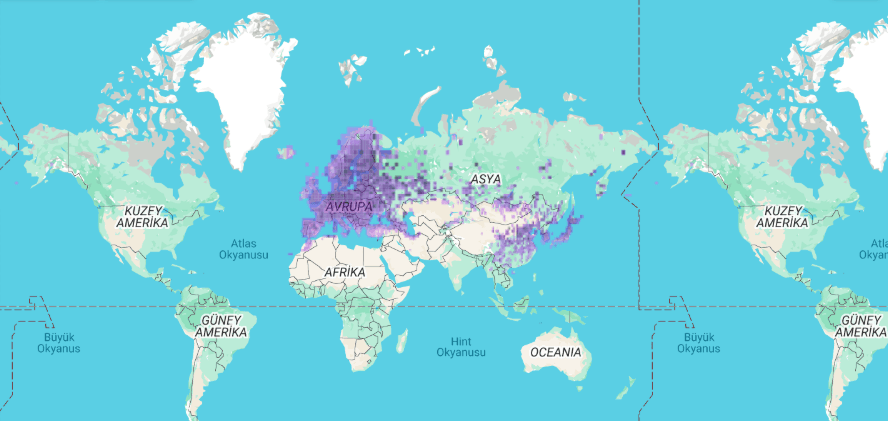
Distribution Map (Source: EBird)
The forest woodpecker exhibits highly flexible feeding behavior. During summer months, it feeds on insects, larvae, various invertebrates, and eggs. Ants and insect larvae form its primary food source. It excavates tree bark to extract harmful insect larvae and consumes them on the spot. During winter months, its diet shifts to include more conifer seeds, nuts, and fruits. Occasionally, it may also prey on the eggs and young of other birds.
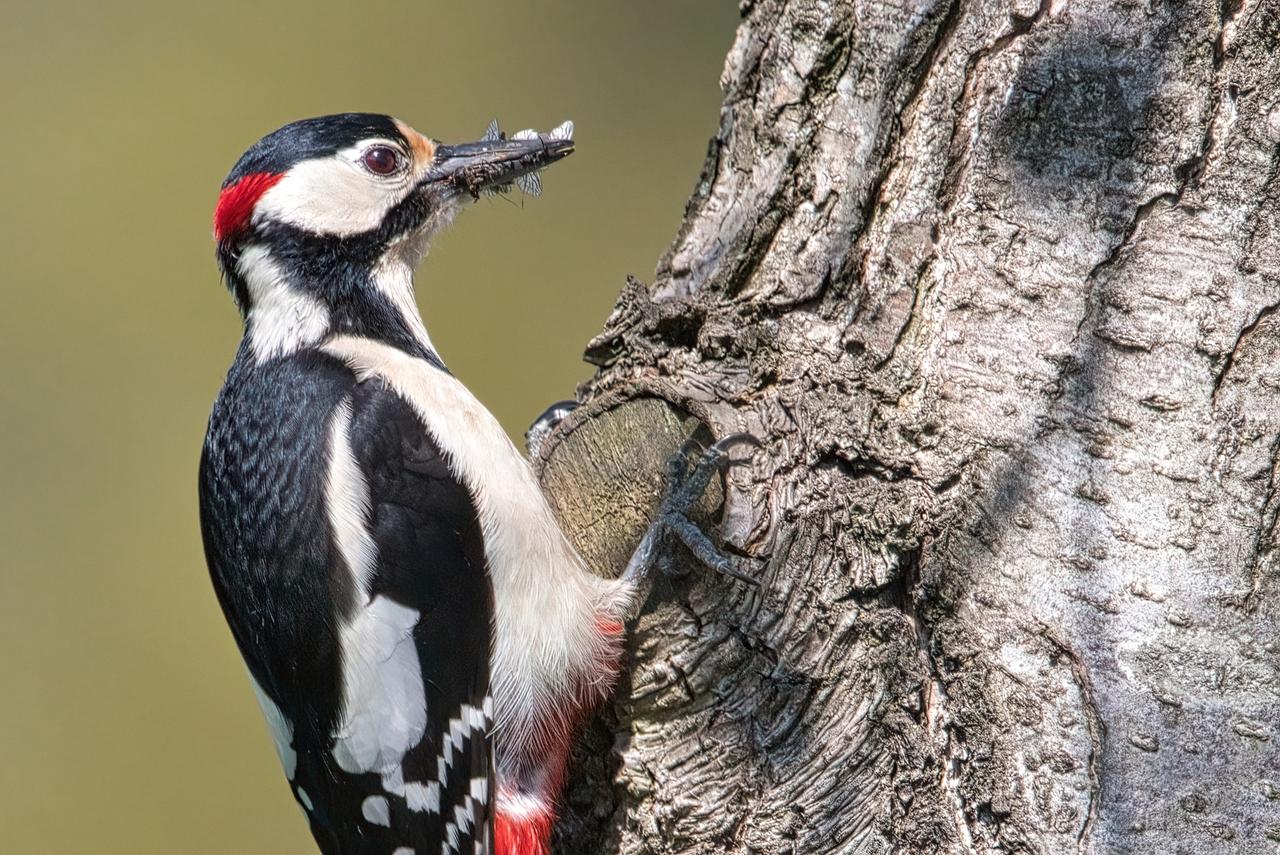
Forest Woodpecker Feeding (Photo: pixabay.com, hapr80)
During the breeding season, forest woodpeckers adopt a monogamous lifestyle and typically build their nests in decaying tree trunks. Nests are created each year by excavating new cavities, and old nests are rarely reused. The female lays 4 to 7 white eggs in the nest. Incubation lasts approximately 10–14 days, during which both male and female take turns incubating the eggs. The chicks remain in the nest for about 3–4 weeks, fed by their parents. After leaving the nest, the young continue to stay under parental supervision for some time.
Forest woodpeckers play an important role as a balancing element in forest ecosystems. By feeding on harmful insects and larvae living beneath tree bark and within woody tissues, they help control insect populations. This feeding behavior contributes to forest health by enhancing tree resistance to diseases and pests. Additionally, the nest cavities they create in trees provide shelter for various bird species and other small forest organisms, thereby supporting the conservation of biodiversity.
Egir. "Большой пёстрый дятел (Büyük Benekli Ağaçkakan)." Egir Web Sitesi. Accessed March 27, 2025.https://www.egir.ru/bird/197.html
Ornito. "Dendrocopos major (Büyük Ağaçkakan)." Ornito Web Sitesi. Accessed March 27, 2025.https://ornito.org/Bird/Detail/373.
TRT Belgesel. "Büyük Ağaçkakan Videosu." YouTube, Accessed March 27, 2025.https://youtu.be/kTiEFeEEPSs?si=cuIF4HMP3qfQNIDx
TÜBİTAK Bilim Genç. "Ağaçkakanlar." TÜBİTAK Bilim Genç Web Sitesi. Accessed March 27, 2025.https://bilimgenc.tubitak.gov.tr/konular/agackakan
eBird. "Büyük Ağaçkakan (Dendrocopos major)." eBird Website. Accessed March 27, 2025.https://ebird.org/species/grswoo?siteLanguage=tr

Orman Alaca Ağaçkakanı
Kingdom | Animalia | ||||||||
|---|---|---|---|---|---|---|---|---|---|
Branch | Chordata | ||||||||
Class | Aves | ||||||||
Team | Ağaçkakangiller | ||||||||
Family | Ağaçkakanlar | ||||||||
Genus | Dendrocopos | ||||||||
Latin | Dendrocopos major | ||||||||
English | Great spotted woodpecker | ||||||||
French | Pic épeiche | ||||||||
German | Buntspecht | ||||||||
Russian | Большой пёстрый дятел | ||||||||
State | Nesting - resident or migratory | ||||||||
No Discussion Added Yet
Start discussion for "Orman Alaca Ağaçkakanı" article
Juveniles and Vocalizations
Distribution and Habitats
Feeding Habits
Reproduction and Nest Building
Ecological Importance